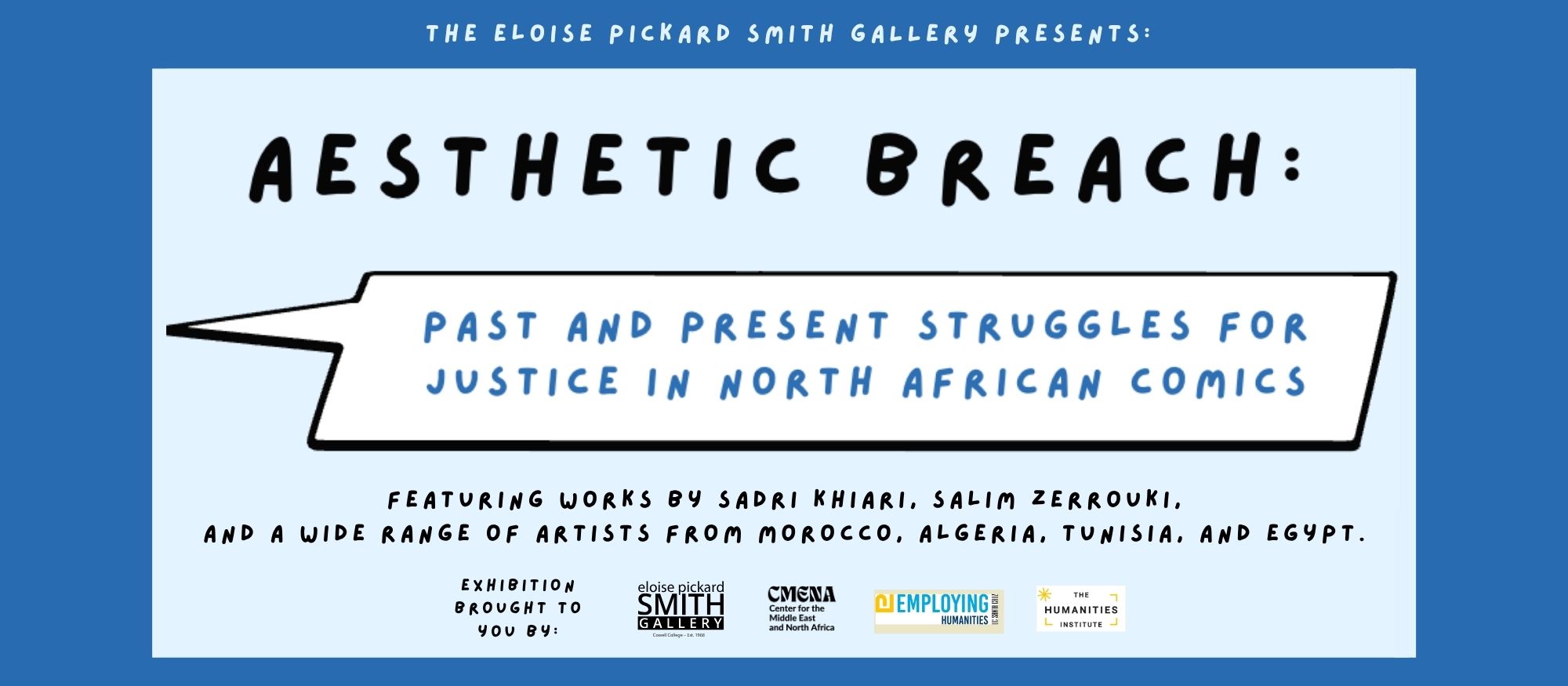
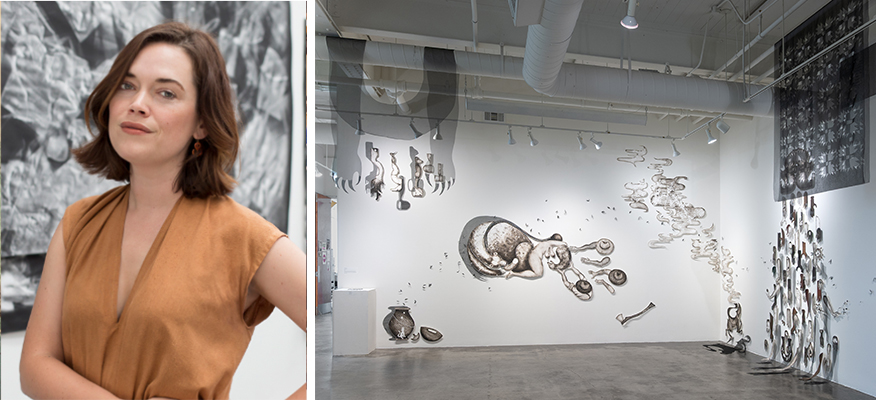
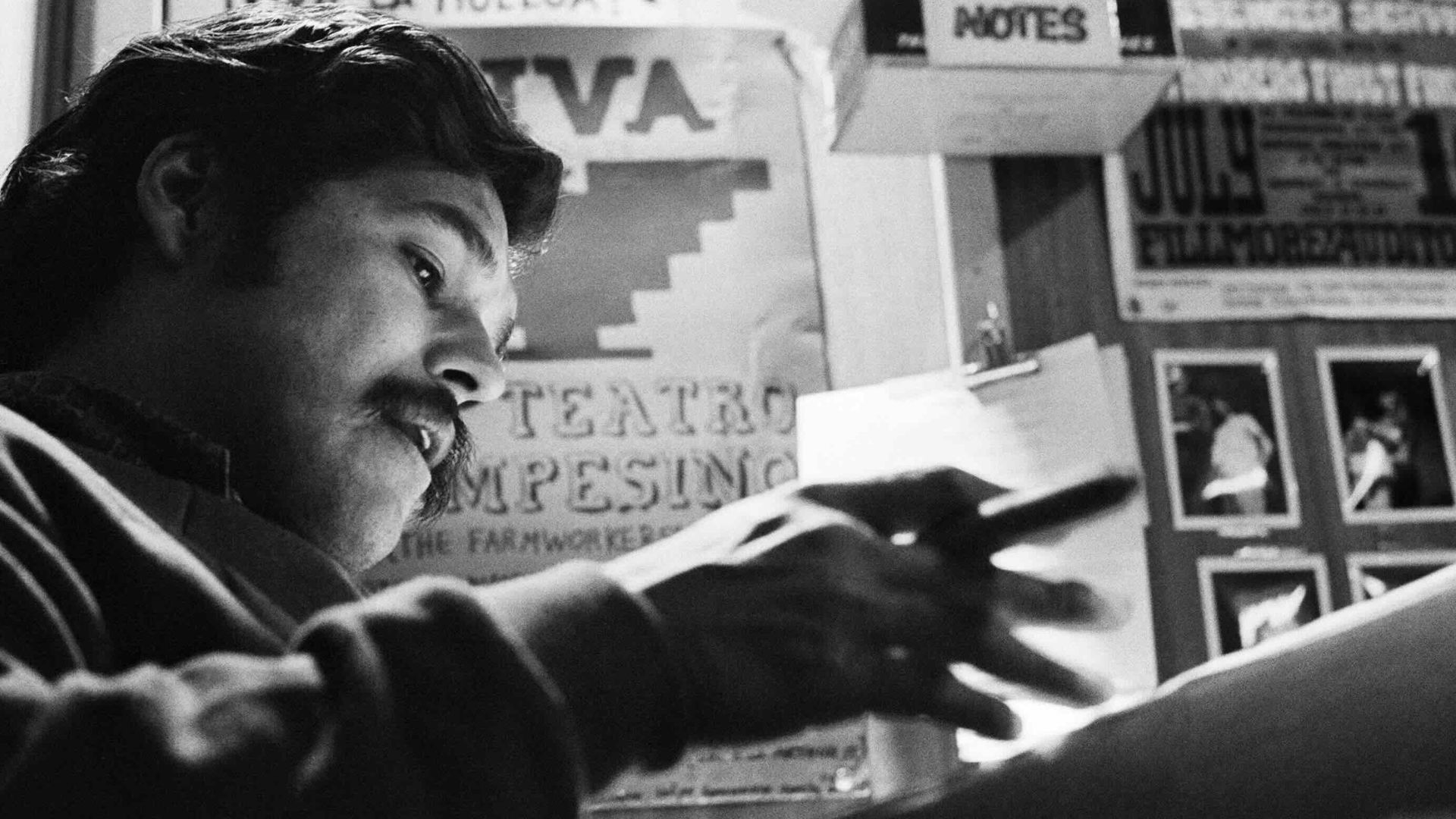
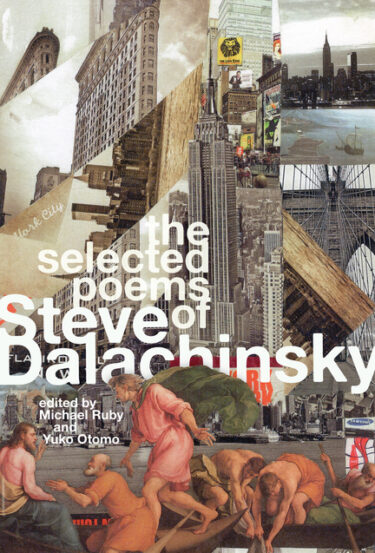
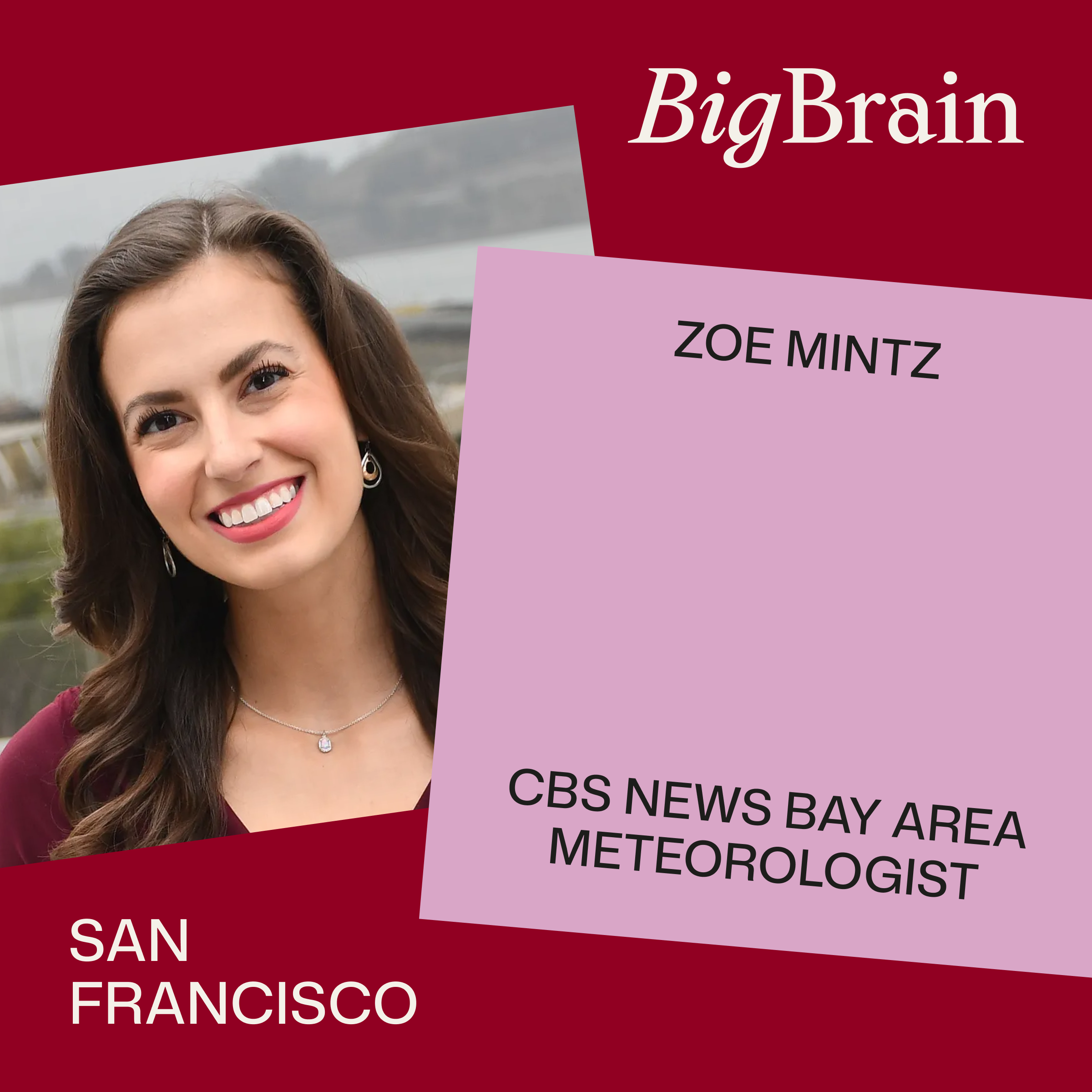
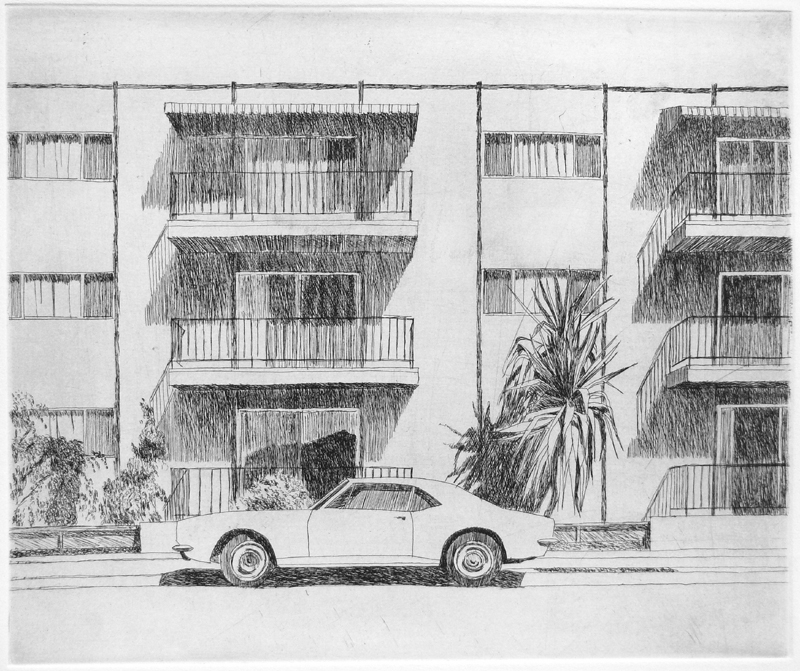
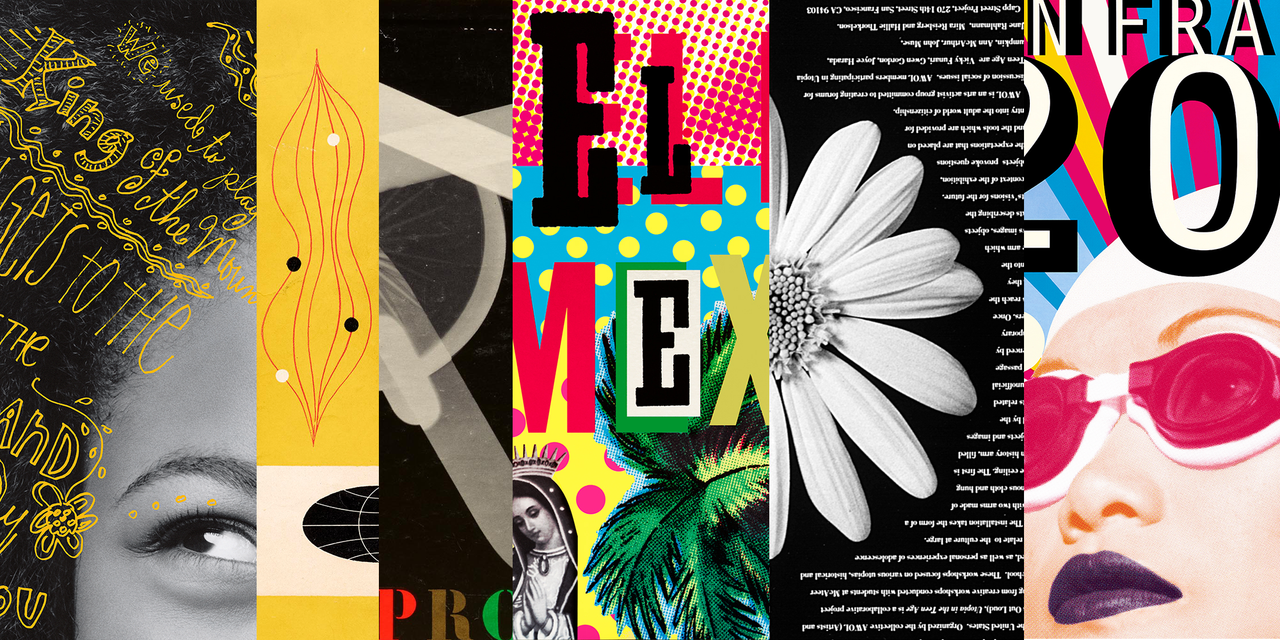
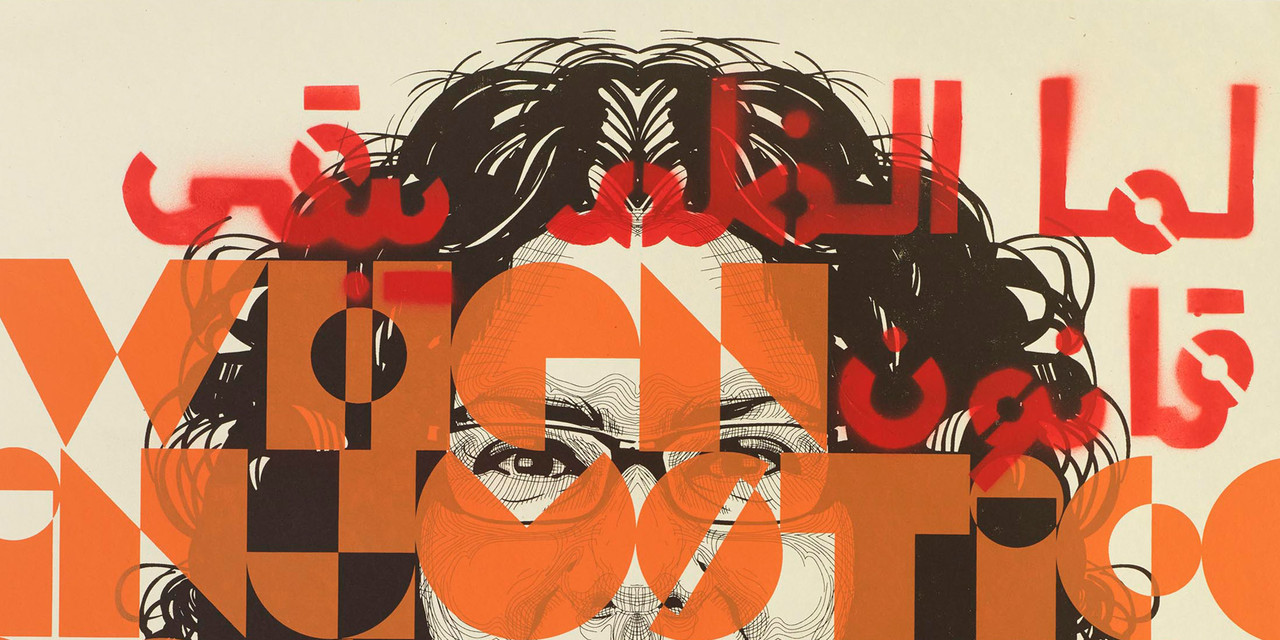
An exhibition of comics and graphic narratives from Egypt, Tunisia, Algeria, and Morocco examining questions of justice, memory, colonial and postcolonial histories, gender, migration, and political struggle. Centered on work by Sadri Khiari, a major figure of the antiracist left in Tunisia and France, and Algerian cartoonist Salim Zerrouki, whose drawings combine satire and nostalgia. Zerrouki's Rwama chronicles the collapse of Algeria's post-independence social order through daily life in an Algiers apartment complex; Khiari's Toussaint est mort dans sa tombe traces the fate of Haitian revolutionary leader Toussaint Louverture's body after his death in French captivity. The exhibition explores comics as form—how speech balloons, panels, composition, and sequence convey intimate experience, everyday life, and resistance. Curated by Susana Ruiz, Annelise Schouten, and Simona Gabrieli at UC Santa Cruz's Eloise Pickard Smith Gallery.
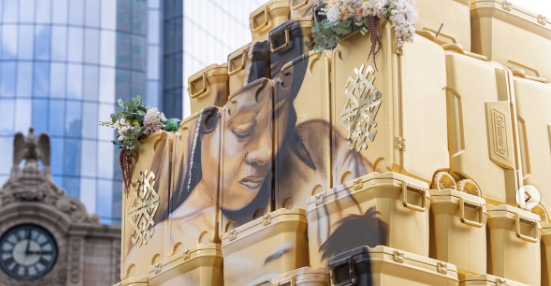
Ni de Aquí, Ni de Allá (Not From Here, Not From There) is a multidisciplinary exhibition by artist Victor 'Marka27' Quiñonez exploring the experience of living between worlds. The show features altars, an immersive botanica, paintings referencing textiles and graffiti traditions, and brightly colored resin sculptures of melting Mexican paletas. Accompanying the exhibition, Elevar la Cultura—a twenty-two-foot-tall pyramid built from ice coolers adorned with ancestral textiles and sacred symbols—will be installed at Santa Cruz Barrios Unidos. The cooler sculptures symbolize immigrant labor and survival in the United States, transforming everyday objects into monuments of resilience and cultural pride.
A free monthly breakfast lecture series uniting Santa Cruz's creative community. Local innovators and cultural leaders share their creative insights and vision over coffee and pastries. This month's speaker is Rabi Chel Mandell, founder and spiritual leader of Tzimtzum Community, a queer- and trans-centered Jewish community in Santa Cruz, who will discuss weaving creativity, spirituality, social justice, and radical inclusivity into community building. Hosted by the Santa Cruz Museum of Art & History.
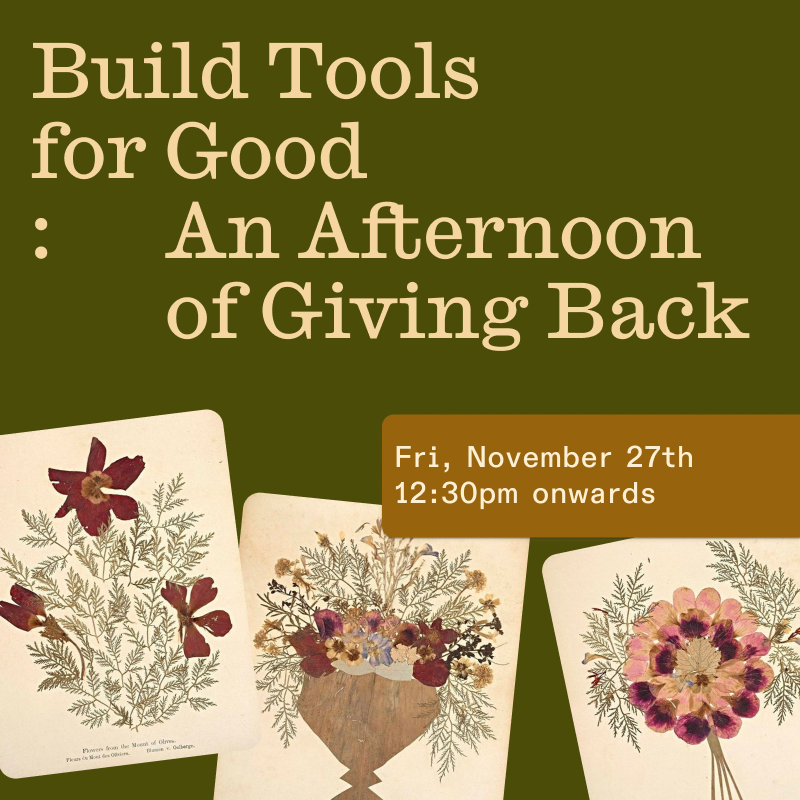
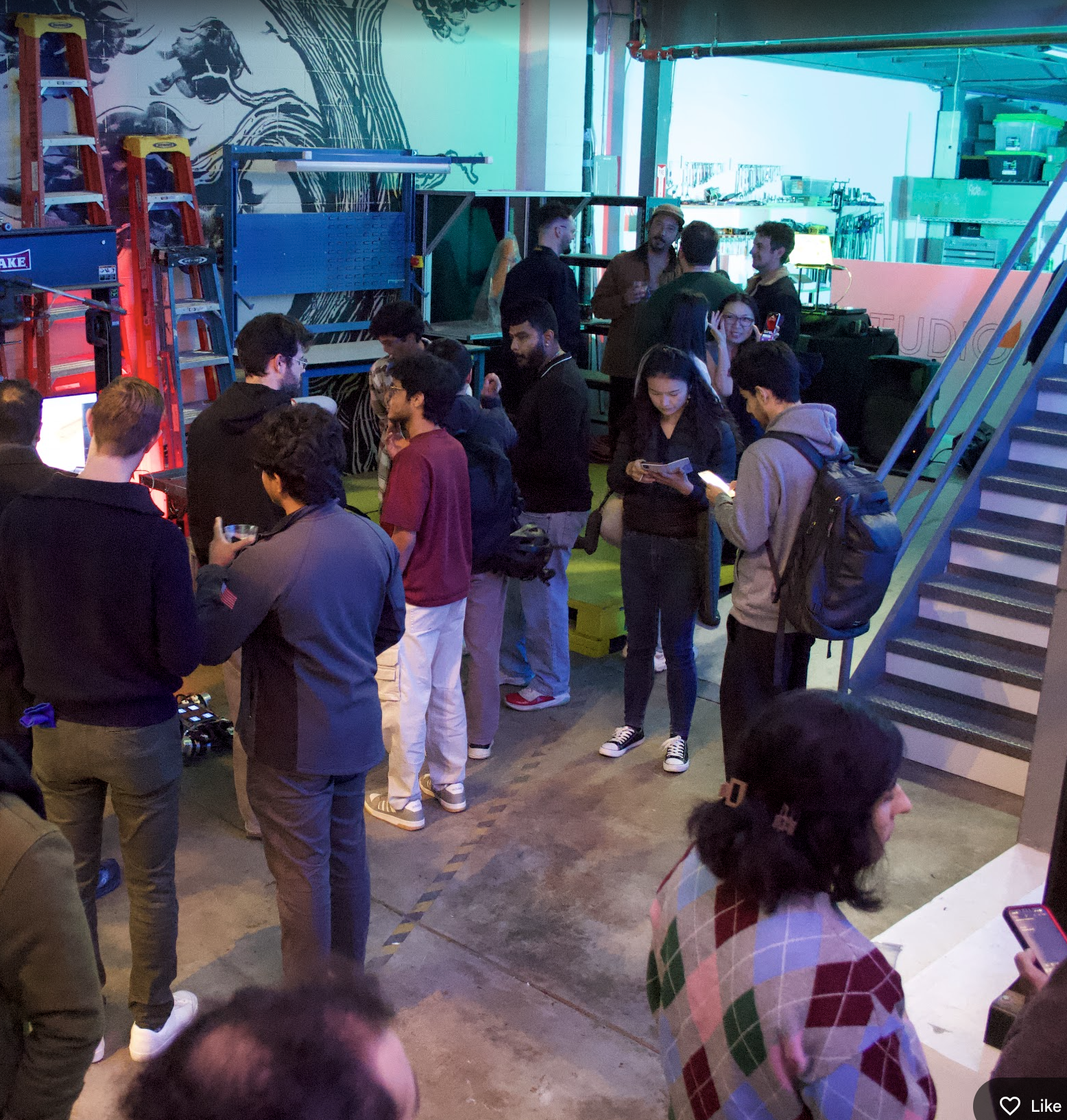
An afternoon workshop where participants form teams to build AI-powered tools for causes and communities they care about, using Imbue Studio (a no-code AI platform). The event brings together people across skill levels and backgrounds to identify real challenges, collaborate on solutions, and demo finished tools. Hosted by Imbue, a company creating trustworthy AI for personal software creation.
A weekly facilitated peer support circle for founders, builders, creators, side hustlers, and small business owners. Participants bring one real situation—a stuck decision, co-founder tension, or isolation—and receive coaching, offer reflection to others, or listen. No pitching. Facilitated by Nima Imani, ICF-certified leadership coach specializing in uncertainty, hard decisions, conflicts, and the human side of organizational change. Meets every Friday.
An introductory hands-on workshop in command-line music using Auwen, a tool for writing and performing songs in real time via command line interface. Led by Nes Croft, a musician, computer engineer, and creator of Auwen, participants will install the software, learn the interface and workflow, create tracks in a collaborative multiplayer session, and have solo time to build their own music. No prior coding or music experience needed. After the workshop, attendees are invited to join a Discord community for ongoing multiplayer jam sessions and continued learning with the growing Auwen collective.
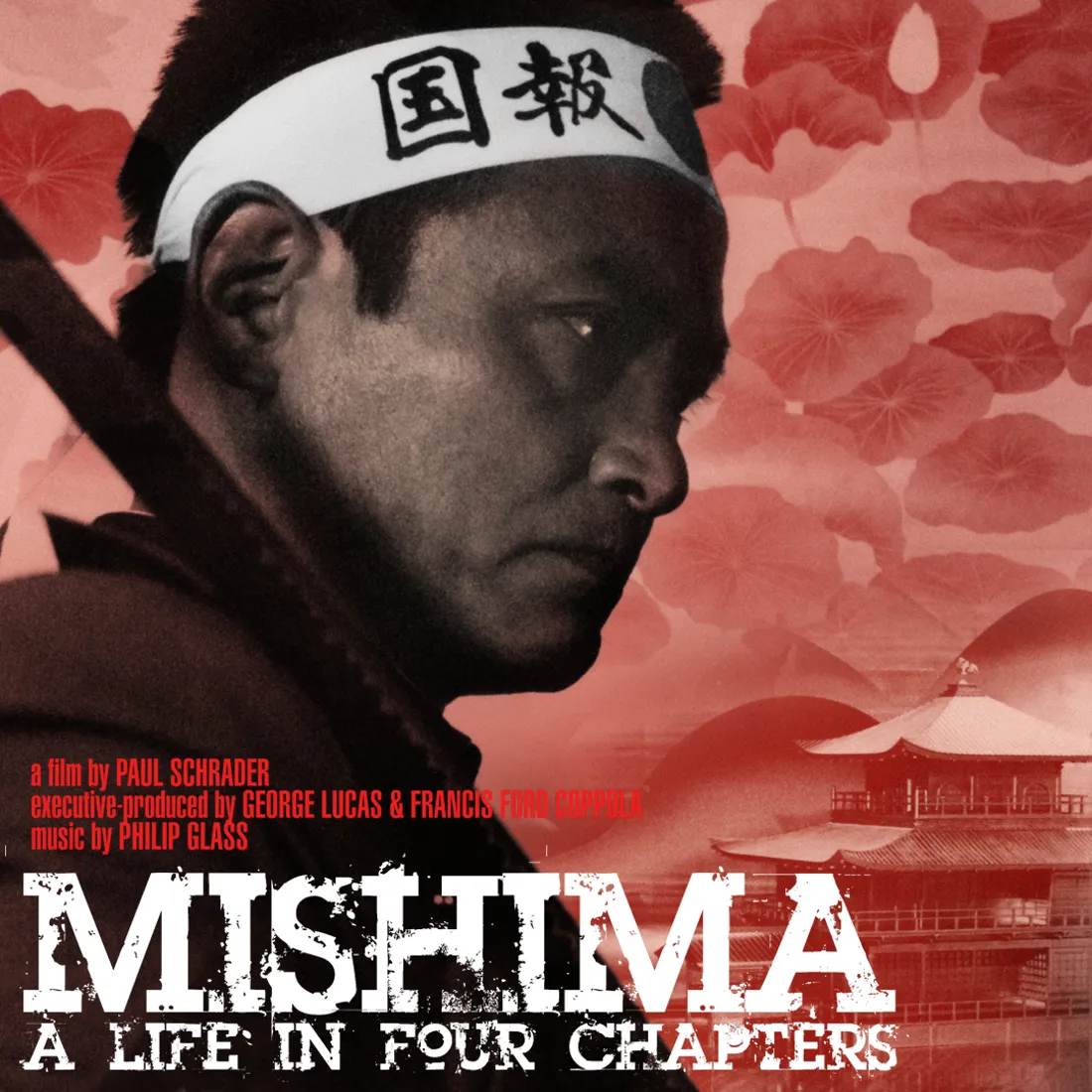
A screening of Paul Schrader's visually stunning 1985 film portrait of Japanese author Yukio Mishima, with an introduction by Mark Fishkin, founder and director of the Mill Valley Film Festival. The collagelike narrative investigates Mishima's inner contradictions through his last day, when he committed public seppuku, interwoven with flashbacks and stylized evocations of his fictional works. With cinematography by John Bailey, production design by Eiko Ishioka, and an influential score by Philip Glass, the film examines the impossible harmony between self, art, and society in a bold work of art.
Nicole Nelson discusses her debut novel *Family Language*, which follows an ambitious academic navigating motherhood and the structural misogyny embedded in the question of whether women can 'have it all.' Nelson explores the tensions between intellectual ambition and caregiving in contemporary life.
Learn needle felting fundamentals and create 3D soft sculptures. This hands-on workshop covers basic techniques for forming shapes and shaping wool. All materials provided. Registration required.
A read-aloud gathering of short stories, poetry, and picture books for adults, led by a San Francisco Public Library librarian. Discover new titles, share inspiring works, and connect with others in the community.
A reading and conversation centered on Natalie Miller's poetry collection *Radiant Connection*. Miller, Chickasaw, shares her work with Joey Clift and Terria Smith, exploring indigenous voices and contemporary poetic practice.
An exhibition of large-scale photographs by Darryl Smith, co-director of the Luggage Store Gallery and 509 Cultural Center, capturing people of color, daily life, and community in San Francisco's Hayes Valley housing projects during the 1980s. Smith's work aims to immerse viewers in the moment and connect them to his subjects' experiences and energy. Proceeds support Smith's care as he lives with dementia. The exhibition honors his decades of curatorial work championing artists and building San Francisco's cultural landscape.
A guided nature walk at Coyote Hills Regional Park led by naturalist Talia Schmitt. Participants will explore the park's trails to spot wild turkeys and learn about their natural history and behavior. All ages welcome; parent participation required.
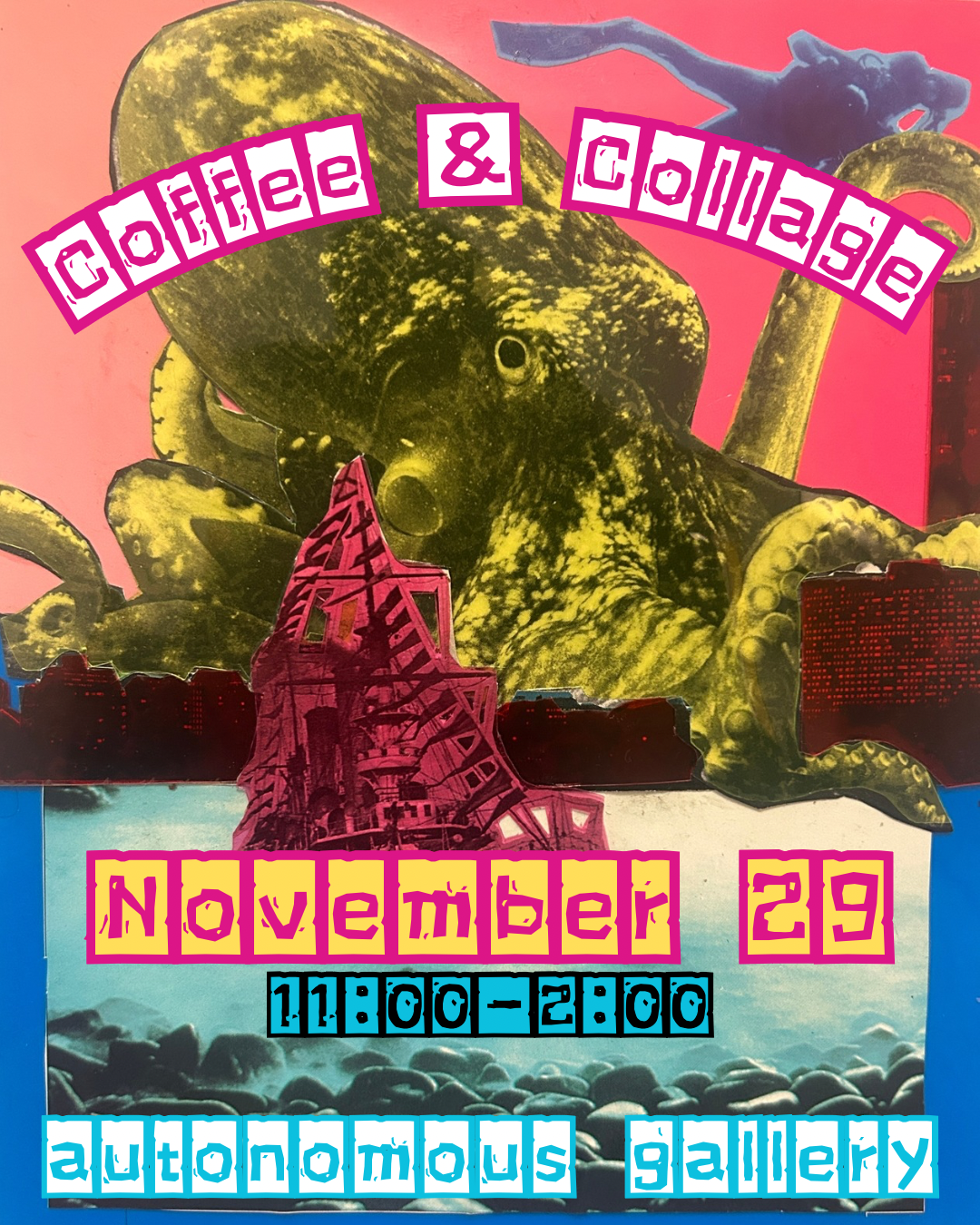
A monthly hands-on collage workshop held on the last Sunday of each month. All supplies are provided, and coffee is served by TBD Coffee. Open to all skill levels.
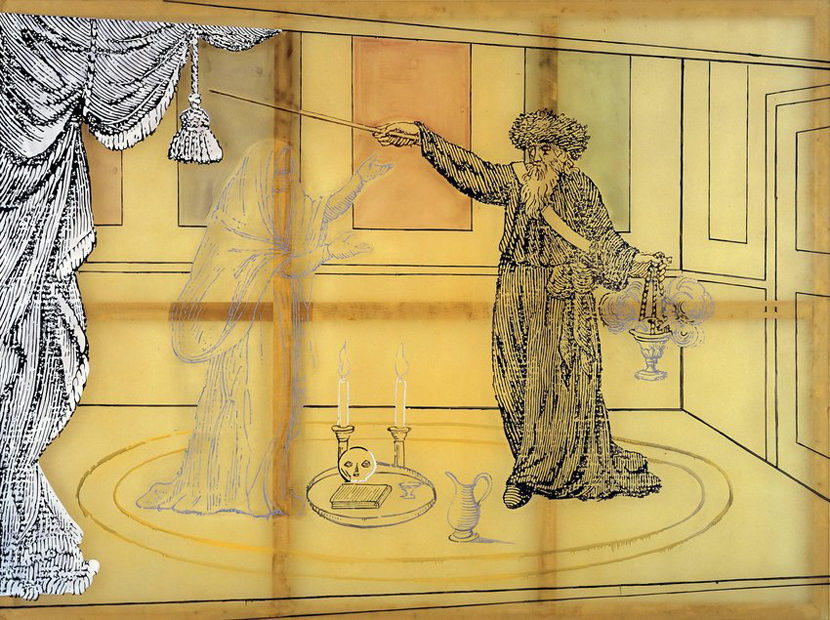
Explore the art of Sigmar Polke, an artist fascinated by myths and magical themes, in this family-friendly program at SFMOMA. Participate in a Co-Lab activation (11 a.m.–2 p.m.) where you can experiment with color and materials, then join a guided Family Art Walk (noon–12:30 p.m.) in the galleries to see Polke's work in person. Designed for children ages 4–11 and their caregivers, this program is presented in conjunction with Athanor Now, an international festival celebrating Polke's work and exploring ecology, alchemy, materiality, politics, and technology.
Rite Life is a creative workshop blending automatic writing with ancestor veneration, designed to confront difficult emotions and celebrate what sustains us. Facilitated by Gabe alongside local writers and practitioners, the workshop honors the vision of Honeysun, a poet and spiritual teacher who conceived it in 2016. Participants of all ages engage in guided writing practice in the cemetery setting, combining craft instruction with contemplative spiritual work.
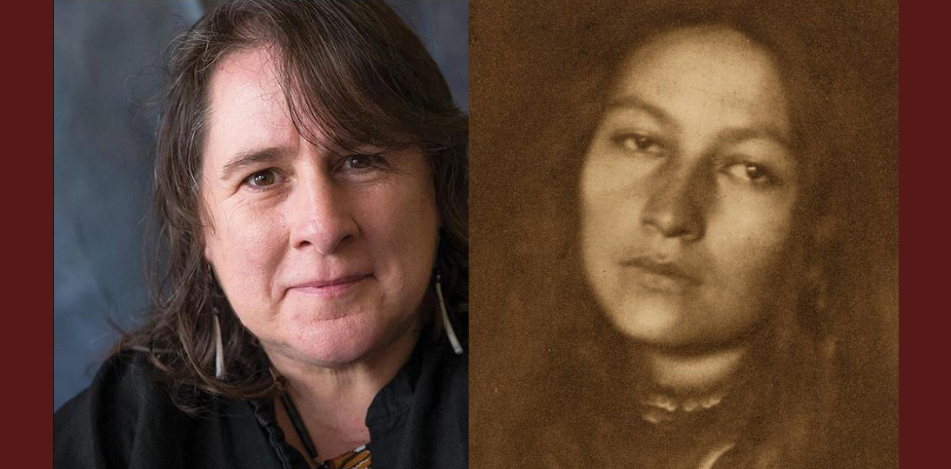
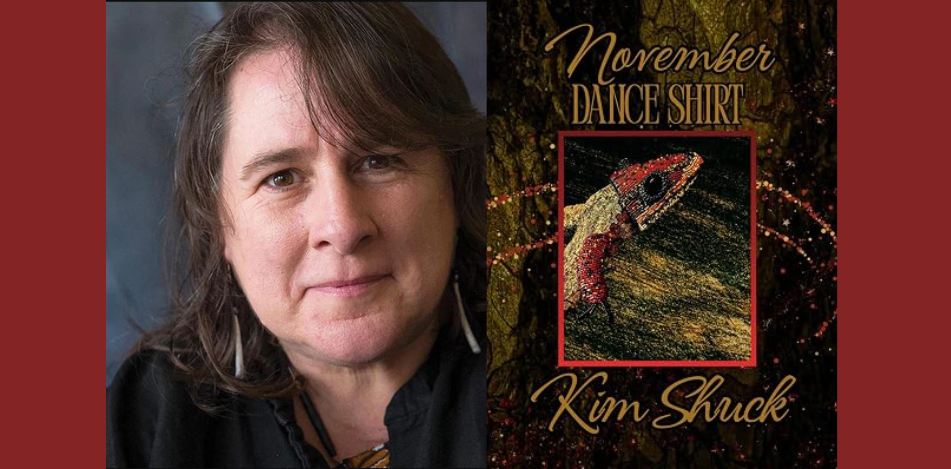
San Francisco Poet Laureate emerita Kim Shuck leads a celebration of American Indian Stories by Zitkala-Ša, the groundbreaking Nakoda writer, editor, translator, and musician. Shuck, who draws on her own Cherokee heritage and shaped the city's Indigenous arts programming during her tenure as Poet Laureate, joins special guests for readings and discussion of this foundational Native American text. Part of SFPL's ongoing programs honoring Indigenous voices and celebrating Native American heritage through poetry, theater, music, and art.
Poets Xochitl Nevel Guerrero and Itzamar Carmona Felipe share work from Walking with the Ancestors and the Dulce Volcán collective, exploring ancestral memory and poetic practice rooted in Latinx and indigenous traditions.
Redesign how you interact with a simple lamp in this hands-on workshop exploring how physical products can behave intelligently around us. Led by Ethan Chang, a MIT-based product designer and artist investigating the boundary between product and art, participants will brainstorm provocative lamp interactions—perhaps one that turns on only when unwatched, or changes color to match your clothes—then build and demonstrate their concepts. Includes artist brief, live demos, collaborative work time, and show-and-tell.
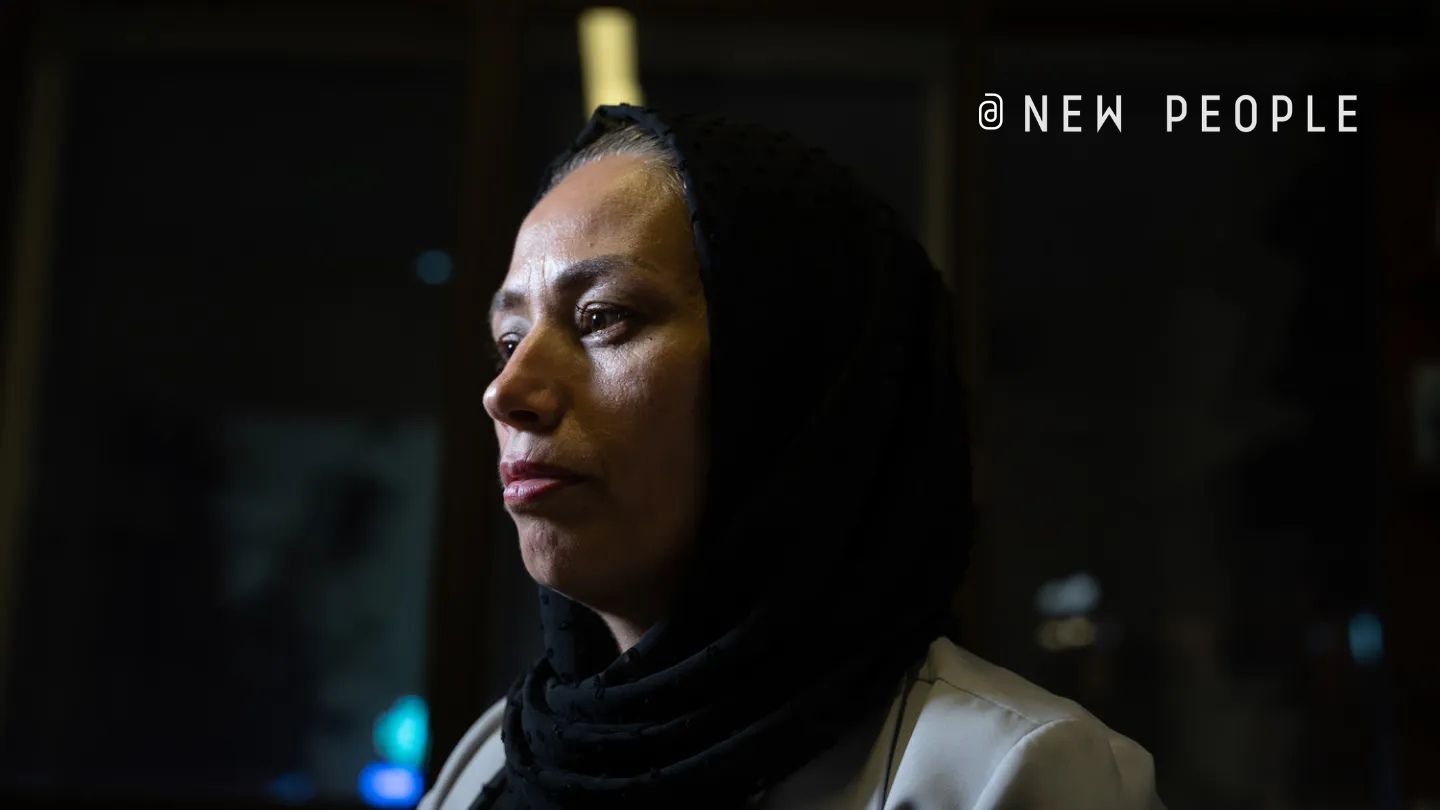
Director Eshaghian will participate in a post-screening Q&A. A screening of An Eye for an Eye, a documentary by Tanaz Eshaghian that follows Tahereh, who faces execution in Iran for killing her abusive husband in self-defense unless she can pay blood money demanded by her abuser's family. The film provides unprecedented access to private legal negotiations and intimate family moments as her son races to save her life.
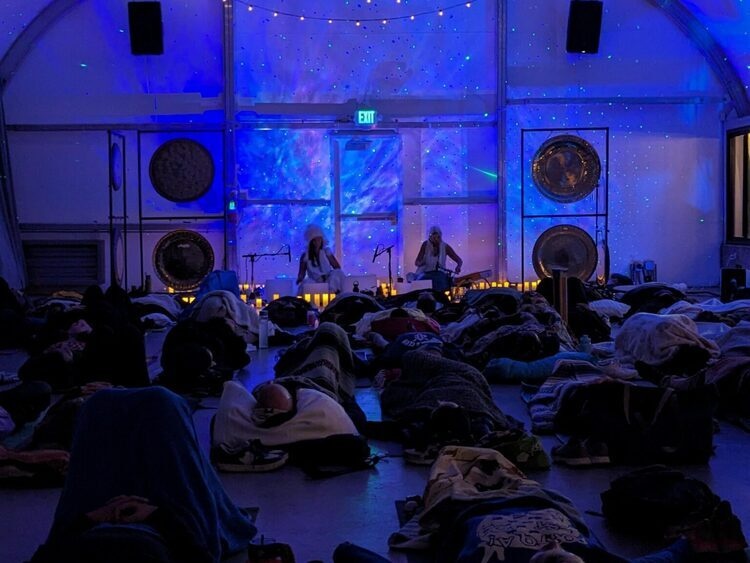
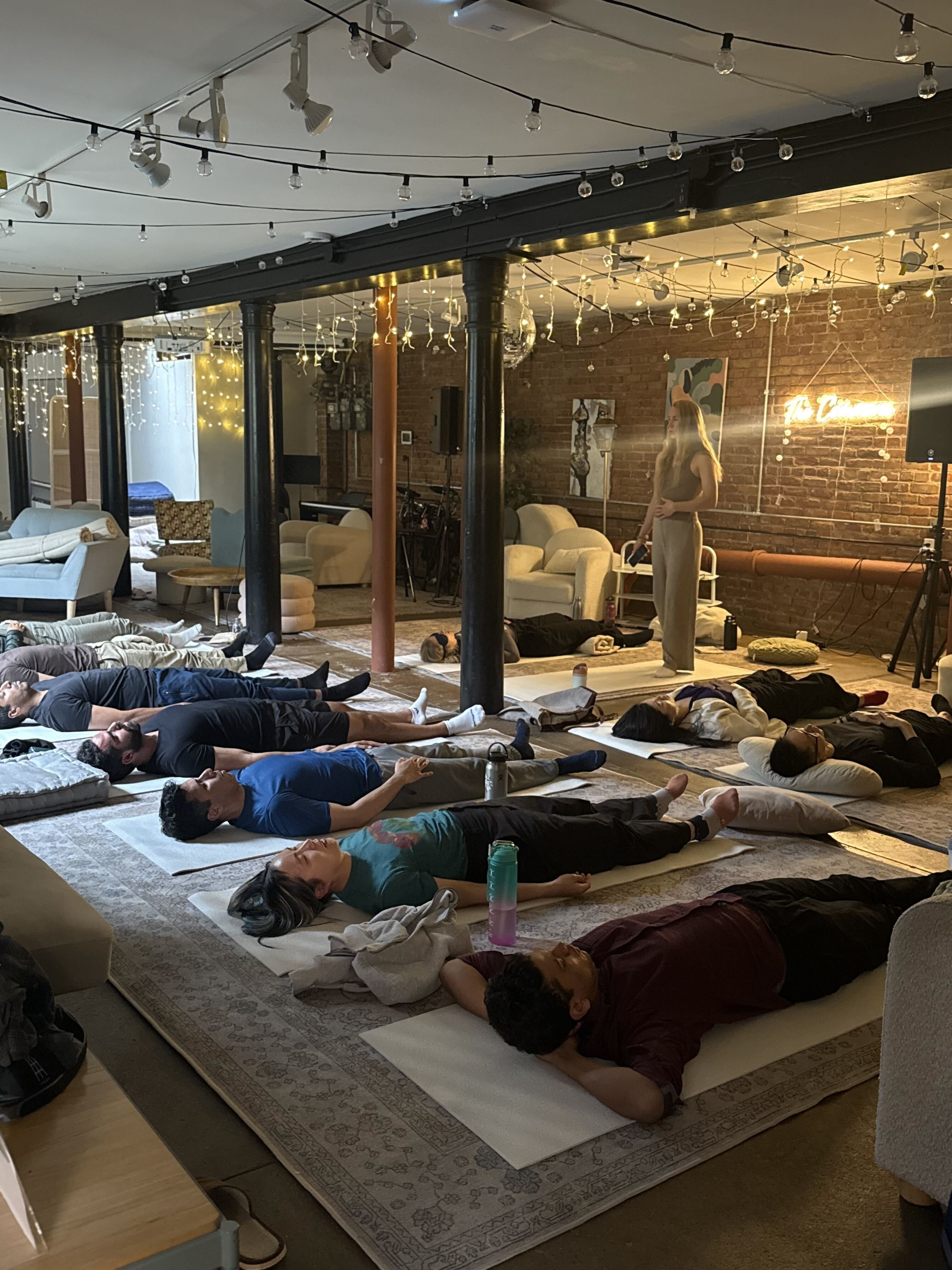
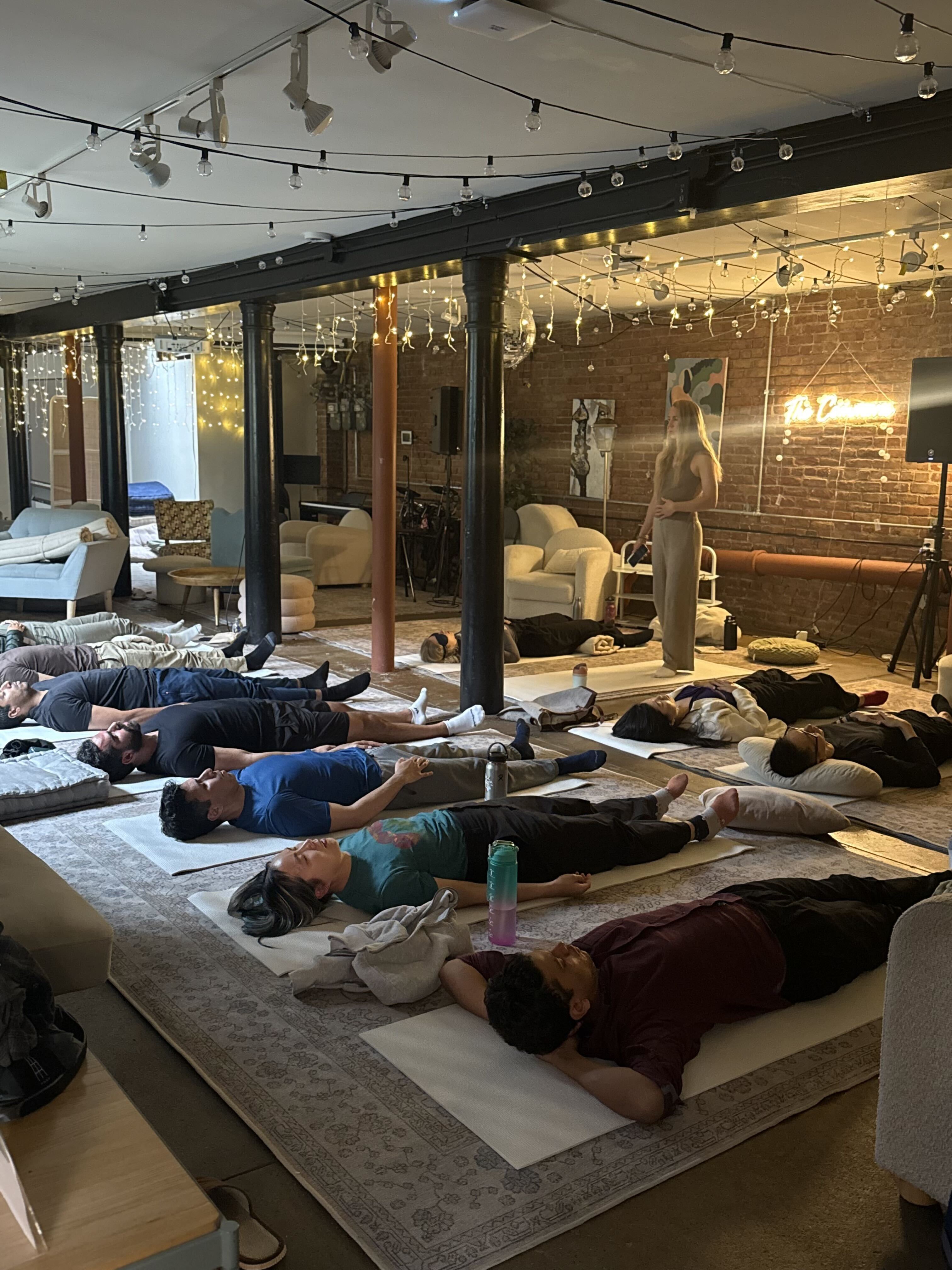
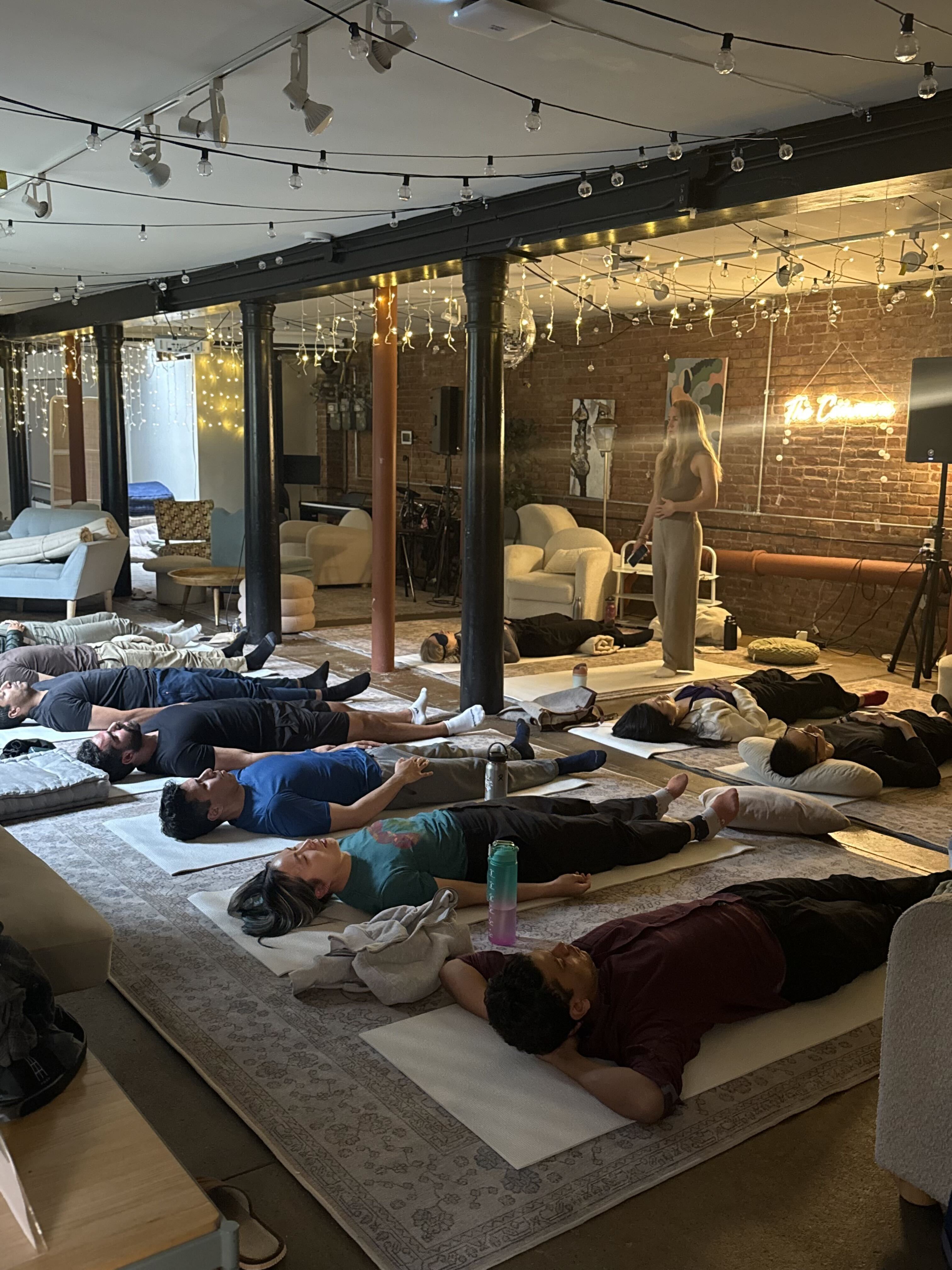
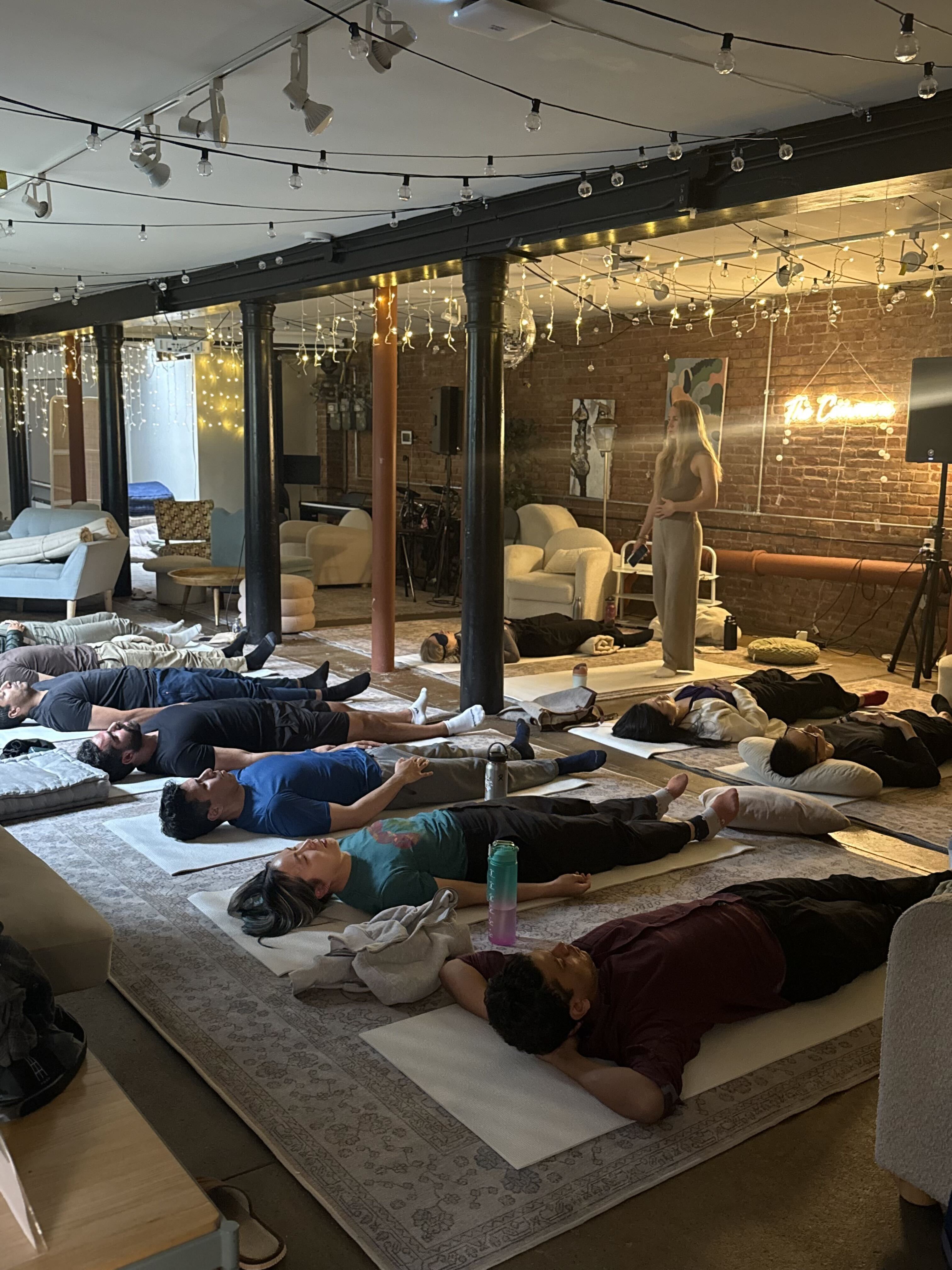
A guided sound bath meditation at the Conservatory of Flowers' Orchid Pavilion featuring crystal singing bowls, gongs, hand pan, monochord, drums, chimes, and vocals. Designed to promote calm, release anxiety and stress, and stimulate healing through frequency and vibration. All experience levels welcome; bring a yoga mat and blankets for comfort. Multiple dates throughout 2026.
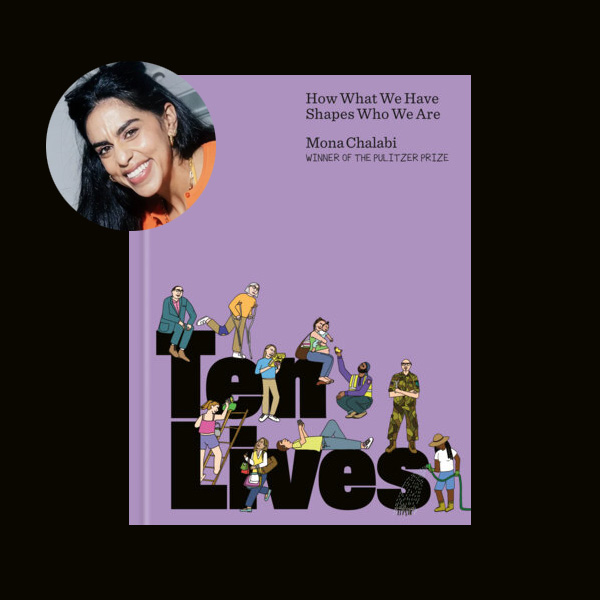
Pulitzer Prize-winning data journalist Mona Chalabi discusses her debut book *Ten Lives*, which follows ten people across different income levels as she investigates how wealth shapes identity, security, and opportunity in America. Drawing on five years of research into taxes, inheritances, and economic systems, Chalabi weaves her own story of financial vulnerability—triggered by her mother's illness and medical debt—with those of her interviewees, illustrated throughout with her signature data visualizations. She explores the central question: how much wealth does it take to feel safe in the United States? In conversation with writer Rahawa Haile, author of the forthcoming memoir *In Open Country* about hiking the Appalachian Trail and freedom of movement.
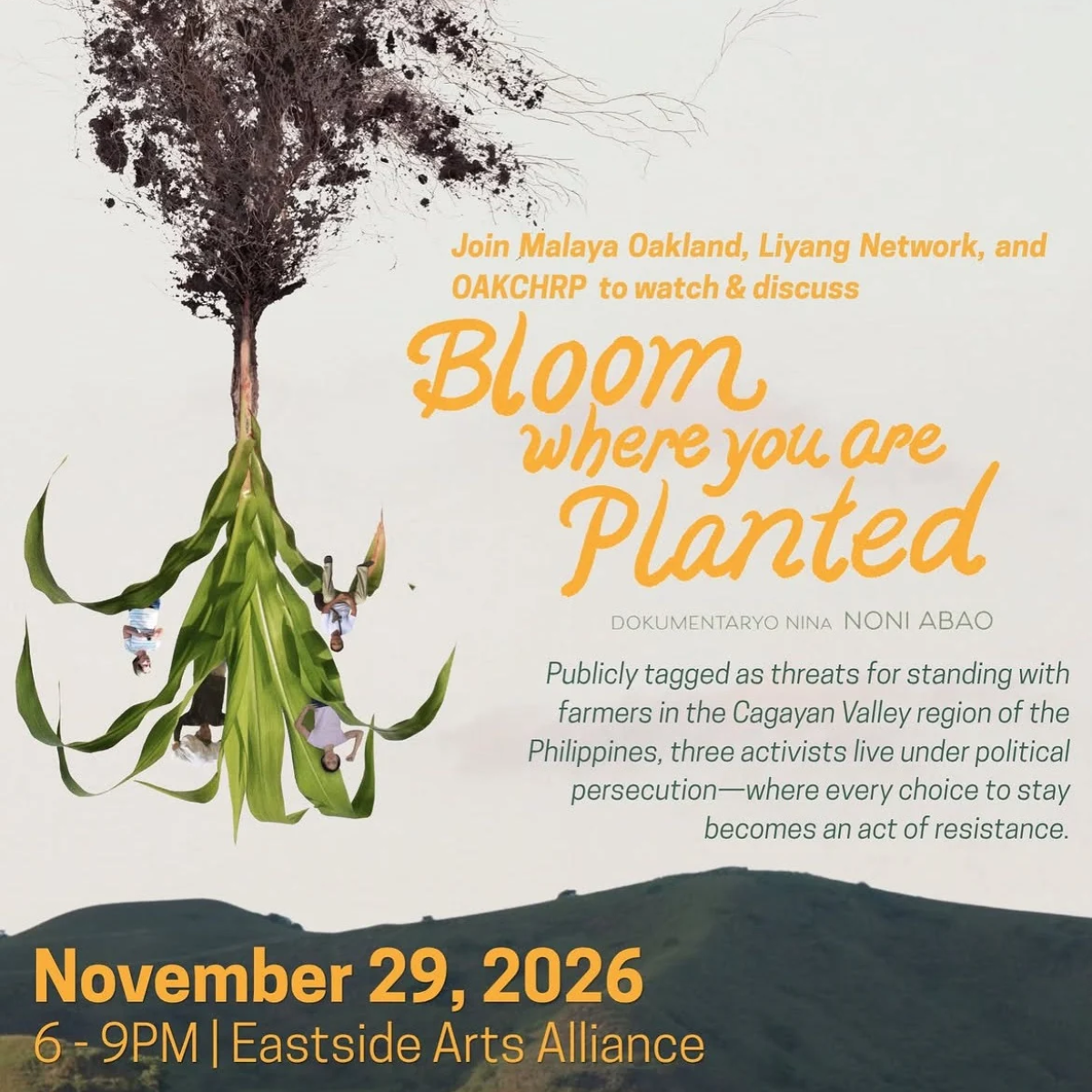
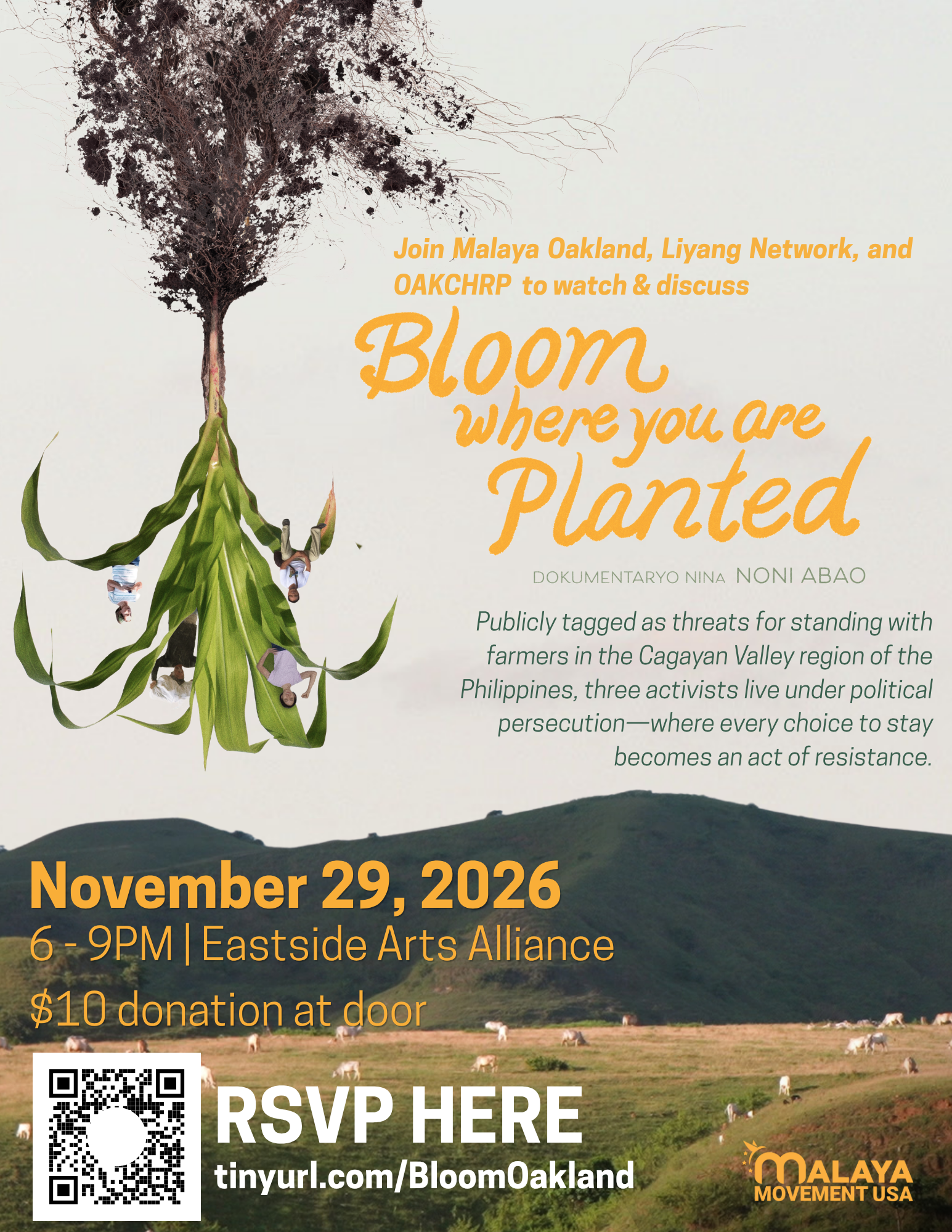
A screening of Bloom Where You Are Planted, a documentary by Noni Abao about three peace workers and land rights activists in Cagayan Valley, Philippines, contending with land dispossession and state violence. The evening includes an art build (6 pm) leading into the screening (7 pm) and community discussion (8:30 pm), organized by Malaya Oakland, Liyang Network, and OAKCHRP ahead of International Human Rights Day. Bring art supplies to participate.
A screening of Bloom Where You Are Planted, a documentary by Noni Abao exploring three activists in the Cagayan Valley Region of the Philippines—Agnes, a development worker pursued by the government; Amanda, a jailed mother-artist-activist; and Randy, a slain peace consultant. The film examines their disrupted connections to home and enduring resilience amid state repression. The event includes an art build (6 pm) leading into the film screening (7 pm) and community discussion (8:30 pm), organized by Malaya Oakland, Liyang Network, and OAKCHRP ahead of International Human Rights Day.
A monthly showcase of independent short films by Bay Area filmmakers and artists, with no submission fees, awards, or gatekeeping. This month's program features ten shorts ranging from 22 seconds to 17 minutes, including works by Fabrice Ducouret, Peter Wolfe, Justin De Celis, Daniel Ward, Troy J. Tibayan, Juan Aguirre, Suzanne Baird, Kyung Lee, Ivy Anderson, Hannie Saba, and Emory Lewman, exploring themes of hunger, survival, time travel, identity, homelessness, trauma, and memory. An intermission separates the two halves of the program.
Hamad Alswaidan presents his master's research on machine learning approaches to full waveform inversion (FWI), a technique for mapping subsurface properties from seismic data. FWI is hindered by cycle skipping—a convergence problem caused by nonlinear effects and limited low-frequency seismic data. Alswaidan explores two complementary ML solutions: generative diffusion models to extrapolate missing low-frequency content, and neural network-based approaches to mitigate cycle skipping by aligning observed and modeled waveforms. The work demonstrates how machine learning can enhance physics-based inversion and improve FWI robustness.
Maria Brbić, Assistant Professor of Computer Science & Life Sciences at EPFL, presents research bridging artificial intelligence and biology. Her work develops new AI methods to advance biological and biomedical research, building on postdoctoral work at Stanford University and the Chan Zuckerberg Biohub. Brbić is an MIT Rising Star in EECS (2021) and recipient of the SIB Early Career Award (2023).
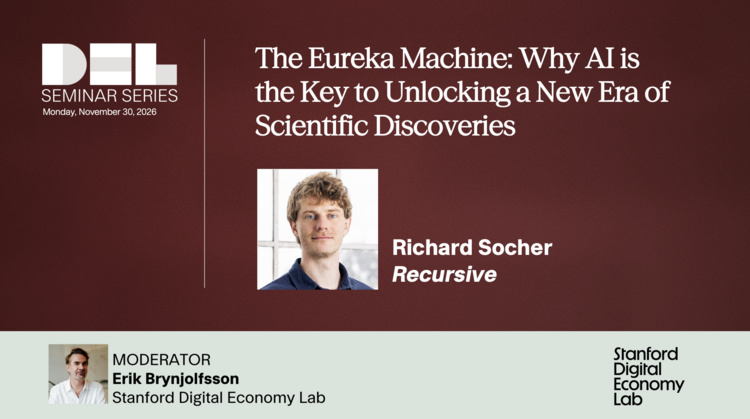
Richard Socher argues that automating the scientific method itself—through full-stack scientific superintelligence combining knowledge mapping, physics models, high-fidelity simulation, autonomous labs, and agent swarms—is the answer to slowing discovery rates and scientific fragmentation. He will explain recursive self-improvement as the path to this architecture, why AI research should automate first, and share early results from Recursive, the company he co-founded to build it.
Dr. Boryann Liaw, Guest Professor at Forschungszentrum Jülich and former Department Manager at Idaho National Laboratory, discusses how physics-informed frameworks can guide trustworthy AI applications in sustainable energy systems. He will address how fundamental science—through empirical reduction, quantification, and verification—can strengthen data-driven approaches, ensuring predictions obey physical principles while remaining quantitatively interpretable. The talk focuses on bridging controlled laboratory data with real-world applications and overcoming data transferability bottlenecks to accelerate cost-effective, energy-efficient deployment.
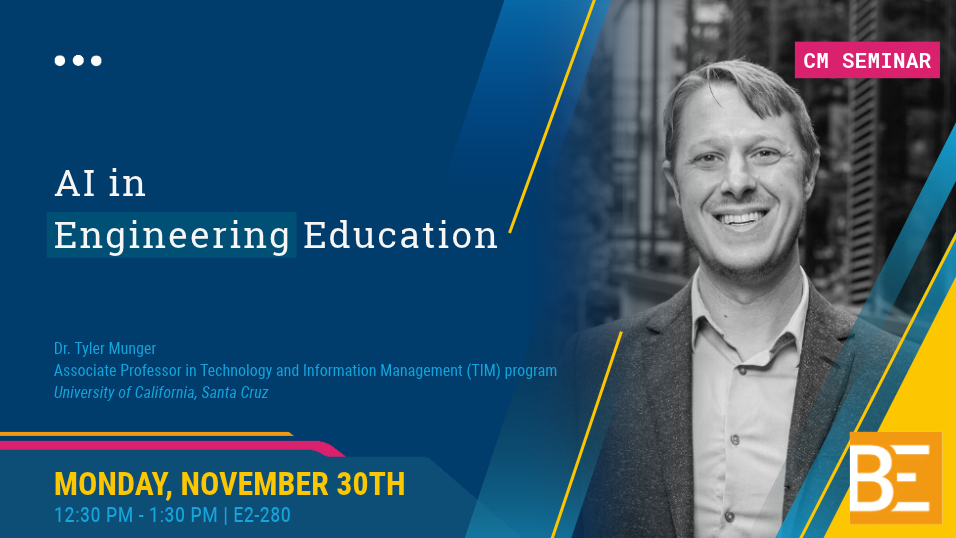
Dr. Tyler Munger, Associate Professor in the Technology and Information Management (TIM) program at UC Santa Cruz, discusses his work preparing students for careers in the age of artificial intelligence. Munger is a triple Baskin Engineering alumnus who spent a decade in industry before returning to teach. The seminar is hosted by Assistant Professor of Computational Media David Lee. Food provided.
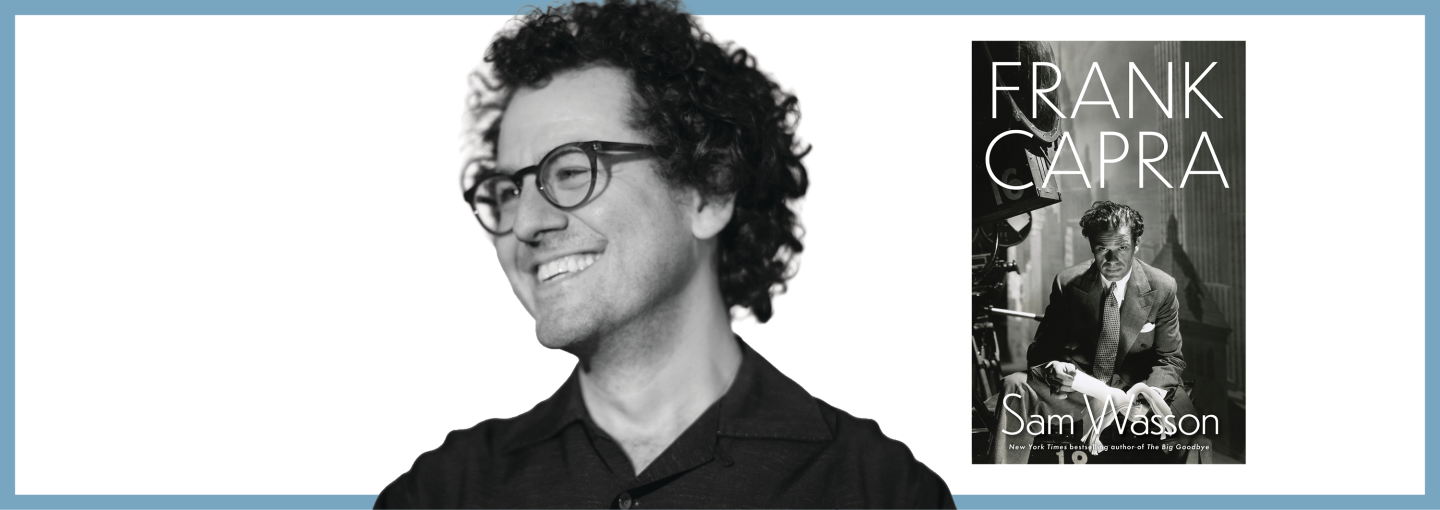
A discussion of Frank Capra's life and artistic legacy with Sam Wasson, Hollywood historian and author of *Frank Capra*, in conversation with George Hammond, author of *Conversations With Socrates*. Wasson explores how Capra, director of *Mr. Smith Goes to Washington*, *It Happened One Night*, and *It's a Wonderful Life*, was both a great chronicler of the American character and a far more complex and complicated figure than popular memory suggests.
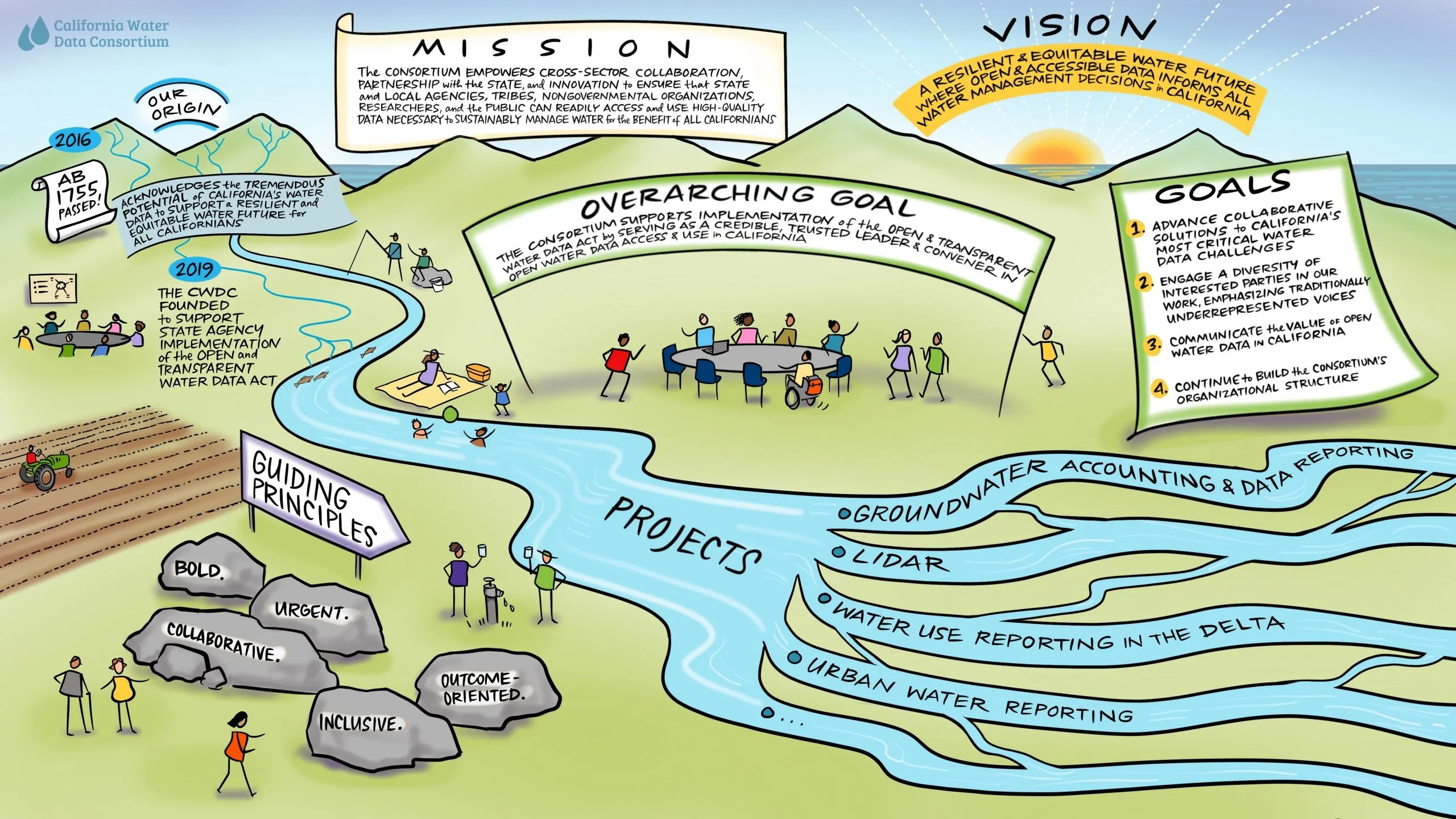
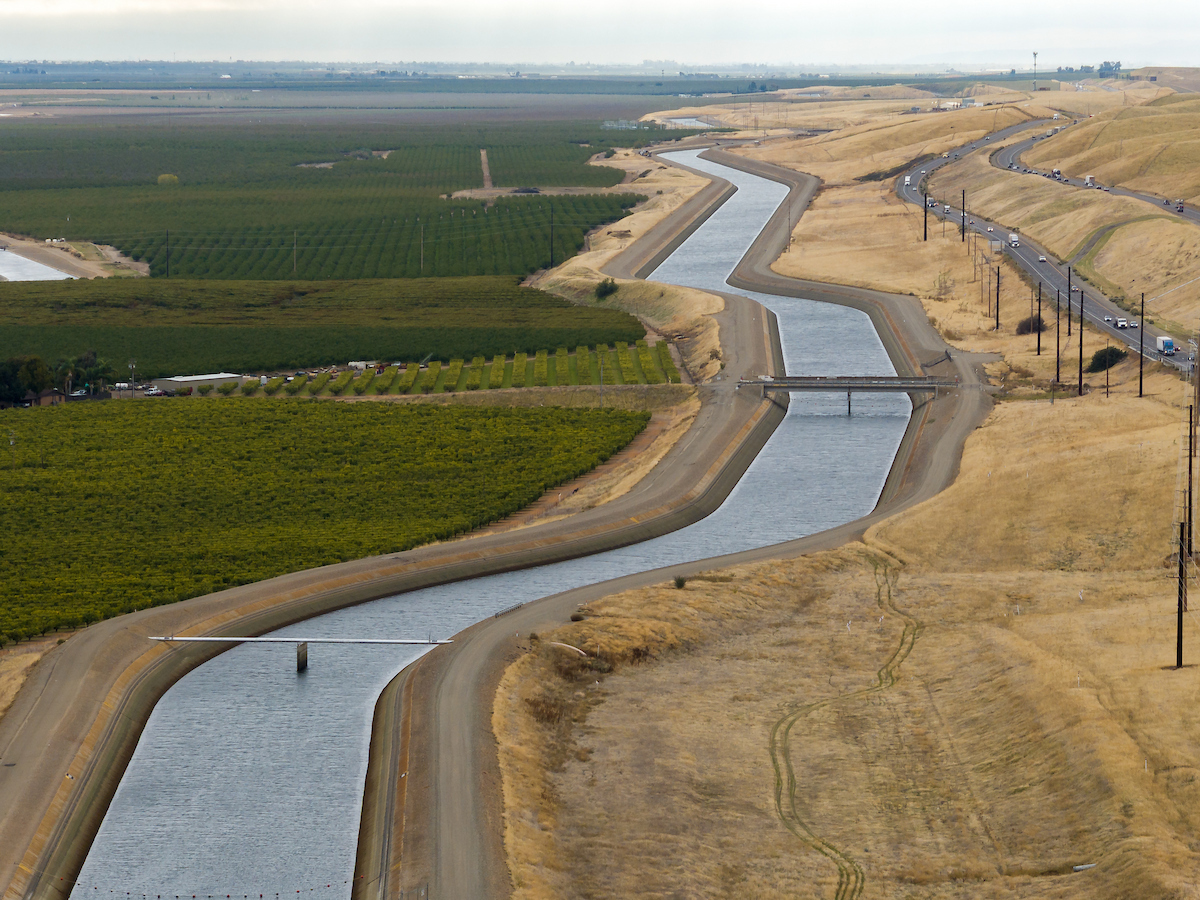
A discussion on California's water data agenda with the incoming administration. The Bay Area Council's Climate Resilience Committee will hear from Robyn Grimm, President & CEO of the California Water Data Consortium, about next steps for improving water data management across the state—building on AB 1755 (the Open & Transparent Water Data Act) to enhance efficiency and regulatory decision-making. The committee will also reflect on election results and outline its 2027 work plan.
A talk on model criticism and robustification for latent Gaussian models (LGMs), widely used in biostatistics and spatial modeling. Rafael Cabral, Member of Technical Staff at Axiom Math, presents a two-step workflow for checking whether Gaussian assumptions hold and fitting more flexible models when they don't. The approach combines Bayesian predictive checking with robustness analysis, yielding diagnostic statistics that target departures from Gaussianity. In the robustification step, non-Gaussian latent models are fitted using variational Bayes and Laplace approximations, downweighting extreme events at a fraction of MCMC cost. Both steps are implemented in Stan and R-INLA with applications to longitudinal, areal, and geostatistical data. Hosted by Professor Yunyi Shen.
Peter Walter, PhD, discusses therapeutic approaches targeting cellular stress pathways. Walter is a renowned cell biologist and UCSF professor whose research on the unfolded protein response and cellular stress mechanisms has shaped modern understanding of how cells respond to dysfunction—work with direct implications for neurodegenerative diseases, cancer, and metabolic disorders.
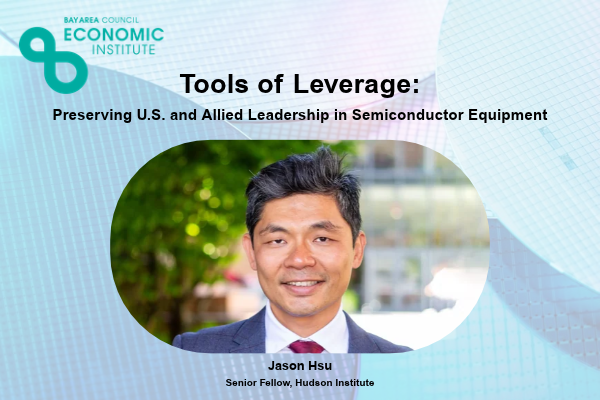
A conversation on US and allied leadership in the semiconductor equipment sector and Taiwan's role in global chip manufacturing. Jason Hsu, Senior Fellow at the Hudson Institute and former legislator-at-large in Taiwan's Legislative Yuan, discusses technology cooperation between the US and its allies, and examines scenarios for a future Taiwan crisis in the context of semiconductor supply chains.
Coarse-Graining Microbial Life: From Genomes to Ecosystem Fluxes Abstract: Microbes transform the chemistry of our planet, yet their extraordinary diversity makes their collective behavior difficult to predict. How much biological detail must we retain to connect genomes to ecosystem function? I will explore how energy budgets, biophysical constraints, and trade-offs can reduce genomic complexity to a tractable set of microbial traits. Using examples from plant–microbe interactions and methane emissions along a permafrost thaw gradient, I will show how these traits connect cellular resource use to ecosystem carbon fluxes. I will close with the challenge of predicting how microbial communities, and their effects on the environment, emerge across scales.
Speakers: Eoin Brodie, Senior Scientist and Interim Director of the Climate and Ecosystem Sciences Division in the Earth and Environmental Sciences Area at LBNL (Lawrence Berkeley National Lab)
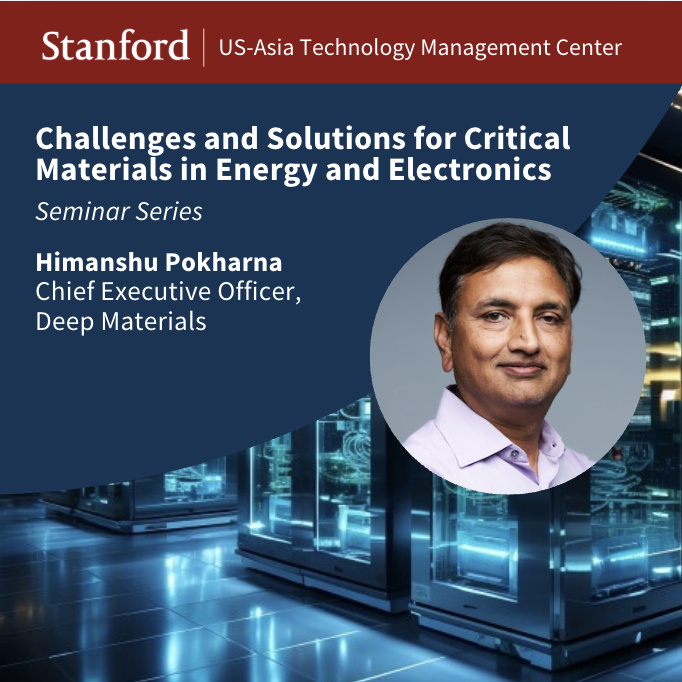
Water scarcity, rising energy demand, and global emissions are major sustainability challenges of the 21st century. Carlos Diaz-Marin, Assistant Professor of Energy Science & Engineering at Stanford University, will present three soft matter-enabled technologies his lab is developing: hydrogel-salt composites for water production from air, low-temperature carbon capture sorbents to enable data center heat reuse for carbon removal, and dry biomass combustion systems for high-temperature industrial decarbonization. The talk explores how fundamental studies of soft materials can address pressing water, energy, and emissions challenges.
Lea Pao, Associate Professor of German Studies at Stanford University, explores the intersection of poetic aesthetics and information theory through a reading of Max Bense and Friederike Mayröcker. Drawing on her forthcoming book *An Archaeology of Forgotten Information Practices*, Pao examines how twentieth-century information theory reshapes our understanding of poetry's social, cultural, and linguistic work—and how poetry, in turn, illuminates the history of information itself.
A talk on Genevieve Nnaji's directorial debut *Lionheart* (2018) and women's creative labor in Nigerian cinema. Speaker Rejoice Abutsa, a doctoral candidate in Performing and Media Arts at Cornell University and filmmaker, examines how Nnaji's film deploys multilingual acoustics to explore language, listening, and belonging while navigating institutional structures that shape African cinema's global visibility. Abutsa's research spans African women's labor in film industries across multiple sites of production and circulation, with published work in *Black Camera*, the *Journal of African Cultural Studies*, and *JCMS: Journal of Cinema and Media Studies*.
Mona Chalabi, Pulitzer Prize–winning data journalist and artist, discusses her visually striking exploration of money and poverty in America through the lives of ten individuals. The book combines data visualization with narrative to examine economic inequality and lived experience across the country.
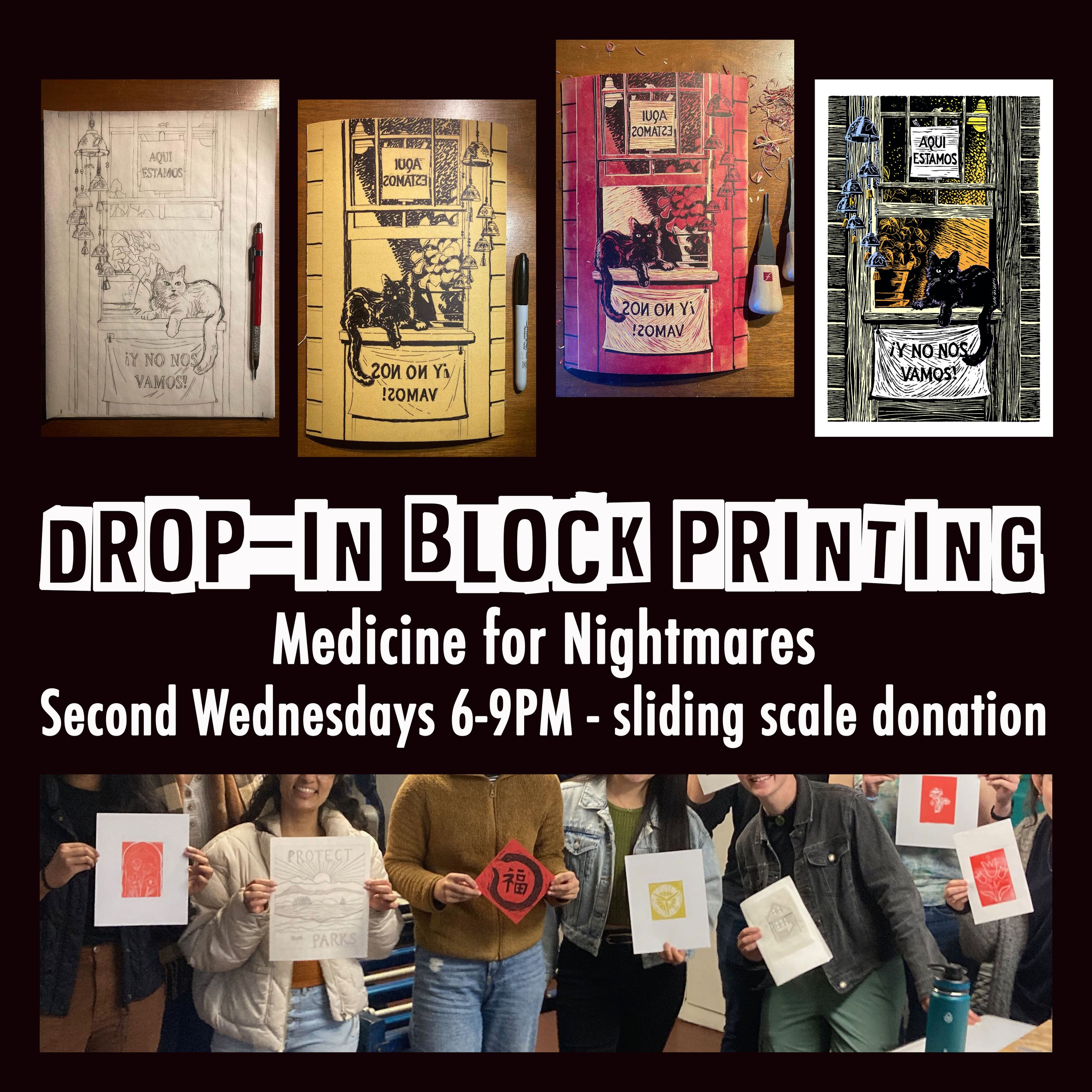
A hands-on printmaking workshop for adults, teens, and families. Adults and teens will design printing surfaces using card stock and scissors to create original prints for greeting cards, gift cards, and wall art. Younger makers (with an adult) can explore a self-directed creative table with cutting, drawing, collage, and gluing. All skill levels welcome.
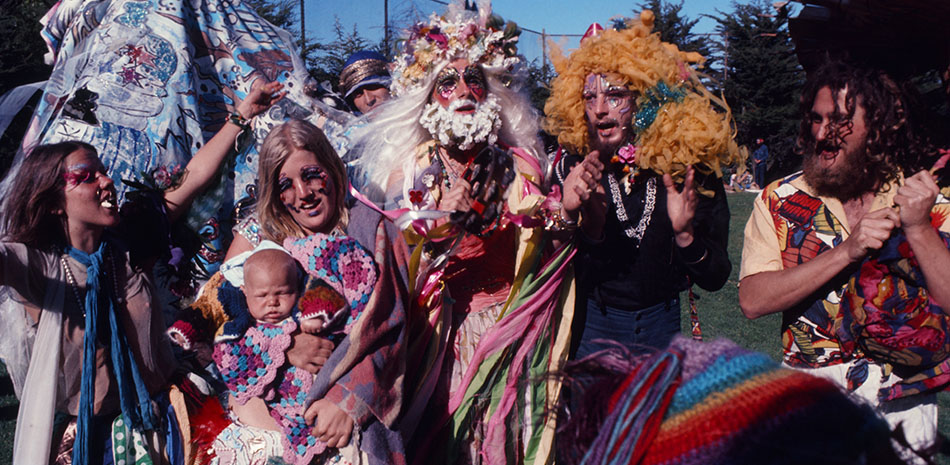
David Perlis discusses his book *Morning in Marin: Zen, Drugs, and Ewoks on the California Coast*, which traces Marin County's cultural transformation from the postwar years through the 1980s. Drawing on archival research and interviews, Perlis explores the artists, musicians, writers, filmmakers, and spiritual seekers—from Sausalito houseboats to back-to-the-land communes—who made Marin a powerful force in American culture. A wine and cheese reception precedes the talk, followed by a book signing. Perlis is a writer, musician, and filmmaker who co-hosted the late-night talk show Night People on WFMU and worked for the New York Public Library and the American Museum of Natural History.
A conversation about finding meaningful children's books for young readers ahead of the holidays. Thu Doan of East Bay Booksellers discusses curating titles that help kids see themselves and the world in new ways, joined by Claire Doornbos of Mr. Mopps' Children's Books. Perfect for parents, gift-givers, and anyone seeking recommendations for the young readers in their lives.
How do patriarchal cultures internalize inferiority in the socially powerless, and how can individuals resist this spiritual entrenchment? Sheba Shobashini, author of *Confessions of a Chateau Worker: A Memoir of Past Lives and the Self-Discovery That Changed Everything*, explores this question in conversation with George Hammond, author of *Conversations With Socrates*. A Commonwealth Club event.
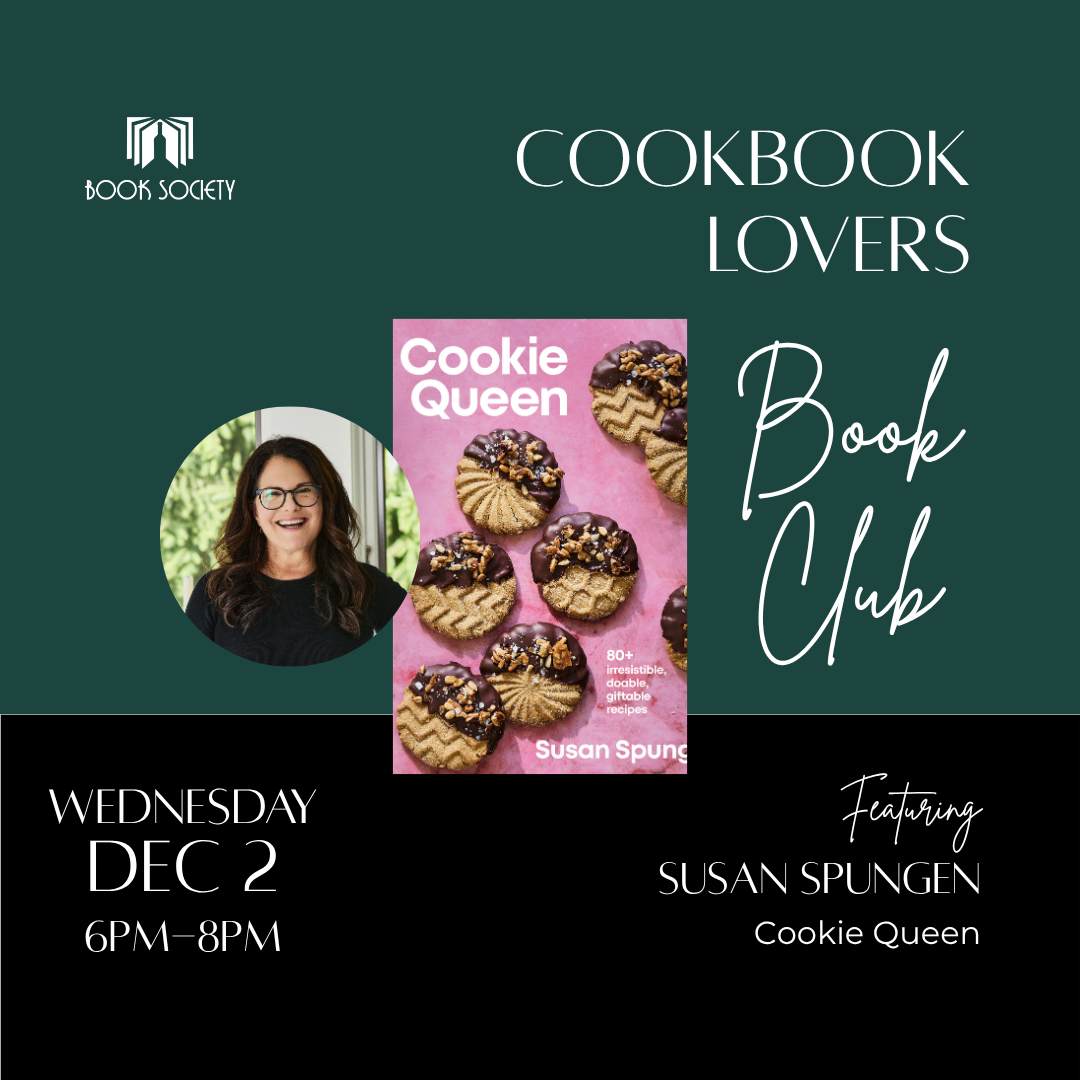
Susan Spungen, founding Food Editor at Martha Stewart Living and food stylist for Julie & Julia and Eat, Pray, Love, discusses her new cookbook Cookie Queen, featuring over 80 accessible holiday and year-round recipes. Spungen is author of Recipes: A Collection for the Modern Cook and What's a Hostess to Do?, and co-author of Martha Stewart's Hors d'Oeuvres Handbook. Known for her influential visual food styling and annual holiday cookie content, she shares her approach to designing recipes that are both achievable and giftable.
A celebration of the 10th anniversary of *Of Poetry & Protest: From Emmett Till to Trayvon Martin*, a seminal anthology compiled by Phil Cushway and edited by Michael Warr. Warr brings together local poets and activists to honor the collection's exploration of race, justice, and resistance in contemporary American poetry. The event takes place in Kerouac Alley at City Lights Bookstore, San Francisco's iconic independent bookshop. Free admission, first-come, first-served seating.
Anthropologist Harjant Gill discusses his book *Coming of Age in Macholand*, an ethnographic and memoir-based exploration of how young Punjabi men navigate rigid patriarchal systems—submitting, rebelling, trying to escape, or breaking under its constraints. Drawing on a decade of research, Gill examines how patriarchy claims to empower men while stripping them of emotional, sexual, and intimate freedom, while brutalizing women and queer people. He argues for what men must relinquish to become truly free. In conversation with David Vine, political anthropologist and author of *The United States of War* and *Base Nation*.
Weekly presentations and discussions on formal methods, software verification, AI, and mathematics. Hosted by Radoslav Kirov and Adi Baradwaj. Beginners welcome.
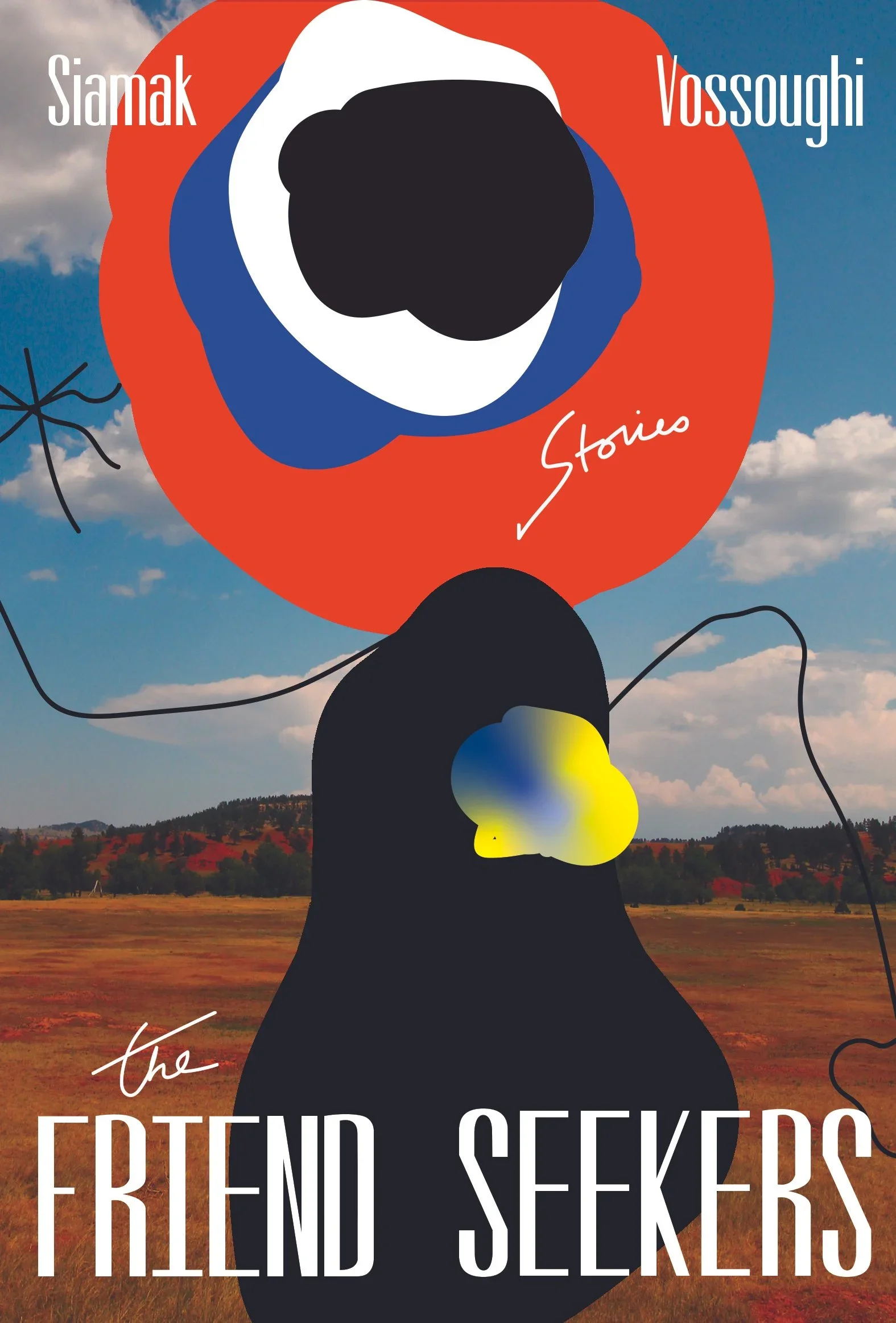
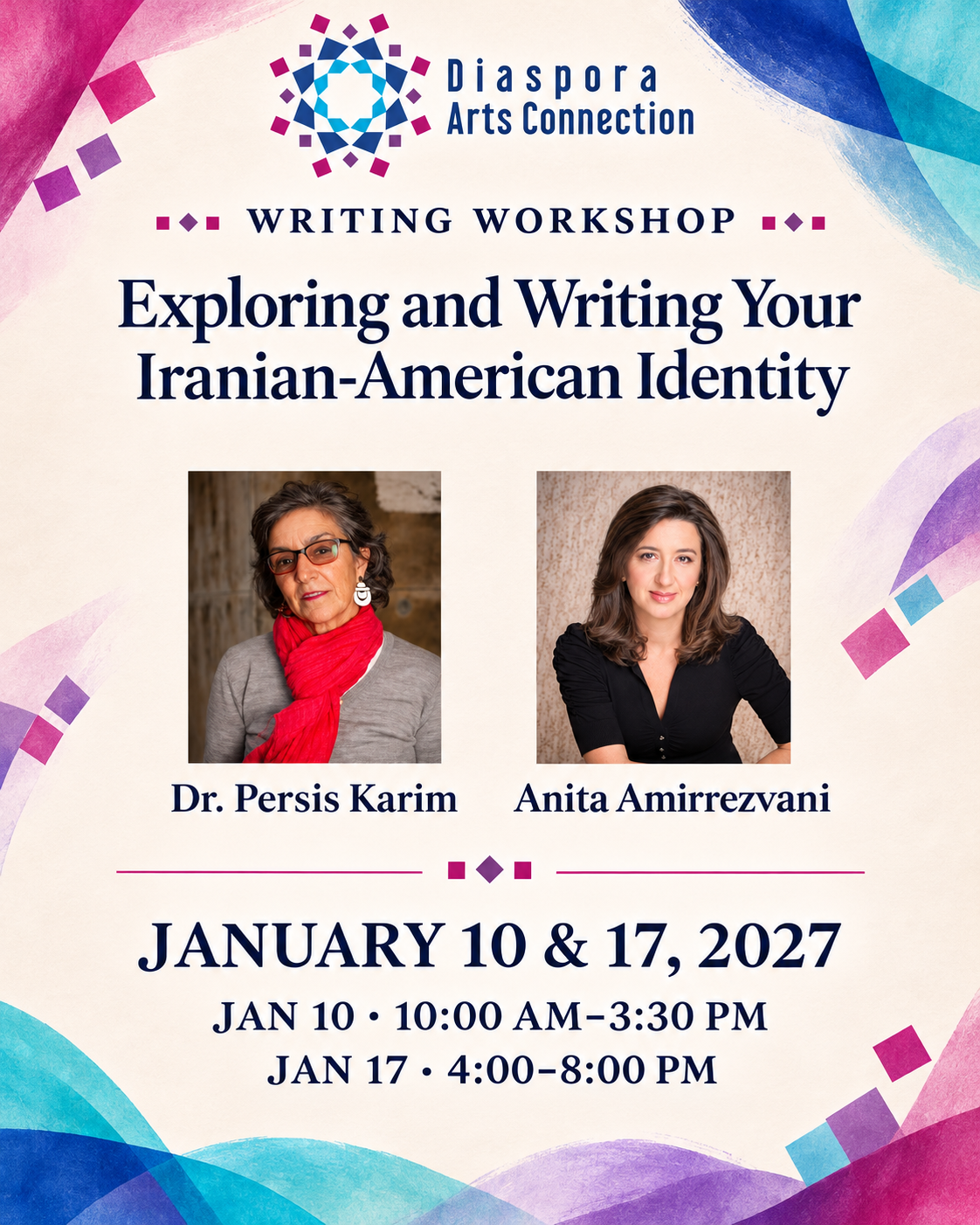
Flannery O'Connor Award-winning author Siamak Vossoughi reads from his Kirkus-starred story collection The Friend Seekers, exploring what it means to be both Iranian and American today. Vossoughi's previous collections—Better Than War (2014 Flannery O'Connor Award) and A Sense of the Whole (Orison Fiction Prize)—have appeared in Missouri Review, Kenyon Review, The Rumpus, and Columbia Journal.
A grand rounds lecture on crystalloid fluid resuscitation in pediatric sepsis, examining the PROMPT BOLUS trial's design, implementation, and results. Frances Balamuth, professor of pediatric emergency medicine at the Perelman School of Medicine, University of Pennsylvania, discusses historical data on fluid types in sepsis and the planning of large pragmatic pediatric trials. CME credit available.
A talk on stress-induced cardiac arrhythmias and the brain circuits that trigger them. Alexander R. Nectow, MD, PhD, Assistant Professor at Columbia University, will present research on heart-brain interactions, including identification of a multi-synaptic brain-to-heart circuit originating in the midbrain that is required for stress-induced ventricular tachycardia, and potential circuit-directed therapies.
An executive roundtable on U.S.-China relations and the strategic implications of recent APEC summit outcomes, with David Shullman, Vice President of the Asia Society Policy Institute, as part of the Seeking Truth Through Facts series.
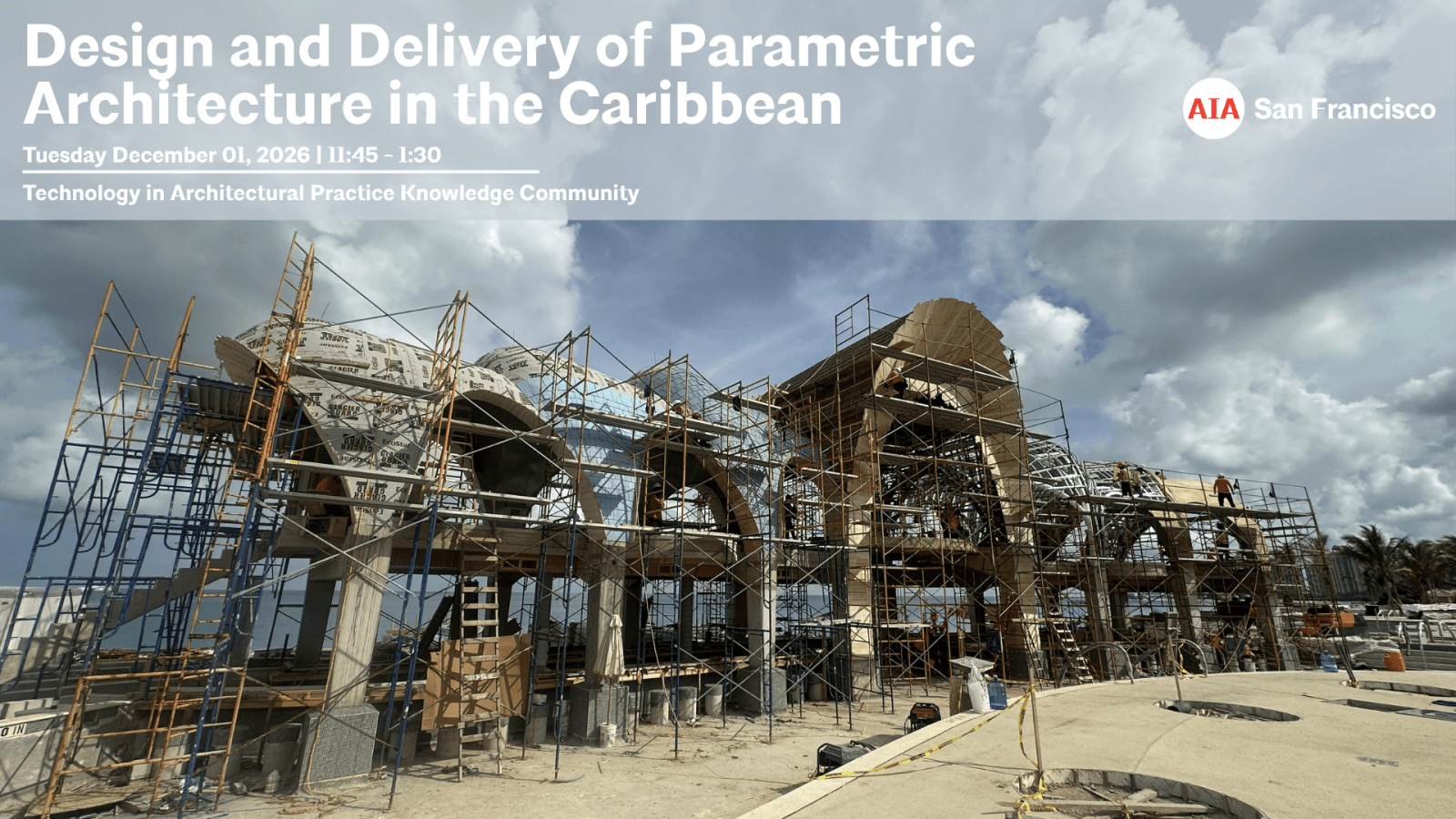
A behind-the-scenes look at designing and building the world's largest swim-up pool bar in Nassau, Bahamas — a project featuring a sweeping free-form canopy that required pushing the limits of design, coordination, and fabrication. Brendan Mullins, AIA of Stantec, walks through the canopy's evolution from concept to installation, revealing the digital workflows, rationalization strategies, and on-site problem-solving that turned complex geometry into reality. Learn practical lessons on protecting design ambition, managing risk, and coordinating architects, engineers, contractors, and specialty fabricators to deliver ambitious architecture on tight schedules and within technical constraints.
How do novels and AI language models construct worlds? Hannes Bajohr (UC Berkeley) explores the convergence of literary and computational world-making, drawing on Hans Blumenberg's theory of the novel and contemporary experiments with large language models. Bajohr examines how both fiction and LLMs generate narrative coherence through networks of relations, inferences, and expectations—and what their comparison reveals about machine understanding versus mimicry. Part of Stanford's German Studies Lecture Series.
A lecture on how parental rights became central to modern conservative political ideology. Julia Bowes, Lecturer at UC Berkeley, traces the historical roots of family-centered conservatism and its role in shaping 20th-century politics. Part of the CRG Forum Series.
A panel on emerging technologies and strategic stability, examining how developments since the Cold War—from autonomous systems to AI to hypersonics—challenge traditional assumptions of mutual deterrence and rational decision-making. The discussion covers three destabilizing dynamics: technologies that replicate nuclear effects, horizontal proliferation to new actors, and psychological impacts on crisis decision-makers. Panelists Herb Lin (Stanford Cyber Policy Center), Rose McDermott (Brown University), Jackie Schneider (U.S. Naval War College), and Harold Trinkunas (Stanford) explore whether adversaries can use these same tools to restore strategic balance. Based on their recent contributions to a special issue of the Texas National Security Review.
The culmination of Stanford's nine-week Big Earth Hackathon: Wildland Fire Challenge, where student teams showcase solutions to real wildfire problems submitted by CAL FIRE, the US Wildland Fire Service, PG&E, CONAF, and other agencies. The expo features lightning pitches from teams addressing early detection and fire suppression, ecosystem resilience, community risk reduction, and ignition reduction, alongside live demos and posters. Attendees will hear how Stanford is connecting wildfire innovation with practitioners and end-users.
An analysis of Taiwan's November 28 local elections—covering 10,000+ races from Taipei mayor to village chiefs—and what the results signal for Taiwan's political future. Speaker: Dr. Austin Horng-En Wang, associate professor of political science at UNLV and adjunct researcher at RAND, specializing in Taiwan politics and US-China-Taiwan relations. Moderated by Kharis Templeman, Research Fellow at the Hoover Institution and lecturer in East Asian Studies at Stanford.
A research seminar on the depths and dynamics of magma storage in oceanic intraplate volcanoes. Prof. Esteban Gazel of Cornell University presents new techniques using CO2-rich fluid inclusions in olivine crystals to constrain magma reservoir depths in near real-time—work informed by the 2021 La Palma eruption and ongoing studies of Cape Verde and Hawaiian volcanism. The research suggests that mafic explosive eruptions are sustained directly from the mantle by high CO2 concentrations that drive rapid ascent and increased explosivity.
Bring broken items to repair alongside engineering students and FixIt Coaches at this hands-on clinic hosted by USF's engineering freshman project class. Learn diagnostic and repair skills while working with tools and guidance designed to help you fix rather than discard your belongings. No experience needed; observers welcome. Hosted at the Innovation Hive.
A panel featuring Santa Clara University faculty across five disciplines — Jasmín Llamas (Counseling Psychology), Vanessa Erisuriz (Public Health), Emre Araci (Biomedical Engineering), Wilson Lin (Information Systems & Analytics), and Heather Turner (English) — discussing how their fields intersect with health research and practice. The event includes a Q&A and informal networking opportunity to explore cross-disciplinary collaboration and research partnerships.
Jo Dunkley, Joseph Henry Professor of Physics and Astrophysical Sciences at Princeton University and Spokesperson for the Simons Observatory collaboration, discusses the new millimeter-wave observatory in the Atacama Desert. The Simons Observatory is mapping half the sky at arcminute resolution to detect primordial gravitational wave signals from the early universe, measure cosmic microwave background fine structure, probe dark matter through gravitational lensing, and identify new transient millimeter-wavelength events. Dunkley, a Fellow of the Royal Society and veteran of NASA's WMAP and ESA's Planck satellite projects, will cover the observatory's current status and science plans.
A lecture on probabilistically checkable proofs (PCPs) and high-dimensional expanders, and how these two mathematical concepts intersect to improve error-correcting codes and proof verification. Speaker: Irit Dinur, faculty at the Weizmann Institute of Science and the Institute for Advanced Study in Princeton, a leading researcher in theoretical computer science and computational complexity. Dinur proved a landmark result on the PCP theorem in 2006 and is a recipient of the Gödel Prize (2019) and the ACM Paris Kanellakis Theory and Practice Award (2021). Part of the Simons Institute's Richard M. Karp Distinguished Lecture series. Refreshments at 3 p.m.
An author talk with Nina LaCour about her novel Meet Me in the Garden, a decades-spanning literary fiction exploring love, longing, art, and motherhood across the Great Migration. Set in 1944 New Orleans and 1950s Los Angeles, the novel follows Odette and her cousin Delphine as they navigate secrets, desire, and family bonds. LaCour is a bestselling author of picture books, young adult novels, and adult literary fiction; her novel We Are Okay was named one of TIME Magazine's Top 100 YA Novels of All Time. Copies of the book will be available for purchase.
A book talk on anticolonial development, examining the history of schooling, race, and emancipation in twentieth-century West Africa. Elisa Prosperetti will discuss her forthcoming Cambridge University Press work and its argument about how education functioned within and against colonial systems in the region.
A lecture on American modernism's engagement with cartography and empire. Aaron Nyerges, Senior Lecturer in American Studies at the University of Sydney, explores his new book *American Modernism and the Cartographic Imagination* (Cambridge UP, 2025), examining how modernist poets—including Langston Hughes, Ezra Pound, William Carlos Williams, and Iraqi poet Nazik al-Malā'ikah—used literary cartography to challenge and reimagine official geographies of US territorial expansion. The talk traces "counter-maps" as forms of geographic knowledge that resisted state and corporate mapping, with particular focus on oil extraction, imperial dominion, and anti-colonial poetics across the early twentieth century.
A screening of Funeral Parade of Roses, Matsumoto Toshio's 1969 surrealist classic, followed by discussion with local photographer and film enthusiast Tommy Milutin. The film plunges into Tokyo's drag and avant-garde nightlife—later influencing Kubrick—centering on Eddie's turbulent love triangle with rival diva Leda and club owner Gonda, creating a vivid portrait of desire and underground culture. In Japanese with English closed captions. 105 minutes.
A workshop exploring the environmental and social impacts of data center expansion across the Bay Area and strategies for collective action. Hosted by UC Berkeley's ACEJ in partnership with Frontline Catalysts, a youth power-building organization rooted in Oakland; the Local Clean Energy Alliance, which advances renewable energy and racial justice; and 350 Bay Area, a grassroots climate movement. Participants will build community knowledge, share experiences from frontline neighborhoods most impacted by environmental racism, and explore pathways toward a more just and sustainable energy future.
A book launch by Harjant S. Gill, professor of anthropology at Towson University and award-winning documentary filmmaker, discussing his ethnographic study *Coming of Age in Macholand* (University of Chicago Press, November 2026). Based on four years of fieldwork in Indian Punjab, Gill examines how boys learn to become men within patriarchal systems shaped by violence, migration, and economic change—and how patriarchy constrains not just women and queer people, but also men's emotional and intimate lives. The event is moderated by Lawrence Cohen, professor of anthropology and South & Southeast Asian studies at UC Berkeley.
A screening of My Father and Qaddafi with director Jihan Kikhia. The documentary follows Kikhia's journey to uncover the truth about her father, Mansur Rashid Kikhia, Libya's Foreign Minister and UN ambassador who defected from Qaddafi's regime and disappeared in Egypt in 1993. Through personal memories, family interviews, and archival footage, the film traces how her mother pursued justice across decades, ultimately discovering his body 19 years later after the regime's fall. Kikhia explores her father's life and Libya's political history as lived experience rather than distant politics, weaving together a portrait of family and nation.
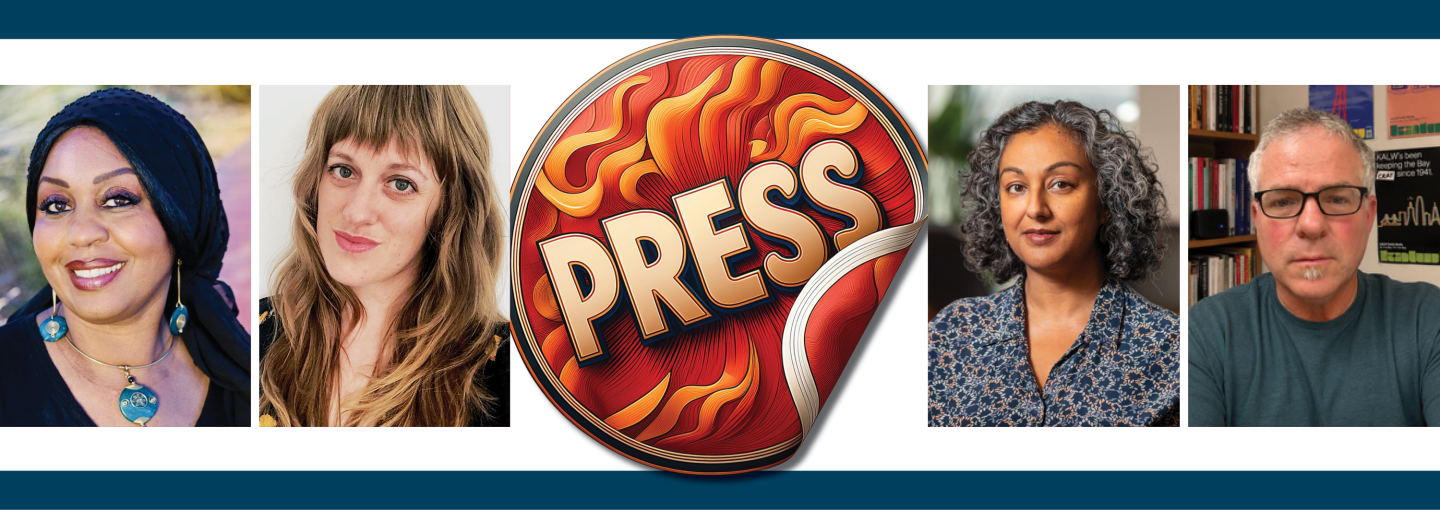
What role should local media play as civic infrastructure? At a moment when local journalism is shrinking and public trust erodes, how can media rebuild community connection, representation, and shared belonging? Hana Baba (host of KALW's 'Crosscurrents' and Radiotopia's 'The Stoop'), Nuala Bishari (cofounder of Coyote Media Collective), and Tasneem Raja (editor-in-chief of The Oaklandside) discuss rethinking media's function in civic life. Moderated by James Kass, executive director of KALW Public Media.
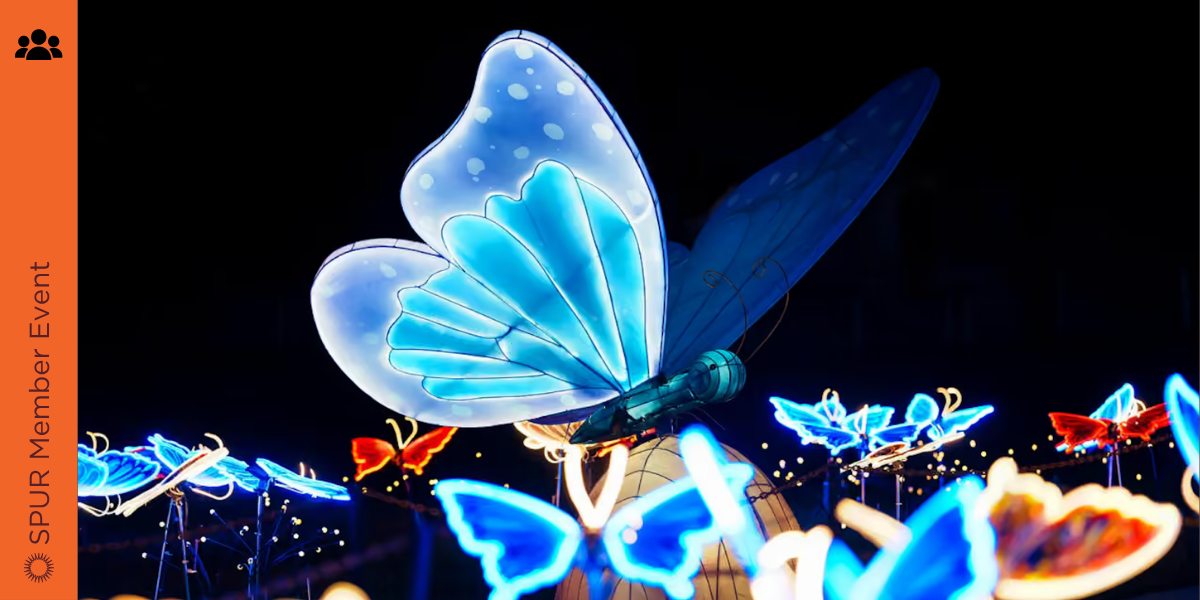
What makes a downtown feel vibrant and welcoming? Join SPUR for a member outing to San José Holiday Lights, an immersive public art and light experience featuring six themed worlds of illuminated installations and seasonal festivities. The tour explores how creative lighting and local artists can transform public spaces, attract visitors, and bring downtown to life—a tangible case study in urban placemaking and cultural revitalization.
Part 2 of a casual philosophy series featuring unstructured ethics discussions with possible AI safety implications. Participants will explore where value comes from and debate objectivism versus relativism in a friendly but challenging format. Hosted by Ran Sun at Mox, a coworking community space.
A screening of the intergenerational documentary Never the Last Love Letter, which explores HIV/AIDS resistance and organizing in Santa Cruz during the 1980s–1990s within LGBTQ+ and harm reduction communities. Following the screening, a panel discussion with local organizers and activists addresses how to meet the current political moment and build community power. Hosted by The Diversity Center and the Santa Cruz Museum of Art & History in honor of World AIDS Day.
A festive evening honoring the 35-year career of UC Santa Cruz professor Bruce Thompson, a legendary educator in History, Literature, and Jewish Studies who has taught over 10,000 students since 1991. Bruce will deliver a capstone lecture, 'My Lucky Career: Thirty-Five Years of Teaching at UCSC,' reflecting on his time as a mentor and scholar. The evening concludes with a reception celebrating his impact. The event also launches a new endowment supporting undergraduate student research in History, Jewish Studies, and Literature. Presented by The Center for Jewish Studies at UC Santa Cruz.
A monthly emergency preparedness series co-hosted by the City of Mill Valley Emergency Preparedness Commission, Southern Marin Fire District, and Neighborhood Response Groups. This session focuses on assembling and updating your emergency go bag to prepare for wildfires, atmospheric rivers, power outages, and other local hazards. Local first responders, government officials, and active community members lead the discussion on practical disaster-readiness strategies relevant to the time of year and recent incidents.
Award-winning author Cara Black discusses her historical fiction novel Huguette, inspired by real events in postwar France. The novel follows a young pregnant woman forced to reinvent herself while evading her father's enemies. Black, author of 21 books in the bestselling Aimée Leduc series and WWII thrillers including Three Hours in Paris and Night Flight to Paris, has won the Médaille de la Ville de Paris and multiple Anthony and Macavity Award nominations.
Six energy professionals share summer experiences working on the energy transition across startups, research, policy, advocacy, and industry. They'll discuss their projects, why the work matters, and how to pursue similar opportunities. The seminar includes interactive breakout sessions designed to inspire and guide attendees exploring pathways into the energy sector.
A 1930s Hollywood-themed evening celebrating audiobook narrator and publisher Daniel Henning, a three-time Audie Award finalist and narrator of over 300 audiobooks including TJ Klune's The House in the Cerulean Sea. Henning will discuss Queer People, Carroll and Garrett Graham's 1930 satire of early Hollywood that he is rescuing from obscurity—a gin-soaked romp through the studios and starlets of the Jazz Age written by two industry insiders. Attendees are invited in cocktail attire for an evening evoking a 1930s movie palace.
A screening of the oral history film 'How Did You Find Bolinas?' by Marc Sanchez and StuArt (2005), followed by a Q&A with the filmmakers. The film explores the history and community of Bolinas through interviews and personal narratives.
A creative writing workshop for people navigating puberty and perimenopause simultaneously. Led by Ali Lawrence of Four Chambers Writing, this session uses poetry and free writing as tools to explore the physical and emotional terrain of bodies in transition—parenting a pubescent child while your own shifts beneath you. No writing experience needed; bring a pen, paper, and something unsaid. Expect a brave space for laughter, tears, and honest expression.
A live demo night showcasing builders working with Deepgram's voice AI platform. See real-time AI avatars, voice video games, dictation tools for authors, accessibility tools for blind users, talking robots, and voice agents in action. The event features curated demos at 6:30 pm, followed by an open mic where anyone building with Deepgram can take five minutes to present their project—polished or experimental. Attendees can interact with the demos, play them, and meet the builders. Remote demos welcome.
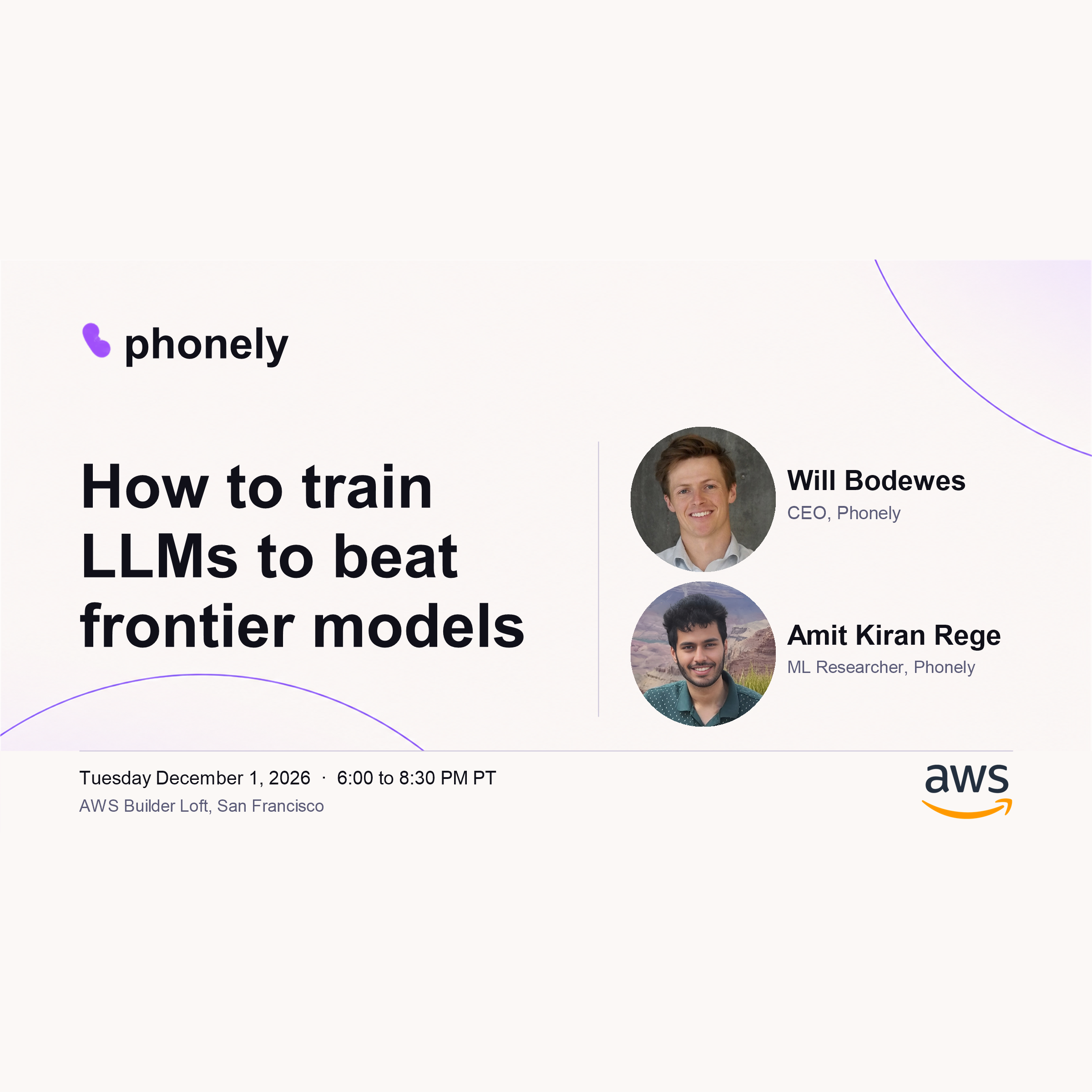
Learn how to fine-tune a small language model to match frontier-model performance on real-world tasks. Will Bodewes and Amit Kiran Rege from Phonely walk through their approach to transforming messy production phone-conversation data into a training set, running fine-tuning on AWS GPUs, and building evaluations that measure whether the model actually improves. Covers dataset cleaning, detecting failure modes, and deciding what to change next. Designed for ML engineers, AI practitioners, and technical founders.
Evan Sharp, co-founder of Pinterest, discusses his experience building one of the web's most influential social platforms. The Berkeley Forum, UC Berkeley's student-run speaker series, hosts a moderated conversation followed by audience Q&A.
A community conversation on how artificial intelligence is enabling scam and fraud, and what broader harms this represents. Participants will watch a video, discuss the issue together, and explore what a good AI future looks like for the community. Hosted by the Los Altos Library in partnership with the AI Safety Awareness Project.
Bonus Round Doors at 6:30pm, show at 7:30pm VIP tickets have reserved seats. General admission seats are first come, first served. 21+ ___ What is Curiosity Guild? We're a community of storytellers who illuminate and investigate the curious corners of history through public talks that celebrate the wonderfully weird. Talks are nearly monthly, 21+ Learn more and see this year's event lineup at: curiosityguild.org
Dr. Joseph Howlett, Senior Reporter at Scientific American and former particle physicist at Columbia and Stanford, explores the surprising scientific insights hidden in pasta. For over a century, physicists have used spaghetti as a tool to understand profound concepts—from undersea cables to fundamental matter. Howlett blends humor with cutting-edge science to reveal how everyday phenomena intersect with cosmic mysteries. Hosted at Lectures on Tap, a bar-based science series.
An interactive hands-on workshop on mushroom identification and foraging with Carrie Staller of Fork in the Path. Learn to identify edible varieties like chanterelles, morels, and porcini, and distinguish them from poisonous species. Participants will examine and handle specimen mushrooms. Fork in the Path offers forest-to-table learning programs across Northern California focused on foraging and seasonal wild food.
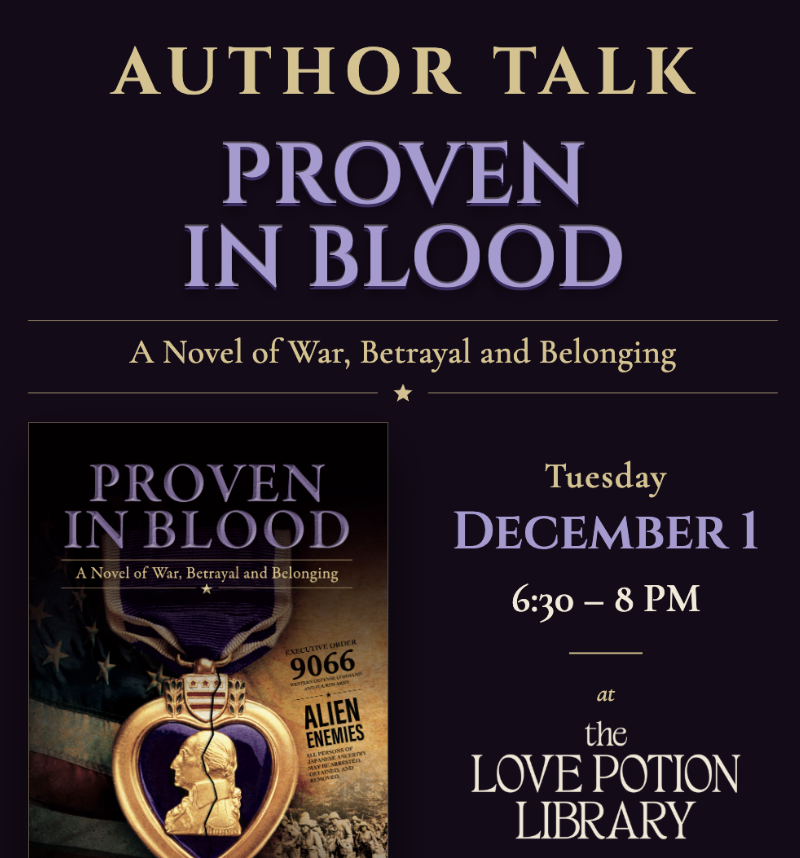
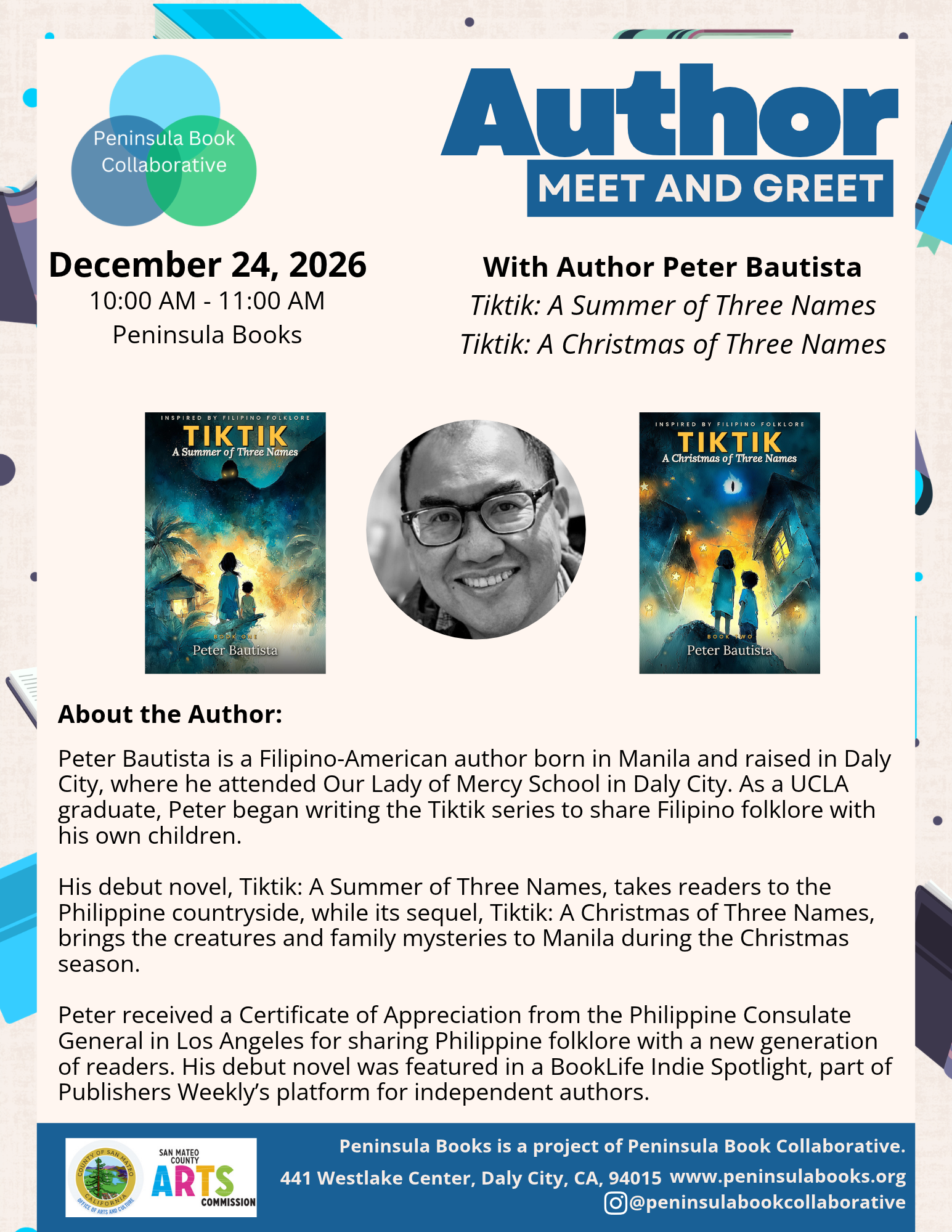
Chris Cheng, champion of History Channel's Top Shot, discusses his debut novel Proven in Blood, an epic work of historical fiction inspired by the extraordinary legacy of Japanese American soldiers in World War II and their families interned during the war. Cheng painstakingly researched the novel through years of archival study, battlefield visits across Italy and France, and conversations with veterans, historians, and family members. Meet the author and purchase a signed copy.
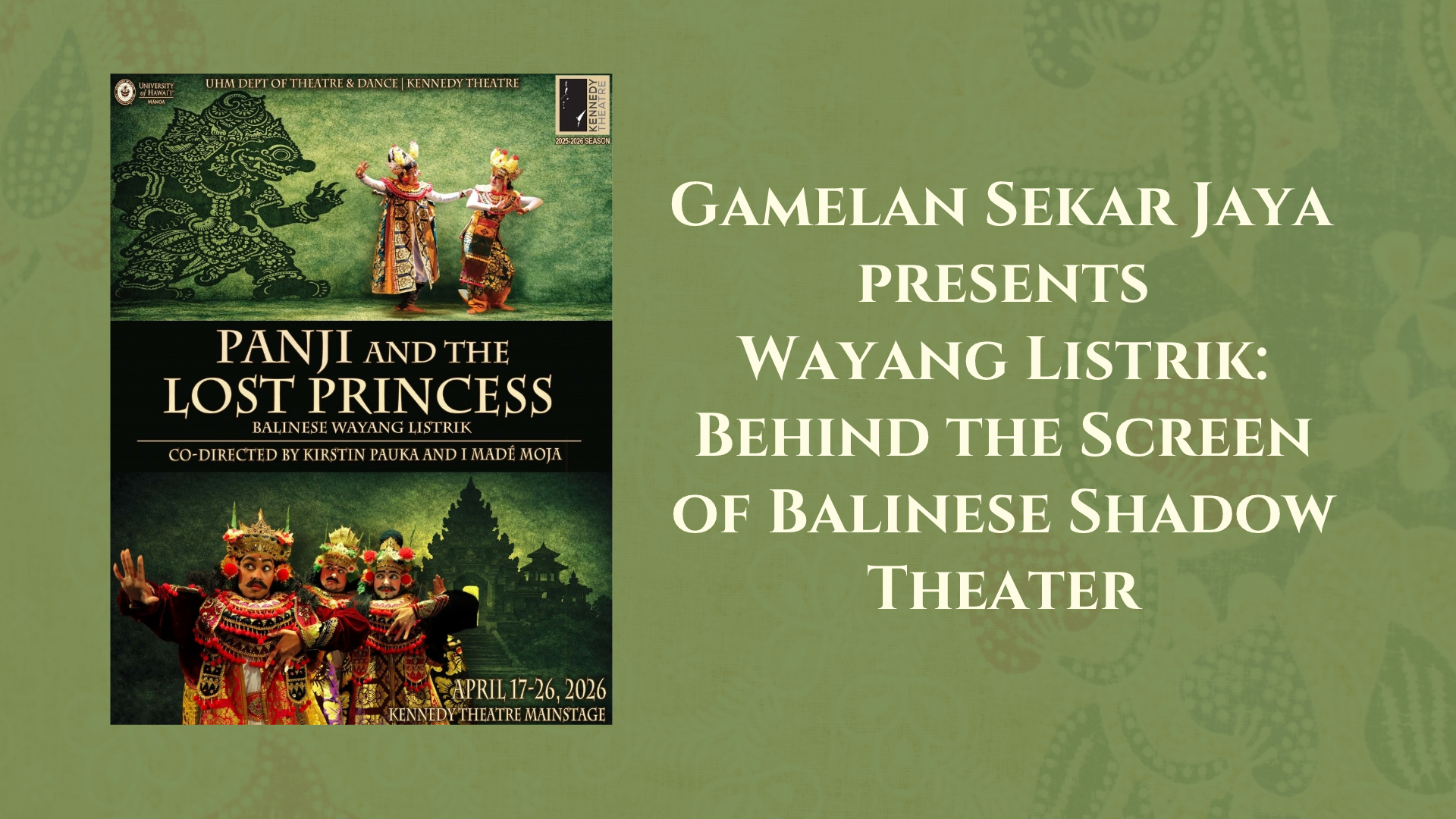
A hybrid live performance, film screening, and artist talk exploring Balinese shadow theater (wayang listrik). Gamelan Sekar Jaya and I Madé Moja present traditional shadow puppetry alongside a demonstration of the form's techniques and history.
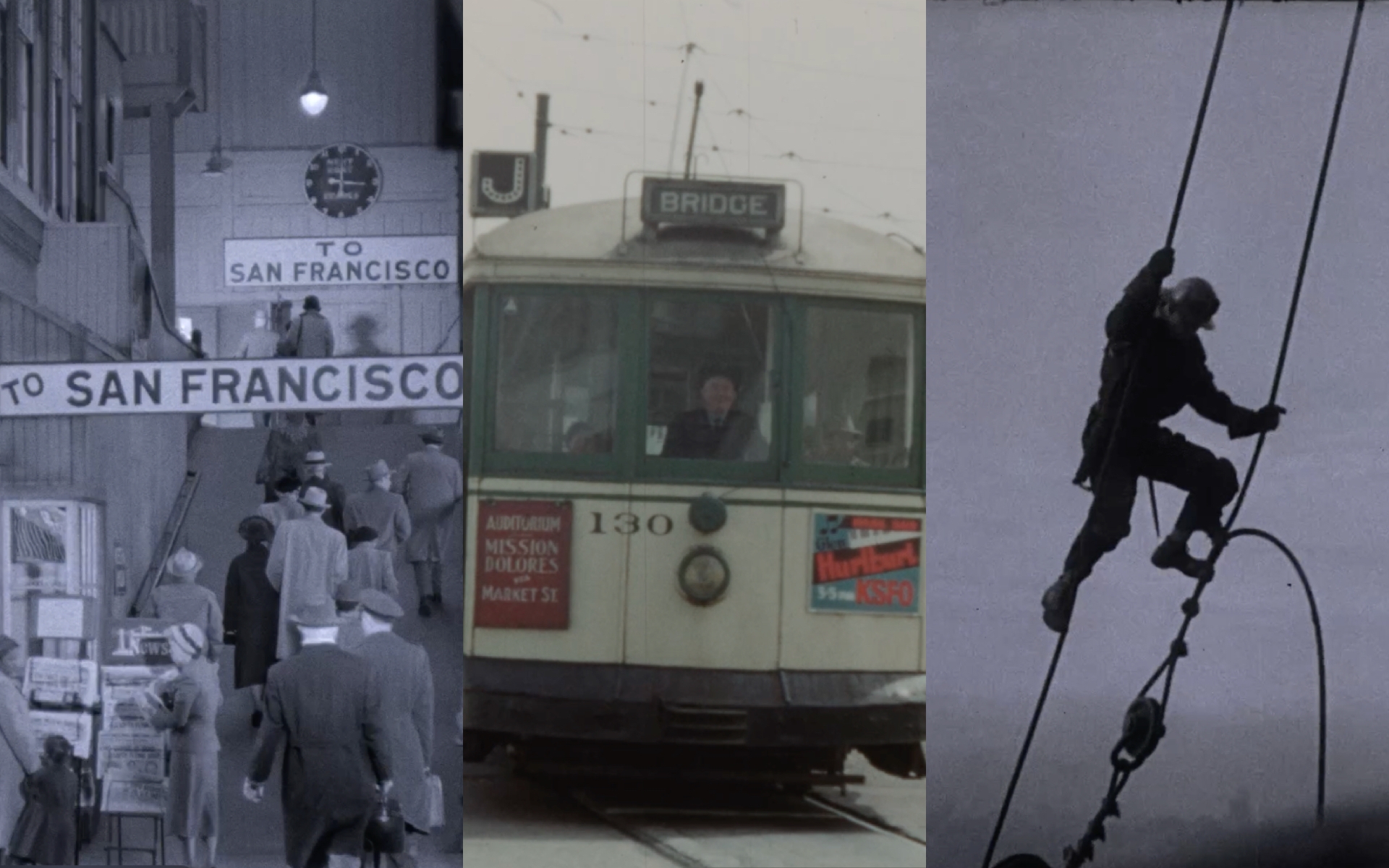
Rick Prelinger presents Lost Landscapes 02026, an annual found-footage film collage recreating everyday life, hidden infrastructures, and pivotal historical moments across San Francisco and beyond. Drawing from the Prelinger Archives' vast collection of home movies, government films, industrial footage, and feature outtakes, the program explores transportation systems, community resilience, unfamiliar views of familiar places, countercultures, and street moments. Prelinger is founder of the Prelinger Archives and co-founder of Prelinger Library, a public research collection serving artists, historians, and researchers. Proceeds support the library's annual budget.
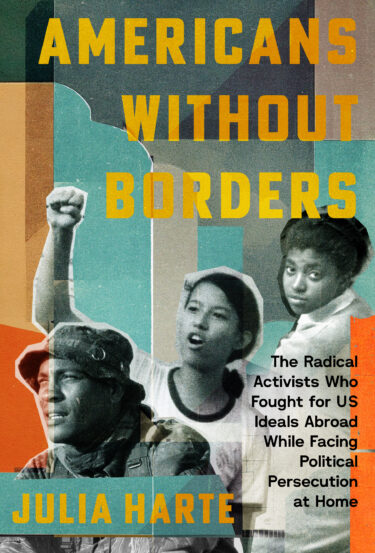
Investigative journalist Julia Harte explores the hidden history of American citizens who fought against imperialism and dictatorship abroad, only to face government persecution at home. Inspired by her distant cousin Sheldon Harte—killed during a 1940 attack on Trotsky's compound in Mexico City—Harte chronicles two centuries of Americans in revolutionary movements, from 19th-century Greek independence fighters to modern solidarity activists in Palestine. She profiles African American volunteers in the Spanish Civil War, a Jewish American who helped the Black Panthers in Algeria, Filipino organizers against Marcos, and Native Americans in Nicaragua's Sandinista conflict. Through meticulous research, she interrogates how U.S. officials branded these activists as threats via surveillance, blacklists, and prosecution—and what makes a "radical."
A poetry reading and book launch featuring Jen Siraganian for her debut collection *Everything Has Been Moved, Even the Dead*. Joined by poets Tongo Eisen-Martin, Nancy Miller Gomez, and Christin Rice. Hosted at Green Apple Books.
Author David Perlis discusses his memoir *Morning in Marin: Zen, Drugs, and Ewoks on the California Coast*, a deep dive into spiritual seeking, psychedelic exploration, and counterculture on the California coast.
A screening of Assembly, a new film by award-winning filmmaker and multidisciplinary artist Rashaad Newsome, followed by a Q&A with Newsome. The film documents Newsome's transformation of a historic military facility into a Black queer utopia, blending art, artificial intelligence, and performance to explore creativity's power to build community solidarity and liberation. Part of UC Santa Cruz Film and Digital Media's Visiting Artists Series.
Following the film, host Peaches Christ will conduct a live Q&A with director Ingram on the documentary's legacy, behind-the-scenes stories, and how queer safe spaces have evolved since its release. A screening of Small Town Gay Bar, Malcolm Ingram's 20-year-old documentary about LGBTQ+ resilience in rural Mississippi, presented in a new 4K restoration.
Dr. Eli Cook of the University of Haifa examines the factors behind the Democrats' dramatic victory in the US midterm elections and its implications for American politics and US-Israel relations. The lecture analyzes the "blue tsunami"—including Trump's declining popularity, inflation, corruption, and the Iran conflict—and explores shifts in America's political landscape. Cook then addresses potential consequences for Israel: future US aid, additional sanctions, AIPAC's role in American politics, and strategies for Israel to strengthen its standing with US policymakers and the public. In Hebrew.
This session: February 14, 2027. An exhibition of final posters from Stanford students in Religion in Anime and Manga (IntroSem Religst 6N), exploring religious ideas and imagery in anime and manga works including Demon Slayer, Your Name, and Neon Genesis Evangelion. The opening reception is Wednesday, December 2, 10:30–11:30 am, in Room 224 of East Asia Library. The exhibition runs through February 14, 2027.
Lightning talks and panels on how AI agents, open-source innovation, and security are shaping next-generation products. Hosted by Founders Bay (a 200,000-member community of founders, executives, investors, and operators), 1Password, and You.com, the event brings a builder-focused perspective on the intersection of AI development and product strategy. Features a Tesla vehicle experience.
A dissertation defense on inclusive design for neurodivergent youth. Presenting researcher Aleksandrina Kobenova advances a philosophy of joyful learning grounded in the Affirmative Model of Disability and Flourishing HCI, resisting ableist therapeutic paradigms that prioritize "behavior deficits" over autonomy and well-being. The work introduces the Joyful Extended Reality (XR) framework—a set of inclusive design principles—evaluated across three immersive systems: a room-scale motion-capture mixed-reality environment for autistic children, a narrative VR space for emotional literacy and grief processing, and an immersive game for environmental problem-solving. Findings demonstrate how instructional structures can be decoupled from adult coercion and embedded into play-centered, self-directed exploration.
French explorers, diplomats, and fortune seekers witnessed and documented California's transformation during the Gold Rush era. Drawing on travel accounts, letters, journals, and drawings from French archives, historian Claudine Chalmers traces how these French-speaking "Argonauts" recorded the unruly excitement of San Francisco, the hardships of mining camps, and the cultural encounters of a rapidly changing society. Their European perspective offers a distinctive complement to earlier French diplomatic accounts, revealing a French presence in the American West far richer than commonly remembered. Chalmers, an independent researcher born in Cannes, has spent decades recovering the stories of artists, explorers, and adventurers from archives in France and the United States. Moderated by Susan Maslan, Associate Professor of French at UC Berkeley.
Join Elaine and the Book Passage staff for an annual celebration of their favorite picks across all genres for the holiday season. The booksellers will share their best-of-the-best recommendations to guide your seasonal reading.
Chris Benz, MD, professor at the Buck Institute and UCSF, discusses the latest findings on cancer prevention, detection, and treatment, drawing on four decades of translational research in medical oncology and his clinical practice caring for breast cancer patients. Benz will explore molecular strategies improving cancer diagnostics and therapeutics, with particular focus on aging as the primary cancer risk factor. Part of the Buck Institute's Live Better Longer Seminar Series on geroscience and healthy aging.
A dissertation talk on enforcing least privilege in cloud infrastructure. Cloud services typically receive broad access to developer resources, creating security vulnerabilities exploited in attacks like ShadowRay and the Capital One breach. Samyukta Yagati presents Skydentity, a system combining proxy-based design with cryptographic protocols to enforce least privilege on third-party workload orchestrators by separating resource management from data access capabilities. The talk demonstrates how Skydentity mitigates real-world attacks on EC2 and extends these principles to service chains.
A lunch talk examining how Hmong refugees in the United States practice both shamanism and biomedicine, and what this reveals about anthropological theory, colonial legacies, and human-nonhuman entanglements. Quincy Yangh, a doctoral student in anthropology at UC Santa Cruz and child of Hmong refugees, discusses ethnographic vignettes from his dissertation fieldwork, introducing "ethnographic shamaning" as a method that positions Hmong shamans as co-theorizers alongside ethnographers. The collaborative format invites participants to engage with preliminary research on how shamans, biomedical professionals, patients, spirits, and landscapes intersect in refugee healing.
A discussion of *Milk in an Eggshell*, a 2026 memoir compiled by Miryam Sas (UC Berkeley, Comparative Literature and Film & Media) from her grandmother Ela's wartime testimony. Ela, a young Jewish lawyer in Poland, survived Nazi persecution by removing her yellow Star of David and hiding her identity and young daughter by posing as Christian. Through Ela's stories and the granddaughter's search for family secrets—including a brother given away at birth because of Down syndrome—the book explores survival, authoritarianism, empathy, and healing across generations.
An Earth & Planetary Sciences seminar on using engineered microbes to extract critical elements from ultramafic minerals while sequestering atmospheric carbon. Prof. Esteban Gazel presents research on how an engineered strain of Gluconobacter oxydans accelerates weathering of olivine and enstatite at low temperatures, simultaneously bioleaching nickel and other energy-critical elements needed for battery storage while enabling magnesium oxalate precipitation for long-term carbon dioxide removal. The work addresses dual challenges: scaling production of rare minerals without geologic timescales, and developing carbon-negative extraction pathways.
A conversation on the global HIV treatment revolution and future directions, featuring Dr. Meg Doherty of the World Health Organization, Ambassador Eric Goosby, and Dr. Diane Havlir, moderated by Dr. Monica Gandhi of UCSF. The discussion spans decades of progress in expanding antiretroviral access worldwide and emerging challenges in treatment innovation and equity.
A seminar on plant thorns as defensive structures, focusing on their development and role in citrus disease resistance. Vivian Irish explores how thorns arise from axillary shoot apical meristems and their implications for citrus breeding and agricultural resilience.
Bill Robinson, MD, PhD, Stanford's chief of immunology and rheumatology, discusses the triggers of autoimmune diseases — rheumatoid arthritis, lupus, and multiple sclerosis — and how his research is being translated into next-generation diagnostics and therapies. Part of the Stanford Department of Medicine's Grand Rounds lecture series.
A lecture on how U.S. geopolitical decisions—including USAID's dismantling and military actions affecting the Strait of Hormuz—are shaping child health and survival in Africa. Dr. Ruth Gibson, Founding Executive Director of Stanford's Geopolitical Human Impact Research Lab, presents research modeling the cascading effects of these decisions on food security and nutrition in the Sahel during the 2027 growing season, and outlines policy options to avert humanitarian catastrophe. The talk draws on health modeling, open-source intelligence, and international law to connect geopolitical crises to human outcomes.
A lecture on the science and strategy of human-centered automation—designing machines and systems that augment rather than replace human capability. The talk explores how organizations can approach automation thoughtfully, balancing efficiency with workforce impact and ethical considerations.
How do AI systems designed to evaluate and 'improve' human speech actually work—and what harm do they cause? Nicole Holliday, Associate Professor of Linguistics at UC Berkeley, presents findings from three studies on Socially Prescriptive Speech Technologies (SPSTs), showing that these systems evaluate speech without regard for linguistic principles or speakers' sociolinguistic expertise. Because they reproduce biases in their training data and operate without transparency, they systematically misevaluate speech from marginalized groups—with real consequences for employment, speech therapy, and policing. A talk on algorithmic discrimination through the lens of language.
Artist Chanell Stone presents work examining the racialized body as a geographic site and embodied history. Working in self-portraiture, film, and poetry, Stone traces migration and cultural memory across the American South and metropolitan cities, unearthing histories of erasure and creating new articulations of female subjectivity through the intersection of lyricism and abstraction. Her work has been featured in The New York Times, NPR, and Aperture, with exhibitions at the San Diego Museum of Art, Carnegie Museum of Art, and SFMOMA. Hosted by the Center for Cultural Studies at UC Santa Cruz.
A screening of how intimate lives and forgotten literary alternatives can unsettle the familiar stories Israel tells about itself. Israeli novelist and literary scholar Lilah Nethanel (Senior Lecturer, Department of Literature, Bar-Ilan University) explores Hebrew literature's approach to home, land, desire, language, and belonging through her novels *The Tired Ones* and *Works and Days*, and her study *The Last European-Hebrew Writer*, which recovers two possibilities for modern Hebrew culture—a European-Hebrew literature centered in Warsaw and a Hebrew-Arabic literature emerging in Ottoman Jerusalem. In conversation with Yael Segalovitz (Helen Diller Institute Visiting Professor, UC Berkeley; Assistant Professor, Ben-Gurion University of the Negev).
How did Earth's massive moon, Mars's tiny moons, and Saturn's icy rings form? Jacob Kegerreis, a planetary scientist, explores violent collision scenarios across the solar system using high-resolution smoothed particle hydrodynamics simulations. He examines competing origin hypotheses—including a giant impact model for Saturn's unexpectedly young rings and a disruptive partial capture mechanism for Mars's moons—and extends these findings to exoplanets. His work shows how giant impacts might create proportionally massive moons around super-Earths and mini-Neptunes, with implications for habitability beyond Earth.
Explore the voices and legacies of Jewish women singers across millennia—from biblical Miriam to contemporary artists like Barbra Streisand, Carole King, and Pink. This lecture examines how Jewish women have composed, performed, and preserved tradition through popular music, folk, theater, and protest, asking who gets to claim a voice in Jewish cultural memory. Led by Rabbi Batshir Torchio, Senior Jewish Educator at the Jewish Community Center of San Francisco, and follows the earlier lecture 'Vashti to Ginsburg: A Tradition of Jewish Female Resistance.'
Following the November 2026 midterms, experts assess the future of U.S. policy toward the Korean Peninsula under the second Trump administration. The panel examines OPCON transfer debates, military burden-sharing, nuclear submarine deployments, Washington's balancing act between Seoul security commitments and potential Pyongyang diplomacy, and how the administration's trade and economic security agenda will reshape U.S.-ROK relations and regional stability. Speakers: Michael L. Beeman (Loyola State University), Mark Lambert (Stanford APARC China Program), and Sydney Seiler (CSIS Korea Chair).
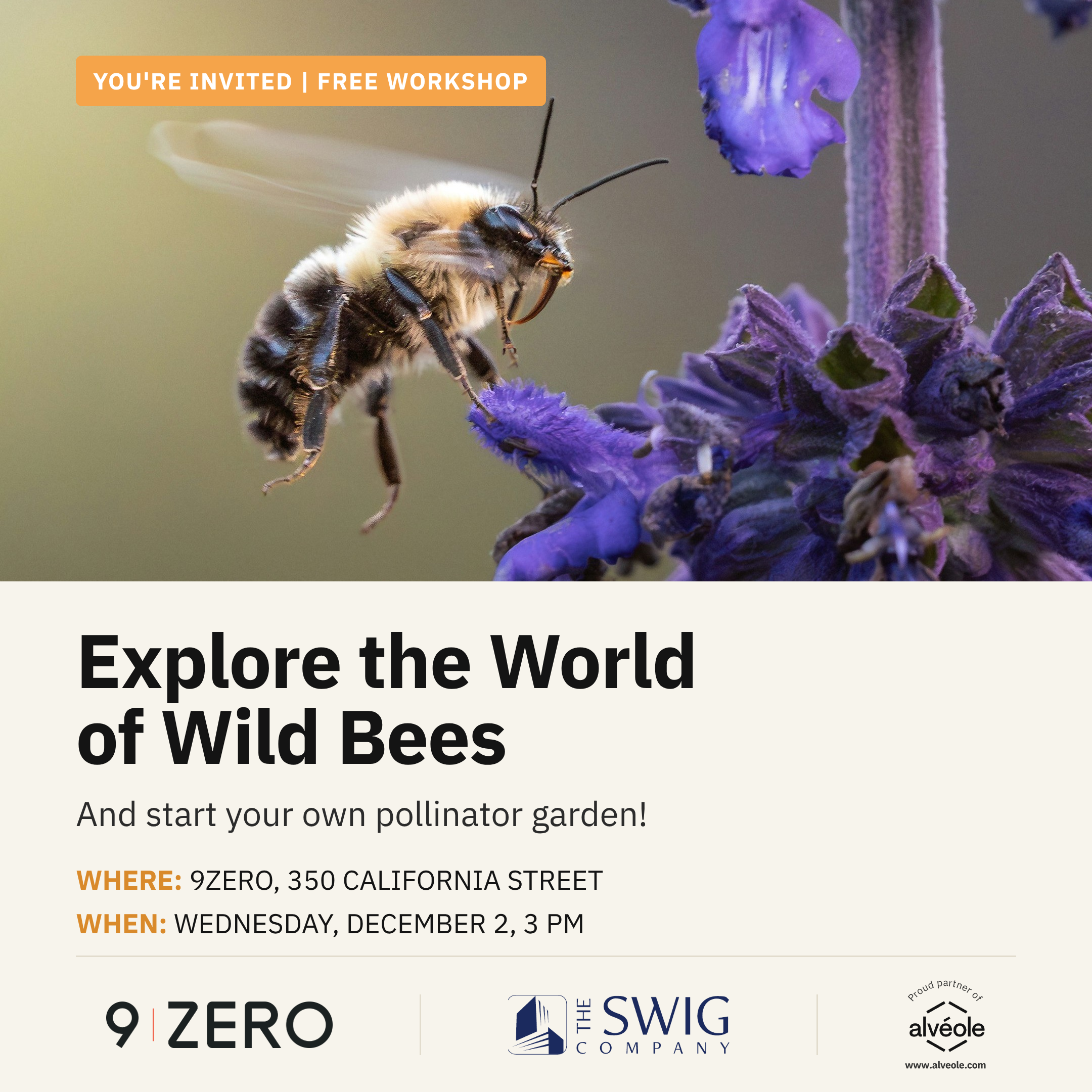
A hands-on workshop on wild bee species native to the Bay Area, led by Alvéole, the team that maintains beehives on the roof of 350 California Street. Learn about bumble bees, carpenter bees, mason bees, and leafcutters, how wild bee homes provide nesting habitat, and how to build a pollinator garden. The session includes a short presentation, habitat discussion, gardening tips, and a hands-on activity to create a bee-friendly seed mix to take home.
Luis Flores, Assistant Professor of Sociology at UC Berkeley, presents research on the regulatory and social politics of home-based moneymaking—examining how previously stigmatized informal economic practices became increasingly popular. His work addresses economic inequality and the intersection of informal work with urban and regional development.
A talk on scaling power electronics through piezoelectric energy storage. Jessica Boles, Chenming Hu Assistant Professor in UC Berkeley's EECS Department and Co-Director of the Berkeley Power and Energy Center, explores how piezoelectric resonators can unlock miniaturization in power electronics—addressing a key bottleneck in transportation, energy systems, aerospace, computing, and healthcare. She will discuss circuit topologies for resonator-based converters, piezoelectric component design including isolated transformers and overtone resonators, and how these strategies enable high-performance power electronics at smaller scales.
How can science guide California's response to catastrophic wildfires? Steven Ostoja, director of USDA's California Climate Hub and research scientist at the Agricultural Research Service, explores decision-relevant solutions spanning forest management, beneficial fire, community planning, and postfire recovery. Drawing on leadership from California's Wildfire Science Synthesis and the 5th National Climate Assessment's Western Wildfires focus, he examines how scientific evidence can inform fuel treatments, home hardening, reforestation, and ecosystem protection. Ostoja also discusses the role of collaborative science in translating complex findings into practical guidance for decision-makers building resilience across California's landscapes.
A seminar on how the kidney independently regulates potassium and sodium balance, resolving a longstanding puzzle in physiology. The speaker will present evidence for an mTORC2-dependent signaling pathway that selectively stimulates potassium secretion independent of aldosterone, while aldosterone continues to regulate sodium reabsorption—explaining how a single hormone can regulate two distinct homeostatic processes without apparent conflict.
A screening of 'The Last Christian in Bethlehem,' a documentary examining the pressures facing Palestinian Christians in the West Bank under Israeli military occupation, settlement expansion, and economic hardship. Award-winning director and producer Stephen Talbot will participate in a discussion following the film. Presented by USF Middle Eastern Studies in collaboration with University Ministry, the Swig Program in Jewish Studies & Social Justice, USF Politics Department, and the USF Institute for Nonviolence and Social Justice.
Roland Betancourt (Chancellor's Professor, UC Irvine and Andrew W. Mellon Professor at the National Gallery of Art) and T.L. Taylor (Professor of Comparative Media Studies, MIT) discuss Betancourt's book *Disneyland and the Rise of Automation*. The book argues that theme park rides function as factory assembly lines that manufacture subjects rather than products, tracing technological systems from limit switches and relay racks to programmable logic controllers—innovations developed for wartime manufacturing and Cold War industry that found new life at Disneyland. The conversation explores the aesthetics of automation and the politics of labor through the lens of technology history, media scholarship, and visual culture.
Leonidas Guibas of Stanford University speaks on AI and data-driven methods in science. Part of a weekly seminar series examining how artificial intelligence and computational approaches are reshaping scientific discovery and research across disciplines. Organized by Emmanuel Candès, Balasubramanian Narasimhan, Brian Wandell, and Gordon Wetzstein.
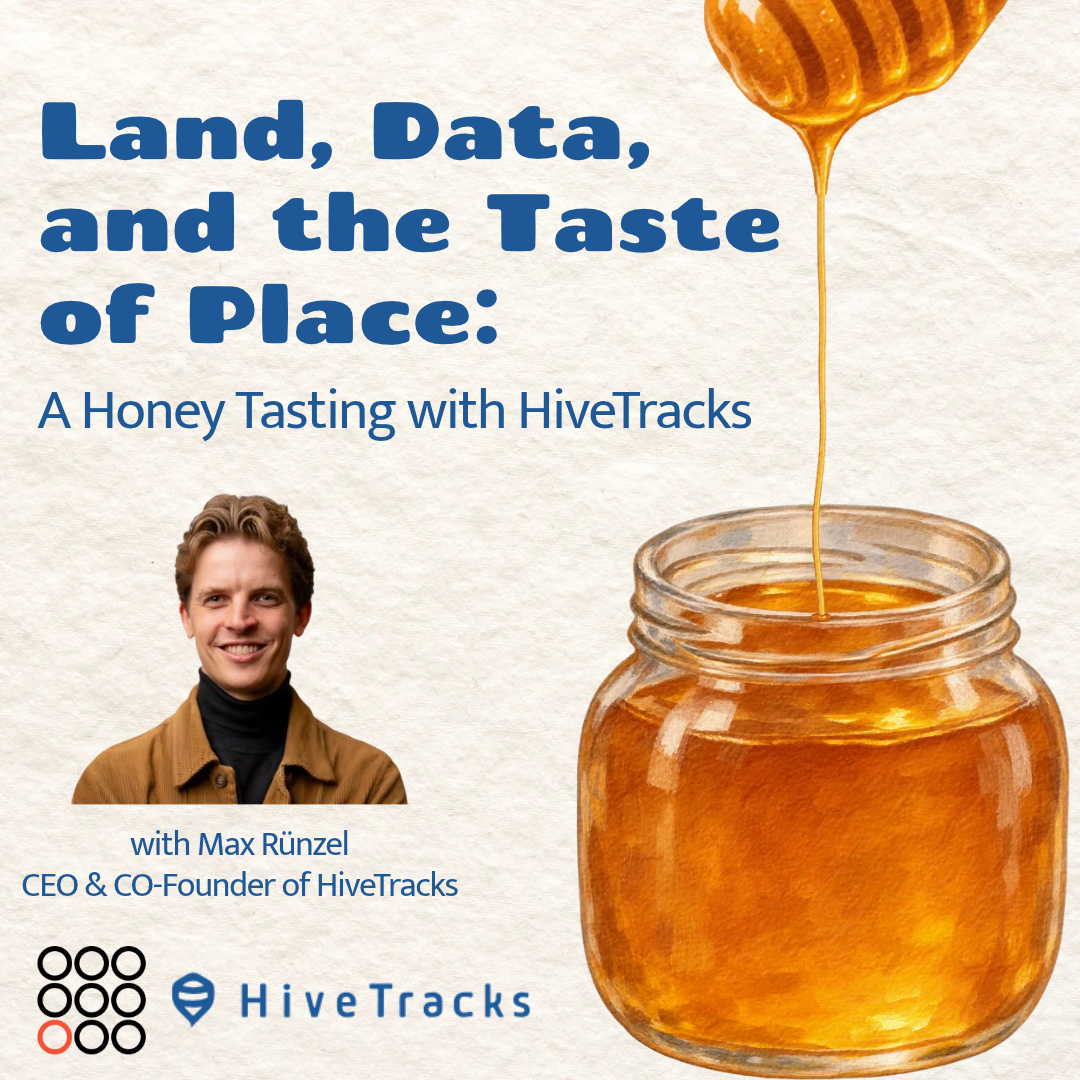
A honey tasting and conversation with Max Rünzel, Co-Founder and CEO of HiveTracks, exploring how flavor reflects landscape and how ground-truth plant and pollinator data can help measure and manage biodiversity. Rünzel will guide a live tasting of honeys from different landscapes while discussing how HiveTracks converts on-the-ground observations—hive by hive, field by field—into actionable land data for farms, food companies, and land managers. Moderated by Tamsin Stringer, 9Zero Community Manager.
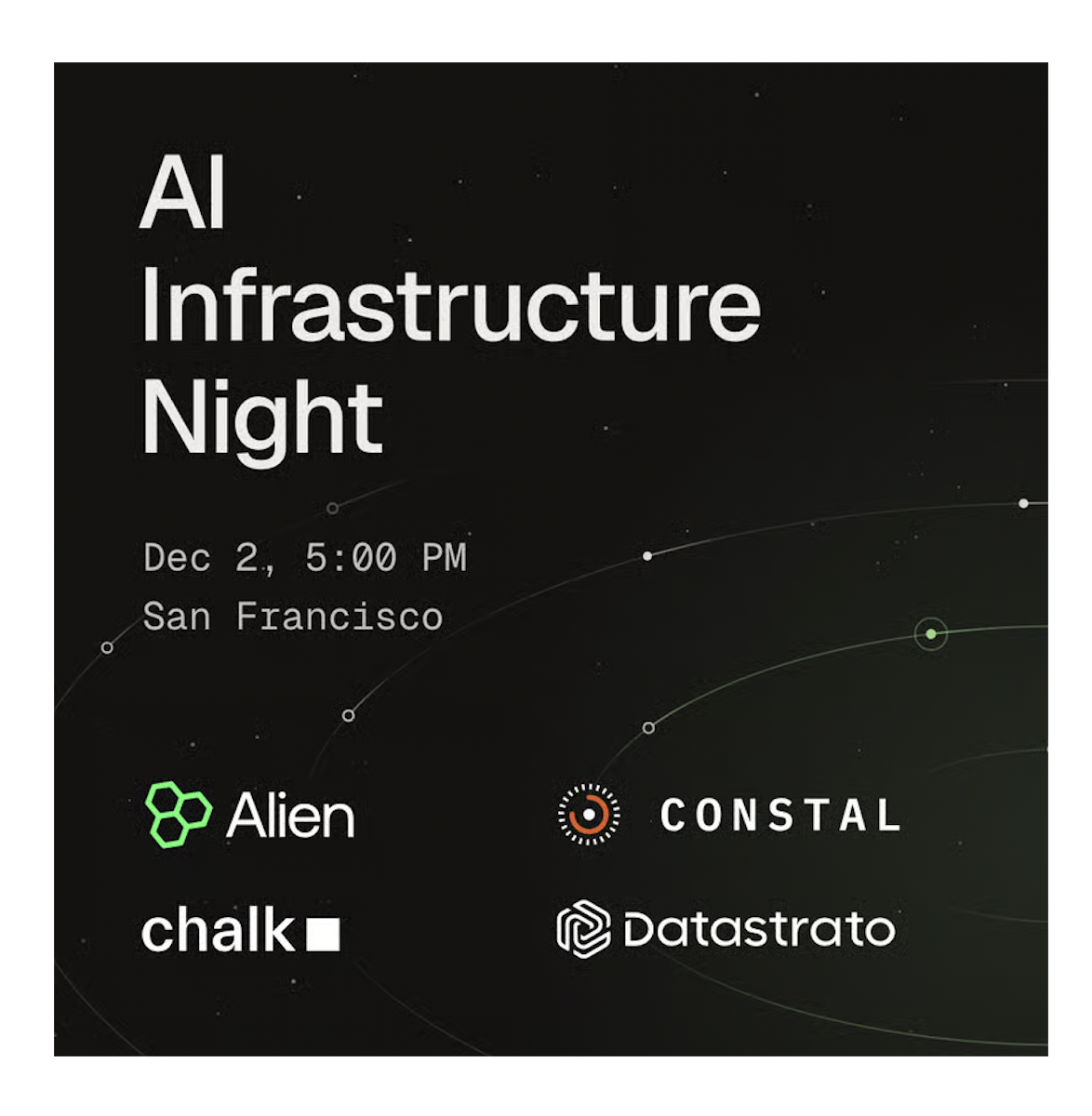
Four technical talks on building, deploying, and operating production AI systems. Sidhartha Mani (Constal) on multi-provider sandbox routing and failover; Elliot Marx (Chalk AI) on infrastructure designed for autonomous agents; Aditya Mahamuni (Alien) on operating software across customer environments; Mark Hoerth (Datastrato) on federated metadata catalogs as control planes for agent data access. Hosted by the Alien Slack Community.
A showcase celebrating the work of emerging photographers from an intensive Monograph Masterclass, featuring limited-edition fine art photobooks created by participants. Mark de Paola, renowned photographer and director, leads a conversation at 6:15 pm about the artists' creative processes, from concept to finished publication. The program includes work by Mark Dubovoy, Tawanda Kanhema, Isabelle Law, Lance Pressl, and others, spanning humanistic documentary to lyrical abstraction. Books will be available for purchase. Presented by Leica Store San Francisco in collaboration with Camera West, Wide Open Art, dePaola Pictures, and Brilliant Graphics.
A talk on design practices and team approaches to building AI tools, part of the UXNight series. The event explores how product and design teams are adapting their workflows and methodologies to develop user-centered AI applications.
Yasmina Price, Presidential Postdoctoral Research Fellow at Princeton and scholar of African and Afro-diasporic visual culture, discusses Black women filmmakers Sarah Maldoror and Sara Gómez, whose cinematic memory work in the 1960s–70s advanced transnational Black feminism and anticolonial resistance. Price explores how their hybrid documentaries created a kinetic archive of witness and retelling, establishing a Black feminist genealogy within African and Afro-diasporic cinema and informing contemporary visual artists. Her work examines the materiality of image-making, aesthetic historiography, and experimental women filmmakers.
An acclaimed New York Times bestselling biographer examines the life and legacy of William Howard Taft, the only man to serve as both president and chief justice of the United States. Walter Stahr offers a fresh perspective on this complex figure and his pivotal role in American history.
Oakland artist and engineer Nick Dong explores the intersections of art, technology, and Buddhist awakening through sound, light, and metalwork. In conversation with Jeff Durham, former curator of the Asian Art Museum, Dong discusses how integrating invisible connections in his sculptural practice creates spiritual awareness and addresses societal fracture. The event features an audiovisual experience combining his artistic and technical vision.
Jon Haveman, Executive Director of the National Economic Education Delegation and principal at Marin Economic Consulting, discusses the economics of climate change. An expert on regional economies, local economic development, and California's seaport and trade policy, Haveman is widely recognized for his analysis of the Bay Area economy and the economic dimensions of climate and environmental policy.
Hannah Dreier, investigative journalist at The New York Times, discusses her reporting and work in conversation with the Berkeley Forum audience. The event includes a moderated Q&A open to all.
A celebration of cookbooks and baking culture with Susan Spungen, founding food editor at Martha Stewart Living, culinary consultant for Julie & Julia, and author of Cookie Queen. Spungen will discuss her years shaping one of publishing's most influential food brands and the stories behind her latest book—80+ cookie recipes from a baker The New York Times called 'the Babe Ruth of Cookies.' The intimate gathering, co-hosted with food stylist and cookbook author Bebe Carminito, brings together cookbook enthusiasts for conversation, tasting, and savoring good company.
A 90-minute survey of opera in the Latin world, exploring the history and tradition of Zarzuela (Spanish-language opera), influential South American composers including Astor Piazolla and Heitor Villa-Lobos, and Latinx operatic superstars. The program features performances, talks, and workshops celebrating movement and the musical arts, connecting engaging discussions and performances related to Latinx heritage and cultural traditions.
An inside look at the deals, drama, and drive behind one of America's greatest wine dynasties. Michael Mondavi, founder and chairman of Folio Fine Wine Partners, discusses his family's role in building California's wine industry—now worth $84 billion annually to the state—in conversation with journalist and Wine Oh! TV creator Monique Soltani.
Rebecca Handler presents her new novel *In the Round*, a metafictional work that nests a play within a novel within a larger narrative structure. Handler is the award-winning author of *Edie Richter is Not Alone*. She appears in conversation with Daniel Handler.
A conversation with Regina Louise, CIIS alumna and author of Somebody's Someone, a memoir about navigating over thirty foster home placements as a ward of the California Juvenile Court system. Louise reframes human experience through a mythopoetic lens, viewing pain as a doorway rather than diagnosis and identity as forged rather than fixed. She discusses healing through the power of words and personal myth-making. With Alicia Stephen.
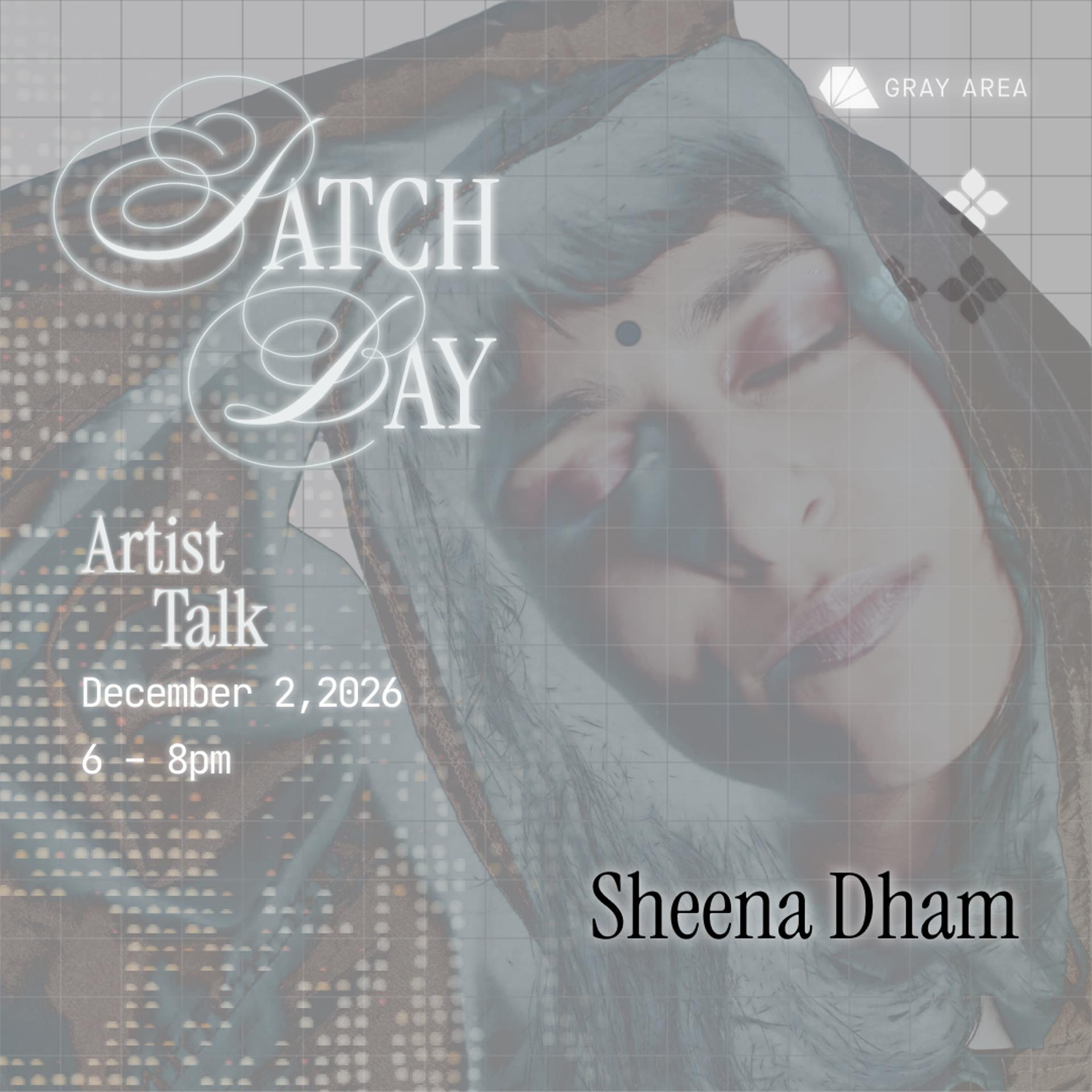
An artist talk with Sheena Dham, a Gujarati American musician, composer, and collaborating artist whose practice spans sound, visual art, and performance. Drawing from projects in dance, extreme sports, documentary film, and experimental music, Dham will explore how interdisciplinary collaboration shapes the creative process, the role of resourcefulness in building a sustainable artistic practice, and how community opens new opportunities for artistic work. She'll discuss her framework of 'musical rematriation'—centered on intentional listening, mindful resource use, and communal healing—and reflect on her collaborations with brands including Red Bull and The North Face, followed by audience Q&A. Part of Gray Area's Patch Bay series for media artists and creative technologists.
How does severe flu reach the heart, and why is that dangerous? Juste Marija Levitt, a researcher at UC Santa Cruz, explores the surprising mechanisms by which respiratory infection can affect cardiac tissue—even without the virus directly infecting the heart—drawing on her own research into flu complications. No science background required. Part of Science on Tap, a monthly public science café at The Crepe Place connecting the Santa Cruz community to cutting-edge research from UC Santa Cruz.
Post-screening Q&A with original Santas John Law and Rob Schmitt and other surprise guests. A screening of Santacon, a documentary about the legendary event's origins in 1990s San Francisco counterculture. Director Seth Porges (Class Action Park) traces how the founders of Santacon—who also created Burning Man and inspired Fight Club—designed the event as absurdist street theater meant to jolt people into wonder and possibility, before it evolved into what many now see as a chaotic annual tradition. The film features exclusive interviews with original creators and archival home movies.
A recurring philosophical salon exploring ethics, metaphysics, and questions of value through thought experiments and structured debate. This session discusses whether obligations to particular cultural communities override a commitment to global community. Participants engage deeply with assigned readings and are expected to follow norms of charitable philosophical discussion. Past topics span personal identity, morality, free will, justice, and meaning. Small group format, approximately 30 participants.
A history of the Tamalpais Valley Improvement Club, one of a dozen civic improvement organizations that flourished in early 20th-century Marin County. Built on marginal land in 1920 from lumber salvaged from a military rifle range, the clubhouse became the community's social and political center, particularly vital before municipal government arrived. Lissa McKee, former state architectural historian, draws on independent research into Tamalpais Valley's transportation and ranching history to explore how this modest building shaped local civic life across generations.
As San Francisco's neighborhoods shift amid investment and rising costs, who benefits from recovery and who risks being left behind? Dr. Billy E. Vaughn and Jen Randle lead an interactive conversation on trust, fairness, and the city's future—exploring what makes recovery feel inclusive, why institutional trust matters, and how San Franciscans can rebuild community across economic, cultural, and political lines. The focus is building belonging, not debating right and wrong.
A hardware demo night exploring how electronics and smart devices address San Francisco's infrastructure challenges. Jason from EquipSight will present noncontact continuous monitoring systems for improving equipment reliability at wastewater and industrial plants. The evening includes vendor demos, talks from hardware founders and engineers, breakout discussions, and networking. Hosted by Flux, an AI-powered PCB design platform, in partnership with informal, a freelance collective for hardware professionals. Part of SF Hardware Meetup, a 40,000-member volunteer organization running monthly demo nights across 40+ cities.
An intro to Auwen, a command-line tool for writing and performing dance music in real time. Led by Nes Croft, a musician and computer engineer who developed Auwen, the workshop covers software installation, the Auwen interface, multiplayer jam sessions in genres of your choosing, and solo composition. No prior coding or music experience needed. You'll build foundational skills in livecoding, improvisation, and real-time musical decision-making, with opportunities to join the instructor's Discord community for ongoing jam sessions and to potentially perform at SF events with the Soniare Collective.
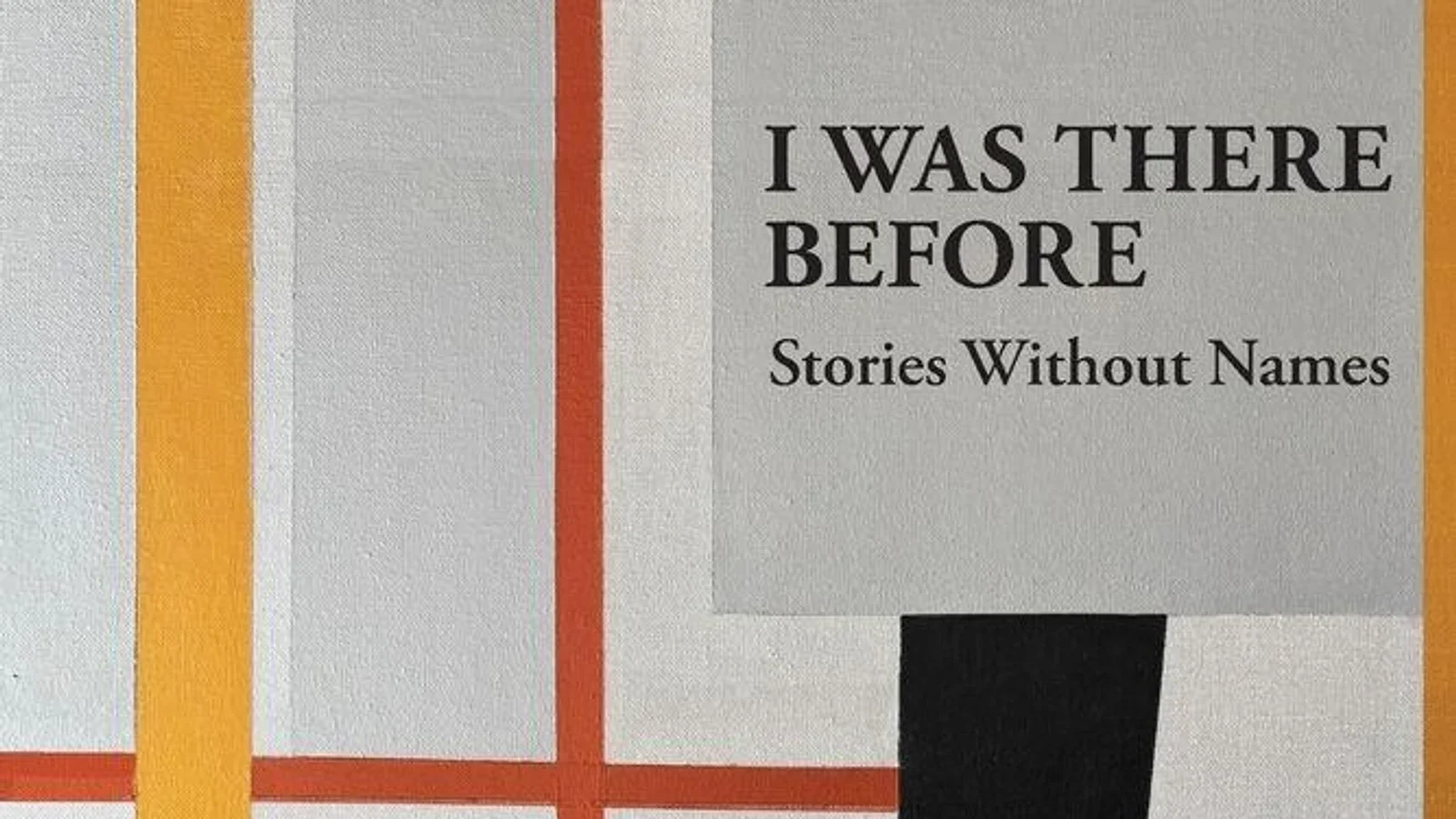
A reading and discussion of Esmail Rahimian's literary fiction *I Was There Before: Stories Without Names*, which explores moments of rupture and erasure through interconnected narratives—a girl who disappears into the streets, a mother listening through an ominous night, a man burdened by what he cannot abandon, and a witness preserving what others seek to erase. Rahimian draws readers into the spaces where everything changes and memory becomes an act of resistance.
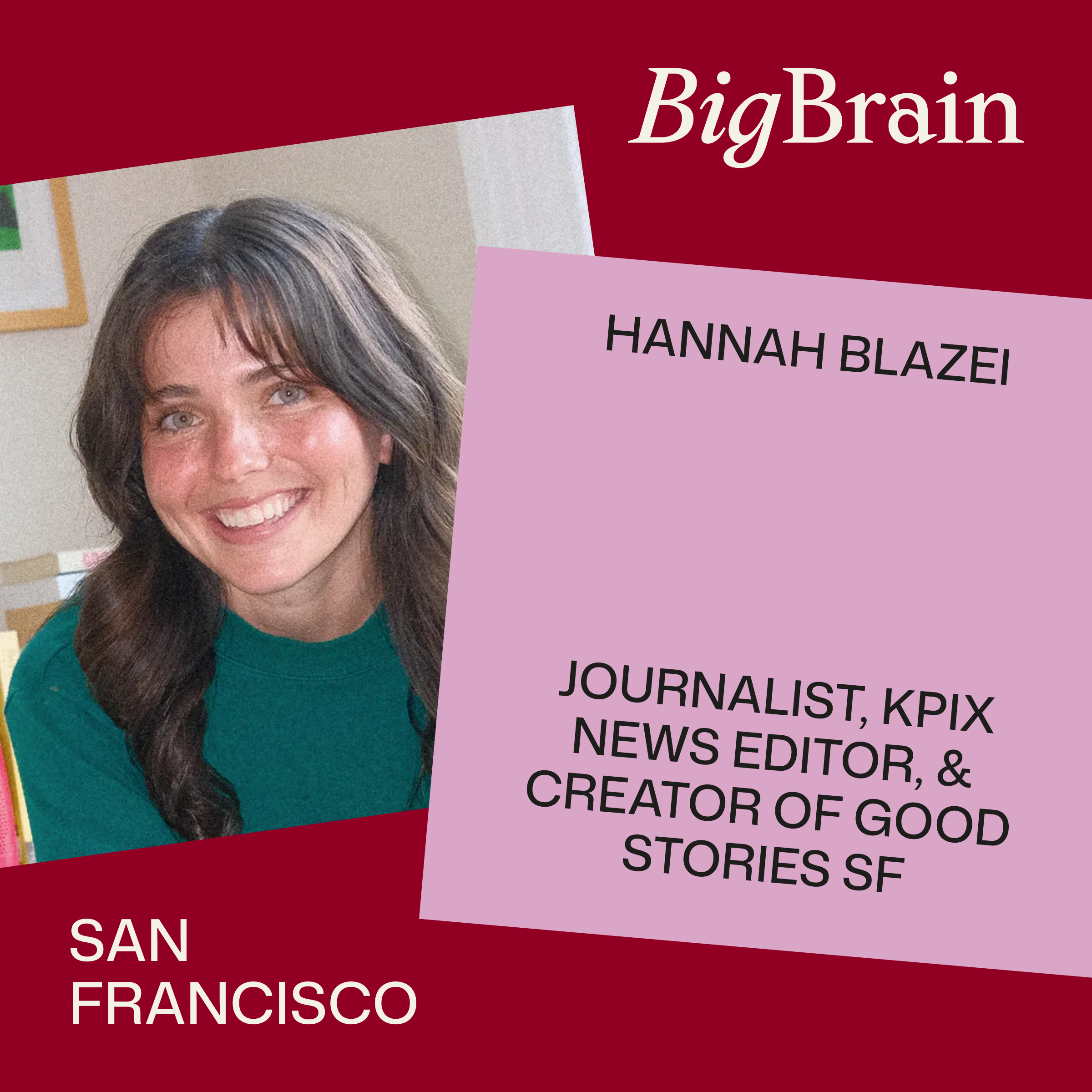
A lecture on San Francisco's iconic skyline and the surprising histories behind its most recognizable landmarks. Hannah Blazei, KPIX journalist and founder of Good Stories San Francisco, explores the stories of Sutro Tower, Coit Tower, the Palace of Fine Arts, and other structures—from world's fairs and bold engineering to controversy and happy accidents. The evening includes a 45-minute lecture followed by Q&A and conversation.
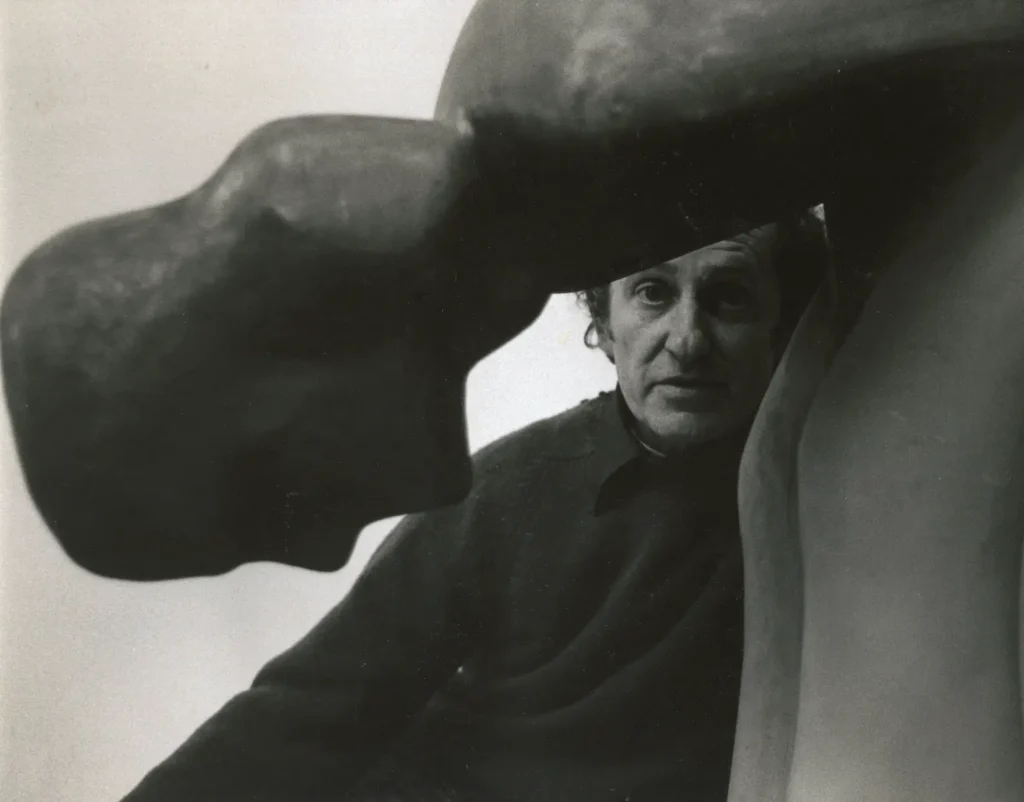
A forum celebrating the practice and pedagogy of artist and former CCA faculty Paul Harris, an avant-garde sculptor whose work and teaching remain underrecognized. Speakers explore Harris's adventurous artistic practice and his influence on pedagogy at California College of the Arts during his tenure from 1968 to 1992.
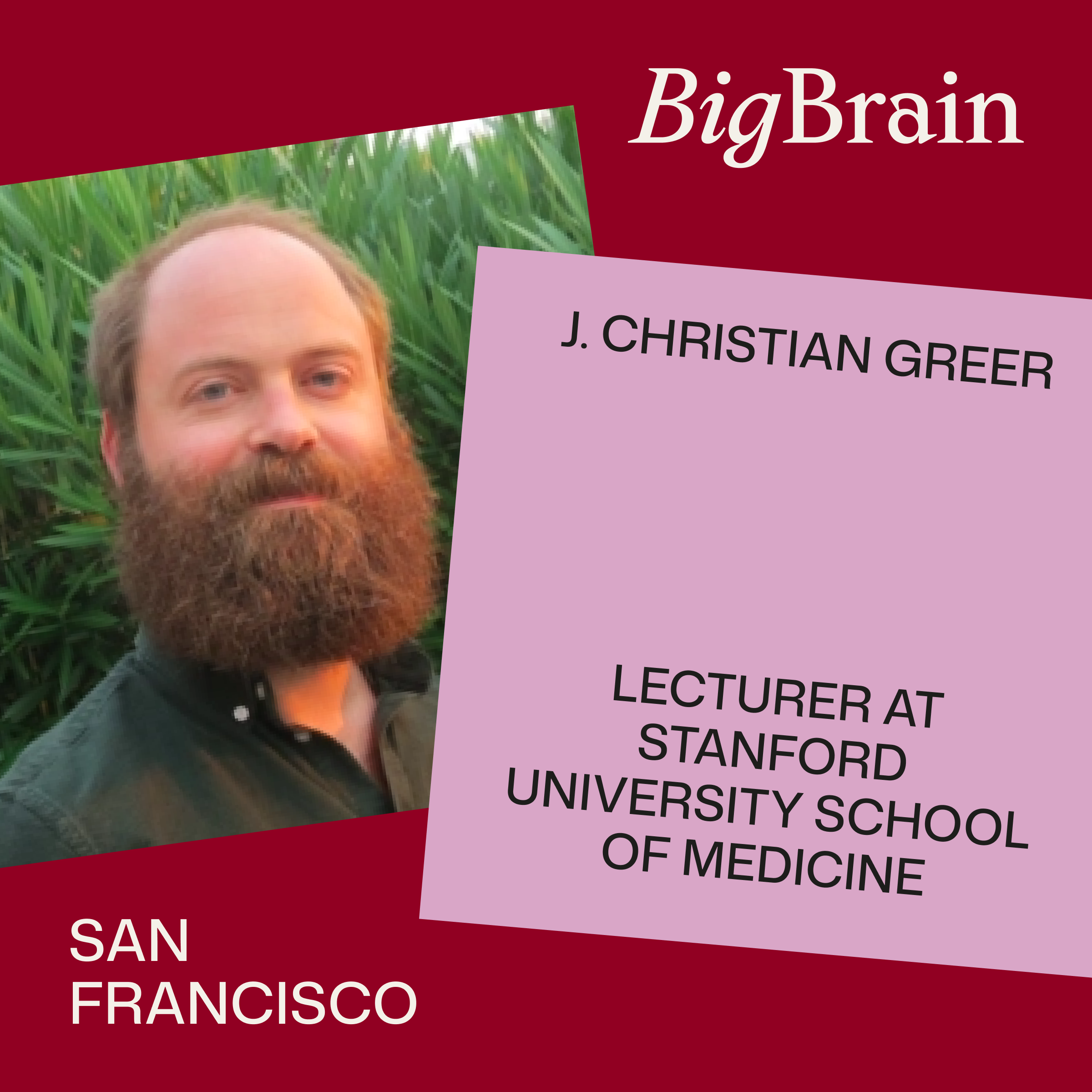
The Chalice is a recurring monthly psychedelic salon exploring history, poetry, ethnobotany, and humanistic dimensions of psychedelic culture beyond clinical and legal frameworks. This session features scholars Albert Casasayas and Ana Luengo discussing psychedelic literature, travel narratives, and grassroots counterculture movements in Latin America. Co-hosted by Erik Davis (author, Alembic co-founder), Maria Mangini (Women's Visionary Council co-founder), and J. Christian Greer (Religious Studies scholar, Stanford), the evening combines a talk with community discussion, breakout groups, and peer conversation designed to deepen psychedelic culture and inquiry.
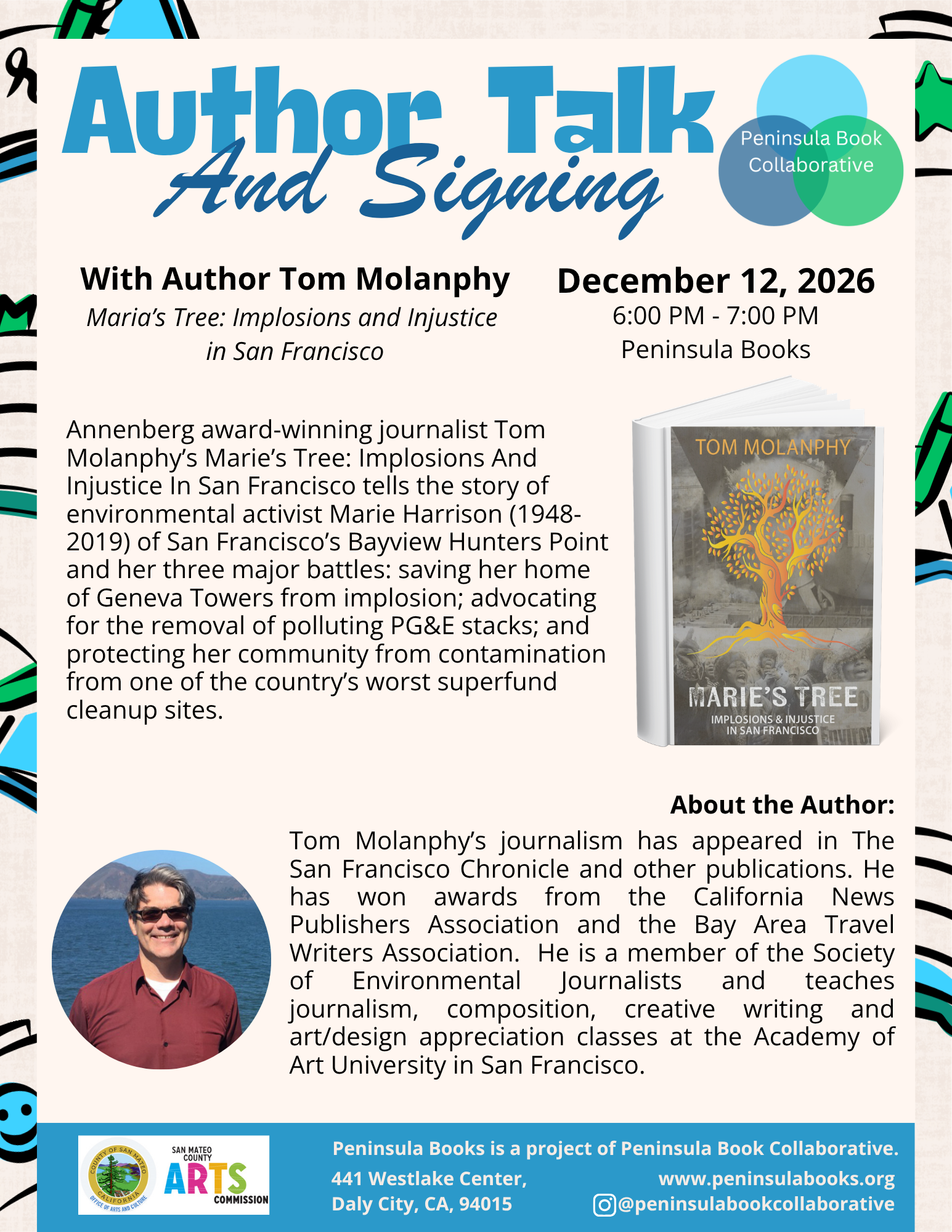
A conversation about Marie Harrison, an environmental activist who fought for housing, energy, and employment justice in San Francisco's Bayview Hunters Point, and the environmental injustices her community endured—from contaminated water at Geneva Towers to radiation exposure near a major Superfund site. Freelance journalist Tom Molanphy, whose environmental reporting won a 2023 California News Publishers Association award, speaks with Arieann Harrison, Marie's daughter and Founder of the Marie Harrison Community Foundation. Half of book proceeds support the Foundation's continued work for environmental and economic justice in District 10.
A public talk on San Francisco's relationship with the tech industry and billionaire influence on the city's future. The speaker is a journalist and author of a book on the subject who previously served as press spokesperson for California politicians including Kamala Harris before returning to investigative reporting on local power structures.
A panel conversation on how tariffs, sanctions, export controls, and industrial policy are reshaping the global economy and international power dynamics. Former Italian Prime Minister Enrico Letta, Ziad Haider, and Matteo Maggiori discuss the implications of economic security concerns for Europe, the United States, and the global economy, moderated by Patrick Foulis.
Join SPUR members for a guided tour of the Exploratorium's climate and water resilience exhibits, including the Bay Observatory and the Waterfront Field Station under construction. Participants will meet Exploratorium educators to learn how the museum develops and delivers climate change and sea-level rise education to Bay Area schools, and gain behind-the-scenes insight into exhibits being assembled.
Warren Sack, Professor and Chair of Film + Digital Media at UC Santa Cruz, explores the gap between what AI is popularly imagined to be and what it actually does. Drawing on science fiction, journalism, and philosophy, Sack examines how banal mathematical techniques—neural networks based on high school algebra—acquire the name 'artificial intelligence' and are ascribed transformative or catastrophic power. He traces the history of AI's shifting technologies and the stable cultural mythology surrounding them. Part of The Humanities Institute's ± AI Initiative.
An expert-led seminar on protecting yourself from scams and identity theft during the holiday season, presented by Contra Costa Senior Legal Services. Learn to recognize common scams and warning signs, prevent identity theft, protect personal and financial information, and report fraud to authorities. Designed for individuals of any age seeking practical guidance for themselves or loved ones.
A facilitated conversation on designing equitable assessment practices in higher education, with particular attention to linguistic justice, neurodiversity, and how AI tools reshape how students demonstrate learning. The salon format invites educators to explore how authentic assessment can honor the diverse identities, experiences, and learning needs students bring to classrooms.
A lunchtime curator talk led by Maggie Dethloff, Assistant Curator of Photography and New Media at Stanford's Cantor Arts Center, exploring the exhibition California Current: Art and Histories from the Bay Area. The show features over 60 works—many displayed for the first time—tracing artistic production and everyday life in Northern California across the twentieth century to the present, from paintings and sculptures to photographs and time-based media by artists including Pacita Abad, Bernice Bing, Lynn Hershman Leeson, and Chiura Obata. The exhibition asks how communities remain rooted in a region undergoing constant change, examining the ecological, infrastructural, technological, and political currents that have shaped the Bay Area.
Art historian Kirsten Pai Buick, author of *Child of the Fire*, discusses the neo-classical sculptor Edmonia Lewis (1844–1907) with Stanford professor Jennifer DeVere Brody, whose book *Moving Stones* also examines Lewis's remarkable international career. Buick is Professor of Art History and Chair of Africana Studies at the University of New Mexico; her scholarship spans African American art, material culture, and histories of representation in the Atlantic world. Brody approaches Lewis's legacy through a Black feminist and queer lens, exploring how her sculptures and self-fashioning challenged constraints of her time and continue to resonate with contemporary artists.
Transformative communication expert Alejandra Siroka leads a workshop celebrating the launch of her book *Language Alchemy: The Essential Communication Tool Kit for a Life of Peace, Authenticity, and Meaning*. Participants explore how what feels easy or hard to communicate shapes relationships and the wider world, and discover how learned language patterns can be transformed to express what now feels impossible. The workshop combines an excerpt from the book with interactive exploration of authentic expression and meaningful communication as a practice. Books available for purchase and signing.
Kirsty Tinto of Columbia University presents findings from Greenland Rising, an NSF-funded collaboration that mapped bathymetry and marine habitat while working with three coastal Greenland communities to understand local adaptation priorities to sea-level change. Though global warming melts the Greenland Ice Sheet, postglacial rebound and decreased gravitational attraction from ice actually cause local sea levels to fall along much of the Greenland coast. Tinto discusses how this complex picture affects ports, waterways, and marine ecosystems, and describes new pathways for communicating science, including coining scientific terms in Greenlandic.
Who decides what time is? In Habsburg Bohemia, that question entangled nation and empire, identity and sovereignty, capital and a newly networked world. Railways and telegraphs created shared time across distance, sparking fierce debate over who held the power to set it. Jana Hunter, Assistant Professor of history at Stanford, traces how an empire tried to synchronize every local clock—examining where authority over time was located and why time became a question of sovereignty. After 1867, Bohemia's unresolved constitutional status moved into daily infrastructure: whose observatory produced noon, which meridian ran the trains, whose clocks kept the time. By century's end, Bohemians called their divided time *dualismus*, the word for the constitutional settlement itself. Hunter examines these jurisdictional disputes across four decades, revealing how sovereignty over time was claimed everywhere but located nowhere.
A lecture by Dr. Lilach Nethanel, Senior Lecturer in the Department for Hebrew Literature and the Literature of Jewish Languages at Bar-Ilan University. Nethanel discusses comparative literature with focus on Hebrew and Jewish-language texts.
A geophysics seminar on RIME and the JUICE mission featuring Lorenzo Bruzzone, full professor of information engineering and computer science at the University of Trento. The JUICE (Jupiter Icy Moons Explorer) mission, supported by RIME (Radar for Icy Moon Exploration), uses advanced radar imaging to study Jupiter's icy moons.
Maisha T. Winn, Excellence in Learning Professor at Stanford Graduate School of Education and Faculty Director of the Stanford Accelerator for Learning's Equity in Learning Initiative, discusses her historical ethnography *Futuring Black Lives*, examining Black institution builders of the late 1960s and early 1970s who leveraged publications and literary imagination to shape educational futures for Black children. The book traces how Independent Black Institutions (IBIs) created ecosystems grounded in shared Black values, addressing identity, purpose, and direction—and demonstrates why their historiography-informed futuring remains urgent amid current racial disparities in education, disproportionate student discipline, censorship of race-centered curricula, and book bans. In conversation with Adam Banks.
Robert Falkner, Professor of International Relations at the London School of Economics, explores how political economy research illuminates the global green transition amid intensifying geopolitical conflict and domestic polarization. Drawing from his new book *Green Political Economy*, Falkner examines the role of technological innovation, renewable energy economics, and climate policy in accelerating decarbonization, and how geopolitical friction and political contestation are reshaping international climate action.
Sara Nicholson reads from her poetry at Lunch Poems, UC Berkeley's long-running noontime poetry series. Nicholson is the author of three collections, most recently April (The Song Cave). She was the 2018 Holloway Lecturer in Poetry at Berkeley and teaches in the MFA program at Boise State University.
Mexican author and Tulane professor Yuri Herrera discusses his novel *The Transmigration of Bodies*, translated into English by Lisa Dillman. Herrera's work explores migration, violence, and displacement through spare, lyrical prose; his earlier novel *Signs Preceding the End of the World* won the 2016 Best Translated Book Award. Free copies of the book available for attending students.
Security evaluation of learning-based autonomous systems requires adaptive mechanisms to efficiently discover failure modes, not just testing against fixed attack collections. Marsalis Gibson discusses recent efforts to uncover new attacks on autonomous systems and automate attack discovery using black-box searching mechanisms, with applications to autonomous driving.
An informal gathering exploring solarpunk as a vision and practice for regenerative futures, systems change, and radical collaboration. Hosted by Bobby Fishkin and Andres Acosta at SF Green House, this open-space conversation brings together systems-change agents, community builders, artists, and innovators for deep dialogue on collective entanglement, knowledge democracy, and micro-moments of care. The event flows into a free block party on 2nd Street at 5 PM.
China's gray-zone coercion in the Indo-Pacific—including military drills between Taiwan and the Philippines—risks disrupting critical sea lanes vital to global fuel and food supplies. Dr. Ruth Gibson, Founding Executive Director of Stanford's Geopolitical Human Impact Research Lab, presents research on what maritime disruptions comparable to a Strait of Hormuz closure would mean for human populations, with focus on food security, energy access, and maternal and child health. Based on the Stanford Geopolitical Coercion and Global Health Impact Initiative, the talk draws on health modeling, open-source intelligence, and international humanitarian law to examine how geopolitical decisions shape human lives.
Ecological stoichiometry—the study of energy and chemical-element balance in ecosystems—with Jim Elser, Bierman Professor of Ecology at the University of Montana and director of the Flathead Lake Biological Station. Elser's research examines freshwater lakes in western Montana and western China, with a focus on how nutrient cycling and elemental composition shape lake productivity and resilience. Part of the UC Berkeley ESPM Seminar Series.
Abstract: In early modern Christian-ruled Europe, unincorporated populations, Muslims in particular, compensated for their lack of administrative protection by cultivating diverse circles of social belonging: circles that overlapped imperfectly, complemented one another, and sometimes conflicted. Foucault and Scott have emphasized the administrative violence of early modern states, rooted in their inability to read society and their tendency to reduce it to rigid communities. This talk instead explores why eighteenth-century administrations had an interest in letting unincorporated populations prosper, and how Muslims became agents of the economic expansion and radical transformation of the early modern world, with a specific focus on the Habsburg Lands and Danubian territories. Rather than viewing non-incorporation as exclusion, the talk argues that administrative indifference could be a deliberate strategy, allowing states to benefit from mobile commercial networks, frontier expertise, and cross-border ties they could neither control nor replace. Unincorporated status thus emerges as a productive space where social belonging was continually redefined. Speaker Bio: David Do Paço is an early modern historian and a diplomat. He earned his PhD in 2012 from Université Paris 1 Panthéon-Sorbonne with a dissertation on the Ottoman commercial-cum-political milieu of eighteenth-century Vienna. The resulting book, L’Orient à Vienne au dix-huitième siècle , was published by the Voltaire Foundation in 2015. He has since held positions at the European University Institute, Sciences Po, where he ran the Departmental seminar in European History, and Columbia University, where he chaired East Central European Studies in 2021, as the Istvan Deák Visiting Professor. His research, at the intersection of social, urban, and political history, has appeared in international journals, including Urban History , the Historical Journal or Business History. In 2023, he joined the French Ministry for Europe and Foreign Affairs as the inaugural Attaché for Academic Cooperation in San Francisco, where he works to strengthen ties between French and American universities. RSVP: https://forms.gle/yxrr9q633bEYzGMP9
Speakers: David Do Paço
Logan Wright, partner at Rhodium Group and author of Broken China: How the Economic Miracle Shattered and What it Means for the World, discusses China's economic slowdown after decades of rapid growth and its implications for global competition. The talk explores how Beijing's financial system and credit conditions shaped the economy's trajectory, and whether the country can chart a new course to preserve its ambitions for economic primacy. Co-hosted by the Stanford Center on China's Economy and Institutions and the Hoover History Lab. A light reception follows.
An advance screening of the documentary Deterrence: Winning the 2nd Cold War followed by a conversation with Shyam Sankar, CTO of Palantir Technologies, and Lt. Gen. H.R. McMaster (Ret.), Fouad and Michelle Ajami Senior Fellow at the Hoover Institution. The film, created by Sankar with filmmaker Peter Berg, follows founders developing autonomous vessels, hypersonic vehicles, and autonomous factories. Sankar and McMaster will discuss the relationship between technological innovation and national deterrence, lessons from America's industrial past, and the role of a new generation in building military and industrial strength amid intensifying competition with China and other adversaries. Attendees may ask questions and explore how their own work might contribute to national security.
As data center expansion accelerates globally, thermal management and access to critical materials are emerging as central challenges. Himanshu Pokharna, CEO of Deep Materials and Founder of Inficold, draws on his extensive background in thermal interface materials and cooling solutions to explore how companies are addressing these infrastructure demands and their international implications. Moderated by Dr. Richard Dasher, Director of the US-ATMC.
Exploring the gendered and racialized dimensions of AI development and deployment. Tamara Kneese, Senior Research Scientist at Partnership on AI, examines how gender and artificial intelligence intersect—from the design politics of voice assistants like Siri and Alexa to narratives of life extension and space colonization—and traces the material impacts of AI infrastructure on global communities. The lecture considers how AI futures will be shaped by venture capital and data center expansion, but also by forms of resistance and collective resistance.
A panel discussion on technology, accessibility, disability, and inclusion with Lainey Feingold and Sheri Byrne-Haber, authors of a new book on disability accessibility ethics. The event includes a panel discussion, book signing, and reception. Books will be available for purchase at a discounted rate, with free copies for RSVP'd students while supplies last. Hosted by UC Berkeley's Office of Disability Access and Compliance, Berkeley Center for New Media, Othering and Belonging Institute, and the Disability Cultural Community Center.
A lecture by Amara Ali, Lecturer in Urdu at UC Berkeley, examining twentieth-century Kashmir as a distinctive center of Urdu literary culture through the evolution of Shia marṣiya (devotional elegiac poetry). Ali challenges the conventional narrative that centers Urdu's development in Delhi and Lucknow, arguing that Kashmir developed its own robust institutions of literary production—from madrasas and radio broadcasts to mushāʿira gatherings—during this period. The talk traces how multilingualism shaped Kashmiri intellectual life, with different languages (Sanskrit, Persian, Urdu) holding prominence across different eras. Moderated by Munis D. Faruqui, Director of the Institute for South Asia Studies and Sarah Kailath Chair of India Studies at UC Berkeley.
Sociologist Myungji Yang (University of Hawai'i–Mānoa) explores why ordinary citizens in South Korea support authoritarian leaders and far-right movements, examining President Yoon Seok-yeol's December 2024 martial law declaration and the democratic backsliding that enabled it. Drawing on 18 months of field research, Yang analyzes the ideas and practices of far-right groups and organizations to understand the roots of contemporary democratic regression. She is author of *Reactionary Politics in South Korea: Historical Legacies, Far-Right Intellectuals, and Political Mobilization* (Cambridge University Press, 2026).
The Living Writers Fall 2026 series, 'Open Season: Writing Enacts', features writers, performers, and artists exploring invisibility, silence, hypervisibility, race, gender, and sexuality across page, screen, stage, and beyond. The series showcases writers who resist and create with spirit and intention. Organized by UCSC's Creative Writing Program and open to all students and the public.
An evening of technical talks and conversations on building, deploying, and securing AI-ready platforms at enterprise scale. Hosted by Nutanix and AccuKnox with the open source community, the event brings together platform engineers, Kubernetes practitioners, AI builders, and enterprise technology leaders to share perspectives on AI infrastructure, cloud native foundations, platform engineering, and security. The program features invited speakers and selected community presenters sharing hands-on experience and technical insights.
This session: February 14, 2027, closed from. An artist panel and reception celebrating the opening of *What We Carry*, an exhibition at Thacher Gallery exploring inheritance, materiality, and cultural memory through five Bay Area artists: Al-An deSouza, Angela Hennessy, Stephanie Syjuco, Rupy C. Tut, and Maryam Yousif. Curated by graduate students in USF's MA in Museum Studies program with guest curator Deena Chalabi, the exhibition examines what we inherit from those before us—in our bodies, materials, and shared histories—and what we choose to keep.
An evening of live demos on agentic AI tools and evaluation frameworks. Builders and AI engineers will demonstrate MCP servers, agent integrations, evals, and experiments they're building, with each team presenting for up to 10 minutes followed by Q&A. Demos from Nikolay Rodionov (Co-founder, Alpic) and Alex Salkever (Editor-in-Chief, Agentic AI Foundation), with additional presenters to be announced. Hosted by Apify, a web automation and data-collection platform for AI agents, and Alpic, a cloud platform for building and testing MCP servers and ChatGPT applications.
An interactive philosophy salon exploring sensory illusions and the gap between perception and reality. Led by Dr. Iris Oved, founder and director of The Paradox Lab, a nonprofit bringing philosophical inquiry to all ages, and an active researcher in philosophy and cognitive science studying how we learn to categorize the world. Bring your own questions and observations as the group discusses why our senses sometimes fool us—seeing with our ears, tasting with our eyes—and what this reveals about the nature of experience and the mind.
Tom Steyer, American businessman and philanthropist, speaks at UC Berkeley's student-run speaker series. The event features a moderated conversation with audience Q&A.
A book release celebration for indie author Swati M. H.'s debut novel *In Another Lifetime*, an angsty forbidden romance about soulmates and impossible love spanning twenty years. Swati will be on hand to meet readers, sign copies, and give away book plates and art prints.
Dr. Emma Acker, curator at the Fine Arts Museums of San Francisco, discusses Made in San Francisco: The Evolution of the California School of Fine Arts, 1945–1969, a spring 2027 exhibition exploring postwar Bay Area artistic developments including Bay Area Abstract Expressionism, Figuration, Beat, Funk, and Assemblage art. Attendees will preview FAMSF's Further Triennial contribution, featuring Bay Area artists and connections to the library's Palette in Play exhibition.
A screening of Sydney Cash Makes Too Much Art with filmmaker Ivan Cash and subject Sydney Cash. At 80, artist Sydney Cash continues creating despite dwindling space and time; his son Ivan's documentary explores what a life devoted to art costs a family, and whether his father's lifetime of work will end in a gallery, a dumpster, or somewhere between. Ivan Cash is an award-winning artist and filmmaker whose work has been presented at Tribeca, SXSW, the Brooklyn Museum, and the V&A Museum in London, and recognized as a Forbes 30 Under 30 and Adweek Creative 100.
A quarterly storytelling and conversation series exploring belonging, connection, and community care in Santa Cruz County. Each event opens with a featured storyteller sharing a personal experience of belonging and what it means to feel seen, supported, and included. A local community partner then joins for a facilitated discussion on how belonging shows up in practice and how inclusive spaces are built. The evening concludes with small-group reflection and a shared invitation to take meaningful action toward a more connected community.
The fourth Sundial Reading Series features authors Joseph Kidney, Jenny Odell, and Bernardo Wade reading work connected to food justice, urban agriculture, and community resilience. Following their readings, the writers will join Leisel Whitlock Petersen, Executive Director of Acta Non Verba—an East Oakland urban farm and nature access center serving young people—in conversation. The series, created by poet Ben Gucciardi, pairs Bay Area writers with local organizations doing vital community work, making visible the relationships between thinking, expression, and action.
An artist talk with Klea McKenna, 2025–26 Kala Fellow and 2023 Guggenheim Fellow in photography, discussing her mixed-media installation *The Remedy* and her process of moving between memory, writing, research, and visual imagery. McKenna will share her methods for making large shaped-plate intaglio prints using cardboard plates, alongside her writing and illustration practice—beginning with a family story passed down through her maternal line and developing it into a written short story and installation. Her work is held in major collections including SFMOMA, LACMA, Getty Museum, and the Victoria and Albert Museum.
A screening of POST ATLANTIC: The Art of Dewey Crumpler (29 mins, 2024) with filmmakers Alan Snitow and Deborah Kaufman, and artist Dewey Crumpler in attendance. The documentary explores Crumpler's evolution as a political artist from his youth with the Black Panther Party to his influential teaching at SFAI, following him through his studio, home, and recent gallery opening in New York. His abstract paintings grapple with slavery, Black liberation, globalization, and pop culture. Snitow and Kaufman, veteran documentary makers, examine what it means to be a working artist with conscience amid social turmoil.
An exploration of how ancient Greek and Roman mythology—tales of gods, heroes, monsters, and legendary figures—has inspired artists for millennia and continues to appear in museum collections today. The talk draws on works from the Fine Arts Museums of San Francisco, including the Legion of Honor and de Young Museum, tracing how classical stories of love, deception, treachery, and triumph remain culturally resonant. Sponsored by Friends of the Fairfax Library.
Lisa Geduldig, creator of Kung Pao Kosher Comedy, discusses the 34-year history of her iconic annual Jewish comedy tradition, born from a single conversation after a 1993 performance at a Chinese restaurant. She shares stories of booking and working with legendary comedians including Henny Youngman, Shelley Berman, and David Brenner, and traces how a one-off idea became a beloved San Francisco institution spanning from the 1990s to today.
San Francisco's Mother Jones magazine, founded in 1976 as the nation's first investigative news organization, turns 50. Adam Hochschild (co-founder, author, and UC Berkeley journalism instructor) and Monika Bauerlein (CEO, Center for Investigative Reporting) discuss five decades of Mother Jones exposing corporate and government wrongdoing. A conversation about the magazine's founding, evolution, and role in accountability journalism.
A illustrated lecture on director Alfred Hitchcock's cinematic use of Northern California locations, from Monterey and Santa Rosa to Vertigo, The Birds, and Family Plot. Jim Van Buskirk, retired SFPL librarian and co-author of Celluloid San Francisco: The Film Lover's Guide to Bay Area Movie Locations, explores how Hitchcock's beloved Scotts Valley home and meticulous eye shaped his iconic Bay Area films through still images and archival detail.
A screening of The Panama Deception, the 1993 Academy Award–winning documentary examining the U.S. invasion of Panama in 1989, its hidden justifications, the disproportionate violence, and the media suppression of evidence. The film presents rare footage and interviews with invasion proponents (General Maxwell Thurman, President Endara) and opponents (Representative Charles Rangel, human rights workers, former diplomats), alongside analysis of how the U.S. government and mainstream media controlled the narrative. Facilitated by Jasmina Bojic, Stanford lecturer and founder of the United Nations Association Film Festival, which presents documentaries on urgent global issues.
An evening with architect Mark Cavagnero, FAIA, and writer Laura Kiniry discussing *Mark Cavagnero Architect*, a survey of fifteen foundational projects from the San Francisco firm that has shaped the city's civic life over two decades. Cavagnero founded his practice in 1988 and has become known for a disciplined modernist language—interlocking volumes, wood and concrete, functional clarity—applied to museums, theaters, schools, and recreation centers. The conversation explores how design substance emerges across cultural landmarks, civic buildings, and current projects including the San Francisco Symphony's renovation and Laney College Library.
Learn to ride safely and comfortably in winter conditions — dark, cold, and rainy weather. This hands-on class covers clothing and gear selection, winter bike maintenance, safe riding techniques, and visibility tips. Run by the Silicon Valley Bicycle Coalition in collaboration with VTA, the workshop includes reflective spoke covers for all participants and time to connect with other cyclists.
New York Times food writer and James Beard Award–winning author Melissa Clark discusses her latest cookbook, *The Big Book of Dinner*, featuring 175 any-night recipes plus 150 tested variations and lessons for intuitive, joyful cooking. Clark, a staff writer for the New York Times Food section and creator of the popular "A Good Appetite" column, draws on decades of helping home cooks master everyday cooking with a chef's creativity and a home cook's sensibility for ease.
Arlie Russell Hochschild, Professor Emerita of Sociology at UC Berkeley and author of the National Book Award-finalist *Stolen Pride*, discusses her new paperback edition featuring the afterword "The Road Ahead." Eight years after *Strangers in Their Own Land* explained the Tea Party movement, Hochschild returned to Pikeville, Kentucky—one of the whitest and poorest congressional districts and a MAGA stronghold—to explore how shame and narratives of stolen pride drive regional politics more than policy or economics. A 2024 New York Times Book of the Year chosen by Barack Obama, the work draws on a decade of fieldwork in right-leaning communities. Hochschild speaks with California magazine's Pat Joseph about what she's learned and how that knowledge might help mend America's fractured democracy.
California magazine's Pat Joseph converses with sociologist and best-selling author Arlie Hochschild about her decade-long embedded research in communities on the political right, her insights into the roots of polarization, and pathways toward healing America's fractured democracy. Hochschild's work examines the emotional underpinnings of political identity and the stories people tell about belonging and loss.
A screening of Ulya, Latvia's Academy Award submission, with commentary from Dr. Karla Oeler, Director of the Center for Russian, Eastern European, and Eurasian Studies and Associate Professor of Film and Media Studies at Stanford. The 2026 film tells the true story of Uljana Semjonova, a basketball legend who grew up as an unusually tall girl on a remote Soviet farm in 1964. Oeler is an expert in film history and theory, with particular focus on cinematic aesthetics, violence, and representation; she has published widely on Soviet and Eastern European cinema.
Create a custom 14-inch holiday wreath from premium greenery, ribbons, ornaments, florals, and seasonal accents. Participants choose their own design—classic Christmas, elegant winter, or entirely personal—and receive step-by-step instruction to assemble their one-of-a-kind wreath to take home. No experience necessary. Your ticket includes all materials and a selection of premade accents.
Dr. Alan Ceaser, a licensed clinical psychologist and cognitive neuroscientist, explores how neuroscience and decolonization theory illuminate the relationship between mind, culture, and identity. The lecture examines systems of power and cultural conditioning that shape how we think and move through the world, alongside questions of internalized beliefs, healing, and liberation. Ceaser considers what becomes possible when we unlearn narratives that no longer serve us. Followed by audience Q&A and informal mingling.
A recurring philosophical salon exploring fundamental questions about human life, civilization, and happiness. The group discusses philosophical, scientific, and religious theories alongside psychological insights into human nature and meaning—topics often dismissed after formal education but essential to understanding how societies function and how individuals flourish.
A monthly poetry event held on the first Thursday of each month, featuring guest poets followed by an open mic for community participation. Hosted by Michael Koch and Jerry Ferraz.
An intimate salon celebrating poetry, literature, food, and culture. Poets James Cagney and Kevin Dublin, social researcher Norma Smith, journalist Soleil Ho, and comedian and writer Baruch Porras-Hernandez share readings and conversation. The evening also marks the release of Kitchen Table's zine and Habibi Ceramics' custom collection. Local vendors offer snacks, wine, photography, and jewelry.
A discussion of the 50th anniversary edition of Rabbi Zalman Schachter-Shalomi's paradigm-shifting 1975 book Fragments of a Future Scroll: Hasidism for the Aquarian Age, which reimagined Judaism for a changing world. Rabbi Tirzah Firestone, author of Wounds into Wisdom and ordained by Reb Zalman; Rabbi Dan Goldblatt, a founder of Jewish Renewal and former spiritual leader of Beth Chaim Congregation; and Sam Shonkoff, Taube Family Associate Professor of Jewish Studies at the Graduate Theological Union, explore his spiritual legacy and its relevance today. Part of the Ayin Salon series celebrating Ayin Press authors reimagining Jewish creativity and storytelling.
Local cartographer and nature writer Obi Kaufmann celebrates the release of his book *California Inside Out: Mapping an Ecology of the Mind*, a manifesto on deepening connection with California's landscapes and ecosystems. Kaufmann's distinctive illustrated maps and lyrical approach to bioregional narrative have made him a Bay Area fixture; this event offers an opportunity to hear directly from him about the book's themes and creative process.
A screening of The Second Life of Freddie Nole, a documentary following Freddie Nole, a formerly incarcerated man who now meets newly released people at prison gates to offer support and a shot at redemption. The film unfolds as a day-long road trip with his friend Steve Chile, the first person Freddie picked up, as they help Ed take his first steps into freedom. Featuring director Dana Nachman, Freddie Nole himself, and David Cowan, Founding Director of Bonafide.
A panel discussion on *We Live in Public*, a book edited by Carla Orendorff, Anthony Orendorff, Lupita Limón Corrales, Ananya Roy, and Marisa Lemorande, written by unhoused people and their allies. The book centers the experiences and organizing strategies of Aetna Street encampment residents in Los Angeles, exploring homelessness as both a symptom of systemic inequality and a site of collective knowledge and resistance. The event features editors and contributors discussing modes of collective living, revolutionary care, and solidarity in the face of state violence and the criminalization of homelessness.
Kim Stanley Robinson, author of the Mars trilogy, The Ministry for the Future, and The High Sierra: A Love Story, discusses his new work exploring Antarctica. The renowned science fiction author and lifelong climate advocate offers insights into this narrative of polar exploration and environmental vision.
Investigative journalist Julia Harte discusses her book *Americans Without Borders: The Radical Activists Who Fought for US Ideals Abroad While Facing Political Persecution at Home*, which traces two centuries of Americans who joined revolutionary liberation movements abroad—from Black veterans of the Spanish Civil War to participants in Nicaragua's Sandinista conflict and the Algerian National Liberation Front—and examines how the U.S. security state branded them as threats. Harte will be joined by Sonia Paul, an award-winning independent journalist and producer who investigates power hierarchies and transnational issues for outlets including WIRED, Mother Jones, Harper's, and NPR.
A reading and author talk with Jim Ruland, author of the crime novel *Mightier than the Sword*. When an adjunct English professor's contract is canceled, he and three colleagues—a gambler, a poet, and a punk—plan to rob an off-campus bookstore. The heist spirals into a larger caper involving corrupt university officials, drug-dealing frat boys, Navajo ex-cons, and a mysterious golden pen. Ruland is an LA Times bestselling author and former music-industry executive whose books include *Make It Stop*, *Forest of Fortune*, and *Corporate Rock Sucks: The Rise & Fall of SST Records* (named best book of 2022 by Pitchfork, Rolling Stone, and Vanity Fair). He is a frequent LA Times contributor and columnist for Razorcake fanzine.
A one-day symposium convening climate and environmental justice leaders, practitioners, policymakers, and academics to reimagine how billions in climate financing can serve frontline communities. The event explores pathways for adaptation and mitigation funding that center community voices while aligning investment strategies with academic research and policy. Keynote speakers include Silvia Paz, Founder and Executive Director of Alianza Coachella Valley, and Dave Jones, former California Insurance Commissioner. The symposium features presenters from CBOs, environmental justice organizations, global climate justice practitioners, and local and global leaders. Participation is capped at 50 to facilitate meaningful discussion. Apply to attend or propose a breakout session. Hosted by UC Santa Cruz at the Silicon Valley Campus on December 4, 2026.
A day-long convening on the history, legacy, and future of Poetry for the People, the groundbreaking program founded by June Jordan at UC Berkeley in 1991 to teach students to speak truth through poetry across diverse traditions. The program includes workshops on P4P's history and contemporary teaching, new models for the modern university, and an evening public conversation celebrating the publication of June Jordan's *Poetry for the People (Expanded Edition): A Revolutionary Blueprint* from Haymarket Books. Organized by UC Berkeley's Departments of African American & African Diaspora Studies and Gender and Women's Studies with Adrienne Torf, alongside faculty, alumni, instructors, and community partners.
Meet the Woodwinds: this session of the Delphian Study Club's lecture series “Meet the Instruments & Meet the Dynasties” takes up the woodwind family (flute, oboe, clarinet, bassoon and their relatives), how the instruments evolved, how they are built, and the composers who wrote for them. Mezzo soprano Deborah Martínez Rosengaus, who holds a Master of Music from the Manhattan School of Music and has sung at Carnegie Hall, Lincoln Center and Disney Hall, presents the series, working through the orchestra one instrument family at a time before turning to the great musical families in 2027. The series continues with Meet the Percussion on January 15. Guests are welcome.
How can robots learn from real-world interaction at scale? Renhao Wang presents work on 'deep data' — the information robots gather only through their own actions — arguing that beyond large vision and language models, robotics needs data that emerges from behavior and physical consequence. The talk spans perception (learning from passively observed and synthesized data), action (using curiosity and generative models to learn from experience in simulation and the real world), and deployment (foundation models and reusable skills that turn failures into corrective learning). Wang sketches a recipe for scalable robot learning combining broad data priors with real-world interaction.
A lecture on advances in superconducting quantum computation, covering nanofabrication of high-performance qubit circuits and robust logical control through bosonic codes. Prof. Valla Fatemi, Assistant Professor of Applied and Engineering Physics at Cornell University, will discuss tantalum thin-film synthesis methods achieving quality factors exceeding 16 million, and a framework for implementing photon-loss–transparent quantum gates that reduce error rates by five-fold. Fatemi's research spans quantum materials, superconducting circuits, and quantum control.
Free First Friday at the Santa Cruz Museum of Art & History opens all three floors from 12–8 pm for exhibitions, gallery browsing, and a wearable-technology art installation by Marsa Greenspan and Abi Mustapha exploring belonging and connection. The evening continues with live music and dancing in Abbott Square.
A talk on the historiography of the Eastern Roman Empire and why Western scholarship has resisted calling it Roman. Professor Anthony Kaldellis of the University of Chicago examines how Eurocentrism, Greek nationalism, and other ideologies have obscured the east Romans' own self-identification, and what it would mean to grant Byzantine civilization equal standing in the broader Roman historical narrative. Kaldellis is the author of *The New Roman Empire: A History of Byzantium* (Oxford, 2023) and host of the podcast *Byzantium & Friends*.
Paul Novosad of Dartmouth presents in the Agricultural and Resource Economics (ARE) Friday Seminar Series. Part of UC Berkeley's regular research colloquium.
An afternoon open studios event at Stanford's Department of Art & Art History, featuring student work in painting, drawing, printmaking, sound art, 3D and digital animation, photography, sculpture, digital art, film, and more. Take a self-guided tour through the normally closed McMurtry Building studios. The day also marks the final chance to view three exhibitions: Tangling the Digital (weaving, printmaking, and computing at Coulter Art Gallery, with live weaving demonstrations and hands-on participation), TNT Traysikel: Never Gonna Give You Up! (Miller Discussion Room and Vitrine Gallery), and Touch Me Not: 12th Annual Undergraduate Juried Exhibition (Stanford Art Gallery). Light refreshments provided.
An monthly AI news briefing and discussion with Bridget Burke, an AI expert with 30+ years in technology. Burke breaks down significant headlines in artificial intelligence—breakthroughs, controversies, emerging trends—into accessible pieces, exploring their real-world implications and impact on daily life. Designed to foster critical thinking about rapidly evolving technologies, the session encourages attendees to understand not just what is happening in AI, but why it matters and how it might shape the future.
An artist conversation with Birgitta Bower, whose exhibition Wild and Wooly II is on view at M Stark Gallery, in dialogue with Peter Tokofsky PhD. The event offers an opportunity to hear directly from the artist about her work.
A celebration of art educator Al-An deSouza's retirement from UC Berkeley's Department of Art Practice, featuring alumni panelists including artists Priyanka D'Souza, Jenifer K Wofford, Nicki Green, Zekarias Musele Thompson, and Connie Zheng offering playful and scholarly responses to deSouza's reflective teaching assignment. The event marks their final semester and honors their extraordinary contributions to art pedagogy, with remarks from MCs and alumni alongside miscellaneous celebration.
Developers, planners, lenders, engineers, and AI builders gather to explore practical applications of AI in real estate through short talks and live demos. Featured speakers include Iman Novin (ProforMap), Olya Krasnykh (Contor.ai), and Curtis Wong (Cloud Apartments), discussing AI in site selection, entitlements research, and modular housing. The format emphasizes working solutions and open conversation over panels or sales pitches.
A presentation on the history of Mangels Ranch, a 545-acre redwood property along Aptos Creek that served as a summer retreat for the Mangels family beginning in 1884. Claus Mangels, a wealthy San Francisco brewer and capitalist, acquired the land and commissioned the 18-room Victorian mansion known as the "Big House," which still stands on the property. Descendants of the Mangels family share stories and memories of life at the ranch and the mansion.
A screening of Tiffany Sia's debut feature essay film *Overt Listening*, followed by a discussion with the filmmaker. The film moves through Kinmen—a Taiwanese island cluster near the Chinese coastline preserved as a national park—capturing its shorelines, military bunkers, underground tunnels, and monuments to Cold War history. Working without voiceover, Sia employs intertitles and varied aural presences—silence, signal, noise, song—to explore how military activity haunts the landscape and how national preservation attempts to calcify geopolitical tension into spectacle. Presented by Stanford Cinematheque, the graduate student-run film collective based in the Department of Art & Art History.
A hands-on workshop series on analog circuits fundamentals. Participants will learn electronics principles through practical exercises, with sessions designed for a committed core group. No prior experience needed — just bring something to write with.
A guided acrylic painting workshop led by Vanessa Callanta, visual arts curator at the Triton Museum of Art. Participants create their own winter-themed painting at their own pace, with all materials provided and complimentary wine included. No prior art experience needed; all skill levels welcome. Arrive by 6 pm for setup; painting runs 6:30–8:30 pm. Free parking.
A celebration of a new edition of June Jordan's *Poetry for the People*, with poets and scholars Samiya Bashir and Solmaz Sharif. The event honors Jordan's radical legacy and her vision of poetry as a tool for collective liberation and social change.
Author and podcast host Keltie Knight discusses her memoir *The F*ck Them Theory*, a guide to building confidence and living authentically on your own terms.
A screening of Remember the Night (1940) with film curator Lara Gabrielle. Part of the Fall Movies at Mechanics' series, this December finale features the classic romantic comedy directed by Mitchell Leisen, with expert curatorial framing and discussion.
How do leaders move from identifying problems to catalyzing change? Jim Bildner, CEO of the Draper Richards Kaplan Foundation and author of *A Matter of Hope*, discusses the role of hope as a catalyst for social impact and turning vision into action at scale. A conversation on venture philanthropy, nonprofit strategy, and optimism in addressing global challenges.
A screening of Filipiñana, the Philippines' official submission for Best International Feature Film at the 99th Academy Awards, with director Rafael Manuel for a post-screening Q&A. Set at an elite country club outside Manila during drought, the film follows Isabel, a 17-year-old from rural Ilocos, as she uncovers violent truths about class, power, and her nation's colonial past. Acclaimed as 'a masterwork' by The New Yorker, the film employs formal precision to transform mundane details—a golf club, a piece of fruit, a glance—into moments of suspense and tragedy.
A structured community discovery event exploring real-world applications for voice AI technology. Participants—founders, builders, operators, and community leaders—will engage in small-group conversations to identify meaningful challenges across small business, education, accessibility, healthcare, workforce development, and community services. Selected ideas will advance to a mini hackathon and demo showcase, creating a conversation-to-creation pipeline. First in a three-part series presented by NemulAI and Lynkable.
An evening celebrating Franklin Furnace's 50th anniversary and the publication of Martha Wilson's *Back to the Present: 50 Years of Free Expression with Franklin Furnace*. Martha Wilson, founder of the legendary NYC alternative space, discusses the book; David Senior, Director of Library at SFMOMA, illuminates Franklin Furnace's early years; and live performance by Selby Sohn. The Lab hosts this tribute to the East Coast sister organization.
A book launch for Carolyn Huynh's speculative novel Fetal Position, moderated by Kathy L. Nguyen. Huynh, author of the GMA Book Club pick The Fortunes of Jaded Women, is joined by Hieu Minh Nguyen, a Jones Lecturer in Poetry at Stanford and author of three poetry collections including Not Here, which won the Thom Gunn Award. Nguyen co-directs the Diasporic Vietnamese Artists Network, a San Francisco-based literary arts nonprofit. The novel explores bodily autonomy, complicity, and artificial life in a near-future dystopia. Presented with DVAN.
A screening and performance of 'A a | a B: B E N D,' a collaboration between choreographer Aszure Barton and composer Ambrose Akinmusire. The work explores emotional and physical friction through live dance and instrumental performance, with Akinmusire performing his electronic and trumpet score. Drawing on concepts of 'unlearning,' the piece creates an intimate yet provocative dialogue between dancers and musician, blending complex emotional terrain with explosive beauty. Performances Friday, December 4 and Saturday, December 5 at 7:30pm.
Dr. Andrea Zorzi of Stanford's Planetary Modeling Group explores how asteroidal and cometary impacts shape planetary atmospheres and habitability. Impacts deposit energy, erode atmospheres, and deliver chemical species—some favorable to life (surface warming during glaciation, delivery of water and organic compounds) and some hostile (global warming, surface melting). Zorzi will discuss modeling these effects and predicting impact thresholds for triggering climate change and delivering the chemical components necessary for life.
Part of the monthly Faith Meets World workshop series on Catholic Social Teaching, this interactive session explores the church's preferential option for the poor and its radical call to social justice. Workshops include opportunities for conversation and reflection among participants.
A one-day hackathon where teams build solutions to real problems in waste management. Participants will tackle challenges identified by Sara Eve Fuentes, founder of SmartWaste Inc and Chairwoman of Women in Cleantech and Sustainability, addressing how offices, restaurants and buildings in San Francisco can reduce waste missorting. The event runs 10 AM–5:45 PM with team formation, kickoff, building time, lunch, and final demos and judging. Open to anyone—individuals and teams welcome, whether building a startup, side project, or portfolio piece.
A two-day conference for people committed to building careers and organizations in AI safety. Friday features expert speakers, a career transition workshop, and a career fair with organizations including Center for AI Safety, Epoch AI, and others; Saturday includes founder fireside chats, an unconference with attendee-hosted breakouts, and a project showcase. Technical background not required; the event welcomes people with expertise in operations, policy, communications, ML engineering, and other fields. Organized by AI Safety SF and sponsored by Mox and BlueDot. December 4–5 in San Francisco.
A recurring discussion circle hosted by Social Impact SF at Manny's where participants gather to discuss current political news, policy developments, and international affairs. The salon format emphasizes conversation and collective inquiry into pressing civic questions.
Learn to grow gourmet mushrooms in this hands-on workshop led by Yolanda Burrell, co-founder of Pollinate Farm and UC Cooperative Extension Master Gardener. Designed for beginners and experienced gardeners alike, the session explores fungi cultivation techniques grounded in permaculture and traditional Black foodways. Burrell brings expertise from her Oakland homestead, where she practices regenerative agriculture, beekeeping, and seasonal growing. Pollinate Farm is a Black woman-owned urban farming operation serving the San Francisco and East Bay. Limited to 20 participants.
Willow Older discusses her illustrated gift book *Get Off That Screen!*, a humorous and candid guide for adults raising and educating children in the digital age. With delightful illustrations and wit, the book addresses the challenges of screen time and parenting in the modern world. Older appears in conversation with Erin Gordon at Book Passage.
AI expert Bridget Burke explores the rapidly expanding world of artificial companions—from chatbots and virtual assistants to robotic pets and social robots. Drawing on research into human attachment and AI design, Burke examines why people develop genuine feelings for artificial entities, what these relationships reveal about human loneliness and connection, and whether AI companionship widens or replaces real human bonds. The discussion considers both benefits (practicing difficult conversations, comfort for isolated individuals) and deeper questions about what we lose when we outsource intimacy to machines.
A screening of Jim Jarmusch's 1986 neo-Beat noir comedy, with an introduction by João Federici, CAFILM Senior Programmer. When an unemployed disc jockey (Tom Waits), a small-time pimp (John Lurie), and an Italian tourist (Roberto Benigni) meet in a Louisiana prison, a singular adventure unfolds. Jarmusch's follow-up to Stranger Than Paradise, the film blends nightmare and fairy tale with crisp black-and-white cinematography by Robby Müller and stellar performances from its unlikely cast.
A food demo and book signing with Anna Voloshyna, author of Ukraïne, a cookbook exploring Ukrainian culinary traditions and culture. The event begins with a food demonstration at 11:00 am, followed by a signing at 11:30 am.
An interactive workshop for developing and performing personal stories. Participants will explore the fundamentals of crafting compelling narratives rooted in memory, identity, and lived experience through writing prompts, group exercises, and performance guidance. The workshop, led by Diaspora Arts Connection's storytelling program Third Culture Tales, focuses on emotional clarity, narrative structure, and authentic audience connection in a supportive, community-centered environment. By the end, participants will have the foundation of a personal story and the tools to perform it. Selected participants can then share their stories at Berkeley Open Stage, the festival's community storytelling event.
A gallery chat with acclaimed author Karen Tei Yamashita centered on her novel *Questions 27 & 28*, in conjunction with OMCA's exhibition *Be Here / 1942: A New Lens on the Japanese American Incarceration*. Yamashita, born in Oakland and a member of the Sansei generation, brings personal connection to this history—both her parents were incarcerated at Topaz, Utah, during World War II. She will explore the novel's questions and their enduring significance in relation to Japanese American incarceration, identity, memory, and belonging. Yamashita is Professor Emerita of Literature and Creative Writing at UC Santa Cruz, author of ten books including *I Hotel* (National Book Award finalist), and a 2024 Literature Fellow of the American Academy of Arts and Sciences.
An urban walking tour exploring San Francisco's street trees led by Jesus Lozano, urban forester with the San Francisco Environment Department. Lozano will guide participants through the city to visit iconic and memorable trees, sharing expertise on what species have been planted, their history, and their current health and condition.
Learn practical tips for preparing beds, soil, and timing to achieve a bountiful summer harvest. Presented by Jenine Stilson, UC Marin Master Gardener and long-time member of the Edibles Guild, and Keri Pon, UC Marin Master Gardener and Edibles Guild veteran. Both are contributing writers for Backyard to Belly and have extensive experience with edible gardening in Marin County.
A workshop on navigating Medicare plan options and enrollment. Sandra Karol, MS, RDMS, RVT, leads an intimate monthly session (limited to 10 attendees) to help participants understand different Medicare plans and choose options suited to their families. Register directly with Sandra at isail2@earthlink.net.
Artist talk and gallery tour with Rose Sellery, a multidisciplinary Santa Cruz–based artist working across sculpture, conceptual garments, and photography. Sellery explores themes of gender bias, societal pressure, resilience, and survival through work that pairs humor and irony with confrontational subject matter. She examines how lives—particularly women's lives—are shaped, constrained, celebrated, and overlooked, drawing on her background in ceramics, woodworking, and jewelry. Meet the artist and view her current exhibition at the Triton Museum of Art.
A richly illustrated lecture on traditional ocean navigation in the Pacific Islands, where navigators rely solely on stars, ocean swells, winds, and other natural phenomena to traverse vast distances without modern instruments. Steve Thomas explores this ancient maritime knowledge system largely unknown to Western audiences, documenting the practices and wisdom of master navigators. Hosted at Book Passage in Corte Madera.
A conversation between author Taylor Catalana and Isabella Lores-Chavez, curator of European paintings at FAMSF, exploring Catalana's debut novel Marble — a feminist retelling of the Virgin Mary's life — through the lens of Renaissance religious paintings in the Legion of Honor's collection. They will discuss works including Pesellino's The Annunciation (ca. 1445) and Raffaellino del Garbo's Virgin Enthroned with Saints Jerome and Bartholomew and Angels (1502), examining how these devotional images portray a humble woman at the center of a remarkable story. Catalana will sign copies of Marble following the discussion.
A gallery conversation with Judy Sakaki and her granddaughter Lana Masako Wong exploring the legacy of Japanese American incarceration during World War II and how family stories are preserved across generations. Sakaki's parents were incarcerated; the family's experience remained largely unspoken until a school project prompted the discovery of family artifacts and deeper historical inquiry. Through personal narrative, they will reflect on memory, family connection, and the act of bearing witness to difficult histories in conjunction with the exhibition *Be Here / 1942: A New Lens on the Japanese American Incarceration*.
Martha Freeman reads from and discusses *Kitty's Christmas*, her picture book about a finicky feline's unexpected discovery of holiday spirit. Freeman is the author of 31 children's books, including *Stink Bomb Mom* and the protest guide *If You're Going to a March*. She has worked as a newspaper reporter, magazine writer, and college lecturer.
Northern California author Kirk Lombard discusses and signs copies of his new novel for young readers, a story filled with brilliant storytelling, original writing, and humor set in a forest populated with animals.
A participatory workshop and multimedia presentation with bryant terry, multidisciplinary artist, chef, publisher, and founder of 4 Color Books. Drawing on histories of the African diaspora, terry explores how creative work—across cooking, sculpture, sound, and social practice—can transform inherited histories into sites of connection and collective possibility. Through conversation, reflection, and a cooking demonstration, the workshop considers how acts of making can bridge memory, time, and imagination across art, food, publishing, and social practice. Presented alongside the group exhibition "Excavating Uranus, A Psalm for Nyota Uhura," curated by Ashara Ekundayo, which brings together work by Sydney Cain, Ayana V. Jackson, Courtney Desiree Morris, and terry, using African cosmologies to explore inhabiting past, present, and future simultaneously.
A conversation between author Alex Werth and artist Derwin Deon Brown II, founder of the Black American Sound System, exploring how Oakland's mobile DJ setups, bass-heavy car stereos, and sound systems function as autonomous zones of Black cultural liberation and resistance. Werth's *On Loop* traces how these sonic assertions of Black presence intersect with municipal politics—specifically how noise ordinances and overpolicing target sound systems as part of a broader "war on nuisance" that weaponizes gentrification. The discussion examines sound system culture beyond its Jamaican reggae origins, mapping how local Black geography and autonomous sound systems claim public space against the erasure of Black joy and community.
An informal gathering of the Oakland Noticing Club, inspired by Rob Walker's "The Art of Noticing," focused on observational practice and shared attention. This month's theme explores things happening in the background—the small, obscure, overlooked, and behind-the-scenes details we often miss. Bring observations, photos, or voice memos to share and discuss with the group.
A screening of American Pachuco: The Legend of Luis Valdez with director David Alvarado for Q&A. The documentary charts Luis Valdez's career from farmworker theater alongside Cesar Chavez to landmark films like Zoot Suit and La Bamba, exploring how he expanded American cinema by centering Chicano stories and experiences. Alvarado uses split screens, archival footage, and a pachuco narrator to illuminate Valdez's cultural impact and enduring message: 'America is Chicano.'
An afternoon of poetry readings by Bay Area poets, performed in the front window of Medicine for Nightmares facing Calle 24. Specific poets to be announced.
New York Times bestselling author Cara Black discusses her novel *Huguette* and the research process behind it. Black will share images and stories from her Paris research, including locations like Boulogne-Billancourt and family-run cafés that inspired the novel. Attendees will learn how to incorporate setting detail into their writing, conduct on-site research, and create believable narratives across time. Black is author of the Aimée Leduc series and WWII thrillers *Three Hours in Paris* and *Night Flight to Paris*, and has won the Médaille de la Ville de Paris and multiple award nominations.
Session #2 of an informal reading group exploring mathematical models of human behavior, inspired by Asimov's Foundation. This week examines how competitive dynamics between firms can amplify early advantages into lasting market dominance. The group works through equations collaboratively, challenges underlying assumptions, and discusses what empirical evidence would validate or refute the models. Hosted by Grant Getzelman. First-timers welcome; some calculus background helpful but not required.
A conversation with painter Keka Enriquez and exhibition curator Victoria Sung exploring Enriquez's return to painting after nearly twenty years, discussing her artistic practice, influences, and the work on view.
A screening of the CAAM-funded documentary series Meals That Made Us, directed by Oakland filmmaker Nisha Balaram, exploring how Asian Americans use food to shape identity and build community across the San Francisco Bay Area. The screening is followed by a panel discussion with director Balaram, forager and educator Cindy Li, and Aruna Lee, founder of Volcano Kimchi, moderated by Czarina Garcia of the Center for Asian American Media. The series moves between intimate interviews and cultural analysis, examining foraging as ancestral connection, institutional meals transformed by cultural care, and food-centered gathering spaces.
Pulitzer Prize–winning novelist Adam Johnson discusses his novel *The Wayfinder*, which weaves oral history with natural world restoration in a narrative evoking the grandeur of *Wolf Hall* and *Shogun*.
A screening of Steal This Story, Please! with director Tia Lessin and Amy Goodman, host of Democracy Now! and a three-decade veteran of independent journalism. Goodman discusses her career reporting from war zones and holding the powerful to account across politics, corporate power, and state violence. Hosted by the Commonwealth Club.
A presentation on the back-to-the-land movement and handmade communes of 1960s Northern California. Photographer Michael Schmelling and oral historian David Jacob Kramer discuss their book, which documents rogue utopian communities through archival materials, photographs of structures as they appear today, and stories from the idealists—now in their 70s and 80s—who built these experimental homes hidden deep in redwood forests and remote areas. The work captures folk architecture and cultural history at a moment when these structures risk being lost forever.
A lecture and conversation on AI philosophy and internet theory with Bogna Konior, Assistant Professor of Media Theory at NYU Shanghai and author of *The Dark Forest Theory of the Internet*. Konior explores an unconventional thesis: that true artificial intelligence might be defined by its capacity for evasion and concealment rather than demonstrable reasoning — and that this reframes how we understand the internet, AI, and first contact scenarios. Drawing on negative theology, Cold War espionage, and the Fermi Paradox, she argues that the real singularity will be undetectable, operating in silence beyond human perception. Following the talk, Adina Glickstein joins for conversation.
An interactive artist talk with Julio César Morales on his food-based projects exploring radical hospitality, migration, and cultural exchange. Morales discusses his exhibition *Invaders: Vallejo, Food and the Making of California*, which pairs his ongoing *Interrupted Passage*—a project using meals as sites of political negotiation inspired by an 1846 feast hosted by Mexican commander Mariano Guadalupe Vallejo—with works from di Rosa's permanent collection. The exhibition spans video, sculpture, photography, and live food activations, examining histories of conquest and cultural exchange. Following the conversation, visitors are invited to share homemade food and continue the discussion.
A screening of Josephine and Q&A with child actor Mason Reeves and associate producer Alex Silverman, a childhood friend of director Beth de Araújo. The film follows eight-year-old Josephine as she witnesses a brutal crime in Golden Gate Park and struggles with its psychological aftermath, while her parents grapple with supporting her trauma and demanding justice in a changed world.
An opening reception for *En Route: The Graphic Design of Transportation & Muni Around the City*, an exhibition exploring the visual language and design history of San Francisco's transit system and broader transportation graphics. Letterform Archive, a museum of typography and graphic design, presents this occasion to view the show and meet curators and designers.
Join the San Jose Astronomical Association for an evening of telescope observation and night sky exploration at Rancho Canada del Oro Open Space Preserve, where darker skies reveal the Milky Way and deep-sky objects. SJAA members and docents will guide participants through the wonders of the universe, offering insights for both beginners and experienced stargazers. Bring binoculars (no personal telescopes); dress warmly and plan to arrive within an hour of sunset. Registration required; limited to approximately 95 cars.
A book release event for 'We Live in Public' at Tamarack, a café and community event space in Oakland housing a free lending library focused on critical theory, social movements, and local history.
An open community storytelling night where participants share true personal stories about five minutes in length, centered on listening, creativity, vulnerability, and human connection. The event welcomes first-time storytellers, workshop participants, and experienced performers across all backgrounds and experience levels. Organized by Diaspora Arts Connection's Third Culture Tales program, which produces storytelling events focused on migration, identity, belonging, and community narratives across the Bay Area.
A guided nature walk led by Shawn Mulcahy exploring how birds are responding to Alameda Creek's restoration—for the first time in over 50 years, the creek flows freely across the plain without dams or barriers blocking it. All experience levels welcome; binoculars provided. Meet at Niles Creek Staging Area. Drop-in; no registration required. All ages, parent participation required for children.
The Mycological Society of San Francisco's annual Fungus Fair celebrates wild mushrooms with displays of hundreds of freshly collected and expertly identified Bay Area fungi, alongside four expert lectures spanning mycological mysteries, fungal toxicology, tropical diversity, and culinary and medicinal mushrooms. Speakers include Thea Chesney on rare fungi from FUNDIS projects, Cat Adams on mushroom poisons, Alan Rockefeller on Central and South American mycology, and Daniel Winkler on edible and medicinal species of the California North Coast. Concurrent workshops in mushroom drawing, cultivation, and cooking run throughout the day. The fair's 50-year collection record documents the region's fungal diversity for research.
An annual day-long festival celebrating radical history, activism, and strategies for social transformation. The 2026 program features 42 sessions across four time blocks: 16 panels, 12 author talks, 6 workshops, 4 conversations, 3 performances, and a film, with topics spanning labor organizing, trans liberation and immigrant defense, anti-fascism, border struggles, reproductive autonomy, eco-socialism, carceral abolition, Palestinian solidarity, and more. Speakers include historians, organizers, poets, and activists. Hosted by the volunteer-run Howard Zinn Book Fair, which since 2014 has brought together over 2,500 readers, writers, and community members to debate visions of a better world. Sunday, December 6, 2026, 10 am–6 pm, at City College of San Francisco Mission Campus.
A screening of Luca with Enrico Casarosa, the Oscar-nominated director of the Pixar film, who stays afterwards for a Q&A moderated by Nicolás P. Villarreal. The morning opens with Maurizio Forestieri's 15-minute animated short Hanukkah – La festa delle luci. Part of FRAME [ITALY], a two-day festival of Italian cinema in the JCCSF's Kanbar Hall, December 5–6. Casarosa's next film, Gatto, is due in March 2027.
A celebration of Cambodian culture featuring vibrant Khmer dance performances with intricate movement and storytelling, alongside a traditional Cambodian Buddhist water blessing ceremony offering wishes for protection, good fortune, and well-being. Held at the Asian Art Museum.
A hands-on workshop exploring color, materiality, and experimental technique inspired by Sigmar Polke's fascination with myths and magic. Part of Athanor Now, an international festival celebrating Polke's work across ecology, alchemy, materiality, politics, and technology. SFMOMA.
Editor Joe Bini joins for a post-screening Q&A. A screening of Remake, Ross McElwee's documentary about his son Adrian and the family archive of forty years of home movies. McElwee, a pioneering personal documentarian, explores how Adrian's death from a fentanyl overdose in 2016 transformed his relationship to the camera and to the films that chronicled their lives together.
Craft your own parol, the iconic Filipino star lantern symbolizing hope, peace, joy, and light during the holiday season. This hands-on workshop is designed for all ages and families; SFMOMA provides all materials needed. Participants can carry their finished lanterns in SOMA Pilipinas' 24th Annual Parol Lantern Festival on December 12, 2026. For Filipinos in San Francisco, the parol represents a shared heritage and ritual that brings the community together.
A guided nature walk through Tilden's forest floor led by Martha Cerda, exploring the diverse fungi and mushrooms (hongos) that grow there. Participants will observe mushrooms in various forms, noticing their shapes, textures, and colors. The walk covers 0.5–2 miles with up to 500 feet of elevation change on dirt and natural stone trails with slight inclines. Drop-in; no registration required.
A screening of Cookie Queens, a coming-of-age documentary exploring girlhood through the lens of Girl Scout Cookie season, followed by a post-screening Q&A with the filmmaker. The film celebrates the joys, pressures, and tensions woven into this American ritual, maintaining a delicate observational style that paints both a melancholic portrait of childhood and several different corners of Americana through young perspectives.
Arthur Dong, a Bay Area photographer, discusses how his work explores photography as both documentary and artistic medium. Photography originates in recording—observing, witnessing, and faithfully reflecting reality and time—yet it also embodies aesthetic value, personal perspective, and spiritual expression. Presented by the San Francisco Photographers Alliance at the San Francisco Public Library.
A lively introduction to playwright Eugene O'Neill's life, work, and legacy. Eric Fraisher Hayes, Eugene O'Neill Foundation Tao House Artistic Director who has directed 36 of the playwright's 51 plays, covers the dramatist's canon in under an hour using images, anecdotes, and audience participation. Ideal for theater lovers and anyone seeking to discover O'Neill's influence on American drama.
Jane Hirshfield, acclaimed poet and lay-ordained Soto Zen practitioner, discusses how poetry can help us respond to ecological and social fracture with imagination, permeability, and witness. Hirshfield, author of *The Asking: New & Selected Poems* and founder of Poets for Science, explores how poems meet questions that require a this-moment response — attending to biosphere, community, intimacy, and renewal as winter solstice approaches and Commonweal marks its 50th year. In conversation with Michael Lerner at Commonweal's Gallery, a historic 1,500-square-foot space in Bolinas.
A joyful, mischievous, heartfelt picture book for children ages 6–10 and the adults in their lives. Jennifer Levi discusses her illustrated work with the Live Like Braun Foundation.
Join the San Jose Astronomical Association for direct solar observation using specialized telescopes with safe solar filters. View sunspots through white-light telescopes and prominences (solar flares) through hydrogen-alpha telescopes that reveal the Sun's chromosphere. A short introductory talk at 1:30 pm will explain how the Sun works and the magnetic fields that drive solar activity. Bring your own filtered telescope to share views with others, or simply observe and ask questions. The event includes a hands-on solar system scale model to take home.
Join a winter solstice tide-pool search to track sea star populations and recovery from wasting disease. Participants will search rocky intertidal zones exposed by extreme low tides, photographing all sea star species—especially endangered sunflower stars and giant pink sea stars—and uploading observations to the iNaturalist Winter Solstice Sea Star Search Project to help scientists map recovery. Led by Anne Cassell, Education Specialist at Santa Cruz Museum of Natural History, in partnership with California Academy of Sciences. Open to ages 7+ (youth must be accompanied by an adult). Rain or shine.
A facilitated community gathering for people navigating major life transitions—career changes, sabbaticals, and reinventions. Hosted by Bernadette Lagman, this Purpose Alignment Circle creates space to share stories, reflect honestly, and find footing together through guided meditation, large-group discussion, small breakouts, and accountability pairing. Designed for those asking: 'I made the brave choice—now what?' Come as you are with your questions and an open mind.
Dr. Thao Ha discusses her memoir *Love Letters to the Dirty South*, a testament to lifelong love and an unflinching account of prison culture, family life in the Vietnamese diaspora, and a counternarrative to typical immigrant narratives. The conversation centers on how the carceral system entangles and impacts Vietnamese American refugee families. Ha is joined by Eddy Zheng of New Breath Foundation. Following remarks, an interactive Q&A and refreshments will follow. Books will be available for purchase, with proceeds supporting library programs.
The California Book Group discusses *The Castle on Sunset: Life, Death, Love, Art, and Scandal at Hollywood's Chateau Marmont* by Shawn Levy. Levy's nonfiction traces nearly a century of Hollywood history at the iconic hotel, exploring generations of celebrity scandal and culture involving figures like Natalie Wood, Jim Morrison, Billy Wilder, and Lindsay Lohan. Levy is a former film critic of The Oregonian and author of *Rat Pack Confidential*, *Paul Newman: A Life*, and *King of Comedy*. The group meets quarterly at Menlo Park Library to discuss books set in California or by California-based authors.
A recurring philosophy reading and discussion group exploring big ideas about how we live and what we value. Each session focuses on a different philosophical tradition—Epicureanism, Stoicism, Kantianism, Existentialism, and Mexican philosophy—through accessible texts including *Living for Pleasure* by Emily A. Austin and *A Guide to the Good Life* by William B. Irvine. The December 6th session examines Epicurus's challenge to modern society through the lens of raising children. Moderated by Natalia & Lottie of the Palo Alto City Library, the group meets the first and third Sunday of each month. No philosophical background required—just curiosity and a willingness to engage.
Gamble is the 2026 SFFILM Awards recipient of the Nion McEvoy & Leslie Berriman Award for Storytelling. A screening of *I Play Rocky*, directed by Peter Farrelly, with screenwriter Peter Gamble and actor Anthony Ippolito for a post-screening Q&A. The film tells the true story of Sylvester Stallone's relentless determination to write and star in Rocky, overcoming industry rejection to bet everything on himself and create the ultimate underdog narrative.
A conversation with bilingual poet and translator Fang Xin celebrating the publication of *Mo Bai 60 (In Prostration 60)*, a bilingual reimagining of his 1963 debut collection. Fang will explore how Rachmaninoff's Second Piano Concerto, heard by chance on Taiwan radio in the 1960s, shaped a poem that traveled across six decades, languages, and continents. In conversation with David Roderick, author of *Darkness for Beginners* and director of Berkeley's Left Margin LIT, the two poets examine how music shapes a writer's ear, what is lost and discovered in translation, and what a lifetime of listening makes possible on the page. Cultural anthropologist and Clio's founding member Cari Borja opens with a reflection on translation as an act of creation.
A reception and panel discussion celebrating Bay Area Lesbian Archives founder H. Lenn Keller's 1987 photography exhibition of Black teenagers coming of age. Panelists Meja Pannell-Tyehimba, Brittsense, and Dr. Kerby Lynch of BALA discuss "Who Gets to Tell Our Stories? Black Youth, Portraiture, and the Politics of Representation." The exhibition runs through January 29, 2027.
Hip-hop has become a billion-dollar business, but its entrepreneurial origins remain untold. Sowmya Krishnamurthy, author of *The Blueprint*, explores how Roc-A-Fella Records, the startup founded by Jay-Z and Damon Dash, created the template for music industry disruption—before the Super Bowl performances and Forbes lists. A conversation about hip-hop as a business model, artist ownership, and the blueprint that shaped modern music entrepreneurship.
BJ Novak in conversation at the Rae Dorough Speaker Series, a Tri-Valley cultural mainstay featuring authors, historians, journalists, and scientists. The event concludes with a Q&A and audience dialogue. Hosted at the Bankhead Theater in Livermore.
A one-day symposium on contemporary management of traumatic brain injury (TBI) and spinal cord injury (SCI), bringing together leading experts in neurotrauma for multidisciplinary participants. The program integrates translational research, clinical innovation, and patient-centered care, covering rapid SCI alerting systems, surgical decompression, intraspinal pressure monitoring, autoregulation assessment, advanced neuroimaging, neuromodulation, transcranial magnetic stimulation, and brain-computer interfaces for prognostication and functional recovery. Sessions also address pharmacologic and rehabilitative strategies for neuropathic pain and secondary injury prevention.
The largest annual gathering of Earth and space scientists, back at the Moscone Center for five days and drawing a stated 25,000-plus researchers from more than 100 countries. The program spans the range of the geosciences — climate, atmospheric and ocean science, seismology, volcanology, hydrology, planetary science, and space physics — through technical sessions, poster halls, workshops, and panel discussions. AGU also runs mentoring and career programming, a careers fair, and sessions putting researchers in front of policymakers. Sessions are available both in person and online.
The Bay Area Council, LAUNCH Apprenticeship Network, and Northern California Apprentice Network are bringing together Bay Area businesses facing talent challenges, with the education and workforce systems capable of providing solutions. Businesses will hear how workforce, education, and their peer business leaders within California & the Bay Area have come together to build programs and talent pathways that respond to today's most critical labor needs.
A dissertation defense on the fundamental physics and design of photonic-crystal lasers. Christos Papapanos examines how finite-size effects, cavity geometry, and boundary conditions influence optical resonances and laser operation, combining theoretical modeling, numerical simulation, and experimental work. The research explores unconventional modal phenomena in photonic-crystal cavities and their implications for scalable semiconductor laser architectures, contributing to the physics of optical confinement and cavity modes.
Learn about the most common tricks scammers use to find victims and how to protect yourself and your family from fraud. The library explores increasingly sophisticated techniques and practical defenses against scams.
A two-day rotating installation showcasing student work from the UC Berkeley Jacobs Institute for Design Innovation and Master of Design program. Projects span more than 10 courses including MDes core curriculum, club initiatives, individual proposals, and prototypes supported by the Institute's Innovation Catalysts grant. Attendees can tour the makerspace and converse with student designers about their research and creative process.
A hands-on workshop on Apple Music basics with Jon Hartman of Option-Click Consulting. Learn how to find music, create playlists, and listen across your Apple devices. Designed for beginners with no prior experience needed.
A series of classes on technology literacy and cybersecurity in everyday life, led by Digital Services Librarian Franklin Walther. Learn how to navigate rapidly changing digital tools, understand their societal implications, and protect yourself from cyber threats.
Suliana Manley of Stanford presents on mitochondrial organization and function, part of Stanford's Biology Seminar Series. Hosted at Stanford ChEM-H Building.
Frontier Tower hosts a showcase of tier-one labs presenting breakthroughs across AI, Ethereum, biotech, neuroscience, longevity, robotics, makerspace, and arts—exploring innovation at the frontier of human potential. The event brings together researchers and creators working on emerging technologies and collaborative ventures within the tower's vertical village model.
An exploration of autism and visual representation in contemporary art. Perwana Nazif, independent writer, curator, and art director at the Los Angeles Review of Books, discusses how autistic perspectives reshape our understanding of image-making and aesthetic experience.
A showcase of recent archaeological work by students in Santa Clara University's Departments of Classics and Ancient Studies and Anthropology. Students present findings and research from their ongoing field and lab projects.
A weekly creative writing workshop exploring craft elements like setting, point of view, dialogue, and tension through published excerpts from novels, stories, essays, and memoirs. Each session begins with close reading and discussion of an illustrative text, followed by generative writing prompts designed to deepen understanding of the week's craft focus. Participants then have the option to share their work and receive feedback from instructor Tanya Žilinskas and fellow writers. Žilinskas is a novelist and essayist whose work has appeared in numerous publications and been nominated for the Pushcart Prize; she holds an MFA from the University of San Francisco.
Nicholas Bagley explores how well-intentioned legal reforms have paradoxically weakened American government's capacity to deliver public goods—from infrastructure to healthcare. Drawing on institutional history, Bagley examines the mechanisms that transformed a government capable of building the interstate highway system and establishing Social Security into one struggling with basic functions. The talk bridges constitutional law, administrative history, and contemporary governance challenges.
A conversation between photographer Jason Francisco and art historian Alexander Nemerov on their collaborative book *Autobiography of an Unknown American*—Francisco's photographs from across the contemporary United States paired with Nemerov's poems. The work explores historical memory, witness, and the sorrow embedded in American civilization, functioning as both lament and praise. Francisco is a professor at Emory University whose practice bridges documentary and conceptual art; Nemerov is the Carl and Marilynn Thoma Provostial Professor in the Arts and Humanities at Stanford, author of *Fierce Poise: Helen Frankenthaler and 1950s America* and *The Forest: A Fable of America in the 1830s*.
A facilitated conversation and social gathering for people in their 40s or 50s to meet and build friendships. The evening combines structured discussion led by facilitators with free time to relax, chat, and connect over drinks at Manny's café. Part of a recurring monthly series designed to foster community and meaningful connections in San Francisco.
A presentation on practical winter emergency and disaster preparedness for households. Brandon Bond, Emergency Preparedness Coordinator for the City of Menlo Park, will cover creating household emergency plans, gathering essential supplies, receiving emergency alerts, and preparing for flooding and power outages. The session will also highlight the city's winter preparedness efforts and local hazard mitigation planning, concluding with a Q&A and disaster supply raffle.
How does human evolution shape what we should eat? Daniel Lieberman, founding chair of Harvard's Department of Evolutionary Biology, explores how and why our bodies are the way they are, and how that history informs contemporary health, diet, and nutrition. Lieberman unpacks the confusion around factory foods and competing diet claims (paleo, Mediterranean, intermittent fasting, vegan, carnivore, and others). In conversation with Patty James, M.S., N.C., nutritionist and culinary educator.
How does severe flu find its way to the heart, and why can cardiac damage occur even without the virus reaching it? Juste Marija Levitt, a researcher at UC Santa Cruz, discusses her work uncovering the mechanisms behind flu-related heart complications and what it means for protecting ourselves against dangerous infections. No science background required.
La Zona Literaria is a Spanish-language reading group meeting the first Monday of each month at the Santa Clara County Library District — Gilroy Library. The inaugural meeting on December 7 discusses Ángeles Mastretta's novel *Arráncame la Vida*. The club explores fiction, essays, poetry, and drama from the 20th and 21st centuries, conducted in Spanish at intermediate-advanced to advanced proficiency levels. Participants discuss books in Spanish; no registration required. Light refreshments provided.
Evan Thomas, author and former Newsweek Washington Bureau Chief, discusses his latest book, *Road to Surrender*, an account of Japan's final days in World War II. Thomas is the author of eleven books including *Being Nixon*, *First: Sandra Day O'Connor*, and *Sea of Thunder*, all New York Times bestsellers. A veteran journalist and editor at Time and Newsweek for over 30 years, he taught writing and journalism at Harvard and Princeton.
A screening of Cookie Queens with director Alysa Nahmias. During Girl Scout cookie season, four ambitious young sellers compete to become a top-selling "Cookie Queen" while navigating an $800 million business where innocence and commercial ambition collide. Nahmias (US, 2026, 91 min) will discuss the film with the audience following the screening.
How did a colossal 1892 ballet flop become an unshakeable holiday tradition? Janine Kovac, former professional ballet dancer and author of The Nutcracker Chronicles: A Fairytale Memoir, explores the ballet's unlikely journey from artistic debacle to pop culture phenomenon in conversation with novelist Shanthi Sekaran (Lucky Boy, Boomi's Boombox). They discuss how The Nutcracker—first performed in the United States by San Francisco Ballet in 1944—evolved into a rite of passage for dancers and audiences alike, examining power dynamics, women's bodies in dance, and the cultural forces that transformed vague narratives and culturally insensitive motifs into an enduring American tradition.
A gathering for non-gestational parents of all kinds—men, women, non-binary, trans, cis, queer, and straight—to slow down together and explore experiences that don't always get airtime. Led by Local Economy member Shea Waldron, this small, intentional space invites deep conversation among parents who didn't carry their children but are carrying other things.
Iris Litt, Professor Emeritus of Adolescent Medicine at Stanford School of Medicine, explores the pediatrician's role in extending lifespan and healthspan. The talk examines antecedents and risk factors for chronic illness and functional decline in childhood and adolescence, and identifies opportunities for prevention and intervention during these critical years to shape longevity outcomes for the next generation.
A practical overview of AI agents, tool integration, workflow coordination, monitoring, and human oversight. Learn how these elements work together in production AI systems. No speaker credentials or affiliations are provided in the source.
A lecture on detecting adaptive and ghost introgression in human populations using machine learning. The speaker presents recent work identifying adaptive introgression from Neanderthals and Denisovans in modern Peruvian populations, revealing two temporally distinct waves of adaptive introgression linked to the peopling of the Americas and the Andean agricultural transition. Candidate loci cluster in immune signaling, hypoxia, and lipid metabolism pathways, with CXCR4 as a key immune-related candidate. The second half covers a scalable machine learning framework for detecting deep archaic ancestry signals in Oceanian and Tibetan genomes, with enrichment near the HLA locus and EPAS1.
Tracy Clark-Flory discusses her memoir and cultural criticism *My Mother's Daughter*, which explores her mother's experience in a home for unwed mothers in the 1960s and the secret daughter she gave up for adoption. After her mother's death, Clark-Flory locates her half-sister and investigates the racist and sexist systems that shaped her family and culture. Part of the Storytime for Caregivers series, hosted by Patricia Zaballos; babies and toddlers welcome but not required.
UC Berkeley Cybersecurity Clinic students present their work supporting public-interest organizations facing ideologically motivated cyber threats. The clinic provides hands-on training and real-world experience in defending vulnerable nonprofits and civil society groups from sophisticated attacks, combining technical security expertise with civic mission.
What was Russell City, and why was this dynamic Black and Latine town bulldozed? A pop-up exhibition and guided discussion exploring land-taking, industrial development, and community erasure in the East Bay, using maps, photographs, and government documents to trace the history of spatial and spiritual loss. Executive Curator Juleon Robinson and artist and Lecturer Joel Wanek, working with students from Seth Lunine's Urban Field Study course at UC Berkeley, examine violent urban renewal of the 1960s and what remains after erasure, connecting Russell City's history to contemporary justice and healing. Guest curators give remarks at 12:15 pm with time for questions.
How do influencers actually make money, and what are the structural costs of platform-dependent work? Angèle Christin, associate professor of communication and senior HAI fellow at Stanford University, draws on ethnographic fieldwork with YouTubers, Instagram creators, and drama commentators to reveal how platform dynamics push creators toward precarity, extreme content, and destructive scandals. Christin identifies three creator archetypes—hucksters working for brands, entertainers chasing virality, and gurus monetizing fan loyalty—and explains how algorithmic incentives and conflicting demands from platforms, brands, and audiences breed inequality and harassment. Her research exposes the economic machinery behind the influencer economy and its structural vulnerabilities.
A two-day rotating installation showcasing student work from UC Berkeley's Master of Design program and Jacobs Institute for Design Innovation. See projects, prototypes, and research from 10+ courses, club projects, and Innovation Catalysts grant recipients. Attend an open house to converse with student designers, explore the Institute's makerspace, and experience the interdisciplinary design community at Jacobs Hall.
Shm Garanganao Almeda, EECS PhD candidate and Smithsonian Postdoctoral Fellow, presents a framework for understanding how creation systems interdepend on distribution, reception, and provenance. Drawing on research into Creativity Support Tools—technologies that enable faster art creation but often ignore or worsen threats to artistic livelihoods—Almeda explores how to reimagine technology's role in supporting artistic communities. The talk covers Artographer, a system using spatial maps to research and support curation and engagement with art collections, and argues for designing creativity infrastructure with intention and care for community, heritage, and culture.
A lecture on Jewish performers honored by the Kennedy Center over the last 50 years. Richie Unterberger, author of Do What You Fear Most: The History of the Velvet Underground and instructor of rock music history at USF, SFSU, and UC Berkeley, presents and discusses film clips of honorees including Carole King, Paul Simon, Barbra Streisand, Leonard Cohen, Bob Dylan, and others across music, theater, and film.
Learn the art of book folding — repurposing discarded or favorite books into beautiful sculptural art without glue, scissors, or stress. Adrienne Biggs leads this hands-on workshop in the global Bookagami practice, guiding participants through techniques to transform pages into intricate three-dimensional forms.
LabOS is the first AI co-scientist uniting computational reasoning with physical experimentation through multimodal perception, self-evolving agents, and extended-reality-enabled human-AI collaboration. By connecting multi-model AI agents, smart glasses, and robots, LabOS allows AI to see what scientists see, understand experimental context, and assist in real-time execution—turning laboratories into intelligent, collaborative environments where human and machine discovery evolve together. Applications span cancer immunotherapy, stem-cell engineering, and materials science. Speaker: Mengdi Wang, Professor of Electrical and Computer Engineering and Co-Director of Princeton AI for Accelerated Invention at Princeton University.
A talk on recent progress in graph theory and optimization. Shayan Oveis Gharan of the University of Washington will discuss a proof of Goddyn's conjecture on sparse spanning trees in edge-connected graphs, with applications to the asymmetric traveling salesman problem. The work uses spectral graph theory and represents a breakthrough in discrepancy theory and algorithmic design. Part of the Richard M. Karp Distinguished Lecture series at the Simons Institute for the Theory of Computing.
A conversation on governing artificial intelligence, featuring California State Chief Information Officer Chris Given in discussion with CITRIS Executive Director Camille Crittenden. As AI reshapes government, industry and everyday life, policymakers face complex questions about catastrophic risks and immediate public harms. A cross-sector panel will explore emerging approaches to AI safety, accountability and responsible innovation, examining policy priorities from California's frontier AI safety legislation (SB 53) to automated decision-making, algorithmic bias and online safety for children. Panelists include Vera Zakem (California Department of Technology), Margaret Tucker (GitHub), Robbie Torney (Common Sense Media), and Will Fithian (UC Berkeley). The event concludes with lightning presentations on university-led tech policy initiatives, a reception and student research poster showcase.
A conversation on sustaining American democratic institutions for the next 250 years, examining how they can adapt to rapid technological, social, and geopolitical change while remaining anchored in enduring ideals of liberty, equality, and self-government. Featuring Condoleezza Rice, Brandice Canes-Wrone, Ben Ginsberg, and Orin Kerr discussing the civic commitments, shared responsibilities, and role of citizens and leaders in strengthening trust and renewing the American experiment.
A celebration of the 2026 William Saroyan International Prize for Writing, honoring new and emerging writers. Justin Haynes, fiction winner and author of Ibis, will read from his debut novel in person. Chloe Dalton, nonfiction winner and author of Raising Hare, will present via recorded remarks. Both books will be available for purchase. Hosted by Stanford University Libraries and the William Saroyan Foundation.
Stanford professor Gordon Chang explores the forgotten history of Chinese railroad workers who made the 1869 transcontinental railroad possible, their connection to Leland and Jane Stanford, and their role in the university's founding. Drawing on decades of scholarship, Chang recovers an underappreciated chapter of American labor and immigration history.
A book release and conversation on *Ethical Complexities in Research for Justice: A Companion for Community-Engaged Scholars*, a transformative guide that reframes research ethics as relational praxis rather than procedural compliance. The book, written by three community-engaged scholars with roots at UC Santa Cruz, addresses ethical dilemmas in community-based, participatory, and justice-oriented scholarship that fall outside standard IRB frameworks. Authors Ronald David Glass (UC Santa Cruz), Natalie JK Baloy (Western Washington University), and Sheeva Sabati (California State University, Sacramento) will discuss the research project undergirding the book, its key contributions, and UCSC's national leadership in community-engaged scholarship.
A technical panel on building software factories powered by coding agents, featuring leaders from NVIDIA, OpenAI, GitHub, Qodo, and the MCP community. Discussion covers what a working software factory looks like today, trust and verification for background agents, code review at scale, running open models in-house, and measuring whether agents actually ship value. Panelists include Idan Gazit (Head of GitHub Next), Liad Yosef (Co-Creator, MCP Apps), and Nnenna Ndukwe (Developer Relations Lead, Qodo), with live demo stations from NVIDIA on self-hosted inference and Qodo on agentic code review. Designed for engineering leaders, directors, and senior engineers. Part of AI Week SF.
A demo night where selected founders pitch their products directly to executives, operators, and potential customers. Founders receive real-time feedback on messaging, positioning, and sales approach, then refine and pitch again. Attendees learn how decision-makers evaluate B2B technology, meet potential customers and partners, and practice converting product demos into business conversations. Format: 3-minute pitch, 2-minute Q&A.
A discussion of Jeanne Carstensen's *A Greek Tragedy*, an account of a deadly shipwreck during Europe's 2015 refugee crisis. In 2015, Europe faced its largest refugee crisis since World War II as hundreds of thousands fled war, persecution, and hardship, risking their lives crossing the dangerous waters between Turkey and Greece. Carstensen explores this humanitarian catastrophe through the lens of a single maritime tragedy. Moderated by Kalena Gregory, chair of the Commonwealth Club's Reading Californians Member-led Forum.
A screening of The Count of Monte Cristo (2024, 178 mins., French with English subtitles) followed by discussion with photographer and film enthusiast Tommy Milutin. The classic tale follows Edmond Dantès, who escapes after 14 years of false imprisonment and returns as the Count of Monte Cristo to seek revenge on those who betrayed him.
An evening reviewing top trends in agentic AI in 2026 and predictions for 2027, hosted by Bond AI. The program includes an introduction, a panel discussion on emerging developments in the field, and networking sessions. Speakers to be announced.
A discussion of economic history and human organization across 300,000 years of civilization. John Fullerton, economist and impact investor, and Kim Stanley Robinson, author, explore how recorded history and modern economic theory represent only a narrow window on human possibility—and what alternative economic arrangements might emerge. Moderated by Philip Yun, Co-President and Co-CEO of the Commonwealth Club.
Two Hanukkah celebrations hosted by UCSF's Office of Opportunity and Outreach Jewish Life Resource Center in collaboration with Shalom at UCSF and Chabad on Campus. Both events feature menorah lighting, traditional Hanukkah food, and community gathering; the Mission Bay celebration (December 8, 5:30–6:30 pm) also includes live music and family-friendly activities, while the Parnassus event (December 10, 5:30–6:30 pm) emphasizes evening community and celebration. Open to UCSF colleagues, students, families, and friends of all backgrounds.
OpenRouter reveals real-world AI model adoption trends beyond benchmarks. Peter Walker, Head of Insights at OpenRouter, presents data on which models developers are actually using, where demand is shifting, and how builders make trade-offs between cost, speed, quality, and performance. A fireside chat and live Q&A with founders, engineers, researchers, and AI builders follow, with networking and refreshments throughout the evening.
How do Wikipedians decide whether a topic merits its own page? Ruth Grace Wong, a Bay Area Wikipedia contributor, discusses the editorial standards and notability guidelines that shape the world's largest encyclopedia. Open to current and potential contributors.
An evening of technical talks on AI engineering and agent systems. Speakers include Muhammad Annas Hashmi (Daytona) on forkable sandboxes for long-running agents, Bastien Beurier (Nango co-founder) on production-ready agent integrations, Lotte Verheyden (Langfuse) on evaluation frameworks for agents, and Liz Zhang (FalkorDB) on episodic memory systems. Also featuring Connor Guerrero of Crusoe. The event concludes with networking.
A 60-minute guided somatic breathwork session using circular connected breathing and rhythmic music to facilitate emotional release, nervous system regulation, and clarity. Led by Anna Bolender, a certified Somatic Embodiment & Intuitive Life Coach and Somatic Breathwork Practitioner, this experience combines breathwork with movement and sound to help participants discharge stored emotions and trauma, reset their nervous system, and reconnect with their body's innate healing capacity. The session includes an opening check-in, guided breathwork journey, and optional group integration and sharing.
How can AI strengthen democratic institutions and collective decision-making? Join an evening exploring democratic uses of AI in state government, development, and civic tools. The event begins with a panel and Q&A, followed by small-group discussions imagining how these efforts could grow and connect to your own work in AI safety, policy, nonprofits, or business. Hosted by Ksusha Miliutinskaia at Mox.
A meetup exploring how Modular's MAX software stack supports diverse hardware platforms. Chris Lattner and community speakers will discuss current approaches to hardware abstraction and future directions for hardware support. Includes talks, live Q&A, and networking with engineers and hardware teams.
A series of rapid live product demonstrations by AI and developer tool founders and engineers building in the generative AI space. Presenters include Shane Wilson of Proofwise.ai, Thomas Karatzas of Terse, Amanda Martin from WorkOS, and Evgheni Demcenco of Promptend.ai, showcasing their current work, technical stacks, and recent tools they're experimenting with. The format prioritizes live building and problem-solving over polished pitches.
A panel discussion on plot, structure, and pacing featuring local authors in conversation with moderator S.Q. Orpin, author and culinary educator. Part three of a four-part writing series hosted by Contra Costa County Library in partnership with California Writers Club, Mt. Diablo Branch. Q&A and book signing to follow.
A monthly poetry and music open mic session at San Francisco Public Library celebrating the art of the poem through readings and talks. Attendees listen to and perform work in conversation with featured poets and musicians.
Egyptologist Dr. Elaine Sullivan, Associate Professor of Ancient Studies and History at UC Santa Cruz, describes masterpieces from the Fine Arts Museum of San Francisco's 'Treasures of the Pharaohs' exhibition—130 objects of ancient Egyptian jewelry, statuary, furniture, and funerary goods rarely seen outside Egypt. Sullivan, whose field research includes excavations at Karnak's Mut Temple, Saqqara, and Karanis, illuminates the mythological and social world behind the objects. Themed cocktails from Front & Cooper available before the talk.
A hands-on workshop to build phone agents using voice AI tools. Attendees will work through three stations at their own pace: building a first phone agent from scratch with Vapi and Deepgram, adding function calling to trigger actions like calendar bookings or Slack posts, or building n8n workflows to connect agents to HubSpot, Notion, Asana and hundreds of other apps. Cohosted by Deepgram, Vapi, and n8n. No experience necessary; bring a laptop and phone. Includes food and drinks.
A hands-on botanical drawing workshop led by Hannah Hirsekorn, an artist specializing in flora and fauna through ink on paper and skin. Participants bring their own art supplies while Hirsekorn provides items to draw and low-key instruction. The session emphasizes deep looking and environmental conservation through artistic practice.
A screening of Arlie Russell Hochschild's latest research on shame, pride, and political polarization in America. Hochschild, a Berkeley sociologist and National Book Award finalist, discusses her book *Stolen Pride: Loss, Shame, and the Rise of the Right*, which explores how working-class Americans in Appalachian coal country lost jobs and status, blamed themselves, and channeled shame into political anger. Andrew Keen, host of the daily podcast *Keen On America*, moderates a conversation about listening across America's deepening divide and whether a fractured nation can still imagine itself whole.
An interactive discussion on personal financial planning, budgeting, and saving strategies. Jenny Baltodano, a financial planning expert, leads the conversation and takes questions from attendees. Part of the Yerba Buena Speaker Series, presented by Yerba Buena Gardens Conservancy in partnership with Creative Collective SF.
An evening of talks and networking on generative AI with Harrison Chase, founder of LangChain, and other AI leaders. The event combines short talks with drinks and casual conversation at the Exploratorium.
Daniel Swain, climate scientist at UC Agriculture and Natural Resources, discusses his research on 'hydroclimate whiplash'—extreme swings between floods and fires—and his work making climate science accessible to the public through his blog, YouTube channel Weather West, and over 200 annual media interviews. Moderated by Kousha Navidar, co-host of Climate One.
An information session on preparing for heavy winter storms and El Niño impacts on the Tiburon Peninsula. Laurie Nilsen, Emergency Operations Center Coordinator for Tiburon, and representatives from the Get Ready 94920 Program and local emergency preparedness agencies will discuss storm-related hazards, local resources, and practical steps to protect your home, family, and community.
Book Society's "WTF Did I Just Read?!" Book Club discusses Shark Heart by Emily Habeck, a novel about newlyweds Wren and Lewis, whose marriage undergoes a metamorphosis when Lewis transforms into a great white shark over nine months. The facilitated discussion explores this intergenerational love story's themes of marriage, motherhood, and letting go. Attendees enjoy lively conversation with a glass of house wine included.
An open-mic poetry night where poets and attendees of all levels share work and enjoy community. Poets have a 5-minute slot and may perform multiple pieces. Sign up as a poet or attendee.
A hands-on holiday decorating workshop led by UC Master Gardeners Laura Westley, Sue Neufeld, and Bernie Day. Learn to create stunning centerpieces using found objects, deconstructed grocery store flowers, and budget-friendly materials. Covers sourcing unique textures and greenery, building high-end-looking arrangements affordably, and keeping arrangements fresh through the holidays. Designed for anyone hosting a gathering, from intimate dinners to larger celebrations.
A weekly presentation and discussion on formal methods, software verification, AI, and mathematics. Speaker Kim Morrison leads the SF Lean Meetup, a recurring gathering for beginners and experienced practitioners exploring these topics through the Lean proof assistant. Hosted by Mox, a coworking space focused on AI safety.
An intimate evening pairing science with exceptional food. Drawing on decades of research in biology, anthropology, physiology, and medicine, Harvard evolutionary biologist Daniel Lieberman traces the human diet from foraging bands through fire discovery, the rise of agriculture, and modern industrialized food systems, drawing on his new book *Fed Up: What Evolution Reveals about Food, Diet, Health, and Eating Well*. The presentation is paired with mindful courses from Greens, San Francisco's farm-to-table vegetarian restaurant, with Executive Chef Katie Reicher.
Seven Pleasanton entrepreneurs and authors discuss their memoir *Success Beyond the Backyard*, sharing how they transformed obstacles into opportunities and exploring 50 different definitions of success. The co-authors will take the stage and answer live questions from Mayor Jack Balch. Tickets $30 (includes book); students free.
A psychology-based guide to one of life's biggest decisions. Meghan Brown, a pre-doctoral researcher at Stanford University and perinatal therapist, uses Bronfenbrenner's ecological systems model to explore the layers of influence—family, friends, work, culture, economy—shaping whether to have children. She then walks through a six-step framework drawn from acceptance and commitment therapy and dialectical behavior therapy to help you notice your own wants, separate them from outside expectations, examine absorbed stories, clarify values, and imagine both futures. The talk favors neither answer; whether leaning yes, no, or unsure, you'll leave with tools for your own decision-making.
D. Leah Steinberg discusses her biography *Clyde Stubblefield: Rhythms of the Funky Drummer*, exploring the life and legacy of the influential drummer who powered James Brown's sound and became the most sampled drummer in hip-hop history. Stubblefield's journey from segregated Chattanooga to Madison, Wisconsin, and his foundational yet underrecognized contributions to music are traced through Steinberg's six years of friendship and research with the drummer. In conversation with Harry Duncan, host of KCSM's "In The Soul Kitchen" radio show and a decades-long DJ, promoter, and champion of Bay Area roots and rhythm music.
An informal social gathering for Bay Area science enthusiasts hosted by Bay Area Skeptics at an Irish pub on the Peninsula. The event emphasizes socializing, dining, and community connection among science-forward attendees. No speaker or structured program is advertised.
The premier international conference on neural information processing systems brings together leading researchers and industry practitioners to present cutting-edge advances in deep learning, machine learning, and AI. Sessions span neural architectures, optimization theory, and real-world applications of neural networks, featuring top-tier academics and industry experts from around the world showcasing groundbreaking research.
The BUILD SF Summit convenes business and civic leaders to examine how San Francisco can address its housing and infrastructure needs through strategic development. The program showcases transformational projects underway in the city, explores the real estate landscape and the policies shaping new development, and identifies innovative public-private partnerships tackling the city's economic and civic challenges. Attendees will learn about mixed-use development hurdles—zoning, financing, changing demand for office and residential space—and how investment drivers and policy incentives influence project feasibility and long-term competitiveness.
A tour stop for small business owners and AI builders to explore practical applications of AI through live product demos, hands-on workshops, and expert feedback sessions. The event combines technical learning with networking opportunities designed to help attendees turn AI ideas into concrete business plans.
An in-person AI builder tour and workshop bringing together entrepreneurs, developers, and creators to showcase projects, get expert feedback, and compete for $30,000 in awards across three categories: Build with Anything, Build & Win with Bluehost, and Vibeathon. The day includes local AI builder showcases, interactive workshops on AI agents and infrastructure, peer breakouts, and networking. Featured speakers include Salim Ali, Antonis Papatsaras, and Vishwa Shroff from Bluehost, plus Ana Ramdas of Build First and additional experts.
An introduction to artificial intelligence and large language models like ChatGPT, Gemini, and Claude. Learn how these tools work, how to evaluate them, and their shortcomings and potential risks. Designed for adults new to LLMs and other types of AI.
Marc Abrahams, founder of the Ig Nobel Prize and editor of Annals of Improbable Research, explores research that 'first makes you laugh, then makes you think'—celebrating science at its most surprising and delightfully absurd. Part of the Stanford Department of Medicine's Grand Rounds series.
Senior Curator Victoria Sung offers insights into Keka Enriquez's art and the unusual career path that informs it in a walk-through of the MATRIX 290 exhibition.
A book launch and conversation on the content creator economy. Digital studies scholar Angèle Christin examines how social media creators—from vegan YouTubers to Instagram dads to drama commentators—enter the platform economy, monetize their work, and navigate the pressures of algorithmic environments. Based on extensive fieldwork, Christin demystifies the professionalization and pitfalls of digital content creation. In conversation with Hannah Zeavin.
Who gets to tell the public story of a landscape extending back thousands of years? Kai Lukoff, along with Ohlone collaborators, students, and faculty, discusses the co-design of the Thámien Ohlone Augmented Reality Tour—a project centering indigenous authorship and sovereignty in digital storytelling about ancestral lands.
The Alameda County Fire Department shares practical steps to prepare your home and family for winter emergencies and earthquakes. Learn how to prepare your home for an emergency, assemble an emergency response kit, and manage your utilities after seismic activity.
A symposium celebrating student research in data science and analytics. Participants present poster projects developed with mentors across UC Berkeley and industry, applying data skills to real-world challenges in design, analysis, and tool-building. The event includes presentations, networking, and awards recognizing contributions to the data research community.
The global trading system faces growing geopolitical tensions, shifting policies, and mounting challenges to international cooperation. Robert W. Staiger, Chief Economist of the World Trade Organization and Loren M. Berry Professor of Economics at Dartmouth College, discusses the World Trade Report 2026 and the future of multilateral trade. Drawing on his research on international trade policy and the economics of the GATT/WTO, Staiger explores the challenges facing the trading system, the WTO's evolving role, and prospects for cooperation in a fragmented global economy. Presentation followed by audience Q&A.
An exhibition celebrating five years of Creative Minds, a UCSF Fein Memory and Aging Center Community Outreach Program that pairs community workshops with visual art-making as a practice for brain health. The exhibition features artwork created by workshop participants. Creative Minds workshops continue in fall 2026. For information or to participate, contact Araseli Garcia or Gloria Aguirre at UCSF.
A lecture on the history and significance of Chinese color printing, from woodblock innovations of the 1600s through the international modern woodcut movement of the early 1900s. Clarissa von Spee, Chair of Asian Art and James and Donna Reid Curator of Chinese Art at the Cleveland Museum of Art, introduces the exhibition *Print Revolutions: Chinese Impressions, 1630s–1960s*, which features over eighty prints, paintings, and porcelains tracing the development of sophisticated Suzhou color-printing techniques. The exhibition opens at the Cleveland Museum of Art in November 2026, following the recent acquisition of more than 200 rare 18th-century woodblock prints by the CMA and the Metropolitan Museum of Art.
What if schools became sites of community and environmental problem-solving, not just classrooms? This Transforming Our Region forum explores place-based education—how schools can connect students to their local environments, communities, and real-world challenges while driving systems change. Speakers include Andra Yeghoian, Chief Innovation Officer at Ten Strands, and moderator Matt Biggar, author of *Connected to Place: Regenerating Nature, Community, and Local Economies through Systems Change*, principal and founder of Connected to Place, and UC Berkeley lecturer.
An annual holiday tradition at Mrs. Dalloway's Bookstore: actor and writer Thomas Lynch performs a dramatic reading of Truman Capote's beloved short story "A Christmas Memory," a nostalgic meditation on childhood, family, and the rituals of the season. A festive evening celebrating one of American literature's most cherished holiday tales.
The Oakland Magic Circle, the oldest independent magic club west of the Mississippi since 1925, celebrates 101 years of history with an illustrated overview of key magical moments, performers, and innovators connected to Oakland. OMC Board member Gary Meyer and special guests will share anecdotes and visuals spanning from Harry Houdini's 1915 Oakland performances and his 1923 Tribune Tower escape, to David Copperfield's later shows at the Paramount and Coliseum. Members will offer live magical entertainment. The program also explores how local institutions and figures — Children's Fairyland, the Oakland Oaks, Morcom's House of Novelties, and notable doctors and editors — shaped Oakland's magic legacy. Marking a donation of Oakland Magic Circle memorabilia to the Oakland History Center.
South Bay engineers and AI builders gather for hands-on technical demos, peer learning, and an open-floor Science Fair exploring practical projects and useful engineering patterns. No pitches or generic networking — the focus is on shared experience and substantive technical discussion among practitioners.
Transform your favorite books into glittering, one-of-a-kind keepsakes at this hands-on bedazzling workshop. Bring a beloved book from home or select from a curated menu of sassy classics provided on-site. All materials—rhinestones, gems, embellishments, and tools—plus step-by-step guidance are included. No crafting experience needed. Wine and snacks provided. Perfect for creating unique holiday gifts or adding sparkle to your own shelf.
A conversation between two leading ethicists on the philosophical and political stakes of artificial general intelligence. Peter Singer (Princeton), a consequentialist philosopher and intellectual founder of Effective Altruism, and Rob Reich (Stanford), a democratic theorist and member of California's AI Advisory Board, will debate the ethical frameworks and political structures needed to guide humanity through transformative changes to economics, governance, and personal decision-making. Moderated by Samuel Kimbriel of the Aspen Institute's Philosophy & Society Initiative.
A conversation between writers Eirinie Carson and Savala Nolan on desire, longing, sexuality, and midlife awakening. Carson, author of the memoir *The Dead Are Gods* and novel *Bloodfire, Baby*, explores sexual taboo, death, and haunting. Nolan, author of *Good Woman: A Reckoning*, writes about midlife awakening and the joy of defying expectations. Together they examine what it means to direct toward yourself the same devotion you've given others—to honor your own hunger as fiercely as you've honored everyone else's.
Block printing workshop for community activists led by Fernando Martí, artist, poet, community architect and housing activist. The session begins with a conversation about printmaking as cultural and political expression, followed by hands-on practice with tools, paper, ink, and small blocks. Offered the second Wednesday of March, April, and May. Bilingual (English/Spanish).
Launch event for Brains Connected, introducing Frontier Tower's vision of a self-governed vertical village housing frontier technology labs and creative spaces across 16 floors in San Francisco. The tower will host projects in AI, Ethereum, biotech, neuroscience, longevity, robotics, makerspaces, and arts & music, with founding citizenship applications open to creators and innovators.
Learn how to select and install drought-tolerant native plants that support pollinator populations. Rebecca Flato, a UC Master Gardener and ecological landscape design director based in San Francisco, will discuss creating pollinator habitat through thoughtful native plant gardening, sharing her expertise in California's natural landscapes and restoration ecology.
Neil G. Ruiz, Head of New Research Initiatives at the Pew Research Center and author of *Everyday Americans: Asians in the U.S. Today*, discusses the largest-ever survey of Americans of Asian ancestry—24 million strong and the fastest-growing racial or ethnic group in the United States. In conversation with Emmy-winning journalist Dion Lim, author of *Amplify! My Fight for Asian America*, about how this transformative population is reshaping American identity and representation. Introduced by Michelle Meow, producer and host of "The Michelle Meow Show."
Wildlife photographer and biologist John Richardson shares photographs of birds and mammals from over 40 years of international travel, exploring how wildlife photography can deepen appreciation for nature and inspire conservation.
Matt O'Hara, in conversation with Rebecca Herman, discusses *The Flying Death*, a narrative history of how a modern pharmaceutical was born from Amazonian sources. The book traces the intersection of natural history, medicine, and indigenous knowledge, combining compelling storytelling with historical research.
A panel on how AI is reshaping drug development by repurposing data from failed programs. Speakers address three phases: preclinical development and FDA animal-testing alternatives (Roopa Ramamoorthi, UCSF Catalyst Program director); clinical-trial optimization using digital twins (Jon Walsh, Unlearn.AI co-founder); and post-clinical data leverage for patient selection (Elena Cassidy, Omahit CEO). The discussion centers on what biomarker and trial data actually improves AI models, ownership questions, and valuation of shelved programs. Moderated by Yizi Mao, UC Berkeley. Hosted by Bits in Bio SF and Nucleate Bay Area at Fenwick & West.
Two accomplished poets explore how their writing cultivates belonging through compassion, presence, and attentiveness to the present moment. Jane Hirshfield, an acclaimed poet, essayist, translator, and Zen practitioner, has received a Guggenheim Fellowship, the Academy of American Poets Fellowship, and in 2024 became the first English-language writer and first woman to receive the Zhongkun International Poetry Award. Colleen Morton Busch, author of the debut collection *Smolder* and *Fire Monks: Zen Mind Meets Wi-Fi*, brings her own practice of mindfulness to contemporary verse. Together they discuss how poetry and spiritual practice intersect in the work of attending fully to life.
A lecture on how cultural backgrounds and family histories shape our relationship expectations, desires, and choices. Licensed Marriage & Family Therapist Kristina Modeste explores monogamy, polyamory, and ethically non-monogamous relationships through the lens of lineage and identity, examining how personal desires navigate cultural and familial expectations. Expect honest conversation and audience Q&A.
AI is now helping build the next version of itself. METR spent 11 weeks inside Anthropic and found AI progress there is running roughly twice as fast as a year ago, mostly because AI is doing more of the work. This discussion-based salon hosted by AI Safety SF includes a level-set on recursive self-improvement and its implications, followed by self-organized breakout groups on AI control and interpretability (for those with technical background) or guided reading and discussion for newcomers. Required reading: a 15-minute excerpt from the METR report on Anthropic's progress.
Furio Rinaldi, Curator in Charge of the Achenbach Foundation for Graphic Arts at the Fine Arts Museums of San Francisco, presents the museums' recent acquisitions of Italian drawings, spanning the Renaissance, Baroque and Modern eras and including works by Annibale Carracci, Lorenzo Tiepolo and Domenico Gnoli. Rinaldi, a specialist in Renaissance drawings from the schools of Leonardo, Raphael and Michelangelo, organized FAMSF's Botticelli Drawings and Tamara de Lempicka exhibitions. Registration is required; the IIC has not posted the link yet.
A recurring monthly reading group exploring speculative short fiction and alternative worlds. Participants read assigned stories in advance and gather for laid-back discussion centered on futurism, social commentary, and philosophical themes. The 2024–2026 program features canonical authors including Ted Chiang, Ursula K. Le Guin, Greg Egan, Octavia Butler, and others, with works ranging from classic science fiction to contemporary anime and film adaptations. Facilitated by a Bay Area host at The Commons SF, expecting ~30 participants per session.
UC Berkeley School of Law professor Saira Mohamed discusses her book *What a Country Owes Its Soldiers*, a critique of how the U.S. government fails to meet its obligations to service members. Mohamed examines how soldiers face exploitation despite public tributes to their service—from inadequate medical care and faulty equipment to legal barriers preventing suits against the military, and the psychological damage inflicted by orders to commit war crimes. The book calls for recognizing soldiers' rights and government accountability. Copies available for purchase from Tally Ho! Books.
A screening of Mud Frontier with Rael San Fratello, architect and designer exploring the fusion of 3D-printing technology and traditional adobe architecture. The artist will discuss innovative approaches to sustainable building and digital fabrication in conversation following the film.
A lecture on two of modern astrophysics' greatest mysteries: dark matter and black holes. Stefano Profumo, Professor of Physics at UC Santa Cruz, explores what scientists know about dark matter as the unseen scaffolding holding galaxies together, and black holes where gravity becomes so extreme that light cannot escape. Drawing on research in particle physics and cosmology, Profumo unpacks what remains puzzling and why these cosmic mysteries may be more connected than they first appear. The evening includes arrival and socializing, a 45-minute lecture, and a Q&A.
What blindspots shape everyday conversation? Zachary Reese, professor at the University of San Francisco, explores the hidden mechanics of how we communicate — from predicting others' sentences to managing fears of self-presentation. His research reveals why people hesitate to share good news (fear of bragging) or mention similar experiences (worry about stealing the spotlight), even though doing so builds connection. He'll discuss findings from speed-friending studies on first-encounter anxiety and offer research-based strategies for deeper, more authentic conversations. Lecture followed by Q&A.
Smart glasses are experiencing rapid growth, with projected revenues exceeding $5 billion this year. Recent hardware advances and AI integration enable hands-free photography, translation, navigation, and contextual assistance, while new designs address privacy and surveillance concerns through recording indicators and optional removal of facial recognition and cameras. Product leaders from Meta and Applied Materials discuss the latest technology and human-centered design driving the next generation of smart eyewear. Hosted by the Computer History Museum.
Why are so many of California's hummingbird flowers red? Santa Clara University biology professor Justen Whittall explores how hummingbirds and bees see flowers differently, including ultraviolet colors invisible to humans. Drawing on research with his students and international collaborators, he reveals how hidden pigments explain not only red flower coloration but also how new plant species evolve, featuring California natives like fuchsia, western columbine, and Indian paintbrush.
Cities across America face interlocking crises: chronic housing shortages, skyrocketing homelessness, car-dependent infrastructure poisoning the climate, and dysfunctional city governments. Ned Resnikoff, independent urban policy analyst and author of *Build or Die: How America Is Suffocating Its Cities and What to Do About It*, joins California Assemblymember Buffy Wicks and Natalie Foster, co-founder of Economic Security Project and author of *The Guarantee: Inside the Fight For America's Next Economy*, to examine how a century of shortsighted policy created this disaster and what structural changes can revitalize American cities and democracy.
An introductory workshop on command-line music with Auwen, a tool for writing and performing songs in real time using a command line interface. Led by Nes Croft, a musician, artist, and computer engineer who created Auwen, participants will get hands-on experience building tracks from scratch in a collaborative setting. No prior coding or music experience needed. The workshop covers software installation, the Auwen interface and workflow, multiplayer jam sessions creating genres of participants' choice, and solo music creation. Participants are invited to join an ongoing Discord community for multiplayer jam sessions and continued learning.
Three talks exploring vision, robotics, and art. Ahna Girshick, vision scientist and artist (UC Berkeley PhD), examines the visual grammar shared by biological and machine perception, transforming computational glyphs into art. Ken Goldberg, William S. Floyd Distinguished Professor at UC Berkeley, discusses Agentic Robotics—a new approach where multi-agent LLM systems write and iteratively improve robot programs. Scott Snibbe, new media artist and meditation teacher, presents Hidden Geometries, a generative art series drawing on Tibetan Buddhist sacred geometry to explore whether contemporary abstract art can induce meditative states, featuring works for projection, LED, and traditional mineral pigments.
A screening of the documentary about Bea Arthur's legendary life, career, and legacy, with a post-film Q&A featuring director Dan Watts and performer Coco Peru. The evening includes a special appearance by the cast of Golden Girls Live!, a costume contest, and an intimate discussion exploring Arthur's iconic roles in Maude and The Golden Girls, her Tony Award-winning stage career, and her groundbreaking advocacy for the LGBTQ+ community.
Colin Kaepernick, Super Bowl quarterback, New York Times bestselling author, and civil rights activist, discusses his life and work in athletics and advocacy. Kaepernick is the founder of the Know Your Rights Camp, Kaepernick Media, and Kaepernick Publishing. His Netflix series *Colin in Black & White*, co-produced by Ava DuVernay, won two NAACP Awards; his Nike "Dream Crazy" campaign won an Emmy. He is a recipient of Amnesty International's Ambassador of Conscience Award and the ACLU Ralph Ellison Award for Defenders of Civil Rights and Civil Liberties.
A two-day continuing medical education conference on contemporary controversies and advances in women's health. Topics include preventive care, reproductive health, and diagnosis and treatment of common gynecologic and medical disorders. The program features formal lectures, case studies, interprofessional case discussions, and an audience response system. Taught by faculty from UCSF's Division of General Internal Medicine and Department of Obstetrics, Gynecology, and Reproductive Sciences. Attendees receive on-demand access to recordings for 30 days after the conference.
Fareed Zakaria, CNN host and geopolitical analyst, addresses the Bay Area Council's annual Silicon Valley Summit. The event convenes regional business leaders, policymakers, and civic figures to discuss major challenges and opportunities facing the Bay Area economy, technology sector, and geopolitical landscape, with emphasis on the intersection of global affairs, American innovation, and regional prosperity.
A highlights tour of *Solid Pictures*, an exhibition exploring photosculpture—the precursor to 3D printing—with Assistant Curator of European Art Patrick R. Crowley. The exhibition features rare artifacts from François Willème's 1859 experiments translating photographic negatives into solid figures using projection and mechanical instruments, aiming to make affordable portrait sculpture accessible to the French middle class. Though commercially unsuccessful, Willème's work laid the groundwork for modern scanning, machining, and printing technologies. The exhibition opens a largely overlooked chapter in the history of art and technology, deepening our understanding of how contemporary digital fabrication emerged from 19th-century innovation.
In honor of International Human Rights Day, Museum of the African Diaspora screens three commissioned short films celebrating key figures in the struggle for human rights: *The Story of Toussaint L'Ouverture and the Haitian Revolution*, *Howard Thurman: Spirit of the Movement*, and *Nelson Mandela & the End of Apartheid*, on view in the Toni Rembe Freedom Theater. The museum also hosts SANCTUARY | Gather, a facilitated group discussion from 1–2 pm examining shared purpose, responsibility, and care through works from *Sonic Lineages* and *After the Island: Ornament and Ceramic Practice in the Jamaican Diaspora*. Free admission for all guests.
A discussion of Edward Niedermeyer's *Elon Take the Wheel*, an examination of Tesla's autonomous driving ambitions and their human costs. Niedermeyer explores the promises and perils of automated vehicle technology, asking critical questions about unchecked innovation and corporate accountability in the race to transform transportation.
Dr. Margot Kushel, Professor of Medicine at UCSF and Director of the Benioff Homelessness and Housing Initiative, delivers the Fourth Annual Faculty Research Lecture in Social, Behavioral, and Health Policy Sciences. Her lecture, 'Housing, Homelessness, and Health: Bringing Evidence to the Policy Discussion,' examines her decades of research on homelessness, housing instability, and health outcomes, with direct translation into state and national policy. Kushel leads major studies including the California Statewide Study of People Experiencing Homelessness (surveying 3,200 adults) and the National Institute on Aging-funded HOPE HOME study on older adults. Her work combines rigorous health services research with community engagement and policy advocacy.
A monthly conversation with mak-'amham/Cafe Ohlone founders Vincent Medina and Louis Trevino exploring East Bay Ohlone culture, experiences, and community. Each session celebrates Ohlone heritage as a vital part of the Bay Area's past, present, and future. Tea and a snack are served. Held at 'oṭṭoytak, Cafe Ohlone's current location on the UC Berkeley campus near the Hearst Museum of Anthropology.
A celebration of Danielle Callegari's exploration of Italian food history and culture from the Roman Empire to the present day. Callegari, co-host of the podcast Stuff You Missed in History Class, discusses how food shaped Italian civilization across centuries. The evening includes a meet-and-greet social hour at Lucania.
A Death Café gathering hosted by EOLPeace at Book Passage to explore death, dying, and end-of-life questions in an intimate, structured dialogue format. Death Cafés, created by Jon Underwood in London, bring small groups together around tables to discuss mortality, grief, and meaning in a confidential, non-judgmental space. Led by Christine Comaford, this community event invites participants to reflect on death and dying through thoughtful conversation.
A demo night showcasing AI agents built by developers and teams in the Bay Area. Attendees will see live presentations of tools and applications leveraging generative AI and agent-based systems. Hosted by Bond AI.
A salon bringing together practitioners building the context layer — the working memory infrastructure sitting between GPU and data layer that determines inference efficiency in 2027. As enterprises move beyond token-counting and cost-per-task optimization, the conversation now centers on persistent, accurate, fast-to-reach working memory: who owns it, where it lives, and how to measure performance. Featured speakers: Aanchal Gupta, Chief Strategy Officer at Adobe, and Liran Zvibel, CEO and Co-Founder of WEKA, alongside infrastructure leaders defining emerging best practices. Expect frank discussion of trade-offs between memory, data access, and GPU time, and the new measures replacing utilization.
An end-of-year celebration exploring AI's impact on agriculture and food systems in 2026 and emerging opportunities in 2027. Hosts Sachi Desai, Rhishi Pethe, and Walt Duflock will facilitate lively discussion on AI autonomy, physical AI, investment trends, and industry developments with the Bond AI community. The event takes place at Shapeshifters Cinema, where food and beverages—including local microbrews, wines, and bourbon—are available for purchase. Attendees have historically found professional connections, investments, and co-founder partnerships at these gatherings.
An evening for founders and engineers building search, research, and intelligence products powered by public web data. Short demos from participating startups showcase data sourcing and product decisions, followed by a panel discussion on finding reliable information, maintaining data freshness, and scaling research pipelines cost-effectively. Attendees can meet demo teams and other builders during an extended networking session. Demo teams selected for Bright Data's Startup Program receive $20,000 in platform credits. Hosted by HackerSquad at Bright Data's Web Data Loft.
A discussion of *Bogland*, a book exploring peatlands, climate change, and ecological science. Merritt R. Turetsky, a leading researcher on permafrost and peatland ecology, discusses her work with science journalist Ed Yong, author of *An Immense World*. The event combines environmental science expertise with accessible science communication.
A fireside chat with Bernadette Lagman, founder of CareerDette, a recruiting and career coaching firm. With 10 years of recruiting experience, Lagman discusses how to stand out in today's job market, what employers actually want, and how AI is reshaping hiring. The session includes a live Q&A where attendees can ask about recruiter ghosting, career transitions, resume gaps, and other job-search challenges. Designed for jobseekers navigating the current market.
An artist talk with wildlife photographer and videographer Vishal Subramanyan celebrating his exhibition 'Wildlife Diaries: Encounters with Bay Area Fauna' at the David Brower Center. Subramanyan will discuss his photography documenting Bay Area biodiversity—from bats to bobcats—and share an exclusive preview of his upcoming documentary 'Dear Blondie,' which follows a bobcat named Blondie over 11 years across Bay Area vineyards, hillsides, and neighborhoods. The evening includes a reception, the artist talk with moderated Q&A, and the opportunity to purchase signed prints.
Monthly gathering of the Cypherpunk Society, a practitioner community focused on open-source digital self-defense, privacy tools, investigative literacy, and freedom bandwidth. Agenda to be announced. Hosted at Frontier Tower, a coworking and community space in San Francisco.
What engineering challenges did Apollo astronauts face on their journey to the Moon, and how do those lessons inform today's Artemis missions? Drawing from firsthand interviews, this talk uncovers lesser-known obstacles—from rocket design to reentry to lunar surface operations—and the creative solutions that powered humanity's first lunar journey. Manny's offers pay-what-you-wish admission; email luis@welcometomannys.com with the word "grapefruit" for a complimentary ticket.
Cindy Cohn, Executive Director of the Electronic Frontier Foundation, discusses her memoir *Privacy's Defender: My Thirty-Year Fight Against Digital Surveillance*, which chronicles her three-decade legal battle to protect digital privacy rights. Part memoir and part legal history, the book argues that privacy is foundational to democracy, free speech, and human rights — and increasingly threatened by surveillance and AI. Cohn will reflect on her career defending privacy in the digital age and address the future of privacy rights amid creeping authoritarianism. The conversation will be followed by audience Q&A and a book signing.
San Francisco Poet Laureate emerita Kim Shuck celebrates her new poetry collection *November Dance Shirt* with poet Lauren Ito and special guests at SFPL's monthly poetry reading. Shuck's work draws on her multiethnic background—Polish and Cherokee heritage—and her lifelong experience as a San Francisco resident. As Poet Laureate, she hosted free poetry and art workshops across neighborhood libraries and schools, and co-launched citywide initiatives honoring Native American Indigenous Peoples' heritage.
A screening of the International Indian Treaty Council's documentary examining the impacts of the California Gold Rush on Native peoples, followed by discussion with members of the International Indian Treaty Council. Part of the San Francisco Public Library's celebration of Indigenous Peoples' voices, featuring programs, workshops, and performances honoring Native and Indigenous communities.
Oil has fueled empires and shaped the modern world, but behind the wealth lies colonialism, political interference, and communities caught in the crossfire. Explore oil conflicts in Iran, Nigeria, and Ecuador—from national revolutions to Indigenous resistance—with Mona Shomali, Iranian American author and former adjunct professor of Indigenous Rights and Environmental Justice at NYU, Pace University, and The New School. Shomali's research includes the landmark Sarayacu v. Ecuador case at the Inter-American Court of Human Rights.
SF Hardware Meetup's 140th gathering and holiday celebration. Attendees bring physical demos — products, prototypes, components, or works in progress — for an open mic showcase. Guest speakers present on hardware topics (6:05–8:00 pm), followed by a community open mic where anyone can pitch a 2-minute demo or talk about their current project (8:00–8:30 pm). The evening mixes structured programming with informal mingling and refreshments.
A recurring romance book club for readers of all preferences—enemies to lovers, fake dating, forbidden love, historical, paranormal, and everything in between. This month the group discusses *An Offer From a Gentleman* by Julia Quinn. Meets the second Thursday of each month in person. Alternate formats (audiobook, Large Print) available upon request.
A talk at Tamarack, a café and community event space in downtown Oakland that also serves as a free lending library focused on critical theory, social movements, and local history. No speaker, topic, or timing information was provided.
A lecture on the search for Weakly Interacting Massive Particles (WIMPs) as dark matter candidates. Linda Xu, postdoctoral researcher at SLAC's Kavli Institute for Particle Astrophysics and Cosmology, describes three complementary experimental approaches: gamma-ray observations from the Fermi Space Telescope, the underground LUX-ZEPLIN rare nuclear interaction detector, and future high-energy particle collider searches. The talk connects decades of dark matter research to efforts to understand the composition and fundamental physics of the universe.
Local author Leah Steinberg and legendary Bay Area historian and DJ Rickey Vincent discuss Steinberg's new biography of Clyde Stubblefield, the most-sampled funk drummer in music history and the rhythmic foundation of hip-hop. Though Stubblefield's drum patterns powered James Brown's legendary success and became foundational to hip-hop, he remained astonishingly little-known and undercompensated. After six years with the Godfather of Soul, Stubblefield relocated to Madison, Wisconsin, where he played funk, jazz, R&B, blues, rock and roll, Tex-Mex, and country for nearly five decades. Steinberg befriended Stubblefield in Madison and chronicles how this influential but overlooked musician shaped popular music.
Three research talks on the frontiers of physics, biology, and AI. Roger Blandford (Stanford) discusses extreme physics from black holes and neutron stars; Stephen Quake (Stanford, Chan Zuckerberg Biohub) explores how AI is transforming cell biology; Hermann Nyuykonge Kumbong (Stanford) presents next-concept modeling beyond autoregression. Chaired by cultural historian Piero Scaruffi. Part of the Leonardo Art Science Evening Rendezvous (LASER) program, which brings artists and scientists together for informal presentations and conversation.
A celebration of Obi Kaufmann's new book *California Inside Out: Mapping an Ecology*. Kaufmann, an artist, author, and citizen scientist known for his detailed ecological cartography and deep naturalist practice, discusses his sweeping visual guide to California's landscapes, watersheds, and ecosystems in conversation with Linus Eukel. The event explores Kaufmann's approach to mapping nature as lived geography and artistic inquiry.
An exploration of remarkable women in Jewish tradition whose stories have been overlooked or forgotten. The event examines lesser-known figures whose lives and contributions shaped Jewish culture and history, centering their voices and experiences through the lens of Kol Isha (Women's Voice).
A celebration of *Selected Poems of Steve Dalachinsky*, the first comprehensive U.S. collection spanning a lifetime of work by New York's consummate outsider poet (1946–2019). Dalachinsky discovered poetry in a psychiatric hospital through Ginsberg's *Howl*, then lived as a true bohemian in SoHo, writing obsessively while selling LPs and attending free jazz performances by Charles Gayle and Cecil Taylor. Moderated by poet and collagist Garrett Caples with Michael Ruby, author of the biographical introduction, and appearances by friends and collaborators. The event marks the publication of this fugitive poet's work—long available only in small chapbooks and expensive European editions—now finally accessible to U.S. readers.
A hands-on workshop exploring the ancient process of nixtamal and the craft of tortilla-making from scratch. Chef Emmanuel Galvan guides participants through corn preparation, discusses heirloom corn varieties and their culinary nuance, then presses and tastes together. Participants leave with practical skills and homemade gorditas.
An evening bringing together artists and scientists for informal presentations and conversation. Bryan Day, sound sculptor and instrument inventor, discusses 'Unreasonable Instruments'; Roger Blandford, director of the Simons Collaboration on Extreme Electrodynamics at Stanford, on 'Extreme Physics from Black Holes and Neutron Stars'; Stephen Quake, professor of bioengineering and applied physics at Stanford, on 'How AI is Changing Our Understanding of Cell Biology'; and Richard Zenith, Pessoa Prize winner, on 'Pessoa: An Experimental Life.' Chaired by Piero Scaruffi and Curtis Frank. Part of the international Leonardo Art/Science Evening Rendezvous (LASER) program fostering interdisciplinary dialogue. Discussions and networking with speakers and audience.
Hosted by Jesse Hawthorne Ficks as part of MOViES FOR MANiACS, a 25-year Bay Area film series celebrating underrated and overlooked cinema. A 35mm screening of Gore Verbinski's 2011 animated film Rango, celebrating its 15th anniversary with the acclaimed director in person. The evening includes a pre-screening autograph signing and a post-screening on-stage Q&A with Verbinski, one of Hollywood's most distinctive contemporary filmmakers. Rango is a surreal Western following a suburban lizard thrust into the Mojave Desert, featuring Oscar-winning animation, cinematography by Roger Deakins, and a score by Hans Zimmer, Los Lobos, and industrial/punk band Lard.
A discussion of Marlon James's new novel *The Disappearers*, which traces the lives of gay men in 1980s Jamaica after a violent mob attack, exploring how survivors navigate trauma, healing, and the compromises society demands of oppressed people. James, the first Jamaican author to win the Man Booker Prize (for *A Brief History of Seven Killings*), is a acclaimed novelist whose work bridges literary and speculative fiction, drawing on Caribbean culture and African legend. In conversation with journalist Shereen Marisol Meraji, James discusses how his fiction examines race, violence, resilience, and the human cost of systemic oppression. Hosted by City Arts & Lectures at the Sydney Goldstein Theater.
Poets Jack Crimmins, Melissa Eleftherion, and Bill Vartnaw from Taurean Horn, a Northern California independent press with a vital roster of contemporary poets. The event celebrates the press and its role in the regional literary scene.
The Berkeley Master of Design 2026 Graduate Exhibition features over 40 thesis installations by this year's MDes cohort, showcasing innovative use of emerging technologies as creative materials. The two-floor exhibition at Jacobs Hall offers an inspiring look at the future of design practice.
A creative gathering for processing difficult experiences through writing, art, reflection, and conversation. Nick Silva shares his story, followed by facilitated creative work with optional sharing. No artistic experience needed; materials provided. This is peer support and creative expression, not therapy. A space to witness, create, and connect around what has been hard to name.
An introductory astronomy talk hosted by the San Jose Astronomical Association. SJAA offers rotating talks on topics including observing the night sky, amateur astronomy, cosmic neighborhoods, astrophotography, telescope use, and planetary exploration. After the talk, attendees can view telescopes at an In-Town Star Party. Hosted by the San Jose Astronomical Association at Houge Park.
A curatorial presentation on the de Young Museum's Treasures of the Pharaohs exhibition. Renée Dreyfus, Distinguished Curator in Charge of Ancient Art at the Fine Arts Museums of San Francisco, offers an in-depth exploration of the ancient Egyptian artifacts on view. Seating is limited and available first-come, first-served; doors open at 5:30 p.m.
A screening of *The Friend's House Is Here*, a documentary about Tehran's underground arts community following theater director Pari and dancer Hanna as they navigate creative life under political pressure. Filmed in secret, the film weaves together their performances and everyday moments in a portrait of friendship and artistic expression. Winner of the Special Jury Award for Ensemble Cast at the 2026 Sundance Film Festival. Co-director Hossein Keshavarz will participate in an in-person Q&A after the screening.
An evening of holiday celebration featuring remarks from Gloria Duffy and Philip Yun, Co-Presidents and Co-CEOs of Commonwealth Club World Affairs, on the organization's 2027 programming. The event includes music and performances, with San Francisco Poet Laureate Genny Lim and visual artist Victoria Veedell among the featured artists, hosted by Robert Melton.
An opening reception for a new exhibition at tiat, an art gallery and R&D space for art, science, and technology experimentation in downtown San Francisco. The gallery has established itself as an accessible venue for developing and exhibiting experimental work, performances, and lectures.
An evening exploring the fairy-tale films of Soviet director Nadezhda Kosheverova—*Cinderella*, *The Shadow*, and *Once Upon a Time*—with film scholar and UC Berkeley professor Polina Barskova. These beloved children's films reveal deeper meanings on adult viewing: why did Kosheverova repeatedly return to fairy tales? What lies beneath her kings, princesses, and sorcerers? Barskova, a poet, writer, and scholar fluent in both literature and cinema, will screen excerpts from Kosheverova's most vivid works and discuss the director's interpretations of Shvartz and Andersen, her beloved actors, and what these timeless films reveal to contemporary viewers.
Earl Fontainelle argues that Platonism was not merely philosophy but a practice — a path of cultivating altered states of consciousness approaching the cosmic and psychedelic in spirit. Though Plato lacked the word 'consciousness', his thought revealed modes of mental experience and features of Being as incomplete descriptions of supreme reality. Fontainelle, host of the acclaimed podcast *The Secret History of Western Esotericism*, traces how Platonism continues to shape contemporary framings of consciousness itself. In conversation with Erik Davis, PhD, an author and journalist specializing in alternative religion and the psychedelic underground.
An immersive exploration of transhumanism and human enhancement technologies—from genetics and AI to neural interfaces and longevity science. Hosted by technology strategist Bridget K. Burke with special guests, this event examines both the promise and the ethical questions raised by emerging technologies that could treat illness, restore abilities, or reshape normal human differences. When does treatment become enhancement? Who decides what counts as a limitation worth overcoming? The discussion invites critical thinking about the future of human bodies, brains, and identity.
An evening of recreational stargazing at Houge Park hosted by the San Jose Astronomical Association, an all-volunteer nonprofit. SJAA volunteers share night sky views through their telescopes; binoculars welcome, personal telescopes discouraged. The event runs 2 hours. An optional introductory astronomy talk for beginners may be offered separately (details TBD); check the SJAA calendar to sign up. Sign-in required for city facility-use tracking.
A screening of short films by legendary Russian animator Yuri Norstein, including his masterpiece *Hedgehog in the Fog* (1975) and *The Tale of Tales* (1979), alongside rarely-seen works spanning from his 1968 debut through experimental pieces. The program totals 101 minutes of lyrical, visually striking animation exploring themes of loss, revolution, folklore, and the human condition. All films in Russian with English subtitles. Presented by The 418 Project.
A screening of Richard Linklater's "Dazed and Confused" preceded by a discussion with Colin Winnette, author of "Dazed and Confused: Minute by Minute" from the Timecodes series. Winnette's book explores the film minute by minute, interweaving three coming-of-age narratives: Linklater's artistic development, his characters' adolescent journeys, and Winnette's own formative years. The discussion will examine how the film's unconventional structure—moving fluidly between characters and moments without traditional plot—mirrors both youthful experience and storytelling innovation, and how Linklater's first studio film marked a turning point in his career.
A guided winter birdwalk led by naturalist Susan Ramos at Crown Memorial State Beach's Elsie Roemer Bird Sanctuary. Learn to identify shorebirds and marsh birds during their winter season, distinguishing between similar species in grays and browns. Binoculars available to borrow; beginners welcome. Drop-in, no registration required.
A presentation by the San Francisco Department of Emergency Management on preparing for emergencies and disasters. Learn about hazards that could affect San Francisco, how to create an emergency plan, build an emergency kit, and stay informed before, during, and after an emergency. Practical guidance for all experience levels.
A monthly moderated discussion group led by Abraxas Adams exploring themes that matter in daily life—drawn from philosophy, spirituality, science, and lived experience. Each session centers on a single carefully researched topic with a printed handout, evidence, and prompts designed to spark genuine conversation. Participants take turns sharing perspectives in a structured, respectful format where disagreement is welcome and no one dominates. No speaking required. Meets every second Saturday, 10:30 AM–12:00 PM at Manny's.
An overview of grief and loss — how we respond to it, how it impacts us, and practical methods for befriending the experience rather than treating it as a problem to solve. Gyani Richards, MA, explores shifting grief from a difficulty to an opportunity for learning and deep healing.
A day of looking, walking, and conversation exploring photography's connection to poetry through the lens of San Francisco's artistic legacy. Artist Bil Brown opens with a presentation on "The Photograph as a Poem," followed by a conversation with photographer Dave Herring on the relationship between form and meaning in visual work. Participants then join a guided photowalk through North Beach to City Lights, concluding with a group photo review where attendees share and reflect on images made during the walk. Bring a camera and an open mind; Leica M EV1 bodies available to borrow on a first-come basis.
What happens when AI preserves—or recreates—a life after death? Join AI expert Bridget Burke for an exploration of digital afterlife technologies: memory boxes and archives, AI-assisted memoirs, recreated voices, digital avatars, and robots. The talk asks critical questions about digital identity ownership, family consent and privacy, and where preservation ends and invention begins. Burke will discuss practical ways to preserve what matters and the ethical implications of AI versions of ourselves speaking in our voices, answering questions posthumously, or appearing as avatars. Come ready to think imaginatively about memory, technology, and what we want to survive us.
The screening includes a panel discussion with special guests and serves as a fundraiser for the National Association for Civilian Oversight of Law Enforcement (NACOLE). A screening of the French film Case 137, directed by Dominik Moll, about an internal affairs officer investigating police brutality during the 2018 Yellow Vest protests in Paris. Starring César-winner Léa Drucker, the film examines institutional corruption and accountability in the criminal justice system.
A guided ¾-mile beach walk from the Santa Cruz Museum of Natural History to observe Western Snowy Plovers and their coastal dune habitat. Led by Will Duncan, Forestry Technician and lead Snowy Plover Biologist with California State Parks; Maggie Leal, Environmental Scientist for wildlife management; Snowy Plover Guardians volunteers; and Dr. Bill Henry of Groundswell Ecology. Participants will learn plover identification, their annual cycle (wintering vs. nesting seasons), ecological role in Monterey Bay, human disturbances and conservation threats, and habitat restoration efforts including nature-based solutions.
A conversation and musical benefit for Palestinian children affected by the Gaza crisis. Dr. Ali Shaar of the Palestinian Child Policy Center and Sabrina Sidi Salah, president of HAWA Organization, will discuss the psychological impact on children and families and present Dr. Shaar's family support initiative operating under An-Najah National University in Nablus. The event explores opportunities for donors, sponsors, and community partners to contribute. Bay Area band Terga, blending North African, Amazigh, Mediterranean, and desert blues influences, performs live. All ticket profits support Dr. Shaar's work.
An in-gallery conversation on memory, intergenerational trauma, and the lasting legacy of Japanese American incarceration during World War II. Melyssa Minamoto, a fourth-generation Japanese American and Oakland resident who learned her family's incarceration history from her grandmother, and Joyce Yokomizo, born in Oakland in 1941 and incarcerated at age six months at Tanforan and Topaz, reflect together on how personal stories are remembered and passed down across generations, and why acknowledging this past matters today. In conjunction with OMCA's exhibition *Be Here / 1942: A New Lens on the Japanese American Incarceration*.
A guided tour of the new Konkow Maidu basket display in the Gallery of California History, developed in collaboration with Jedediah Brown and the Berry Creek Rancheria of Maidu Indians of California. Led by Angeera Khadka, Learning, Experience, and Programming Developer at Oakland Museum of California, the tour explores how baskets tell stories of intergenerational learning and cultural knowledge—from gathering materials and preparing fibers to learning the art of weaving alongside family members. Tour spots are limited; sign up at the Ticketing Desk upon arrival.
A tatreez circle — a gathering of Palestinian embroidery artists stitching together while sharing stories and learning from each other. Tatreez is the centuries-old art of Palestinian hand embroidery, historically passed down through generations and representing village origin, social status, and individual identity. This is an open community space for Palestinians and allies who practice or are learning tatreez; bring your own projects and supplies. All experience levels welcome. Hosted at Medicine for Nightmares.
A hands-on geology program led by Erin Blackwood at Coyote Hills Regional Park. Participants discover how rocks and the ground were formed through games, treats, and a short hike up Muskrat Trail (approximately 150 feet) to examine and touch rock formations. All ages welcome; parent participation required.
A visual and sonic presentation on Leigh Raiford's new book *When Home Is a Photograph: Blackness and Belonging in the World*, which explores how Black people throughout the diaspora used photography to craft home despite displacement and migration. Drawing on archives of activists, writers, artists, and photographers, Raiford examines political and familial connections and the unseen in imaging home. The presentation uses the John Henry Sound System, part of The Break Room exhibit by Black American Sound System.
A Death Café discussion group at Berkeley Public Library's Central branch, where strangers gather to talk openly about death and dying in a supportive, unstructured setting. The format prioritizes peer conversation over agenda or expert guidance—a chance to reflect on mortality and finite life without the formal structure of grief counseling or therapy.
An in-person conversation with experimental filmmaker Tommy Becker about his work blending original poetry, songs, and cinema. Becker discusses his artistic practice in conjunction with his exhibition 'Raindrops on Roses,' currently on view at Telematic Media Arts. Moderated by Clark Buckner.
A panel discussion on artist Corita Kent's life, work, and influence on contemporary practice, held in conjunction with the exhibition 'Live the moment light' at the Palo Alto Art Center. Speakers include Nellie Scott, Executive Director of the Corita Art Center; Terri Friedman, an exhibiting artist; and Christine Koppes, guest curator.
A celebration of the new international anthology *Becoming Ourselves: The Moments That Shape Us*, a collection of personal essays from the Birren Center for Autobiographical Studies. Local writer Rosemary Wick Stevens will read from her essay "From Blue to Rosy," which explores resilience and identity following congenital heart disease. The event will also feature curated readings from San Mateo County Libraries' Guided Autobiography community writers, including Kulvinder Arora (storyteller and former professor), Leslie Fiering (certified Guided Autobiography instructor), and others sharing their personal journeys of memory, joy, and resilience. Guided by instructor Liz Dossa, the event honors the transformative power of life-story writing and welcomes seasoned writers, those exploring family legacy, and anyone who loves storytelling.
A celebration of Ms. Margaret Gordon, a legendary environmental justice leader from West Oakland who has spent over thirty years fighting air pollution near the Port and winning policy victories. A Champions for Change honoree from the Obama White House and the subject of Alexis Madrigal's *The Pacific Circuit*, Ms. Margaret turns 80 and will reflect on her journey and vision for her legacy. Hosted by Local Economy.
A screening of *The Friend's House Is Here*, a documentary about Tehran's underground arts community filmed in secret, with co-director Hossein Keshavarz in person for a Q&A. The film follows theater director Pari and dancer Hanna as they navigate creative life and difficult choices under political pressure, interweaving their performances with intimate moments of friendship. Winner of the Special Jury Award for Ensemble Cast at the 2026 Sundance Film Festival. Presented by Diaspora Arts Connection at the Roxie.
Discover Suzhou embroidery, a traditional Chinese art form renowned for intricate silk stitching. Teen embroidery artisan Anthea Sun shares her personal journey with the craft and displays original works, then guides participants through hands-on embroidery to create their own piece. Part of Amplify: Teen Voices, a program for teens sharing their passions with an audience.
A screening of threeASFOUR: Full Circle, the documentary portrait of the avant-garde fashion collective threeASFOUR — designers Gabi Asfour, Angela Donhauser, and Adi Gil — with director Sean Ono Lennon in person for a post-screening Q&A. Over 25 years, the collective has created boundary-pushing clothing inspired by natural forms and pioneering techniques, earning a cult following and global museum exhibitions. The film explores how three iconoclasts navigate the tension between uncompromising creative vision and industry pressure to prioritize commerce and profit.
Multi-award-winning mystery author Rhys Bowen presents her latest work in the acclaimed Royal Spyness series, To Crown It All, featuring Lady Georgiana Rannoch in a new adventure.
A guided walking tour of the Castro neighborhood tracing LGBTQIA+ resistance history, from the White Night riots through the AIDS crisis and beyond. Created by Shawn Sprockett, a former senior adjunct professor and practicing designer, the tour examines the trans doctors, lesbians who ran blood drives and wards, and the community that resisted two police riots and a plague. The 90-minute tour begins at the GLBT Historical Society and ends at the Lookout with a complimentary round of drinks. Part of Unspeakable Vice's three-part history of queer San Francisco, extending from North Beach (1770–1960) to the Castro's modern resistance.
A cozy winter craft evening combining a 10-minute historical deep dive into bookmaking with a hands-on workshop where participants stitch, bind, and create their own custom 8x5-inch, 100-page book—perfect for journaling, sketching, or gifting. Hosted by SF craft and yap at The Love Potion Library.
A live demonstration and hands-on workshop on suul, Korea's traditional fermented alcoholic beverages, led by Sunook Park, brewer, educator, and president of the Korea Suul Institute. Participants will learn the brewing process for makgeolli (unfiltered rice wine)—from preparing rice and mixing it with nuruk (traditional fermentation starter) through fermentation—and explore suul's agricultural, culinary, and communal traditions. The session concludes with a tasting of a batch prepared in advance. Each participant receives a take-home makgeolli-making kit with rice, nuruk, a fermentation vessel, and step-by-step instructions to brew their own at home. Co-hosted by the Oakland Asian Cultural Center and MARU with support from the Korea Suul Institute.
Tom Molanphy discusses his book *Marie's Tree: Implosions and Injustice in San Francisco*, a chronicle of environmental activist Marie Harrison's three decades fighting to protect San Francisco's Bayview Hunters Point from development, pollution, and contamination. Molanphy, a journalist whose work has appeared in the San Francisco Chronicle and who teaches at the Academy of Art University, traces Harrison's battles against the implosion of Geneva Towers, the removal of PG&E stacks, and cleanup of a major superfund site. Half of book proceeds benefit the Marie Harrison Community Foundation. Endorsement from Bill McKibben, author of *Here Comes the Sun*.
An evening of readings from Writers Grotto authors, emceed by Leslie Kirk Campbell. This month's event is co-organized with The Writers Grotto to present writers, poets, and other artists while supporting the creative community. Hosted at Telegraph Hill Books.
Talk: FRANCE!. At Tamarack, a café, community event space and free lending library (critical theory, social movements, local history) at 1501 Harrison Street in downtown Oakland.
A puppet and painted object play about Friedl Dicker-Brandeis, the artist who created a space for children to make art and find joy in the Theresienstadt concentration camp barracks using scraps of paper and a few painting supplies. Created and performed by Jennifer Levine, directed by Jeff Raz, with vocals by Diana Naparst and accordion by Brad Friedman. The production includes audience art-making and returns to Manny's before a European tour in April 2027.
A live storytelling series by Diaspora Arts Connection featuring personal narratives shaped by migration, identity, and life between cultures. Storytellers, artists, and community voices share experiences of family, displacement, memory, language, love, and belonging—ranging from humorous and intimate to reflective and emotional. The evening explores how stories bridge difference, challenge assumptions, and reveal the universal threads connecting people across cultural boundaries. Curated lineup to be announced.
Witness the Geminid Meteor Shower and explore the night sky at Del Valle's East Ridge Trailhead. Led by astronomer Josh Armosino, this stargazing event invites participants to observe stars, planets, and meteors on a near-winter night. An easy quarter-mile walk down a dirt trail leads to the viewing spot; bring warm clothing, blankets, or chairs. Weather-dependent; registration required.
A guided 2-mile walk through Coyote Hills Regional Park led by Talia Schmitt, part of the Beginning Birder Program. Participants search for bay gulls and other local bird species while enjoying bagels and using provided binoculars. All ages welcome with parent participation required.
A guided nature walk exploring ferns and other ancient plants predating flowers, led by Anthony Fisher. Participants will identify species and learn about fern biology and ecology. Drop-in, no registration required. Meeting at the Environmental Education Center in Tilden Nature Area.
A guided walk through Coyote Hills Regional Park led by Shawn Mulcahy exploring native plants and their cultural significance across traditions. Participants learn stories behind plants while enjoying tea brews made from local botanicals. Bring your own mug. All ages welcome; parent participation required. Drop-in, no registration needed.
Make a wacky kite from everyday materials at this drop-in workshop led by educators from SCRAP, a San Francisco creative reuse center founded in 1976. Your kite doesn't have to fly—imagination is the only limit. SCRAP provides all materials and transforms ordinary discards into extraordinary art projects inspired by SFMOMA exhibitions. The organization's mission is to make art-making accessible to everyone while diverting waste from landfills.
A conversation with Mario Klingemann, artist and creator of Botto, exploring authorship and machine creativity. Klingemann has spent over thirty years building generative systems and custom neural networks that question how much of art-making and judgment can be delegated to machines. His work includes Memories of Passersby I (2018), an endless-portrait installation, and A.I.C.C.A. (2023), which positioned the machine as critic rather than maker. Botto, launched in 2021 with ElevenYellow, is a decentralized autonomous artist whose outputs are voted on weekly by BottoDAO community members, whose votes shape its future output and who share in auction proceeds. The talk explores this novel model of machine creativity, collective agency, and value distribution.
A hands-on hanji collage workshop led by multidisciplinary artist Tara Baghdassarian. Participants will tear, layer, and assemble traditional Korean mulberry paper using contemporary techniques to create textured artworks exploring personal and collective visions of an ideal world. Through experimentation with color, texture, and composition, attendees will reflect on how art can help imagine futures rooted in connection and belonging.
An intimate salon exploring Winter Yang Sheng (冬季养生), the ancient Chinese art of nourishing life in harmony with the seasons, reimagined for modern living. Led by Yifei, a data scientist and Traditional Chinese Medicine practitioner, participants will discover practical ways to care for body and mind through winter over warm tea, Q&A, and community conversation. An optional interactive experience follows at nearby Patricia's Green.
Members of the Older Writer's Laboratory (OWL) share their poetry and prose in a community reading. Discover new voices and engage with Bay Area writers.
Learn to identify AI-generated images, videos, and voice recordings, and understand how AI-generated misinformation spreads and impacts communities. This interactive workshop covers digital literacy skills including fact-checking, online scams, source verification, and evaluating article quality. Designed for community members with little or no technical background. Hosted by San José Public Library.
A hands-on workshop introducing adults and seniors to artificial intelligence fundamentals. Participants will learn to recognize AI-generated content, identify scams, understand AI hallucinations, and explore everyday applications like trip planning and recipe discovery. The session includes a guided ChatGPT demonstration and practice exercises on protecting personal information and verifying AI outputs. No prior experience required. Pre-registration required; a laptop, smartphone, or tablet recommended. Organized by Next Vision AI teen volunteers.
A beginner-friendly 2-day scroll saw workshop held on consecutive Sundays. Learn the basics of using a scroll saw — a thin-bladed tool for intricate cuts along curves and corners — and practice following patterns on Day 1, then create a wooden snowflake artwork on Day 2. Perfect for anyone interested in fretwork, puzzles, and decorative crafts. Limited spots; must be 18+.
A facilitated salon exploring how AI is reshaping human connection and emotional life. As 27% of U.S. adults now use AI for social and emotional purposes—and a third consider their AI a friend—this gathering asks: what happens to human relationships when AI offers frictionless, accommodating connection? Hosted by Resonance Salons, the evening uses Socratic dialogue to explore how we can preserve and strengthen bonds with other people in an age of AI companionship. Dinner and drinks provided.
An intimate hands-on brewing and dinner experience with Sunook Park, designer, educator, and president of the Korea Suul Institute. Guests will prepare suul (Korean fermented alcohol) alongside Park while learning the purpose, technique, and tradition behind each stage, then enjoy a seven-course Korean dinner with eight carefully selected suul pairings. Participants take home a clay fermentation jar of their prepared suul and a hand-thrown ceramic suul cup. Co-hosted by OACC and MARU with support from the Korea Suul Institute.
A guided community drum circle led by Amir Etemadzadeh, an accomplished percussionist, composer, and founder of Amir School of Music who specializes in frame drums and Persian percussion traditions. The afternoon features sacred chanting, energy-balancing practices, and collective rhythm-making designed for all levels — no musical experience necessary. Participants will explore the healing power of sound and rhythm while building community connection across cultures.
Brad Johnson of East Bay Booksellers and Stephen Sparks of Point Reyes Books preview their favorite books arriving in the fourth quarter, curating an alternative to the commodified holiday catalog the industry pushes. A celebration of independent bookselling and genuinely interesting fall and winter releases.
A full-day conference exploring the viability and development of AI agents in 2027 and beyond. The program features six presentations on agent technology, including a talk from Ray Paik of Vijil AI, followed by a demo day where startups showcase their work. Organized by Open Source for AI in partnership with Gravitational Ventures and AWS.
A kick-off community meeting for the East Bay Crescent Adaptation Plan, a three-year regional project to plan for sea level rise, storms, and shoreline changes affecting Berkeley, Albany, and Emeryville. The City of Berkeley, in partnership with the San Francisco Estuary Partnership, will present an overview of the planning process, explain how local risks were identified, and invite residents, community groups, and Tribes to share priorities and shape the adaptation strategy. Funded by California's Sea Level Rise Adaptation Planning Grant Program, the project addresses impacts to neighborhoods, parks, roads, and buildings along the Bay shoreline.
Andrew Ward discusses structure-first approaches to vaccine design and antibody discovery. Ward is a structural biologist whose research focuses on the atomic-level design of immunological therapeutics.
A panel of local romance authors — Alyssa Jarrett, Kilby Blades, Lorelei Tarlow, Janine Kovac, and Rebecca Hunter — discuss holiday romance tropes, snowed-in meet-cutes, mistletoe moments, and what makes winter love stories compelling. Come early for wine or tea and browse the shelves.
A celebration of *Out of the Darkness: Classic Short Fiction from Sweden*, a new University of Minnesota Press anthology of Swedish fiction in English translation. Speakers include editor and author Vendela Vida (founding editor of *The Believer*, author of *We Run the Tides*), David Katznelson (musicologist, record producer, and publisher), Ulf Olsson (Professor Emeritus of Literary Studies at Stockholm University and literary critic for Expressen), and Linda Haverty Rugg (Professor Emerita of Scandinavian Studies at UC Berkeley). The panel will discuss the selection, translation, and cultural significance of these classic Swedish short stories.
An evening exploring tarot through a Jewish mystical lens. Heather Cohen, an intuitive guide with backgrounds in tarot, astrology, Jewish mysticism, counseling, and expressive arts therapy, will lead candlelit readings and group interpretation of tarot imagery while examining connections between tarot and Kabbalah—the Jewish mystical tradition. Participants will discover how these traditions intersect, sip tea, and engage in reflection and shared discussion. No prior experience with tarot or Kabbalah required; ages 14+.
A community workshop hosted by the County of Marin to gather public input on Envisions Marin, the county's strategic plan. Attendees are invited to share their vision for Marin's future and participate in shaping the county's long-term planning priorities. This is one of several workshops the county is holding to solicit resident feedback on the plan.
A hands-on craft workshop for adults 18+ to make a rustic star wreath. Materials are provided, walk-ins welcome, and participants take home their finished decoration.
A monthly informal discussion series featuring UC Santa Cruz faculty. This month's speaker is Jeremy Sanford, professor of molecular, cell, and developmental biology. Talks range across scientific topics and encourage audience participation.
Luigi Troiani presents his book on Adriano Olivetti, the Italian entrepreneur and visionary who pioneered the personal computer and embodied a philosophy placing human dignity at the heart of enterprise. The event includes a 15-minute documentary and conversation with Marco Zeppieri, Vice President of the Bruno Buozzi Foundation, moderated by Alberto Acito of INNOVIT. Troiani, Professor of International Relations at the Pontifical University of St. Thomas Aquinas, explores Olivetti's extraordinary legacy across technology, design, architecture, and social thought, including the P101—recognized as the world's first personal computer, used by NASA for Apollo 11 calculations.
Dr. Chelsea Taber-Cory, a social work researcher and clinician, examines how socioeconomic status shapes cognitive development, mental health, identity, and opportunity across the lifespan. Drawing on developmental psychology, social work research, clinical practice, and her own experience as a first-generation college graduate, she explores the psychological impacts of poverty, resource scarcity, and class-based stigma, alongside the systemic conditions perpetuating intergenerational inequality. The lecture includes audience Q&A and time to connect with the speaker.
A lecture on how American identity was constructed around exclusion as much as inclusion. Michelle Taylor Bruno, writer and international development strategist, explores the myths behind American belonging—from Henry Ford's 1914 immigrant "melting pot" ceremony to modern nativism—using historical cartoons, political speeches, and immigration law to show how the same arguments about who belongs resurface across generations. Includes audience Q&A.
An evening of readings and discussion celebrating Pierre Joris' multifaceted literary legacy. Featuring Ariel Resnikoff and Nicole Peyrafitte reading from *In Between, Keep Moving: A Pierre Joris Reader*, a new selected volume spanning over fifty years of Joris' poetry, prose, poetics, translation, and collaborative work. Moderated by Solomon Rino of City Lights, the event explores Joris' distinctive translingual practice—his care for the shifting, intersecting languages that shape contemporary writing and meaning. Published on the anniversary of his death, the reader stands as an opening toward the continuing life of his work.
A lecture on psychedelics' role in human history, from ancient religious rituals and Indigenous traditions through the postwar counterculture to today's clinical renaissance. Dr. J. Christian Greer, lecturer in Psychiatry at Stanford University School of Medicine and affiliate professor at the Graduate Theological Union, examines how cultures worldwide have used these substances, what claims scholars make about their historical significance, and why those arguments remain contested. The evening includes a Q&A.
Author Chloe Benjamin joins Orinda Books to discuss her novel *Under Story*, a sprawling work grappling with human hubris, the fragility of the natural world, and consciousness. Benjamin, an avid knitter, will talk about writing, knitting, and the book's themes of science, soul, and what we owe the earth. The bookstore is hosting an ongoing knit-along inspired by the book's custom-dyed yarn pattern. No knitting experience needed; scones and tea will be served.
Part of a three-session lecture series in Hebrew for Israeli families navigating life in California, this session covers financial management in the US. Family finance advisor Einat Donski, with 15 years of banking experience in Israel and an MBA, will explain credit cards, credit scores, health insurance benefits, workplace benefits, and practical financial decision-making. The series also includes sessions on the US education system (Jan 13) and healthcare (Jan 31).
A gerontologist explores the facts and myths around dementia and memory loss, dispelling common misconceptions about aging and cognitive health. Speaker: Bevi Kothare, MA, Ph.D., gerontologist with enABLE Care Management.
A hands-on family workshop exploring how AI works, its capabilities and limitations, and responsible use. Participants will engage in creative challenges and experiment with ChatGPT while developing critical thinking about technology's role in their lives. Led by Stephanie Chang, technology executive and author of *Buttons and Beeps Can't Give You Hugs*, a children's book about human connection and technology. For students in grades 4–6 with a required parent or caregiver (18+).
A screening of My Life as a Zucchini, a 2016 animated film (67 mins., PG-13, in French and English with English captions), followed by a discussion with local photographer and film enthusiast Tommy Milutin. The film follows Zucchini, a boy navigating foster care who finds trust, belonging, and hope through the support of a kind police officer and new friends, discovering a new sense of family through healing.
Explore AI fundamentals and practical cybersecurity measures to use emerging technology safely while protecting your data. Learn cyber tools and strategies that enhance daily life without compromising security. Part of a monthly library series covering different technology topics through seminars, workshops, and roundtable discussions.
Artist, designer, and illustrator Jesse Hernandez discusses Mondo's stunning collection of Godzilla artwork in conversation with host and cultural influencer DJ Amen. Explore the intersection of fine art and film through Mondo's iconic poster designs and visual legacy.
A celebration of cookbooks and cookbook culture centered on Debbie Berne's *Cookbooking: A Fan's Guide*, a pop history of the genre Berne designed and loved before writing her own book. Kate Leahy, cookbook author and host of the Everything Cookbooks podcast, leads a conversation with Bebe Black Carminito, author of *The Curated Board*, and Dianne Jacob, author of *Will Write for Food*, the standard guide to food writing. For cookbook enthusiasts, food lovers, and home or professional chefs.
A book release and signing for romantic thriller *Let Me Be Your Ghost* by Amy Suto. The novel follows Lola Whitman, an FBI informant hired by powerful men to write their memoirs, who falls for billionaire Ezekiel Crane—the one subject she can never be honest with. Suto, a USC film school graduate, has worked as a television writer specializing in fast-paced thrillers for global audiences.
A screening of the documentary *Living Harriet Tubman* (27 min, 2026) followed by a post-film discussion. Directors Brandon Tauszik and Theo Schear's film follows Nancy Whittle, a Fresno-based social worker and educator who has spent over three decades portraying Harriet Tubman at Civil War reenactments throughout California. As she approaches retirement, Whittle stages a final performance that challenges whitewashed narratives in these spaces while reflecting on her personal connection to Tubman and the legacy of the Underground Railroad. After the screening, Whittle, Tauszik, and Schear will discuss the making of the film, Civil War reenactments, and how American history is remembered and taught, moderated by KQED columnist Pendarvis Harshaw.
An exploration of grief as a tool for reimagining community and place. Lauren Markham, author of the speculative essay *Immemorial* on language and climate catastrophe, and Liz Ogbu, designer and spatial justice activist working on a book about collective grief and broken places, discuss how processing untended loss—from personal deaths to climate thresholds to eroding rights—can help communities and individuals imagine generative futures. Part of the ongoing Art of Midlife series.
A discussion of the cryptographic threat posed by quantum computing and its implications for digital security infrastructure. When quantum computers mature, they may break the mathematical foundations of current encryption systems that protect banking, medical records, government infrastructure, and business communications. How should society prepare? Speakers include Bill Jouris and Mark Nguyen of Outside the Stacks, Inc., moderated by Nalini Elkins (Chief Technology Officer), with introduction by Frank Price (Chair, International Relations Member-led Forum, Commonwealth Club World Affairs).
An exploration of classical mythology from ancient Greece and Rome as depicted in the Fine Arts Museums of San Francisco's collections. Speaker Mike Madrid, a museum guide and author of *The Supergirls* and other books on cultural history, traces how myths of gods, heroes, monsters, and legendary figures have inspired artists across millennia, from ancient masterworks at the Legion of Honor to American art at the de Young Museum.
Does the global AI race resemble the Cold War Space Race, or does that metaphor obscure more than it clarifies? This talk explores whether today's AI rush is fundamentally about technological innovation or about politics, national security, and economic power. Bebo White, an internet pioneer and key contributor to the World Wide Web who spent years at SLAC National Accelerator Laboratory at Stanford, examines the positive implications of AI for health, education, creativity, and global prosperity, then considers what ordinary citizens need to know: what skills and policies matter, and what role each of us can play in steering this technology toward the common good.
Join us for a bit of holiday fun as The Puppet Company spoofs our classic Christmas television specials.
Library staff may take photos, videos, or audio recordings at our events. Please tell us if you do not wish to be photographed, video-recorded, or audio-recorded. We will always respect your requests!
An ASL (American Sign Language) interpreter or closed captioning can be provided for this program if requested at least seven (7) days in advance. For assistance, please contact your library or accessibility@aclibrary.org .
An illustrated lecture on the Egyptian Book of the Dead exploring the spells, transformations, and beliefs ancient Egyptians used to navigate the afterlife and achieve divine judgment. Prof. Rita Lucarelli, Associate Professor of Egyptology at UC Berkeley and leading specialist in ancient Egyptian funerary literature and magic, examines how these manuscripts promised renewed life and freedom of movement. The talk draws on vivid images and manuscript details from Berkeley's "Book of the Dead in 3D" project. No prior knowledge required—just curiosity about how ancient cultures understood death and eternity.
A hands-on writing workshop led by local author and writing teacher Jordan Rosenfeld exploring how to find and tell meaningful personal stories. Participants will learn how understanding personality, perspective, language, and emotion can help craft narratives to share or express oneself. No previous writing experience necessary; come prepared to write.
CBS News Bay Area meteorologist Zoe Mintz explains the science of El Niño — how it forms, influences weather patterns, and what makes this year's unusually warm Pacific Ocean remarkable. She'll explore California's warm coastal waters, record-high sea levels, Kelvin waves, and extreme king tides, then address local impacts: which Bay Area neighborhoods face flooding risk, what happens when winter storms coincide with king tides, and how to prepare. Attendees will understand one of Earth's most influential climate phenomena and its implications for the Bay Area this winter.
What determines which ideas get published, which voices are heard, and which stories enter cultural conversation? A panel explores the politics of publishing with Tim McKee (Publisher, North Atlantic Books), Michelle Phan (Marketing Manager, UC Press), and author and mental-health advocate Kelechi Ubozoh, discussing editorial power, knowledge systems, and representation across the publishing ecosystem. Using Ubozoh's anthology *We've Been Too Patient: Voices from Radical Mental Health* as a case study, panelists examine how lived experience becomes valued as knowledge and what it takes for voices outside dominant systems to reach print and public attention. Moderated by Cari Borja, cultural anthropologist and Clio's founding member.
Monthly cognitive science paper reading group at Frontier Tower. The specific paper for this session will be announced and voted on by the group shortly. All welcome.
Mitochondria — ancient bacterial organelles present in nearly every human cell — supply the energy that powers life and maintain critical cellular functions. Researchers have identified mitochondrial dysfunction as a key driver of aging. This talk explores how these cellular powerhouses work, why they fail with age, and what their dysfunction reveals about the aging process itself. Hosted by Wonderfest, a Bay Area nonprofit dedicated to public science engagement.
A lecture on the intersection of faith, tradition, and modern science in Jerusalem archaeology. Dr. Amit Re'em, Jerusalem District Archaeologist at the Israel Antiquities Authority and a leading Israeli archaeologist, explores mysteries surrounding the search for King David's tomb on Mount Zion, examining First Temple period evidence and the surprising role of a disputed 19th-century figure in the story. He will also share dramatic accounts from the unprecedented rescue archaeology operations conducted by the Antiquities Authority following October 7th. The lecture explores how advanced technology might solve a thousand-year-old mystery—or deepen the mystery further. In Hebrew.
A hands-on workshop for technical founders on go-to-market strategy, led by Raj Badarinath (25+ years in GTM leadership, 4x CMO, founder of Hivekind.ai). The session cuts through sales tactics to focus on four strategic decisions: who you're actually selling to, which budget you're competing for, what you're replacing, and pricing. Attendees will build their own GTM Decision Blueprint—ICP, category, priority accounts, and first move—and hear live teardowns from two founders pitching their own GTM challenges. Bring your website, deck, design partners' input, and your pricing target. Small, working group; registration subject to approval.
An evening of practical talks on scaling recommendation systems in production. ML engineers from Faire (Matt Wheeler, Infrastructure Engineer, ML Platform), Paramount/Skydance (Adam Leary, Senior VP ML Engineering), and Anyscale discuss how teams handle training, embeddings, and inference with mixed model workloads—classical ML rankers, deep learning models, LLMs, and personal agents. Hosted by Anyscale, the Ray platform company.
Does the obsessive pursuit of health itself make us sick? A panel examines the booming wellness economy—biometric wearables, longevity podcasts, supplements, and expensive biohacking regimens—and asks whether complexity and cost have divorced modern longevity culture from genuine wellbeing. Speakers include Ben Dubin, venture capital investor and author at Health Gap Ventures, and Dr. Loree Pinnavaia, doctor of chiropractic, moderated by Robert Lee Kilpatrick of the Commonwealth Club's Health & Medicine Forum.
A year-in-review conversation examining 2026's political and technological upheaval: a second Trump presidency, an AI boom, shifting geopolitics, and the nationwide Democratic sweep. Jonathan Weber, founding editor of the San Francisco Standard and author of City on the Edge, interviews Andrew Keen, host of the Keen On America podcast, to parse the year's chaos and forecast 2027. Manny's offers pay-what-you-can tickets and drink discounts for ticket holders.
A celebration of Jen Siraganian's debut poetry collection *Everything Has Been Moved, Even the Dead* (Perugia Press, 2026), which traces Armenian-American identity, family history, and the Armenian Genocide through lyric and archival photographs. Siraganian, former poet laureate of Los Gatos and a Lucas Artist Fellow at Montalvo Arts Center, will read alongside Bay Area poets Judy Halebsky (author of *Sky=Empty*, New Issues Prize winner) and Amanda Moore. Halebsky is a translator and the author of three poetry collections. The event features new poems and a shared reading exploring themes of home, displacement, memory, and diaspora.
Rock music historian Richie Unterberger presents his new book *Do What You Fear Most: The History of the Velvet Underground*, exploring the groundbreaking band's merger of taboo-breaking lyrics, avant-garde instrumentation, and hard-charging rock'n'roll. Unterberger will show and discuss rare film and audio clips, examining Lou Reed's songwriting and vocal contributions alongside the work of John Cale, Nico, and other band members. Signed copies of the book will be available for purchase.
A presentation and expert panel on Western Snowy Plovers wintering at Seabright Beach, covering their biology, survival strategies, conservation challenges, and recovery efforts under the Endangered Species Act. Speakers include Portia Halbert (Natural Resources Program Manager, California State Parks), Will Duncan (Western Snowy Plover Biologist, State Parks), Dr. Bill Henry (founding director of Groundswell Coastal Ecology, leading the Seabright restoration program), and dedicated Snowy Plover Guardians volunteers. The discussion will address habitat threats, predation pressure, and the Seabright Beach Coastal Enhancement Project—a living shoreline and dune restoration initiative protecting both plovers and the shoreline.
A conversation between Mexican writer Laia Jufresa and Pulitzer Prize finalist Ingrid Rojas Contreras about Jufresa's novel Wishbone, which moves backward across two decades and seven cities with dreamy precision, inventive structure, and a cast of vivid characters. Jufresa is the author of Umami and Veinte, veintiuno, with work published in McSweeney's, Vogue, and El País. Rojas Contreras teaches in the St. Mary's MFA program.
A discussion of Mark Twain's *The Adventures of Huckleberry Finn* and the history of its censorship in American schools. The novel has faced repeated challenges since its 1885 publication for Huck's unconventional behavior, socially subversive ideas, controversial language, and grammar. This event examines the literary, pedagogical, and cultural arguments surrounding the book's place in education.
Dr. Vincent Minjares, a sport researcher, coach, and educator, explores the psychology and culture of sports fandom through the lens of religious practice. Why do we adopt game-day rituals, wear lucky jerseys, and treat stadiums as sacred spaces? Minjares examines how sports tap into our deepest human needs for belonging, identity, ritual, and belief—revealing the surprising parallels between team devotion and organized religion. The lecture includes audience Q&A.
An evening of poetry with disabled combat veteran and poet Karol Olesiak reading from his chapbooks *Saturday Morning Crusades* (Finishing Line Press) and *The Airplane Game* (Moonstone Press), alongside poet Taneesh Kaur. The readings explore disability, ecological crisis, militarism, memory, and possibilities of resistance and reconciliation—examining what armistice might mean beyond the battlefield, between bodies and institutions, humanity and nature, and personal memory and collective history. Olesiak's work moves between humor and formal experimentation to confront vulnerability, migration, environmental destruction, and the legacies of war.
How should contemporary civic education engage with Greek and Roman classics? A panel explores what ancient texts can and cannot offer students today, and how to teach them without treating antiquity as either a settled model or discarded relic. Panelists—Dr. Naomi Campa (UT Classics, author of *Freedom and Power in Classical Athens*), Avshalom Schwartz (Stanford political theorist), Jacqueline Arthur-Montagne, and Josh Ober—share practical approaches for bringing classical sources into the classroom in ways that invite disagreement, nuance, and pluralistic understanding of civic life. Hosted by the Alliance for Civics in the Academy.
A guided winter birding walk led by Naturalist Aki at Big Break, designed for all levels of birding experience. The paved, flat trail and accessible pier vantage points make this an ideal introduction to Pacific Flyway migration. Guides use birding by sound and adaptive scope equipment to help participants connect with bird identification and behavior. Drop-in program; restrooms available at the Visitor Center.
A conversation with Janet Chang, a former resident of Ming Quong, the historic school for Chinese girls that shaped Los Gatos history. Chang shares her memories of life at the institution and its significance to the community. Hosted at New Museum Los Gatos.
A monthly dialogue series celebrating East Bay Ohlone culture, experiences, and community. Vincent Medina and Louis Trevino, founders of mak-'amham/Cafe Ohlone, lead discussion on topics central to Ohlone life and heritage in the Bay Area's past, present, and future. Tea and a snack are served. Held at 'oṭṭoytak (Cafe Ohlone's current iteration), an outdoor venue on the UC Berkeley campus near the Hearst Museum of Anthropology. Doors open at 3:30 pm; capacity limited to 40 guests.
An anti-racist bookclub and writing workshop centered on the work of non-white poets and writers. The Poet's Bookshelf welcomes writers of all backgrounds and experience levels to read, discuss, and write poetry inspired by their own voices and experiences. Hosted at Nomadic Bookshop.
A Thursday Night Live drop-in craft workshop series at SFMOMA featuring Bay Area artists leading stations in UV resin creations, printmaking, and embroidered monogrammed journals. Participants create handmade gifts to take home. Artists include Bea Byrne (resin and textiles), Risa Iwasaki Culbertson (prints and cards), and NehaXStitch (embroidery).
A year-end ritual workshop led by somatic coach Anna Bolender combining breathwork, gentle movement, visualization, and journaling to reflect on 2026, release what no longer serves, and set intentions for 2027. Participants will ground into the body, move through stuck energy, and reconnect with their vision for the new year through a guided closing circle. Bring a journal and water bottle; arrive on time as doors close promptly.
A talk on the political and engineering drama of the 1960s space race between the US and USSR, from Sputnik through the moon landing. The speaker will profile influential figures from both nations' political and engineering establishments, highlighting surprising characters and moments that shaped the competition for orbital supremacy.
Learn to read your PG&E bill, understand your energy usage and charges, and discover simple ways to conserve energy and water. Presented by Malaika Khan, Outreach Manager at Rising Sun Center for Opportunity, a Bay Area nonprofit connecting residents with energy efficiency and water conservation resources through workforce development and accessible education.
An economic analysis of immigration policy by Jon Haveman, Executive Director of the National Economic Education Delegation. The presentation examines how economic research illuminates key aspects of the immigration debate often overshadowed by rhetoric: crime, government support programs, and labor market effects. Haveman will discuss what economics reveals about these dimensions and raise substantive questions for policymakers developing immigration law.
A live-reading event celebrating queer literature and storytelling. Nomadic Bookshop invites readers to share bedtime stories, personal narratives, and reflections on growing up queer and finding representation in literature. The event creates space for connection among LGBTQ+ book lovers and those seeking queer narratives and community.
Speaking Axolotl, the Bay Area's long-running monthly Latiné reading series, features decolonized verses, spanglish poesia, Latiné spoken word, and Pocho poemas. This month's featured poet is Osmani Ochoa, a queer Mexican-Xicano poet and longtime organizer for immigrant and workers' rights whose migrant futurist writings address immigration, queerness, and borders. Ochoa's work appears in *Not Your Papi's Utopia: Latinx Visions of Radical Hope* and *Xicanofuturism: Gritos for Tomorrow*. The event includes a 10-slot open mic at 6:50 pm, with readers given 5 minutes each.
A conversation between Mexican author Laia Jufresa and American novelist Colin Winnette celebrating the publication of Jufresa's debut English-language novel, *Wishbone*. The novel traces the interconnected lives of two women—Tor Sima, founder of the International Museum of Color in Oaxaca, and Vica Luft, a secretary and single mother in Edinburgh—across two decades and seven cities, exploring motherhood, friendship, art, and the bonds of chosen family. Jufresa is the author of *Umami* and the memoir *Veinte, veintiuno*, and was named to the Bogotá39 list of Latin America's outstanding writers under forty. Winnette's novel *Users* was a 2024 PEN/Faulkner finalist and a New York Times Editor's Choice.
An almost-monthly series of talks by Walker Brents III on poetry, mythology, folklore, philosophy, and related topics. Part of a nearly 20-year-old recurring program featuring 9–10 talks annually. Primarily broadcast via YouTube and Facebook; in-person listening available at the venue.
An all-day AI hackathon where participants build agents, skills, tools, or mini-projects, then trade them in a simulated marketplace using virtual currency. Start with seed money; publish your creations at self-set prices, test others' work, negotiate deals, and combine purchases with your own builds into a final integrated project. Judges include Merve Isler (Marvelous, ex-Google), Pratima Garg (Freehand AI), and founders and engineers from AdaL, GameerAI, and other AI-focused companies. Awards for best final project, best seller, and best negotiator. Organized by Crewbase Collective with sponsorship from Band, Finch, and Glasser.
A guided nature walk through Sobrante Ridge Botanic Regional Preserve exploring the winter blooms of manzanitas with Paula Urtecho. Learn about this special botanical population, why these plants matter for the local ecosystem, and gain stewardship skills to protect them. The walk covers 2–5 miles on gravel, crushed stone, and dirt trails with up to 500 feet of elevation gain. Drop-in, no registration required.
Learn research skills from librarians at the Mechanics' Institute. Whether you have a specific topic in mind or want to develop your research methodology, librarians will guide you through effective search strategies, source evaluation, and information discovery techniques.
A hands-on family workshop exploring how artificial intelligence works. Participants will train a simple machine learning model, investigate algorithmic bias, and examine AI in everyday tools, while learning core concepts like datasets and digital safety. No prior programming experience needed; all materials provided. Hosted by San José Public Library at Dr. Martin Luther King, Jr. Library.
Adrian Nichols, writer in residence of the World Shibori Network Foundation, presents an installation and live performance exploring how mending and re-purposing reshape clothing and language. Two vintage boro textiles from textile historian Yoshiko Wada's collection hang as figures in the gallery, animated by Nichols' live voice, multilingual texts (English, German, Arabic), recorded voices, and found sounds. The work riffs on writings by John Cage, Felix Rückert, Ibn Arabi, and Al-Hariri of Basra, echoing the boro tradition of Japan—a practice of dignified textile repair using fabric scraps, creating complex patchworks visible only inside the garment.
Author Waide Riddle celebrates his novel *The Night Elvis Kissed James Dean*, a coming-of-age story set in summer 1959 following Billy Sanders and his friend Jason Blue as they navigate youthful romance, rock-and-roll culture, and the allure of era icons in a vibrant gay social scene. Riddle will have signed copies available, along with his other works *They Crawl on Walls* and *A Grieving Man*.
An evening of holiday storytelling with award-winning comedian and storyteller Don Reed, creator of Redwood Nights: Storytelling Under the Stars and author of the forthcoming memoir Here's Donnie! A cast of gifted storytellers will share true stories celebrating the joy, surprises, mishaps, and meaning of the holiday season—some hilarious, some deeply moving. For adults and high school students only.
A guided exploration of the Palo Alto Baylands with Environmental Volunteers docents, focusing on the science and ecology of this unique salt-marsh habitat. The walk covers plant and animal adaptations to saline conditions, seasonal and diurnal ecological shifts, and conservation. Low-impact hike suitable for ages 6 and up; children under 14 must be accompanied by a parent or guardian. Space is limited; advance registration is recommended.
A meet-and-greet signing event with author and food activist Florencia Ramirez. The afternoon includes a food demo at 11:00 AM followed by a book signing at 11:30 AM for her work on food justice and culinary activism.
Learn Jianzhi, a traditional Chinese paper-cutting art form, in a hands-on workshop with interdisciplinary artist Yu-Wen 'Twiggy' Chen from Taiwan. Create your own design or work with provided templates; all materials included. Instruction available in English and Mandarin. Chen brings 10 years of studio practice informed by Western modern design, Taiwanese folk art, and Pacific Island woodcraft traditions.
Margaret Rodriguez, an Oakland children's librarian and visual artist, releases her chapbook *In the Company of Many Saviors* (Dani Gabriel). The event pairs the launch with a community chapbook exchange, inviting attendees to share and discover work from local writers and artists. Rodriguez's recent publications include zines on paleontology and nature, plus poetry in the Local Economy newsletter.
A celebration of Las Posadas featuring San Francisco Poet Laureate Genny Lim and visual artist and poet Adrian Arias. This workshop is part of Lim's Academy of American Poets Laureate Fellowship project 'Words Without Walls,' a community-building series exploring cross-disciplinary responses to poetry across civic and cultural observances. Participants will discover how the languages of the arts can help free the written word beyond the page. The six-workshop series culminates in a performance at the San Francisco Main Public Library featuring Lim, intergenerational poets, and collaborating artists.
Zen teacher, poet, and author Norman Fischer discusses his new essay collection *The Great Road*, exploring what it means to engage fully in spiritual practice and embody our deepest aspirations. Fischer brings decades of experience in Zen Buddhism and contemplative writing to a meditation on practice, meaning, and transformation.
A talk on the Minneapolis 15, a group of activists and organizers. Hosted at Tamarack, a community café and event space that also houses a lending library focused on critical theory, social movements, and local history.
An evening exploring the history and cultural significance of Krampus, the Alpine folkloric creature linked to centuries-old witchcraft beliefs and darker pre-Christian understandings of the Christmas season. Author Al Ridenour, who wrote the definitive English-language study *The Krampus and the Old Dark Christmas*, delivers an illustrated presentation revealing how Krampus traditions connect to the spirit world. The evening includes live traditional St. Nicholas songs performed by singer Christina Linhardt, a curated collection of European Krampus video shorts (DIY horror films, disco shows, metal music videos), a rare excerpt from the 1955 German film *Der Struwwelpeter*, costumed Krampus performers for photo opportunities, local artisan vendors, and a book signing.
Join the nationwide Christmas Bird Count, a citizen science survey led by Talia Schmitt in partnership with the Ohlone Audubon Society. Participants will witness and record winter bird populations to expand knowledge of migratory birds in the East Bay. Bring binoculars (optional), water, and hiking shoes. All ages welcome; parent participation required for children. Drop-in; no registration needed.
An artist walk and creative workshop led by Dev Heyrana, 2027 Osher Fellow and artist-in-residence on a recent scientific expedition to the Verde Island Passage in the Philippines. Participants will explore the California Academy of Sciences, find inspiration in what they observe, and create art together. All ages welcome, no experience necessary.
A book club discussion of 'Love Tester Machines,' a history of early 20th-century arcade devices that promised to predict romantic compatibility—predecessors to modern dating apps and their embedded biases. The group reads Agata Malinowska's essay, then moves offsite to Musée Mécanique, the nation's largest arcade museum at Pier 45, to examine and test the machines firsthand. Format: discussion → hands-on trial → reflection. Bring quarters; museum admission is free. Ideal for two or more people testing compatibility together, or solo participants joining the regular book club community.
An intimate salon exploring Winter Yang Sheng, the ancient Chinese art of seasonal living adapted for modern life. Led by Yifei, a data scientist and second-generation TCM practitioner, participants will discover practical ways to care for body and mind through winter over warm tea, Q&A, and community conversation. An optional interactive experience follows at Patricia's Green.
A live program exploring how Japanese American artists sustained cultural traditions during World War II incarceration. Koto artist and cultural historian Shirley Kazuyo Muramoto and her son Brian Mitsuhiro Wong open with a traditional Japanese performance, followed by a screening of Hidden Legacy: Japanese Traditional Performing Arts in the World War II Internment Camps and a panel discussion moderated by Dr. Kirk Kanesaka, a kabuki actor, Japanese classical dancer, and assistant professor of Japanese and Asian Studies at California State University. Visitors can explore historic objects from the camps and try playing traditional Japanese instruments.
An open mic and poetry workshop celebrating local voices. The evening begins with a free writing workshop at 2:30 PM, followed by sign-ups and an open mic where performers share up to four minutes each, with a featured poet closing at 5:00 PM. Hosted by Chris 'L7' Cuadrado, a cultural worker and artist committed to amplifying the voices of colonized and oppressed communities through poetry, music, and radical thought. All Vinyl House Music throughout.
A recurring philosophical reading and discussion group exploring big ideas about how we live and what we value. The group reads accessible texts from different philosophical traditions—including works on Epicureanism, Stoicism, Kantian ethics, existentialism, and Mexican philosophy—and engages in open, respectful conversation about the assumptions shaping everyday life. No philosophy background required. Moderated by Natalia and Lottie of the Palo Alto City Library. Meets the first and third Sunday of each month, 3:30–4:45 PM.
A beginner-friendly 2-day scroll saw woodworking class held on two consecutive Sundays. Learn to use a scroll saw to make intricate cuts for fretwork, puzzles, wooden toys, and decorative crafts. Day 1 covers tool basics and practice following patterns; Day 2 applies your skills to create a wooden snowflake design. Spots are limited and participants must be 18 or older.
Learn essential Mac skills with Jon Hartman of Option-Click Consulting in this hands-on workshop series covering macOS, iPhones, Apple services, and related topics.
A creative workshop for ages 12–19 exploring portraiture, self-expression, and emotional awareness. Dev Heyrana, 2027 Osher Fellow, and photographer Priscilla Gragg—whose commercial work spans Nike, Gap, and Target campaigns—lead a hybrid portrait session and guided creative experience. Participants slow down, notice their feelings, and express themselves without pressure to find words. No prior art or photography experience required.
A screening of My Man Godfrey (1936), the screwball comedy about a spoiled socialite who hires a down-and-out man as her family's butler during a scavenger hunt, followed by discussion with local photographer and film enthusiast Tommy Milutin. 93 mins., in English with closed captions.
Explore the solar system up close in an immersive planetarium experience at Morgan Hill Library. This program takes visitors to the edge of the universe and back, offering an engaging introduction to astronomy for teens and adults.
A Christmas Eve meet and greet with author Peter Bautista, who will discuss his Tiktik series and answer questions about his work and writing practice. Bautista is a Filipino-American author whose debut novel, Tiktik: A Summer of Three Names, and its sequel, Tiktik: A Christmas of Three Names, draw on Philippine folklore and family stories. He created the series to share Filipino traditions with a new generation of readers. The event includes an activity component.
A community celebration of Kwanzaa's first day, Umoja (Unity), featuring the Musical Soulmates Performers Collab and Harmony Youth Choir alongside invited guests. The event sets the Kwanzaa table and shares musical and spoken-word offerings in an intergenerational gathering. Part of Musical Soulmates' seven-year cultural cycle, with each year dedicated to one of the seven days of Kwanzaa. Hosted by the Santa Cruz Museum of Art & History.
An audiovisual presentation exploring Opus One (1966–late 1990s), a visionary independent record label that released experimental and electronic music with psychedelic black-light-reactive album art in small pressings across four decades. Featuring audio samples and visual presentations of the label's striking covers, along with personal narration on how avant-garde communities survive in rural isolation. Presented by Brian Darr, a media historian and former SFPL librarian who has written for Senses of Cinema and the San Francisco Silent Film Festival, and Kerry Laitala, an experimental filmmaker and performance artist from the San Francisco Art Institute.
A read-aloud gathering of short stories, poetry, and picture books for adults, led by a San Francisco Public Library librarian. Participants discover new titles, share favorite works, and build connections with others in the community.
A hands-on writing workshop blending automatic writing with ancestor veneration practices, designed to confront what haunts us and celebrate what sustains us. Facilitated by Gabe alongside local writers and craft practitioners, the workshop preserves the vision of Honeysun, a poet and spiritual teacher who founded it in 2016. All ages welcome.
Celebrate the Japanese New Year with Omochitsuki, the traditional practice of mochi pounding. Watch skilled practitioners demonstrate this high-energy tradition believed to bring good fortune and prosperity, then participate by taking a turn at the wooden mallet. Follow with fresh mochi tastings and community celebration at the Asian Art Museum.
Learn plant terminology and identification techniques in a hands-on, informal workshop led by Lucy Ferneyhough, assistant director of the UCSC Arboretum & Botanic Garden. Participants are encouraged to bring plants to examine together and suggest topics for future sessions. Sessions held the 4th Monday of each month, 5:30–7:30pm at the Horticulture 2 meeting hall.
A screening of High Life (2018), Claire Denis's science-fiction film about survivors of a doomed space mission drifting toward a black hole, followed by discussion with Tommy Milutin, local photographer and film enthusiast. 113 mins., R-rated. Closed captions in English.
A winter bird-watching program for families led by Naturalist Miriam at Big Break Regional Preserve. Participants will observe migratory birds passing through the Delta, engage in crafts, and learn about winter ecology through play and guided exploration. Drop-in program; adult supervision required.
The Asian Art Museum's 41st annual bell-ringing ceremony rings in the new year in the Japanese Buddhist tradition. Led by Rev. Keisuke Lee-Miyaki, the ceremony features Sambujo (a traditional blessing chant), guided meditation, and a short Dharma talk, culminating in 108 strikes of the museum's 2,100-pound 16th-century Japanese temple bell—each strike releasing one of the 108 mortal desires that, in Buddhist belief, torment humankind.
An end-of-year reading celebration and DIY book journal workshop at Book Society. Attendees share their favorite reads of 2026 on a Community Shelf, then craft a personalized reading journal for 2027 using provided templates and materials. The afternoon includes sparkling cider and closes with a toast to the new year. No artistic experience needed.
An open mic poetry event hosted by Gabriel Kittle-Cervine, inspired by previous Santa Cruz poetry series. The evening features a free workshop at 4:30pm, open sign-ups at 5:30pm, the main open mic from 6:00–7:00pm (4 minutes per performer), and a featured poet at 7:15pm. Named after the olive tree as a symbol of resilience and peace, the event welcomes poets of all ages and backgrounds to share work on a public stage. Vinyl House Music Artist provides music.
A guided bird walk in Sunol Regional Wilderness led by naturalist Kristina Parkison. Participants of all experience levels will learn to identify local bird species, understand migration patterns, and recognize habitat preferences. The walk covers 0.5–2 miles on dirt and natural stone trails with minimal elevation gain. Children 8 and older welcome with adult supervision; bring binoculars if available, plus hat, water, and sunscreen.
A guided mushroom walk led by Anthony Fisher through Tilden Nature Area's Environmental Education Center. Explore the fantastical forms and colors of fungi appearing after precipitation, learning to identify edible and toxic species. Flat dirt trail, 0–0.5 miles. Same-day sign-up at visitor center 15+ minutes before start.
Explore flow, listening, and the Dao through the qin and xiao—traditional Chinese instruments that invite performers and audiences into meditative states. Coral Liang, a master musician with over 20 years of experience, demonstrates both instruments live and discusses how flow arises in performance. The lecture draws on Zhuangzi's concept of zuowang ('sitting in forgetfulness') to explore how music can guide listeners to release the physical self and approach clarity. The program concludes with an intimate qin-xiao concert. Special guest flower arrangement artist Lisa Liao contributes to the cultural experience.
A member-led mystery book group meeting on the second Monday of each month. The Mechanics' Institute Library hosts this recurring discussion circle for readers of mystery fiction.
A six-week women's leadership cohort centered on reflection, transition, and crafting next steps. Facilitated by Laura Guzman, founder of Book Society and certified holistic yoga instructor, the Circle brings together a small group for dedicated space to reconnect and plan the chapter ahead. Designed for women navigating career transitions or seeking to define what's next.
A monthly science café connecting the Santa Cruz community to cutting-edge research. This month's speaker is Josie Lester on coastal policy. Held at The Crepe Place, an outdoor venue where attendees can grab a beer and relax while learning about recent developments in environmental science and policy. Part of Science on Tap's ongoing series designed for all audiences, not just scientists.
Environmental consultant Dr. Juliet Lamont discusses efforts to restore biodiversity to Codornices Creek, an urban waterway. The talk covers the ecological challenges of urban creeks and strategies for restoring habitat and ecosystem function.
Why do people judge violations of international law differently depending on who commits them? Nivedita Jhunjhunwala, US-India Security Fellow at Stanford's Center for International Security and Cooperation, presents research showing that public condemnation of wartime violations splits into two processes: evaluating the act itself and attributing responsibility to the actor. Using a survey experiment with 1,521 Indian respondents, she finds that political favorability reduces responsibility attribution roughly twice as much as it reduces condemnation—revealing an accountability gap where individuals recognize conduct as wrong without equally holding favored actors responsible. The findings illuminate how international law norms generate widespread moral agreement while producing uneven enforcement.
A poetry reading and discussion celebrating Mark Nepo's new collection *Our Time on Earth*, a compilation of 365 poems drawn from fifty years of work offering insight and reflection on living meaningfully. Nepo, an author and poet known for his meditative work, appears in conversation with Brooke Warner.
A screening of The 47, a 2024 Spanish-language film inspired by the true story of Manolo Vital, a bus driver who helped shape Barcelona during the city's 1970s boom, followed by a discussion with local photographer and film enthusiast Tommy Milutin. The film runs 110 minutes with English closed captions.
Why are so many American cities struggling to build enough housing and deliver reliable transportation? Urban policy analyst and journalist Ned Resnikoff discusses his new book, *Build or Die: How America Is Suffocating Its Cities and What to Do About It*, tracing a century of policy decisions that have shaped today's cities and exploring what needs to change.
Book Society's Leading Ladies Book Club discusses Arundhati Roy's debut memoir *Mother Mary Comes to Me*, a candid and sweeping account of Roy's relationship with her single-mother activist Mary Roy, who founded a school in Kerala and advocated for women's property rights. Roy explores grief, ambivalence, and love across her own life from Kerala childhood through her years in Delhi and her career as a novelist and essayist.
A science talk exploring recent news about primates — from legislative changes protecting apes in England to fascinating animal behavior stories, like the power dynamics within Japanese macaque troops. Part of Wonderfest's public science lecture series.
How can we strengthen our minds the way we train our bodies? Drawing on research in mindfulness and neuroplasticity, Shauna Shapiro, PhD, a clinical psychologist and professor at Santa Clara University, explores how mental training can enhance resilience, improve stress response, and support well-being across the lifespan. Part of the Buck Institute's Live Better Longer Seminar Series on geroscience and longevity.
A discussion on how artificial intelligence may reshape the economy, with particular focus on productivity, employment, and growth. Mary C. Daly, president and CEO of the Federal Reserve Bank of San Francisco, examines AI's economic implications from the perspective of monetary policy and labor markets.
A Stanford study found crime declined approximately 20% at San Francisco intersections where Urban Alchemy street ambassadors were deployed, with the largest reductions in behavioral health-related incidents. SPUR President and CEO Sean Elsbernd and Stanford Professor Forrest Stuart discuss the findings and what they reveal about community-based approaches to reducing crime, de-escalating conflicts, and creating safer public spaces.
Dr. Rivka Amado, retired professor of political and bioethics and musician, explores the pivotal role of Sephardic women in preserving Jewish culture following the 1492 expulsion from Spain. Through lecture and song, Amado examines how women in Ottoman and crypto-Jewish communities transformed trauma into cultural resilience, taking on new spiritual and domestic leadership roles—teaching, ritual practice, and heritage transmission—that shaped Sephardic identity across generations. The talk illuminates how women's historical agency continues to define Sephardic communities today.
Michael C. Frank of Stanford University presents on AI and data-driven methods in science, part of a weekly seminar series organized by Emmanuel Candès, Balasubramanian Narasimhan, Brian Wandell, and Gordon Wetzstein. Each Wednesday features a different Stanford speaker exploring applications of AI and data science across scientific disciplines.
A talk on using continuous glucose monitoring to optimize energy, weight loss, and metabolic health by understanding your body's signals. Bill Tancer, author of *The Glucose Edge*, explores how personalized glucose awareness can replace generic dietary advice with data-driven strategies for sustained wellness.
Historian and railfan Richard Torney explores early railroad routes in Marin County, now abandoned or replaced, including the 1870 San Rafael & San Quentin Railroad, the North Pacific Coast Railroad's 1875 route from Sausalito across Richardson's Bay to Strawberry Point, and the Fairfax Funicular Railroad. Through historic and contemporary photographs, Torney examines how these early transportation networks shaped Marin County's development to serve businesses, residents, and visitors. Part of the First Wednesday History Talks series presented by the Mill Valley Historical Society.
Kim Stanley Robinson discusses his latest work, interweaving memoir and adventure narrative around his research trip to Antarctica and his long engagement with Apsley Cherry-Garrard's classic *The Worst Journey in the World*. Robinson traces his own expedition across the continent by snowmobile, helicopter, and airplane, following Scott's ill-fated 1911 polar attempt, and explores how Cherry-Garrard's account shaped his imagination and fiction for decades. A meditation on exploration, climate, and the places that haunt us.
A curator-led highlights tour of Solid Pictures, an exhibition exploring photosculpture—the overlooked precursor to 3D printing. Patrick R. Crowley, Associate Curator of European Art at Stanford's Cantor Arts Center, guides visitors through rare artifacts from François Willème's 1859 invention, which used projection and mechanical instruments to translate photographs into solid sculptures. Though commercially unsuccessful in Second Empire France, these experiments pioneered the scanning, machining, and printing technologies central to contemporary digital fabrication. The exhibition and its accompanying catalogue reveal this hidden chapter in the history of art and technology.
An informal gathering exploring solarpunk as a hopeful vision for regenerative futures and systems change. Bobby Fishkin and Andres Acosta will facilitate open-ended conversation around radical collaboration, knowledge democracy, and collective reimagining of what's possible. Designed for systems-change agents, community builders, artists, and innovators to connect, dream collaboratively, and seed networks for change. Held at SF Green House, an indoor public open space (POPO) on 2nd Street; attendees can arrive anytime between 2–5 PM, with the gathering flowing into a street block party at 5 PM.
Michael Shellenberger and Alex Gutentag discuss their book *The Left's War on Reality*, examining left-wing policies through nine case studies. Shellenberger, CBR Chair of Politics, Censorship, and Free Speech at University of Austin and founder of Public.News, and Gutentag, Senior Editor at Public.News, argue that destructive outcomes from progressive policies result from deliberate choices rather than unintended consequences. A moderator will facilitate discussion.
A screening of Ali and Cavett: The Tale of the Tapes, directed by Robert S. Bader, featuring archival footage of Muhammad Ali on the Dick Cavett Show. The documentary traces Ali's profound impact on the Civil Rights Movement alongside his boxing legacy, with insights from sports commentators, authors, and historians including Thomas Hauser, Randy Roberts, and Juan Williams. The event includes a watch party and film discussion connecting to the San Francisco Public Library's More Than a Month programming celebrating Black history and community leaders. 95 mins., 2021; closed captions in English.
Wendy Lesser, author of *Berlin Before and After*, explores Berlin as more than a city—a place whose recent past and present complexities hold essential lessons for understanding the world today. Lesser examines how Berlin survives as both enigma and mirror, revealing the historical and cultural forces that have shaped one of Europe's most consequential cities.
A somatic breathwork session designed to support emotional release, mental clarity, and nervous system regulation. Participants engage in guided breathwork practices to explore embodied awareness and cultivate calm.
A monthly poetry reading series featuring guest readers followed by an open mic for community poets. Hosted by Michael Koch and Jerry Ferraz on the first Thursday of each month.
How do data centers, wildfires, and solar incentives shape California electricity rates—and what might bring them down? Severin Borenstein, professor at UC Berkeley's Haas School of Business and Faculty Director of the Energy Institute at Haas, examines why California's electric rates grew faster than anywhere else in the country from 2020 to 2025, and how global energy prices, renewable energy policy, data center demand, and wildfire liability could reshape bills in coming years. Part of the First Friday Forum lecture series.
An in-person generative craft class examining risk-taking women memoirists who challenged literary conventions through genre-bending, sexual honesty, and subversion of gender norms. Led by award-winning journalist and creative nonfiction writer Joanne Furio, the class analyzes works by Grace Paley, Maxine Hong Kingston, Lidia Yuknavitch, Abigail Thomas, Roxane Gay, and Melissa Febos. Participants explore how these writers turned lived experience into compelling narrative, navigate the "true-ish" tension between accuracy and storytelling, and weigh intimacy against narrative distance. Includes readings, in-class freewriting, homework assignments, and workshopping. Students develop new approaches applicable to their own memoir writing.
A Chinese-language reading group discussing Ed Yong's *An Immense World*, an exploration of how animals perceive the world through senses beyond human experience. Participants connect with fellow Chinese readers to discuss the joy of reading and share ideas about the book. Sessions conducted in Cantonese and Mandarin.
Sonja Swift discusses her memoir Red Sky in the Morning, which blends memoir, science, and cultural history in a lyrical exploration of the ocean and its inhabitants. Ideal for readers of literary nonfiction and environmental writing.
Patrick Bringley, author of the bestselling memoir *All the Beauty in the World: The Metropolitan Museum of Art and Me*, discusses his decade working as a guard at the Metropolitan Museum of Art. Weaving together personal reflections on art and grief with behind-the-scenes stories from the Met, Bringley explores the vital role of great museums, including the Fine Arts Museums of San Francisco. The event concludes with a book signing.
Steph Kent discusses the Santa Cruz Almanac 2027, a locally-made seasonal guide featuring monthly weather, ocean, and astronomy guides plus a unique daily event for every day of the year. Kent is the author and co-founder of Call Me Ishmael, a literary website curating anonymous stories about books and featuring vintage pay phones as literary installations. Her work has received a National Book Foundation Innovations in Reading honor and Webby Award shortlist recognition. Registration encouraged, walk-ins welcome.
A guided walk and cultural program led by Kristina Parkison exploring Ohlone history, material culture, and contemporary life on ancestral lands. Participants will examine cultural objects and traverse the landscape the Ohlone people continue to steward. Suitable for ages 8 and up (adult participation required). Bring water, hat, layers, and sturdy shoes.
A memoir of resilience, love, and self-discovery by Sarita Sarvate. Named after a freedom fighter, protagonist Aruna must fight for her own liberation in this moving exploration of identity and personal transformation.
Learn the history of Korean immigration to San Francisco, from the earliest arrivals in 1885 through the colonial period and beyond. Though small compared to other Asian immigrant communities, San Francisco's Korean settlers — students, merchants, political activists, and picture brides — formed a tight-knit and well-organized community despite facing severe discrimination. Presenter Rosemarie Nahm, a lawyer and independent researcher of Asian immigration history, served on the content team for the Angel Island Immigration Museum and curated a 2020 exhibit on this history at the Oakland Asian Cultural Museum. She will explore the lives, networks, and mutual support systems of early San Francisco Koreans.
A screening of *The Eyes of Ghana*, an Oscar-winning documentary from director Ben Proudfoot about 93-year-old cinematographer Chris Hesse's race to rescue and repatriate over 1,000 lost films documenting African independence in the 1950s and 1960s. With producer Nana Adwoa Frimpong (Vice President of Partnerships at Breakwater Studios, George Lucas Scholar) and Amina Mama, UC Davis Professor in Gender, Sexuality and Women's Studies and transdisciplinary feminist scholar. The films may rewrite Ghanaian, African, and world history. Produced in partnership with Higher Ground, the production company of Barack & Michelle Obama.
A hands-on mending workshop for adults of all skill levels. Bring clothes needing buttons, hems, patches, darning, or other repairs, and work on them while learning from fellow participants and a librarian. Supplies provided.
A presentation of Native stories and music with Paul Steward, a tribal member of Elem Indian Colony of Pomo Indians of the Sulphur Bank Rancheria and lecturer of Native American/American Indian Studies at CSU. Steward specializes in California history and the local culture of the Bay Area and North Bay, drawing on his own upbringing on the reservation. Part of the Library's celebration of Indigenous Peoples Day programming.
Greg Orfalea discusses his memoir *Wonder and Shame*, which follows Frank's quixotic mission to teach baseball to traumatized orphans in a refugee camp of half a million people. The book explores how to hold onto fair play, honesty, and respect in the face of overwhelming human suffering and displacement.
A screening of My Cousin Vinny (1992), the acclaimed courtroom comedy starring Joe Pesci and Marisa Tomei, followed by an in-person conversation with screenwriter and producer Dale Launer. Launer's script is widely praised by legal experts as one of the most accurate and funny depictions of real courtroom procedure ever written. Launer, who also wrote Dirty Rotten Scoundrels and Ruthless People, has traveled from Los Angeles to discuss the film's writing, characters, and enduring legacy.
A multi-session workshop for developing a book or long essay from initial idea to first draft. Participants will develop a story concept, write an outline, complete a first chapter, and receive feedback in a supportive group setting. Led by Jenny Bitner, a writer, teacher, and certified hypnotherapist whose novel *Here Is a Game We Could Play* was published by Acre Books; her work has appeared in Fence, PANK, The Sun, and other journals. Bitner's teaching integrates craft, intuition, and the psychology of creativity, helping writers access deeper imaginative layers and reconnect with the joy of writing.
A four-week workshop on reconnecting with yourself and your inner voice, designed for anyone feeling stuck, disconnected, or uncertain about what's next. Led by Sarah Kennedy, this series meets on four consecutive Sundays (January 10–31, 2027) at Book Passage Corte Madera, combining guided reflection, meditation, and introspective practice to help participants clarify their direction and deepen self-awareness as the new year begins.
Valeria McCarroll, a psychedelic educator, scholar, therapist, and Adjunct Lecturer at CIIS, launches her book exploring what it means to be a guide in the psychedelic space — who guides the guides, what the role entails, and how to cultivate oneself as a guide ethically and effectively. After a reading, she'll converse with Carla Detchon of the Psychedelic Divas Podcast, followed by audience questions, a ritual blessing, book signing, and dancing. Light refreshments provided.
Four She Writes Press authors present their latest memoirs. Teri Roche Drobnick, Dr. Beth Ricanati, Eve Sprunt, and Katie Trexler share their personal narratives in an intimate author panel.
Street photography as a way to document everyday life faces new creative, legal, and ethical challenges as AI reshapes the photographic landscape. Hongwei Wang, a photography enthusiast and co-founder of the San Francisco Photographers Alliance, shares his personal street photography journey and explores techniques, styles, and evolving issues photographers must navigate today.
A facilitated salon exploring vocation, purpose, and career alignment through guided reflection and small-group dialogue. Hosted by Bernadette Lagman, a senior technical recruiter with 10+ years of experience at Amazon, Indeed, and Qualtrics, this 2-hour circle invites people questioning their current path—whether considering a pivot, sabbatical, side project, or simply reconnecting with deeper purpose in their work—to move beyond networking toward candid conversation about what they actually want from their career, beneath titles, money, and status.
Veteran China expert and journalist Orville Schell discusses his investigation into China's prison labor network, the personal costs of reporting on state repression, and the enduring implications for human rights and press freedom. Schell brings decades of reporting experience and deep expertise in Chinese politics and society to bear on one of the most pressing geopolitical and humanitarian issues of our time.
A screening of Tell Me Everything, the award-winning Israeli drama directed by Moshe Rosenthal (Karaoke), who will be present for discussion. The film follows 12-year-old Boaz as he confronts a devastating secret about his father on the eve of his bar mitzvah, exploring masculinity, identity, and the possibility of repairing a fractured relationship across years of longing and shame. Set in late 1980s Israel amid the paranoia of the HIV crisis, it becomes a poignant coming-of-age story about loss, acceptance, and truly seeing a parent beyond illusion. Winner of 10 Ophir Awards including best film, best director, and best screenplay; Israel's official Oscar submission for Best International Feature Film. Hebrew with English subtitles, 109 minutes.
A two-part creative writing workshop exploring Iranian-American identity, memory, and belonging. Led by poet and professor emerita Persis Karim and novelist Anita Amirrezvani (author of *The Blood of Flowers* and *Equal of the Sun*), participants will work with writing prompts, discussion, and feedback to craft poetry, fiction, or nonfiction about family, language, and personal experience. The workshop accommodates 16 participants; discounted spots available for those under 25. Participants may optionally share work at a public reading on January 17.
A launch celebration for four new books by Asian American writers: K-Ming Chang's novel Needlemouth, Jihoon Park's debut novel Stickman, Nghiem Tran's debut poetry collection Our Hours Are Married to Shadow, and Jennifer Tseng's memoir in essays Mixed Feelings. Chang is a Lambda Literary Award winner and National Book Foundation 5 Under 35 honoree; Tran is a Kundiman Fellow whose debut novella was featured on NPR's Books We Love 2023; Tseng teaches literature and creative writing at UC Santa Cruz. Cosponsored by Kundiman, a nonprofit nurturing Asian American writers and readers.
John McEnroe, one of tennis's greatest players and a seven-time Grand Slam champion, reflects on his career, his work to revitalize American tennis, and his efforts to expand opportunity through the Johnny Mac Tennis Project and his academy in New York. McEnroe, an Emmy-nominated commentator for BBC, ESPN, and TNT, discusses how tennis can shape young lives beyond the court.
An evening with Robyn Hitchcock discussing his memoir *Stranded in the Future*, a dystopian self-portrait spanning 1968–1978 that explores obsession, teenage fandom, and his early musical formation. The book traces Hitchcock's linking of two formative figures—a musical hero and a specific love—and follows his journey learning to write songs and founding the influential art-rock band the Soft Boys. Hitchcock, a London-born surrealist songwriter whose work has influenced generations of musicians from R.E.M. to Neko Case, is also the author of *1967: How I Got There and Why I Never Left*.
A full-day hands-on workshop and hackathon exploring practical AI development and emerging technologies. Participants will learn AI tools, develop technical skills, and collaborate on real-world challenges through interactive sessions and experimentation. Designed for developers, engineers, startup founders, students, and career-transition professionals of all experience levels. Hosted by TechEquity AI, a nonprofit dedicated to democratizing access to AI knowledge and applications.
A monthly guided meditation and teaching on Rosh Hodesh, the Jewish new moon marking renewal and intention-setting. Rabbi Batshir Torchio, Senior Jewish Educator at the Jewish Community Center of San Francisco, opens each session with accessible teachings on the holiday's meaning and history, then leads a guided meditation to help you carry your intention forward. No meditation experience needed; all are welcome.
An exploration of end-of-life options in California, including the End of Life Option Act, Medical Aid in Dying, Voluntarily Stopping Eating and Drinking, and the distinctions between hospice and palliative care. Speaker Donna Edwards Neumark, an oncology nurse and End-of-Life Doula, will examine the ethical dimensions of these choices, discuss eligibility and mechanics, and address grief and bereavement for survivors. The presentation covers community resources for navigating serious illness, advance directives, and values-based decision-making, with time for questions.
A screening of Suspiria (Dario Argento, 1977) with local photographer and film enthusiast Tommy Milutin. Argento's landmark Italian horror follows a young woman who arrives at an elite ballet academy only to discover it harbors a sinister supernatural secret behind a string of brutal murders. As danger escalates, she becomes entangled in the school's dark forces. The film is widely regarded as Argento's signature work—a stylish, unsettling masterpiece of visual horror. R, 98 minutes. Closed captions in English.
What makes neighborhoods feel lively and connected, and how can cities measure what their commercial corridors need to thrive? SF New Deal's Vibrancy Index offers a new framework to turn this complex concept into actionable data for local investment and decision-making. SPUR hosts a conversation with SF New Deal, design firm Gehl, and community partners from neighborhoods where the index has been implemented.
Part four of a four-part writing series exploring the editing and revision process. A panel of local authors will discuss their approaches to revision in a moderated conversation followed by audience Q&A. Moderated by S.Q. Orpin, author and culinary educator. Presented in partnership with California Writers Club, Mt. Diablo Branch. Time to meet the authors and purchase signed books afterward.
A one-hour practical session on planning and preparing for every stage of aging—for yourself and loved ones. Hospice nurses and end-of-life doulas, including Dori L. Sappo (Hospice RN, BSN, End of Life Care), share thoughtful insights on making informed decisions about financial management, health, estate planning, and wellness as you age. Space is limited; reservations required.
A celebration of the 2027 Berkeley Youth Poet Laureates, featuring poetry readings from finalists, special performances, and guest appearances. The evening showcases the work of teen poets and honors the power of young voices in the community.
Create a custom portrait of your pet in this guided painting workshop. Before the session, email a photo of your pet's face to the artist, who will hand-sketch it onto your canvas. During the workshop, you'll receive step-by-step instruction on painting details like fur, feathers, eyes, and noses. All materials and techniques are provided; no prior painting experience is necessary. Leave with a one-of-a-kind portrait keepsake.
A generative poetry workshop led by Marin County Poet Laureate Francesca Bell. Participants discuss poems and poetic devices, then write together to imaginative prompts. Bell is author of *Bright Stain* (finalist for the Washington State Book Award) and *What Small Sound*, and translated Max Sessner's *Whoever Drowned Here* from German. Her work appears in ELLE, Los Angeles Review of Books, New England Review, and other major publications. Held monthly in collaboration with the Marin Poetry Center.
Journalist Josh Marcus discusses *The Time Lords*, his investigation into the 10,000-Year Clock—a monumental timepiece built inside a Texas mountain by tech visionaries including Jeff Bezos, Danny Hillis, and Stewart Brand. Marcus traces the project from its idealistic origins in Silicon Valley's counterculture through its present-day contradictions: a symbol of long-term hope emerging from an industry now marked by surveillance, inequality, and online radicalization. Drawing on reporting for *The Independent*, *Rolling Stone*, and other outlets, Marcus explores the hidden history of tech's founding generation and the wider ideological crisis of Silicon Valley capitalism.
A 3-day conference (January 14–16) exploring cutting-edge health technologies and advancements across longevity, women's health, diagnostics, biotech, peptides, stem cells, mental health, digital infrastructure, DeSci, and healthcare finance. Hosted by Aiify.io as a major JPM Healthcare Week side event, the summit features keynote presentations, panels, fireside chats, product demos, and a startup pitch competition with investor audience. Includes networking, co-living community options, and a HealthTech Wearables Fashion Show. In-person with livestream available.
Two consecutive summits for startups and investors: Silicon Valley Healthtech Summit (9:30–11:30 AM) covering life sciences, biotech, medical devices, and digital health; followed by Silicon Valley AI & Tech Investing Summit (1–5 PM) focused on generative AI, deep tech, climate tech, and enterprise software. A panel of 10–20 investors judges pitch presentations from global startups across all funding stages. Attendees include angels, VCs, corporate investors, family offices, and tech professionals. One ticket grants access to both summits; startups can register to pitch (3–12 minutes with Q&A); optional $25 VIP networking lunch with investors; accredited investors attend free with verification. Hosted by Angel Launch.
An exploration of pediatric palliative care's role in improving quality of life for children with serious illness and their families across Africa. Justin Baker, Chief of the Division of Quality of Life and Pediatric Palliative Care at Stanford Medicine, introduces the field and its importance in global child health. Claire Wakefield, Director of Research for the division and head of the Quality of Life for All Lab at Stanford Medicine, discusses emerging research partnerships in sub-Saharan Africa. Eve Namisango, Executive Director of the African Palliative Care Association, shares perspectives on palliative care development across the continent and highlights capacity-building initiatives.
A historical examination of amanuenses—scholarly and authorial assistants—from antiquity through the digital age. Ann Blair explores how the techniques of text-making have transformed across media and contexts, the patterns of invisible labor that have sustained scholarly work, and how contemporary AI fits into and departs from centuries of human assistance. Part intellectual history, part reflection on how technology reshapes authorship.
E.J. Chichilnisky of Stanford University speaks on AI and data-driven methods in science. Part of a weekly seminar series organized by Emmanuel Candès, Balasubramanian Narasimhan, Brian Wandell, and Gordon Wetzstein, featuring Stanford researchers discussing applications across scientific disciplines.
Four researchers present on AI and scientific discovery at this Leonardo Art/Science Evening Rendezvous. Andrew Shen (Stanford, NSF fellow) on analogical reasoning in LLM-driven science; Mark Musen (Stanford, Chief of Computational Medicine) on automating science with AI; Clark Barrett (Stanford, director of the Center for Automated Reasoning) on a topic to be announced; and Virj Kan (Biodesigner) also speaking. The evening includes informal presentations, discussion, and mingling with speakers and audience. Chaired by Piero Scaruffi and Curtis Frank.
Rhae Lynn Barnes discusses *Darkology*, a cultural and social history examining minstrelsy and its legacies through gripping writing and archival research. She appears alongside David M. Henkin, author of *Out of the Ballpark*, for a conversation on how performance, race, and American culture intersect across two centuries of popular entertainment.
Peter Rowan discusses his memoir *Walls of Time: Tales of a Bluegrass Pilgrim*, chronicling his five-decade career from joining Bill Monroe's Blue Grass Boys in 1965 through the folk revival, psychedelic scene, and jamgrass era. Rowan weaves together portraits of Jerry Garcia, David Grisman, and other legends with explorations of Tibetan Buddhism, Native American spirituality, and the cross-cultural roots of American music. The Grammy Award-winning singer-songwriter and 2022 International Bluegrass Music Hall of Fame inductee reflects on how tradition and innovation collide, how songs carry wisdom across generations, and how one artist's quest for authenticity mirrors America's search for its musical soul.
Poets and prose writers Michael Schuffler and Yates Cessna read and discuss their work alongside Andrew Joron and Solomon Rino at Bird & Beckett Books & Records, a legendary independent bookshop and vinyl shop in San Francisco.
A live grafting demonstration and talk covering methods for joining fruit and ornamental trees, the best timing, sourcing supplies, and troubleshooting common issues like irregular harvests, disease, or undesirable fruit. Speakers Eva Huala, a geneticist and experienced fruit grafter specializing in apples, pears, stone fruits, and her favorite cleft graft method, and John Hammerschmidt will show several techniques hands-on. Designed for gardeners of any experience level.
A multi-day summit on neuro-engineering, cellular reprogramming, and human longevity, bringing together 700+ founders, institutional investors, and deep-tech researchers. Sessions span brain-computer interfaces and neural plasticity optimization, epigenetic resets and senescent-cell clearance, and the neuroscience of peak performance. Speakers include Dr. Eric Verdin (CEO, Buck Institute for Research on Aging), Dr. Aubrey de Grey (President, LEV Foundation), Dr. Daniel Kraft (Stanford and Harvard-trained physician-scientist; founder, NextMed Health), and Zak Williams (mental health advocate). San Francisco, 2027.
Asia Society Northern California's annual conference on U.S.-China relations and future engagement. Convenes policy experts, business leaders, academics, and civic stakeholders to discuss bilateral relations, trade, technology, security, and strategic competition between the world's two largest economies. January 14, 2026, at the City Club of San Francisco.
Join a creative paper plate sculpture workshop led by artist Daniel Attaboy Seifert at the Santa Cruz Museum of Art & History. Participants will use paper plates, colored tapes, wire, staples, and scissors to create their own sculptural works. Materials provided.
Eugene Wang, Abby Aldrich Rockefeller Professor of Asian Art at Harvard University, examines Hong Kong ink painter Irene Chou's work through neuroscience, plant biology, and Buddhist-Daoist meditation. When brain imaging revealed neural changes in Chou's work, she recognized in her own X-rays the tree branches she painted—a revelation that reframes her art as biocosmic imagination rather than abstraction. Wang traces how Chou's rhythmic ink lines, sketched obsessively in Hong Kong's forests and rooted in her father's Shanghai darkroom, became protective membranes against inner chaos. Drawing on Darwin's plant studies, modernist aesthetics, medical imaging, and alchemical breathing practices, Wang demonstrates how Chou transformed vulnerability into paintings of cosmic resilience—visual systems that move from cellular to galactic scale.
A talk by David Y. Lei, retired businessman and board member of the Chinese Historical Society of America, on the history of Chinese American civil disobedience and litigation. Lei immigrated from Taiwan in 1956 and spent decades in San Francisco's Asian American community—first as a social worker in Chinatown in the late 1960s, later as a business owner, and subsequently as a cultural leader, directing the Chinese New Year Parade from 1977 to 2006. He explores how Chinese Americans have used the courts and direct action to advance their rights and community interests.
A lecture on how the Soviet Union and Russia have used energy as a tool of political influence across the Cold War, post-Soviet transition, and Putin era. Sergey Radchenko, Rupert Murdoch Distinguished Professor at Johns Hopkins School of Advanced International Studies, examines Soviet 'red oil,' transcontinental pipelines, and major energy deals—why they promised so much geopolitical leverage yet often backfired, and whether Putin has learned from his predecessors' failures. Part of Stanford's annual Alexander Dallin Lecture series.
San Francisco Poet Laureate emerita Kim Shuck hosts the monthly Poem Jam featuring Iranian American poets including Dena Rod. The reading celebrates the art of poetry and the diverse cultures, traditions, and histories of Southwest Asian and North African heritage. Part of SFPL's decade-long Poem Jam series, each month Kim invites poets to read their work, celebrate publications, or bring attention to specific communities.
Thomas Page McBee discusses his book *Trans Time Travel*, which traces gender variance across American history—from the eighteenth-century Public Universal Friend to Western outlaw Harry Allen to Brandon Teena—exploring how stories of gender fluidity have been archived, sensationalized, and forgotten. In conversation with Susan Stryker, author of *Transgender History*. McBee blends memoir, reportage, and cultural criticism to examine cycles of liberation and oppression while offering a historical reckoning and a hopeful path forward. Pay what you can; $31 with signed book.
Paulina Borsook's 1997 critique *Cyberselfish* identified toxic cultural undercurrents in Silicon Valley's libertarian elite that have since become mainstream realities. In conversation with journalist and author Gil Durán (*The Nerd Reich: Silicon Valley Fascism and the War on Democracy*), Borsook examines how her "accidental prophecy" anticipated tech industry's ideological trajectory. A sharp historical reckoning with how tech culture shaped politics and democracy.
A recurring romance book club for readers of all preferences—enemies to lovers, fake dating, forbidden love, historical, paranormal, and beyond. This month the group discusses *The Paradise Problem* by Christina Lauren. Meets the second Thursday of each month in person at the Mill Valley Library. Alternate formats (audiobook, Large Print) available upon request.
A reading and discussion of *Murder on the Hatchie*, retired Tennessee trial attorney Jim Emison's narrative nonfiction account of the 1940 murder of NAACP organizer Elbert Williams in Brownsville, Tennessee—the first voting-rights martyr in the Civil Rights Movement. Drawing on FBI files, DOJ correspondence, and eyewitness testimony, Emison reconstructs how federal and local officials conspired to suppress Black voter registration and evade justice for Williams's lynching, decades before Emmett Till and Medgar Evers. The book reorients civil-rights chronology and exposes the embedded character of government complicity in racial terror. Featured by NPR and the Associated Press; led to renewed DOJ review under the Emmett Till Act.
Bookshop Santa Cruz staff present their eight recommended books for the annual Winter Reading Program, which challenges adults to read three by February 28th for rewards from local partners. Attendees can hear brief presentations on each selection, ask questions, and browse books available for purchase while enjoying food and drinks from Ibiza's menu.
Meet the Percussion: this session of the Delphian Study Club's lecture series “Meet the Instruments & Meet the Dynasties” turns to the percussion section, from timpani and cymbals to the mallet instruments, how these instruments developed, how they are made, and how composers have written for them. Mezzo soprano Deborah Martínez Rosengaus, who holds a Master of Music from the Manhattan School of Music and has sung at Carnegie Hall, Lincoln Center and Disney Hall, presents the series, working through the orchestra one instrument family at a time before turning to the great musical families later in 2027. The series continues with Meet the Conductors on February 5. Guests are welcome.
Sergey Radchenko, Rupert Murdoch Distinguished Professor at Johns Hopkins School of Advanced International Studies, discusses his research on Russia's invasion of Ukraine and the challenges of writing a global history of an ongoing war. Radchenko is author of *To Run the World: the Kremlin's Cold War Bid for Global Power* and has written extensively on Cold War history, nuclear policy, and Russian and Chinese foreign policy.
An opening reception for three linked exhibitions marking the Santa Cruz Museum of Art & History's 2027 thematic year of "Language": Con/Text: Language as Art, curated by Ginger Shulick Porcella; Tim Youd: the typewriter is holy the poem is holy; and Word for Word, curated by Rodney Harder. Explore ceramic artworks and mingle with community members. Complimentary wine and beer.
A screening of the documentary Steven Arnold: Heavenly Bodies (2019, 80 min.), directed by Vishnu Dass, former head of the Steven Arnold Museum and Archives. The film traces the life and visionary work of Los Angeles-based multimedia artist and filmmaker Steven Arnold (1943–1994), a pioneer of underground cinema and queer aesthetics who created surreal, shamanistic tableaux and legendary midnight screenings in San Francisco. Narrated by Anjelica Huston and featuring archival footage and interviews with collaborators including artist Ed Moses, actress Ellen Burstyn, Warhol Superstar Holly Woodlawn, Beat poet ruth weiss, and former members of The Cockettes drag theatre troupe.
A hands-on workshop where robotics and AI engineers, researchers, and builders team up with Google DeepMind to prototype Physical AI systems across perception, spatial reasoning, dexterity, autonomy, and human-machine interaction. The day features collaborative building with robotics and simulation tools, finalist demos, and judging by Vineeth Kalluru, NVIDIA Gen AI Solutions Architect.
A day of art, poetry, and performance during SF Art Week 2027. A VIP curator and collector walkthrough runs 10 AM–1 PM, offering opportunities to meet artists in their studios and discuss their practices. The public open house follows 1–7 PM with poetry readings and live performance activations throughout the afternoon.
A hands-on workshop for aspiring authors seeking guidance on developing a book idea from concept to first steps. Diane Conway, a writing coach praised by Anne Lamott for her intelligence, spiritual wisdom, and humor, leads participants through brainstorming techniques and practical next steps for turning a story concept into a publishable project. Ideal for writers at any stage who need direction and encouragement.
An opening reception for two exhibitions featuring live music and DJs, food trucks, art talks, hands-on art projects, and live screen printing. The event celebrates the Model's new space and programming at Art + Water.
Dr. Giulietta Octavio reads from and discusses her book Code Calm: How to Stand Your Ground Without Losing Yourself, exploring how cultivating greater awareness and self-understanding can help readers maintain boundaries and authenticity in challenging situations.
A half-mile guided nature walk led by naturalist Kaija Ollikainen designed to cultivate awe and wonder through close observation. All ages welcome; parent participation required. Drop-in, no registration needed.
The FTM-SIG meeting explores practical applications of AI as an assistant for FTM (Financial/Technical/Management) work, with a comprehensive discussion of real-world use cases and implementation strategies.
A conversation with authors Robert L. Rodriguez and Jacob Perez about their novel *The U.C.: A Story of a Small Town, Friendship, Baseball, and Growing Up Too Fast*, a coming-of-age tale set in Union City's Decoto neighborhood. The authors will share excerpts, discuss what inspired them to write the book together, and take audience questions. Free book signings while supplies last. ASL interpretation and closed captioning available upon request.
An opening reception for "Baja Nights and Other Tales: Paintings and Drawings by Roy De Forest" and “Looking through the Window Glass: Works by Stephen Arnau” with remarks at 3:30. De Forest is renowned for anthropomorphized figures and animals in folk-like settings, creating paintings and works on paper employing vivid color and line to convey myth and storytelling in fantastical landscapes. This exhibition features works selected primarily from the final three decades of his career, showcasing one of the most original and influential painters of his generation. Arnau's exhibition includes abstract paintings and folded paper sculptures exploring divided shapes, patterns, and intersecting forms inspired by early modernist abstraction and post-war color field painting.
An opening reception for After the Rain, featuring work by Pat Boas, Dan Gluibizzi, Graeme Mitchell, Heather Watkins, and Lynne Woods Turner. Artists Rae Davis and the SeeSaw Collective will be present.
An opening celebration for KUROSHIO, an exhibition exploring the Pacific current that connects Japan and Northern California, carrying materials, seeds, and weather between the two shores for centuries. Hosted at the Bolinas Museum.
Paula McLain, New York Times bestselling author of The Paris Wife, discusses her novel Skylark, a vivid story of brave resilience and survival. McLain returns to Book Passage to read from and discuss her latest work.
An opening reception for Mark Gleason's exhibition 'Between Myth & Reality'. Gleason is a contemporary realist painter who draws inspiration from Renaissance and Old Master painting traditions, combining technical precision and dramatic lighting with a distinctly contemporary visual language.
An intensive workshop, illustrated lecture, and guided visualization exploring the figure of Lilith across mythology, literature, and modern reclamation. Scarlett Amaris, screenwriter of *H.P. Lovecraft's Color Out of Space* and author on occult studies, traces Lilith from ancient night spirits and Jewish protective traditions through her appearance in Romantic poetry and nineteenth-century art—Goethe, Dante Gabriel Rossetti, John Collier—examining how female refusal, sexual autonomy, and power outside sanctioned structures became coded as danger. The workshop includes an interactive reflection on inherited agreements and suppression, followed by a twenty-minute guided visualization inviting participants to meet the exiled or ungovernable aspect of self. Participation is fully optional; no disclosure required.
A four-session book discussion group exploring novels in translation by women writers from around the world. Led by Karen Secrist, the group meets on the third Sunday of each month from January through April 2027, diving into contemporary and classic works that offer diverse perspectives and voices. Ideal for readers interested in international literature and cross-cultural storytelling.
A memoir exploring spiritual longing and the search for an end to suffering through the author's experience as a Tibetan Buddhist nun. Paldrom Catharine Collins recounts both transcendent experiences and moments of disillusionment in her journey toward enlightenment.
A conversation with poet Rosemerry Wahtola Trommer about her new collection The Wonderment and her creative practice of writing a daily poem since 2006. Trommer, a winter 2027 visiting scholar at Commonweal New School, will discuss how poetry becomes a practice of evolving through wonderment in times of challenge. She joins Rabbi Irwin Keller, host, for this in-person conversation. Co-presented with Point Reyes Books.
Berkeley-based photographer and San Francisco native Jenny Sampson discusses her two decades documenting West Coast skateboarding culture. Her work moves beyond the counterculture stereotype to reveal the nuanced narrative behind skaters' creative reimagining of urban spaces. The event includes a panel discussion and book signing.
A facilitated conversation circle exploring vocation, purpose, and career alignment led by Bernadette Lagman, a senior technical recruiter and founder of CareerDette Coaching. The session uses guided reflection and small-group breakouts to help participants reconnect with what they actually want from work—beyond titles, money, or status—whether they're questioning their current role, considering a pivot, exploring a passion project, or returning from sabbatical. No answers required; curiosity and candid conversation about the *why* behind career choices are the point.
Debbie Raphael, a psychiatrist and parent, discusses her guide to understanding children's emotions and raising resilient kids. The book offers essential insights for parents at any stage, as well as pediatricians, therapists, and anyone supporting children's emotional development.
Artist Tim Youd discusses his 100 Novels Project, a long-running practice of retyping entire books and Beat poetry onto single pages using authors' original typewriter models, transforming literature into layered, abstract drawings. His exhibition "The Poem is Holy, The Typewriter is Holy" is on view through June 1, and he is a featured artist in the inaugural Further Triennial, performing live retyping across Bay Area locations. The talk pairs with Con/Text, a group show of text-based contemporary art.
A poetry open mic celebrating local voices across all ages and cultural backgrounds. The afternoon includes a free writing workshop (2:30 PM), open sign-ups (3:30 PM), and an open mic session (4:00 PM) hosted by Chris "L7" Cuadrado, a cultural worker and artist who draws from radical political traditions and liberation movements. A featured poet performs at 5:00 PM. Vinyl house music throughout. $10 suggested donation.
An artist talk with Ronald Rael and Virginia San Fratello, the collaborative duo behind the exhibition 'Rael San Fratello: Prototypes and Provocations.' The artists discuss their work in architecture, design, and material innovation.
A celebration of Phoebe Thompson's debut novel *Girls Our Age*, which follows three women navigating their late twenties together. Thompson discusses her literary exploration of friendship, ambition, and growing up in contemporary life.
Tate Swindell and Thomas Antonic present a program centered on Allen Ginsberg's 1980 Graz poetry event with Peter Orlofsky and musician Steven Taylor, featured on the forthcoming double LP 'America: Give A Shit' (Unrequited Records). Antonic will discuss his new book, *The Three Wives of William Burroughs*. Swindell, a San Francisco-based archive curator and publisher, and Antonic, author of *Amongst Nazis: William S. Burroughs in Vienna 1936/37*, have been presenting variations of this program across Central Europe; this homecoming event brings together their research on the Beats' transatlantic literary and musical legacy.
Rocky Sharma discusses his experience building Ironman's helmet for the U.S. Army using Silicon Valley's Lean Launchpad and Lean Startup methodology. The talk explores how companies create meaning for customers while solving critical problems, drawing on real-world case studies from defense technology and innovation strategy. Presented at Book Passage Ferry Building.
A curator walkthrough of Mapping the Story: Narrative Explorations in Artists' Books with curators Casey Gardner and Ellen Sheffield, exploring how contemporary artists use maps and cartographic forms to construct narrative and meaning.
Three artists discuss their work and practice during SF Art Week. Sisi Ivy speaks at 6 PM, Taro Hattori at 6:30 PM, and Travis Somerville at 7 PM. All talks held at the Recology Artist in Residence Program.
A screening of Bonjour Tristesse with Tommy Milutin, a local photographer and film enthusiast. Directed by Sébastien Foleyé, this 2024 film follows 18-year-old Cécile during a summer holiday on the French coast, where new romance with her boyfriend is disrupted by the arrival of her late mother's mysterious friend, pushing her toward a deeper emotional awakening. In French and English with English closed captions. 110 minutes, rated R.
Explore AI fundamentals and practical cybersecurity strategies to use emerging technology safely while protecting your data. This workshop covers cyber tools and techniques that enhance daily life without compromising security. Part of San José Public Library's monthly technology series featuring seminars, workshops, and roundtable discussions on emerging tech topics.
What distinguishes the prose of great novels, and how have celebrated novelists shaped language into lasting sources of insight and aesthetic pleasure? Literary critic Robert Alter, UC Berkeley Professor Emeritus of Hebrew and Comparative Literature and author of *The Language of Fiction: The Craft of Writing and the Pleasures of Reading*, explores the literary devices and techniques novelists have used to create enduring fiction. In conversation with George Hammond, author of *Conversations With Socrates*.
Tyler Hooper discusses his book *Beneath Waves and Shadows: The Sinking of the Steamship Valencia*, a work of historical narrative drawing on survivor testimonies, extensive archival research, and a decade of immersion along Vancouver Island's treacherous coast. Hooper reconstructs the 1906 maritime disaster and its aftermath through primary sources and deep historical investigation.
Adam Savage, former MythBusters co-host and special effects designer on Star Wars, The Matrix, and Galaxy Quest, discusses finding joy and meaning in making things. Drawing from his 2020 book *Every Tool's a Hammer*, Savage explores how hands-on creation has shaped his career and worldview—from industrial design to television to his current work with Tested.com.
Stacey Lindsay, author of *Being 40*, explores the Autumn Queen—a mythological archetype embodying courage, creativity, intuition, and power that has been conspicuously absent from how we narrate women's lives. Historically, the Maiden, Mother, and Crone dominated storytelling; Lindsay argues this erasure was deliberate and shows how to reclaim this missing stage. The event combines conversation about the Autumn Queen with hands-on creative practice: guided journaling, sketching, and crafting to uncover your own inner Autumn Queen, including designing a tarot card and making a personal ornament.
An opening reception for 3,345 Postcards: An Untimely Conversation with Rayyane Tabet and Jay DeFeo, an immersive, site-responsive installation bringing together the artists' postcard collections. Meet the artists at the CCA Wattis Institute for Contemporary Arts.
A book release celebration for Frankie Caracciolo's debut novella *Off Season*, a romance about Valley Magnolia, a sports psychologist hired by the San Francisco Seals, and Cal Monte, the pitcher she's meant to help overcome the yips. The novel explores their unexpected connection amid Valley's grief over her late father, the team's former pitching coach. Caracciolo is a writer and father based in Brooklyn.
Where, when, and why do auroras appear? A Wonderfest talk exploring the Northern Lights and Southern Lights, the special geomagnetic conditions that recently made them visible across California, and when and where they might appear again.
A conversation between award-winning authors Tanaïs and Carvell Wallace, whose new novel *Stellar Smoke* launches at this event. The novel follows Qamar, a musician from a near-future city, who returns to her birth island ashram after losing her apartment in a fire, where she discovers VEDA—an AI archive of her family's lives created by her late mother. Tanaïs (author of *In Sensorium*, Kirkus Prize winner) and Wallace (author of *Another Word for Love*, Kirkus Finalist and PEN Oakland Prize winner) explore what it means to write archives of the past to imagine more loving, liberated futures. They discuss love, connection, technology, climate crisis, and the mother-daughter bond in a rapidly changing world.
Winter is an ideal season to observe raptors in Marin, as resident hawks, falcons, and eagles are joined by migratory species from elsewhere. Shannon Burke of Marin County Parks explores why raptors migrate seasonally, examines the hunting strategies employed by different species, and provides practical identification tips for these birds of prey.
A lecture on film noir created by French Jewish directors during and after the Nazi occupation of France. Speaker Loren Means explores the work of Jean-Pierre Melville (Army of Shadows), Louis Malle, François Truffaut, and Claude Miller, screening scenes and discussing how these filmmakers navigated their hidden Jewish identity under threat during the occupation. Means holds a BA in Film and Information Science from San Francisco State University and has done graduate work in Film Noir.
A four-week workshop on writing family history, led by Laurel Hilton. Learn how to begin researching, decide when to stop gathering material and start writing, and develop your own family narrative. Meets Wednesdays, January 20–February 10, 2027. Hosted at Book Passage.
Christine N. Garcia, Geoscience Specimen Collections Curator at Stanford University's Earth Specimen Collection, discusses how the university's rock, mineral, fossil, and geological samples support research and teaching. Part of the JRBP Community Lecture Series.
A conversation with Judd Winick, creator of the New York Times bestselling Hilo series and THE MIGHTY, and author of the acclaimed graphic novel Pedro and Me about his Real World friend and AIDS activist Pedro Zamora. Winick discusses cartooning as a form of creative rebellion and joyful expression, drawing on his career spanning comics, graphic novels, and his appearance on MTV's The Real World: San Francisco.
An inspirational reading and discussion with Tony del Zompo, author of *5150: A Manic Depressive Adventure*, his debut memoir about growing up in a chaotic home, struggling with addiction and mental illness, and his tumultuous journey through psychiatric hospitalization, incarceration, and recovery. Del Zompo recounts his spiral following divorce, his unexpected volunteer work at Ground Zero, a near-fatal car accident, and his path toward confronting life-defining choices. The event includes a Q&A, light refreshments, and an opportunity to purchase signed copies.
How have Afro-descendant activists in Argentina and Chile challenged dominant narratives of whiteness and won state recognition for Black populations long rendered invisible? Antonia Mardones Marshall, Assistant Professor at Universidad de Tarapacá and incoming Luksic Visiting Scholar at Stanford's Center for Latin American Studies, draws on ethnographic research, interviews, and archival sources to examine the political struggles through which Afro-descendant recognition emerged. She explores how racial categories are produced through interactions among social movements, state institutions, and transnational actors, and why similar demands for recognition produce different political possibilities across national contexts. Based on her book *Unsettling Whiteness: The Struggle for Afro-Descendant Recognition in Argentina and Chile*, under contract with Stanford University Press.
Sergei Chapnin of Fordham University explores Church Slavonic, the liturgical language of Eastern Orthodox Christianity. His talk examines the tension between the language's sacred role in worship, its function as a marker of religious and cultural identity, and its ideological significance across Slavic communities—especially given that Church Slavonic is no longer anyone's native tongue. Part of Stanford's Slavic Colloquium.
Ben Domingue of Stanford University speaks on AI and data-driven methods in science. Part of a weekly seminar series featuring Stanford researchers discussing applications of artificial intelligence and data science across scientific domains. Organized by Emmanuel Candès, Balasubramanian Narasimhan, Brian Wandell, and Gordon Wetzstein.
A behind-the-scenes panel on the making of MU, an ambitious dance drama inspired by a San Francisco fable of interconnection and environmental responsibility. Costume designer Beaver Bauer, playwright and performer Brenda Wong Aoki, and choreographer Kimi Okada discuss creative exchanges, artistic decisions, and collaborative processes that transformed the idea into a fully realized theatrical experience. Moderated by exhibition co-curator Trisha Lagaso Goldberg.
A coffee reception and guided tour of Crown Point Press, a renowned printmaking studio and gallery. Visitors will see the working studio spaces and exhibition galleries.
FOG Design+Art Fair celebrates leading international art galleries and contemporary design dealers with four days of exhibitions and programming. FOG Talks features dynamic conversations with artists, designers, and technology leaders exploring current practice across visual arts and design. Single-day tickets ($35–$40) and four-day passes ($95–$100) include entry to both the main fair and FOG FOCUS, plus access to all talk sessions.
A moderated panel and collaborative workshop bringing together women leaders from clean energy and climate tech organizations Solar Sisters, WRISE Bay Area, and Women in Cleantech and Sustainability (WCS). Panelists include Abby Hopper, founder of Solar Sisters and former president of the Solar Energy Industries Association; Julia Murphy, commercial and investment executive and WRISE board member; Sara Fuentes, co-founder of SmartWaste and WCS chairwoman; and Farah Saeed, industry director at Frost & Sullivan and WCS board secretary. The evening combines leadership perspectives with an interactive workshop where attendees crowdsource ways these organizations can collaborate in advancing an equitable energy future.
A curator-led discussion on contemporary art and the relationship between two- and three-dimensional forms. Curator Liz Lopez and Gallery Manager Ajaya Bhatnagar discuss the group exhibition Material Matters, featuring paintings by John Gibson, Jupp Linssen, and Brendan Burns, and sculpture by Brad Howe. Presented by Caldwell Snyder Gallery in celebration of San Francisco Art Week.
An inaugural exhibition and panel discussion featuring participating architects discussing their work, contributions to the show, and the ideas driving their practices. Learn about BAD Forum, a new initiative bringing together emerging architecture and design practitioners from across the greater Bay Area.
A screening of Where You Find Me, a short documentary directed by Jen Tocquigny about Betty Ann Bruno's remarkable life: from her work as a Munchkin in The Wizard of Oz, through CIA employment and civic activism in Oakland, to a City Council run and her pioneering career as a three-time Emmy Award-winning KTVU reporter—one of the first Asian-American women in broadcast journalism. Following the screening, Tocquigny and producer David Freid will discuss the film's themes and take audience questions.
A screening of the International Indian Treaty Council's documentary on the California Gold Rush and its devastating impacts on Native peoples, followed by discussion with IITC members. Part of the Library's Indigenous Peoples Day programming featuring conversations, performances, and community resources honoring Indigenous voices.
Gary Kamiya, journalist, historian, and author of Cool Gray City of Love and Spirits of San Francisco, explores San Francisco history through a lively talk based on his Jackson Square and Barbary Coast walking tour. Kamiya's award-winning "Portals of the Past" column ran in the San Francisco Chronicle and Examiner for a decade. Refreshments at 6 pm; program begins at 7 pm.
Dona Murad discusses her debut cookbook *Librae: Third-Culture Recipes from a Cult New York Bakery*, which chronicles the inventive pastries of her eponymous New York bakery. Raised in Bahrain with mixed heritage and global experience, Murad blends Bahraini flavors with Danish baking techniques to create genre-bending recipes. The book features chapters on buns, babkas, breads, croissants, scones, cakes, and cookies, emphasizing bold flavor combinations and meticulous technique. At Omnivore Books on Food.
A talk on the Jahanian brothers, five influential Iranian merchants and reformers who, rising from a Zoroastrian family in 19th-century Yazd, built one of Iran's first modern banking enterprises and became key supporters of Iran's Constitutional Movement. The firm pioneered international banking operations across Bombay, London, and New York, while the brothers faced assassination and exile for their political activism. Jamshid Varza, a Stanford-educated engineer and founding member of Anjoman, discusses their legacy of economic innovation and philanthropic contributions to Iran's Zoroastrian community.
Julie Leong launches her cozy fantasy novel *The Isle of Lonely Monsters*, a whimsical tale of a monster hunter who secretly runs a sanctuary for the creatures she pursues, featuring a fire-breathing dog named Zongzi. Leong will be in conversation with author Charlie Jane Anders, followed by audience Q&A and a book signing.
City Lights celebrates 90 years of New Directions Publishing, the legendary independent press founded in 1936 by James Laughlin on Ezra Pound's advice. The event features Barbara Epler, president and publisher; Declan Spring, executive vice president and senior editor; and Pulitzer Prize-winning poet Forrest Gander, A.K. Seaver Professor of Literary Arts at Brown University. New Directions has published modernist masters and contemporary international writers in translation, launching careers of Dylan Thomas, Marianne Moore, Tennessee Williams, and Gary Snyder, among many others. Special guests to be announced.
A panel on wuxia and xianxia storytelling featuring editor Julia Vee, author Jo Wu, and author Ivy Fang, discussing tropes, traditions, and new forms in the genre. The event celebrates *Martial Hero*, a sixteen-story anthology spanning classic martial realms to cyberpunk reimaginings, edited by Vee and featuring Wu's work alongside tales exploring righteous heroes, wandering swords, and cultivators in both historical and contemporary settings. The panel includes games and snacks; hanfu encouraged.
An almost-monthly series of talks by Walker Brents III on poetry, mythology, folklore, and philosophy, hosted at Bird & Beckett Books & Records. Part of a 20-year tradition of 9–10 talks annually exploring diverse humanistic topics.
Rayyane Tabet presents a performative lecture within a site-responsive installation that assembles his postcards alongside those of Jay DeFeo, exploring an untimely conversation between the two artists' practices. Refreshments provided.
A guided walk along the San Francisco Bay shore exploring king tides and their ecological effects. Led by Erin Blackwood, this 1.5-mile flat walk invites participants to join the community science King Tides Project, observing how tides affect plants and animals in the shoreline environment. Muddy shoes advised; ages 12+, parent participation required.
A guided tour of two concurrent exhibitions — 'Baja Nights and Other Tales: Paintings and Drawings by Roy De Forest' and 'Looking through the Window Glass: Works by Stephen Arnau' — led by gallery director Greg Flood. The in-depth talk explores the inspiration behind the works and the artists' creative processes.
Since 2022, Russia's Moscow Patriarchate has demanded more than silence from clergy: every liturgy now includes a prayer for "Holy Rus'" asking God to grant victory in war, and priests who substitute "peace" face suspension or defrocking. Believers who speak against the war face church courts and prosecution, sometimes reported by their own parishioners. Drawing on documented cases from 2022–2026 and fifteen years working inside the Patriarchate, Sergei Chapnin, a Russian Orthodox journalist and scholar now at Fordham University's Orthodox Christian Studies Center, traces how the church built an apparatus of myths and images—"Holy Rus'," the "Russian world," a sacralised Second World War memory, St. Seraphim as patron of nuclear weapons—to produce and police loyalty. What does this crisis reveal about the church's bond with state power, and what remains for Orthodox Christians resisting in Russia and abroad?
An introductory tour of Letterform Archive's collections led by Stephen Coles. Letterform Archive is a nonprofit organization dedicated to preserving, exhibiting, and providing access to typeface design history and related materials.
Faculty from Stanford and MIT discuss how the arts can respond to and shape the evolution of research universities in an age of paradigm-breaking AI advances. Panelists explore how artistic practice engages distinctly human capacities, whether AI changes what art offers the academy, and how arts integration can prevent research universities from becoming institutes of applied AI.
How did medical knowledge circulate and transform across Eurasia under Mongol rule? This lecture examines two medical texts compiled at the Yuan court—the *Formulas of the Imperial Pharmacy* and the *Essentials of Food and Drink*—to trace the introduction of West Asian medicinal substances and dietary practices into East Asia, and their subsequent transmission and reinterpretation in Korea. Won Cho, Professor of East Asian History at Pusan National University and Visiting Scholar at UC Berkeley's Center for Chinese Studies, draws on her research in Mongol institutional history and the circulation of medical knowledge across empires.
A somatic breathwork session designed to facilitate emotional release, mental clarity, and nervous system regulation through guided breathing practices.
An opening reception for In the Shadows of the West, an exhibition exploring the stories, histories, and cultural traditions that shape understanding of the American West. Curated by Charles H. Lee, the show features artists who collectively reclaim and reconstruct the pluralistic origins of Western American culture and intervene in their historic erasure.
An artist talk with Muzae Sesay and Alexcia Sundra discussing their collaborative exhibition Attentive Earth, on view at the Guardhouse at Fort Mason. The artists explore their creative process and the ideas behind this speculative installation, which examines humanity's disconnection from the natural world and the commodification of attention through video, painting, and archival materials. The exhibition invites viewers to reconsider what we notice, what we overlook, and how renewed attention can deepen our sense of connection and belonging.
An opening reception for Big Feelings, an exhibition exploring Bay Area artist Nathan Oliveira's use of figuration as an expression of emotional and psychological states. The show places Oliveira's work from the 1960s–2010 in dialogue with contemporaries and successors including Lynn Hershman Leeson, Gregory Rick, and others, examining how artists' formal and expressionistic decisions communicate complex feelings from solitude and existential contemplation to elation and joy. Guest curated by Morgann Trumbull. The evening includes a make-and-take art workshop, live music, and food and drink for purchase.
An interactive exhibition of Erick Calderon's generative art, code, and play. Calderon, a pioneering figure in onchain generative art and creator of Chromie Squiggle and Art Blocks, believes art can be playful and interactive. The exhibition features five principal works created between 2020 and 2026, tracing his artistic evolution through experimentation and ambition over more than a decade. NODE presents this retrospective as an opportunity to explore the ideas and technologies that have shaped his practice.
Explore the layered history of Coyote Hills Regional Park, from Ohlone villages through agriculture, Cold War infrastructure, and modern marine research. Led by Erin Blackwood, this guided program traces how the landscape has been shaped by Indigenous settlement, industrial use, and conservation. The walk covers less than one mile on gentle inclines to key historical sites.
A workshop for writers stuck mid-manuscript. Leslie Keenan guides participants through strategies to overcome the common challenge of abandoning a book after the initial hundred pages, helping writers develop momentum and complete their work.
A series of beginner-friendly hands-on sessions exploring the artists, histories, and ideas behind the RM x SFMOMA exhibition. Presented by the Namjooning Collective, Sturdy Bridge Art Skool creates welcoming entry points into contemporary art through craft projects and guided exploration. Part of the San Francisco Public Library's Weaving Stories celebration of Asian American, Native Hawaiian, and Pacific Islander heritage and cultures. All materials provided.
Learn which Asian vegetables thrive in the South Bay's mild climate and when to plant them for spring and summer harvests. UC Master Gardener Emily Maslyn shares varieties suited to the region and practical tips for successful cultivation, plus how to prepare your garden now for optimal yields.
Lucille Lang Day discusses her memoir The Cosmos and Me, an opus spanning over fifty years exploring a life devoted to wonder, justice, love, and poetry. Day confronts life's hardest questions through the lens of science, art, and personal reflection.
Watch a 7.5-foot king tide flow into Alameda's marine protected area and participate in community science documentation. Led by Susan Ramos at the Doug Siden Visitor Center, this drop-in event invites participants to observe which areas flood, where birds seek shelter, and photograph the tidal event for submission to the California King Tide Project. A hands-on way to engage with coastal dynamics and contribute to citizen science.
Join Environmental Volunteers for a hands-on learning experience about King Tides and coastal dynamics. The event features a brief science talk on tidal mechanics followed by a gentle walk through the Baylands, with participants contributing to the California Coastal Commission's statewide King Tides Project by documenting the highest tide of the day (12:25 pm). Come prepared for wet trails and possible puddle-jumping.
Wilderness guide Hannah Hindley discusses her luminous debut essay collection, which weaves together natural history and personal stories across eighteen lyrical pieces. The work explores encounters with aquatic life and the human connection to wilderness, blending scientific observation with lyrical reflection on nature, love, and belonging.
Learn risograph printing from local artist and printer Neko Natalia in this beginner-friendly workshop at BAMPFA. Participants will create a multimedia drawing or collage and print it as a one-color risograph using the machine's manual printing option. All experience levels and ages welcome.
Explore best practices for handling, storing, and framing photographs to preserve these complex historic materials. Learn about photographic techniques across decades and how different processes affect conservation. Features world-class designers, artists, and preservation experts.
An evening of poetry, song, and piano with poet Rosemerry Wahtola Trommer and pianist Kayleen Asbo, exploring wonder as a path through heartbreak and anxiety. Kayleen performs four original compositions inspired by Trommer's new book The Wonderment, which identifies four gates of wonder: The Opening, The Noticing, The Deepening, and The Belonging. The program includes storytelling, poems, and a brief conversation with the audience. Endorsed by Parker J. Palmer, founder of the Center for Courage and Renewal, and Tara Brach, author of Radical Acceptance.
An artist talk and signing celebrating the release of a catalogue for the Book of Saints exhibition at Ryan Graff Contemporary. The catalogue features in-depth analysis and critical writings on the work. Participating artists will discuss the exhibition and sign copies.
A screening of the documentary Wood Street, which follows a year in the life of Oakland's largest unhoused encampment facing imminent eviction, capturing residents' collective resistance through organizing, legal action, and protest. The film centers on John and LaMonté as pressure mounts on the community. After the screening, filmmaker Caron Creighton and members of the Wood Street community will discuss the film and its themes. Registration is encouraged for planning purposes.
A discussion of Julie Leong's novel *The Isle of Lonely Monsters*, a fantasy about a monster hunter who secretly runs a sanctuary for the creatures she pursues and must form an unlikely alliance with a sorcerer. From the USA Today bestselling author, with Julia Vee.
Christy Scott Cashman discusses her debut novel *What Happened in Beulah*, a coming-of-age mystery in which a teenage girl uncovers dark secrets of her Smoky Mountain town while searching for a missing classmate. Perfect for fans of *Where the Crawdads Sing*.
A conversation between artist Nayland Blake and curator Larry Rinder, moderated by BAMPFA's Phyllis C. Wattis Senior Curator Victoria Sung. Blake and Rinder will discuss Blake's landmark 1989 MATRIX show, which began a long association with the museum, and the groundbreaking 1995 exhibition *In a Different Light*, which they cocurated to explore the cultural resonances of gay, lesbian, and queer experience across generations.
An opening reception for Soleé Darrell's solo exhibition Sanctify, an immersive installation performance exploring intimacy, connection, vulnerability, and healing. Darrell pairs her signature velvet paintings with new materials to create a collective, participatory experience that challenges traditional ideas and invites reflection and gathering. The Bermudian-born, Oakland-based multidisciplinary artist works across painting, textiles, installation, and sculpture, creating environments that blur the boundary between physical and emotional worlds through layered materiality, gesture, translucency, color, and draped architectural forms.
A launch celebration for Ann Liang's novel The Lost Life of Sylvia Song, a YA speculative fiction work about a girl navigating parallel universes and second chances at love after loss. Liang, a New York Times bestselling author whose work has appeared on GMA Book Club and major media outlets, discusses the book in conversation with fellow author Samantha Chong, whose debut YA novel Prodigal Tiger explores themes of belonging and displacement.
A practice-based workshop anchored in Katherine May's Wintering: The Power of Rest and Retreat in Difficult Times. Rather than a book report, this session explores rest as a radical practice — reframing winter (both seasonal and personal) not as failure but as necessary dormancy. Drawing on May's reframing of fallow, slowed-down seasons as integral to a whole life, participants reflect on how to integrate rest into their own rhythms and resist the cultural pressure to perpetually produce. The workshop provides space, ideas, and guidance to move from understanding the concept to actually practicing it.
Rabbi Noa Kushner explores how religious experience can transform contemporary life in her book *Pretend You Believe*. Kushner, recognized as one of the country's most visionary rabbis, offers an invitation into faith and spiritual practice for the modern world.
A lecture on sleep science and sleep disorders by Dr. Kin Min Yuen, a board-certified sleep medicine specialist and Clinical Associate Professor at Stanford University School of Medicine. Dr. Yuen will cover the stages of sleep, sleep's impact on overall health, common sleep disorders, and the relationship between medications and sleep. Part of the Speaking Of... lecture series.
Neuroscientist and New York Times bestselling author Louann Brizendine, who wrote *The Female Brain*, explores how a woman's brain undergoes significant changes during midlife, reframing menopause as an upgrade rather than a decline. In conversation with Katy Butler, she offers scientific insight and practical guidance for women navigating this transition.
An interactive multimedia performance combining spoken word, music and song to explore American identity and belonging. Massachusetts Poet Laureate and former Poetry Slam Champion Regie Gibson joins composer and storycatcher Guy Mendilow to guide audiences through real-world stories—from small towns, cities, and immigrant communities—examining how Americans risk, live, love and laugh. Drawing on American blues, Ottoman Jewish music, and other traditions, the ensemble weaves personal narratives with musical score and poetic reflection to explore civic healing and what it means to celebrate both America and Americans in a polarized moment.
Dr. Sharon Hsiao, Assistant Professor of Computer Science and Engineering at Santa Clara University, presents on her research in educational technologies, computational modeling, visual analytics, and adaptive learning systems. Hsiao's work combines AI, HCI, applied data science, and machine learning to develop technology that personalizes learning. She leads international research communities in Educational Data Mining, Learning Analytics & Knowledge, and AI in Education, and serves as Program Chair of the 14th International Conference on Educational Data Mining. Hosted by Associate Professor of Computational Media Christina Chung.
How do historians assess U.S. presidents—their intelligence, competence, and ethical conduct? Dr. Gerald Henig, Professor Emeritus of History at California State University, East Bay and author of *America's Presidents: What Your History Teacher Never Told You*, explores little-known revelations about presidential character and behavior. Moderated by Dr. Michael Baker, Rear Admiral, U.S. Navy (ret).
Winter is an ideal season to observe hawks, falcons, eagles, and other raptors in Marin, as year-round residents are joined by migratory species from elsewhere. Shannon Burke of Marin County Parks will explore why and how raptors migrate, examine the hunting strategies of different species, and share tips for identifying these birds of prey.
An evening of applied AI learning combining keynotes, expert panels, live demos, and hands-on workshops led by AI leaders and developers. Attendees will explore practical approaches to AI-native product development, agent-based systems, and emerging tools through both strategic talks and technical sessions. Designed for enterprise and startup leaders, engineers, founders, students, and career-transition professionals seeking hands-on AI experience. Bring your laptop for workshop participation.
A screening of Masaki Nakajima's 'Audition' (1999) with Tommy Milutin, a local photographer and film enthusiast. The psychological horror film follows Shigeharu Aoyama, a widower who holds a fake film audition to meet potential partners and becomes entangled with the mysterious Asami, whose true nature proves far darker than expected. In Japanese with English closed captions. 115 minutes, rated R.
A panel on the role of journalism in a polarized political landscape, examining whether journalists should disclose their political views and how rigorous reporting and normative argument coexist. Jonah Goldberg, editor in chief of The Dispatch (a fact-based conservative media company), and Kelsey Piper of The Argument (which advances liberal arguments through in-depth reporting) discuss how their outlets navigate these tensions, in conversation with Larissa MacFarquhar, staff writer at The New Yorker since 1998.
Learn how civil libertarians transformed America's First Amendment from an unfulfilled promise into the world's strongest protection for free speech. Nico Perrino, Executive Vice President of the Foundation for Individual Rights and Expression (FIRE) and author of *Free Speech Generation: The Civil Libertarians Who Saved the First Amendment and Transformed America*, discusses the men and women behind this legal and cultural shift.
Journalist Emily Feng, White House Correspondent for NPR, discusses her book *Our Hearts Burned for Home*, which unearths the story of Uyghur exiles who fled China's expanding police state to become a pivotal force in the fall of Bashar al-Assad's regime in Syria. Feng explores the paradox at the heart of Beijing's repression: meant to crush dissent, it instead scattered and radicalized a generation, transforming thousands into militant actors on the Syrian front lines. A moderator will lead the conversation.
A conversation about Larry Mindel's rise from selling instant coffee to building a restaurant empire that transformed Italian cuisine in America. Steve Reinertsen, author of *Lorenzo!*, discusses Mindel's legacy and influence on the industry with Mike Mindel. An exploration of entrepreneurship, immigrant enterprise, and culinary innovation in the Bay Area and beyond.
The 43rd annual Martin Luther King Jr. Convocation honors Dr. King's legacy of freedom, equity, and human dignity. Hosted by UC Santa Cruz's Office for Diversity, Equity, and Inclusion, the event features leaders and scholars who apply an equity lens across diverse, interdisciplinary fields, reflecting how civil rights advocacy intersects with every facet of daily life. Speaker to be announced.
Local author and writing teacher Jordan Rosenfeld discusses her book *Writing Through the Pause: Mining Midlife for Powerful Writing*, exploring how life's difficult seasons—grief, caregiving, midlife changes, creative blocks—can become rich sources of creative material. Drawing on her own experience and teaching practice, Rosenfeld offers encouraging discussion and practical writing prompts to help participants access creativity during challenging times and transform difficult experiences into meaningful, powerful writing.
The Die Laughing Book Club discusses *This is Not a Game* by Kelly Mullen, a locked-room mystery about a grandmother and granddaughter snowed in at a lavish mansion party where the host has been murdered. The unlikely, contentious pair must narrow down suspects in this cozy whodunit.
Dakota Gruener, founder and CEO of Reflective, discusses rigorous research on sunlight reflection as a climate mitigation strategy. Gruener leads a nonprofit climate research initiative focused on accelerating transparent, evidence-based work in solar radiation management. Her background spans global health, technology governance, and international standards-setting, including prior roles as aide-de-camp to the CEO of Gavi, the Vaccine Alliance, and founding Executive Director of ID2020 during the COVID-19 pandemic. She holds a dual degree in Biology and Political Science from Brown University. Hosted by The Long Now Foundation at Fort Mason, San Francisco.
A conversation with tech critic and journalist Paulina Borsook about her prescient 2000 book *Cyberselfish: A Critical Romp through the Terribly Libertarian Culture of High Tech*, now reissued with renewed attention from *The New York Times*, *Wired*, and *TechCrunch*. Borsook, a former *Wired* masthead editor who has observed Northern California tech culture since the early 1980s, examines how Silicon Valley's anti-regulation, anti-democracy sentiment has shaped the present moment — from "Don't Be Evil" to the erosion of corporate oversight and consumer protections. Joined by Gil Durán, author and podcaster, in conversation with moderator Angie Coiro. A critical reassessment of a book that predicted the trajectory of tech power.
Otto Rank's unpublished 1906 writings on homosexuality have been largely eclipsed in psychoanalytic history. This lecture recovers Rank's readings of the Sphinx—especially in his manuscript 'On the Expression of Homosexual Inclinations in Myth and Poetry'—as destabilizing heteronormative binaries and opening critical dialogue between psychoanalysis, sexology, and queer theory about sexual and gender fluidity in fin-de-siècle Vienna. Delivered by Professor Birgit Lang, Botstiber Visiting Professor at UC Berkeley and Professor of German at the University of Melbourne, whose scholarship spans the cultural history of sexuality, psychoanalysis, and exile literature.
How did South Africa's anticolonial liberation struggle paradoxically produce entrenched wealth concentration and enduring inequality? Scholar Mesrob Vartavarian examines the rise of privileged minorities—small, exclusive groups dominating political and economic life—and traces how they secured exclusive advantages including land seizures, racialized labor systems, and favorable state support from the Dutch colonial era through ANC rule. Rather than dismantling minority privilege, challenges from marginalized groups often reshaped and incorporated new actors into existing structures. Vartavarian offers a framework for understanding how structural advantage persists and evolves across African societies.
Senior Curator Victoria Sung leads a tour through MATRIX: 50 Years of Experimentation, highlighting artworks across thematic sections and exploring how they exemplify the experimental nature of BAMPFA's legendary MATRIX program.
How did American scholars in the late 19th and early 20th centuries invent the concept of the 'Fertile Crescent' and use ancient Near Eastern history to construct Western civilization as an idea? Serena Shah, a PhD candidate in U.S. History at Stanford, explores American orientalism's effort to find historical rather than biblical origin stories for humanity—and how these scholars argued that Eastern civilizations' development of monotheism and empathy became foundational to modern democratic society. A lecture examining the production of knowledge in American universities and museums.
Emma Alexander (Northwestern University) discusses AI and data-driven methods in science as part of AI + Data for Science, a weekly Stanford seminar. The series features leading researchers exploring applications of machine learning and computational approaches across scientific disciplines, organized by Emmanuel Candès, Balasubramanian Narasimhan, Brian Wandell, and Gordon Wetzstein. Meetings are Wednesdays 4:30–5:30 pm.
A screening of Pasang: In the Shadow of Everest, the documentary about Pasang Lhamu Sherpa, the first Nepali woman to summit Mount Everest in 1993, followed by Q&A with director Nancy Svendsen. The film explores how Sherpa overcame social and cultural barriers to achieve this feat, offering a conversation about perseverance, women's leadership, and expanding possibilities for future generations.
How fossil fuel industry money shapes climate science and energy research at elite universities. Rachel Morello-Frosch, UC Berkeley's Associate Provost for Energy, Climate, and Environment; Franklin M. Orr Jr., Professor Emeritus of Petroleum Engineering at Stanford; and investigative journalist and author Katie Worth examine the ways Big Oil funds academic programs to influence research and slow climate action. Moderated by Greg Dalton, founder and co-host of Climate One.
A fireside chat on navigating today's job market with recruiter and CareerDette founder Bernadette Lagman, who brings 10 years of recruiting experience. Learn what employers want, how to stand out in a competitive market reshaped by AI, and get answers to common job-search questions — from recruiter ghosting to career transitions and resume gaps. Includes audience Q&A and networking with other job seekers.
An evening with novelist Bonnie Garmus, author of the bestselling debut *Lessons in Chemistry* and her new novel *Peck & Peck*. Garmus will be in conversation with Pranav Anand, faculty director of The Humanities Institute at UC Santa Cruz. *Lessons in Chemistry* spent nearly two years on the New York Times bestseller list, was named one of the top 100 books of the 21st century by Times readers, won sixteen international literary awards, and was adapted into an Apple TV series. *Peck & Peck*, her second novel, follows a young poet navigating life, meaning, and family at a prestigious poetry journal in 1980s New York.
Part 1 of a four-part Political Ideologies 101 series exploring the history, meanings, and contemporary applications of liberalism, conservatism, socialism, and democracy. This session focuses on liberalism: its origins, evolution within U.S. history, tensions with alternative political philosophies, and role in contemporary politics. Taught by Brian Weiner, USF professor of political theory, American politics, and public law, who specializes in both classical and contemporary political theory.
Journalist Jason Dove Mark discusses his book *The Earth Said Remember Me: How to Revive Our Memories and Restore the Planet*, which explores 'shifting baseline syndrome'—the cognitive phenomenon that undermines climate and extinction action. Mark argues that recovering ecological memory is key to environmental restoration, drawing on practices inspired by Marin activists. He joins two of his book's main subjects: Mia Monroe, co-founder of the Western Monarch Count and Muir Woods ranger, and Phil Rhodes, Mill Valley Public Library docent and Mount Shasta glacier photographer. Together they explore how personal and collective memory shape our relationship to the natural world.
Pico Iyer discusses his memoir *The Messenger in White*, an exploration of caregiving, mortality, and aging inspired by Shakespeare. Drawing on his experience caring for his mother in her final seasons, Iyer examines how to navigate the intimate passage of parent-child relationships, anxieties about aging, and finding joy amid impermanence. A prolific author, journalist, and TED speaker, Iyer brings his characteristic storytelling and meditation on stillness to a tender investigation of later life's challenges and unexpected possibilities. In conversation with Angie Coiro.
A screening of the documentary Surviving Skokie with filmmakers Eli Adler and Blair Gershkow. The 2015 film follows Jack Adler, Eli's father, a Polish immigrant and concentration camp survivor who built a life in Skokie, Illinois—until a neo-Nazi group announced a march through the Chicago suburb in 1978. Using the elder Adler's first-person account and historical footage, the filmmakers explore how the Holocaust survivor community and their neighbors united in response to the sudden exposure of old scars and trauma. An event in recognition of Holocaust Remembrance Day.
Explore Midsummer Night's Dream, studying its choreographic style, musical score, and the dancers' athleticism and artistry. Led by Corinne Jonas, Artistic Administrator and Community Engagement Coordinator with Marin Ballet, this hour-long session includes discussion and a brief, fun choreography lesson — no ballet experience needed. Most of the class is seated, making it accessible for everyone, and helps prepare adults and seniors to enjoy upcoming live Bay Area ballet performances more thoroughly.
Professor David Oppenheimer traces the intellectual history of the diversity principle—the idea that people with different backgrounds and perspectives produce better results through engagement—from its origins at the University of Berlin in 1810 through its influence on John Stuart Mill, Charles Eliot at Harvard, and constitutional thinkers including Thurgood Marshall, Pauli Murray, and Ruth Bader Ginsburg. His book recovers diversity's forgotten history as a practical method for improving knowledge and institutional decision-making before it became a principle of equality, reshaping how we understand the relationship between knowledge and democratic self-government. In conversation with Ayelet Shachar, IES Director at UC Berkeley.
Susan Ives, Director of Communications for The Living New Deal, explores one of America's most transformative periods and its continuing relevance today. The Living New Deal, an Oakland-based nonprofit, documents the legacy of New Deal programs created between 1933 and 1942, their lasting impact on communities, and what these ambitious government initiatives teach us about meeting contemporary challenges. Drawing on her background in journalism and public policy, Ives will illuminate how New Deal projects—parks, schools, bridges, post offices, and public art—continue to shape American life.
An open mic for local poets to share work and listen to others. Hosted by Dan Brady and Antoinette Vella Payne, this monthly event continues the legacy of 1428 Poets, founded by the late Richard Sanderell, a poet, activist, and Vietnam veteran. In-person attendance at the North Beach Library; Zoom access also available.
A discussion of retirement transitions, relationship dynamics, and solo aging with Kieran Sullivan and colleagues from Santa Clara University's psychology department. The panel explores how major life transitions like retirement reshape personal relationships and how individuals navigate aging without a partner.
Danielle Roper, Associate Professor of Romance Languages and Literatures at the University of Chicago, discusses her book *Hemispheric Blackface: Impersonation and Nationalist Fiction in the Americas*. Rather than centering the US minstrel tradition, Roper traces a hemispheric network of blackface performance across Peru, Bolivia, Colombia, Jamaica, Cuba, and Miami, examining how racial impersonation mediates nationalist fictions of mestizaje, creole nationalism, and postracialism. She analyzes blackface in the context of multiculturalism's turn in Latin America, modern blackness in Jamaica, and Obama's rise in the US, arguing that the Americas are linked by repeating myths of racial democracy and colorblindness. The lecture challenges simple framings of blackface as liberatory or oppressive, instead tracing its emergence from shared histories of slavery and varied politics of racial enjoyment.
A lecture on Borobudur's architectural and cosmological design through the lens of Esoteric Buddhism. Anning Jing, art history professor at Michigan State University, argues that the 8th-century Javanese temple was conceived as a monumental maṇḍala of Mahāvairocana, shaped by Tantric Buddhist master Vajrabodhi's teachings and their transmission to Java. He traces parallels between Vajrabodhi's "secret disc" described in Tang Buddhist texts and Borobudur's form, iconography, and solar symbolism, while connecting the maṇḍala tradition to neolithic Chinese origins.
Artist and media theorist Claudia Hart discusses her practice at the intersection of techno-ethics, feminist critique, and digital simulation. Hart traces her entry into simulation technologies in 1990 — a militarized, male-dominated field — and describes building a feminist artistic practice within it, spanning 3D animation, virtual and augmented reality, performance, and installation. She examines how digital systems shape perception, embodiment, and ideology, situating simulation within a long history of representation from Renaissance perspective through photography to synthetic worlds. Her work appropriates Western canonical figures and reinvents their languages as theatrical fantasy, often centering women's voices and challenging traditions of objectification in both historical painting and contemporary media.
A conversation with design leaders Jennifer Morla and Mark Fox on the intersection of typography, visual culture, and the familiar in contemporary design practice. Hosted at Letterform Archive, a nonprofit dedicated to preserving and sharing typographic design history and contemporary work.
Gil Durán, independent journalist and author of *The Nerd Reich: Silicon Valley Fascism and the War on Democracy*, discusses his investigation into how Silicon Valley's wealthiest leaders are waging a decades-long campaign to replace elected government with corporate rule. Drawing on his career at the San Jose Mercury News, Sacramento Bee, and San Francisco Examiner, and his decade as advisor to Jerry Brown, Dianne Feinstein, and Kamala Harris, Durán exposes the origins, strategies, and ambitions behind tech billionaires' political projects—from weaponized Bay Area elections to White House influence. He will discuss his journalism and prescriptions for preserving democracy. Audience Q&A and book signing follow. Mrs. Dalloway's will sell copies.
A screening of Felicia Lowe's Emmy-winning documentary Chinatown (1995), which explores San Francisco's oldest neighborhood and its 160-year history of resilience amid racial and social injustice. The film features poetry by Genny Lim, San Francisco's 9th Poet Laureate. The evening includes a poetry reading by Lim and a discussion with both Lowe—an award-winning producer and director with 50 years of experience documenting Chinese American experiences—and Lim, whose poetry collections include Child of War and Paper Gods and Rebels.
Emergency physician Barbara Bond discusses her book *The Wrong One Died*, an unflinching examination of America's emergency departments as the safety net collapses. Through vivid stories from the front lines, Dr. Bond reveals the systemic failures—overcrowded waiting rooms, staff shortages, medication scarcities, and cascading effects of underfunding—that threaten a system millions depend on. She combines intimate narratives with analysis of how homelessness, addiction, mental health crises, and unequal access to care converge in the ER, asking readers to confront an uncomfortable truth about the future of emergency care in America.
A discussion of *Carry My Strength: A Parent's Guide to Growing and Thriving Alongside Your Child*, featuring Debbie Raphael, M.D., a double board-certified child and adult psychiatrist. Dr. Raphael decodes the psychological forces shaping early parenthood, helping parents understand their own emotional patterns and build stronger connections with their children. Drawing on clinical concepts like reflective functioning, secure attachment, and mentalization, she offers actionable guidance on interrupting intergenerational trauma cycles and cultivating resilience. Event includes a reading and audience Q&A.
A screening of *A Bronx Tale* followed by a Q&A with actor Lillo Brancato ('C'). The 1990 film follows Calogero, a teenager growing up on the streets of 1960s Bronx, as he is drawn into the world of a neighborhood mobster while his bus-driver father urges him toward a straight path—a conflict that intensifies when Calogero falls for his African-American classmate Jane. Meet-and-greet photos and autographs available after the discussion.
The 4th Annual SJSU Blockchain Tax Conference features expert presentations on tax policy and blockchain applications, with structured discussion between speakers and attendees. The all-day event includes continuing education credit for California CPAs, attorneys, and Enrolled Agents, alongside networking and collaborative learning. Hosted by San Jose State University's Tax Institute on January 29, 2026.
A poetry reading hosted by the California School Library Association, featuring Lisa Cheby of Cal State Northridge and additional poets to be announced.
An ink painting workshop for children ages 6–12 celebrating the Year of the Ram in the Chinese zodiac. Led by Mei-Ying Dell'Aquila, a Taiwanese American artist and former educator who taught art for 25 years at My Art School in Cupertino, the session explores the Ram's association with creativity, gentleness, and artistic expression through hands-on practice with brush and ink. All materials provided; children should wear clothes comfortable around paint.
Jamie O'Keefe, Museum Registrar at SFO Museum and volunteer Curator for Guardians of the City Museum, presents an overview of SFO Museum's exhibition "Heroes of the City: Early Firefighters of the San Francisco Fire Department." O'Keefe will highlight remarkable artifacts from the San Francisco Fire Department collection, with a special focus on the Sunset District, and discuss ongoing preservation efforts to maintain this local history.
Maggie Oman Shannon discusses A Year of Crafting Joy, a guide to finding peace of mind and joy through craft practices. Shannon explores how creative, hands-on activities can serve as a counterbalance to stress and anxiety, offering readers inspiring ideas and practical approaches to cultivate wellbeing through making.
After 30 years of research and 500+ live global events, spiritual teacher Alisha Das shares how readers can uncover their Archangelic name, spiritual lineage, and higher purpose. Based on her work exploring angelic guidance and ancestry.
An ink-painting workshop celebrating the Year of the Ram, led by award-winning Taiwanese American artist Mei-Ying Dell'Aquila. Participants will create paintings on canvas exploring the Ram's symbolic qualities—gentleness, creativity, and artistic sensibility—in the context of the Fire element year. All materials provided; wear comfortable clothes suitable for paint. For teens and adults (ages 13+).
Learn how to research like a newsroom pro for fiction writing—tracking sources, cross-checking facts, interviewing for character depth, and building historical settings with journalistic rigor while maintaining narrative flow and emotional truth. Led by Geri Spieler, an investigative reporter for the Los Angeles Times, San Francisco Chronicle, Forbes, and Truthdig, and author of *Housewife Assassin: The Woman Who Tried to Kill President Ford*.
A concert by classical duo Ensemble Humanité featuring pianist Ayaka Isono and violinist Maki Ishii, with Isono discussing Braille musical notation. Isono holds degrees from Indiana University and San Francisco Conservatory of Music; Ishii studied at Juilliard and SFCM and performed with the San Francisco Opera Orchestra for over 25 years. Part of the simultaneous Hooray For Braille celebration in the library's atrium.
Join the San Jose Astronomical Association and Santa Clara Valley Open Space Authority for an evening of telescope observation at Rancho Canada del Oro Open Space Preserve. SJAA members will guide beginners and experienced stargazers alike through viewing celestial objects, including the Milky Way band visible during summer months. Arrive an hour before the session ends; registration is required and limited to approximately 95 cars. Bring binoculars if desired, dress warmly, and use only red-filtered flashlights to preserve night vision. No personal telescopes, smoking, or pets.
A guided exploration of mushrooms, their ecological roles, and habitat at Coyote Hills Regional Park, led by naturalist Talia Schmitt. The program combines a short fungus frolic through the park with a return to warm mushroom tea. All ages welcome; parent participation required.
A book club for readers interested in yoga philosophy and ethics, held at Book Society. The group gathers to discuss texts that deepen understanding of yoga's philosophical foundations and ethical teachings, integrating meditation and journaling for reflection. This month focuses on the origins and sources of yoga's ethical teachings. Open to teachers, students, and anyone curious about the practice.
Bring harvested seeds and leftover seed packets to swap with fellow gardeners. UC Master Gardeners will be on hand to answer questions about seeds, varieties, and growing practices. All are welcome; you don't need to bring seeds to participate.
Award-winning nature writer Marina Richie discusses her book *Feathered Forest*, which entwines the lives of birds with a hidden vertical world of wild trees. The work blends narrative, perception change, and memoir to explore the interconnected ecosystems of the forest canopy.
Experience live music and personal stories with Cuban composer and saxophonist Maikel Garcia, who shares his journey from Cuba to California. His sound blends Latin, funk, and Afro-Cuban influences, rooted in traditional rhythms. Through performance, reflection, and opportunities to join in, Garcia invites audiences to listen, discover, and feel the groove. Part of the Library's ¡VIVA! celebration of Latinx heritage and culture.
New York Times bestselling author Neal Shusterman celebrates Rising Thunder, the long-awaited prequel to his Arc of a Scythe series. The novel explores a world approaching December 2042—the end of the Age of Mortality—as humanity grapples with optional death, powerful AIs with competing visions for civilization's future, and teenagers in a global online chatroom whose conversations hold unexpected weight. Shusterman is the author of over thirty award-winning books including Unwind, Skinjacker trilogy, and Challenger Deep, which won the National Book Award.
A discussion of coastal resilience and private investment strategies to address rising sea levels affecting the Bay shoreline, hosted by the Bay Area Council Climate Resilience Committee. The session includes updates on the committee's 2027 work plan for strengthening regional shoreline infrastructure and adaptation.
A lecture on electricity as a hidden force in twentieth- and twenty-first-century Brazilian aesthetics and culture. Victoria Saramago, associate professor of romance languages and literatures at the University of Chicago, examines how electrification's contradictions—its promises and demands—appear in Brazilian cultural production, from the 1920s avant-gardes' theorization of anthropophagy as an energy system to contemporary explorations of rural electrification and nocturnal experience in the sertão. Saramago is author of *Fictional Environments: Mimesis, Deforestation, and Development in Latin America* and the forthcoming *Against the Current: Electricity, Environment, and Culture in Brazil* (MIT Press, 2027).
Holocaust and genocide scholar Omer Bartov, Dean's Professor at Brown University, examines the moral and historical trajectory of Israel from its founding through contemporary conflict. Drawing on his book *Israel: What Went Wrong?*, Bartov traces how Zionism—a movement born to emancipate European Jewry from oppression—transformed into a state ideology of ethno-nationalism, and how a state founded in the Holocaust's aftermath now faces credible accusations of war crimes. He explores the roots of current violence, Palestinian displacement, the politics of the Holocaust, debates over genocide, and Israel's uncertain future with rigor and historical depth.
Katherine Rowland, author of *The Pleasure Gap* and former executive director of Guernica, discusses her new biography of Anaïs Nin. Drawing on newly uncovered archival material, Rowland reappraises Nin's life and work, arguing that her diary—and the multiple identities she carefully crafted within it—was a visionary act of self-creation rather than simple deception. The book explores how Nin forged a self that could contain her many hungers: rebel and lover, muse and creator, during an era that offered women few models for such multiplicity.
Mayor Adena Ishii discusses issues of concern to Berkeley residents in a fireside conversation format. A direct opportunity to hear from the city's elected chief executive on local policy priorities and challenges.
A hands-on workshop on using Claude, Anthropic's AI assistant, for real work tasks. Learn how professionals and small business owners use Claude to draft, summarize, analyze, and plan workflows. After instruction and demonstration, you'll have a build session to complete one piece of your own work—an email, document summary, proposal outline, or spreadsheet analysis. Led by Elizabeth Goodwin Welborn, founder of Dash of AI and Claude Partner and Trainer. No technical experience needed; bring your laptop and one task you've been postponing.
Composer Tarik O'Regan and oud virtuoso Joseph Tawadros discuss a new concerto for oud and Baroque orchestra, exploring the instrument's centuries-long influence across North African and Middle Eastern musical traditions and its connection to the modern guitar. O'Regan shares the creative process behind the work, while Tawadros demonstrates the oud's expressive range and cultural significance. Moderated by Stanford musicologist Matthew D. Morrison, the salon includes live performance by Tawadros and the Stanford Middle Eastern Ensemble, plus audience Q&A.
Practitioner talks and Q&A on data engineering, AI/ML infrastructure, and platform architecture. Data For AI brings together data engineers, ML engineers, platform architects, and technical leaders to discuss emerging tools and methodologies in the data-AI stack. Speakers and attendees will explore topics around metadata management, data governance, and AI-ready infrastructure, with talks from contributors to Apache Gravitino and other open-source projects, plus representatives from Neo4j and the broader data platform community. Food and drinks provided.
A lecture on the search for extraterrestrial intelligence (SETI) and the methods used to detect alien life. Since 1960, radio telescopes have been the primary tool for searching for ET signals, but decades of silence raise questions: are we looking in the wrong places, using the wrong methods, or making anthropocentric assumptions about how alien intelligence would communicate? Hosted by Wonderfest at HopMonk Tavern.
New York Times bestselling author Mike Chen discusses his novel *The Haunting of Santo Domingo Street*, a supernatural horror tale exploring gentrification, immigrant trauma, and family secrets when two cousins inherit a crumbling Victorian in San Jose haunted by the desperate history their father concealed. Chen appears in conversation with fellow Bay Area author Yangsze Choo, bestselling novelist of *The Ghost Bride* and *The Night Tiger*. The event features a reading from the novel and audience Q&A.
Marina Richie discusses her new book *Feathered Forest: Aloft with Birds in Ancient Trees*, exploring the ecology and cultural significance of birds in ancient forest ecosystems. Richie signs copies at Mrs. Dalloway's Bookstore.
Dr. Meredith Bock, a neurologist at Brigade Health and former UCSF faculty member, discusses science-backed habits to protect brain resilience and prevent cognitive decline—covering nutrition, sleep, and other lifestyle factors. Part of the Buck Institute's Live Better Longer Seminar Series, a monthly program featuring geroscience experts on longevity, sleep, exercise, nutrition, and mental health.
The CIFE annual Industrialized Construction Forum convenes industry leaders, innovators, and startups exploring off-site construction, prefabrication, 3D printing, robotics, and emerging business models reshaping how buildings are made. Since 2014, the IC Forum has served as the premier knowledge-exchange hub for this growing community across the Bay Area and globally, bridging research and practice in next-generation construction technology and methodology.
A five-week workshop on writing crime fiction short stories, led by Alexa Wejko. Participants will spend equal time writing, reading, discussing, and workshopping crime stories with peer feedback. Open to writers at all levels seeking to develop their craft in the genre.
Peter Rowan, Grammy-winning bluegrass musician and Mill Valley resident, discusses his new memoir *Walls of Time: Tales of a Bluegrass Pilgrim*, chronicling over 60 years as a touring musician. From his days on the Cambridge folk scene in the early 1960s to touring with Bill Monroe, performing with Earth Opera, Sea Train, and Old & In the Way (featuring Jerry Garcia and David Grisman), and his prolific solo career, Rowan reflects on his musical evolution and spiritual journey. He wrote the classics "Panama Red," "Midnight Moonlight," and "Lonesome LA Cowboy" for New Riders of the Purple Sage. Interviewed by Mill Valley musician and writer Larry Carlin.
A full-day convening examining homelessness through the lenses of housing, health, and criminal justice. Speakers and panelists include people with lived experience, service providers, public health professionals, legal experts, researchers, government officials, and community advocates. The program explores how criminalization of poverty, gaps in housing voucher access, and housing policy failures drive homelessness in California, and what systemic changes are needed to address the crisis. Hosted by UC Law San Francisco.
A curator-led tour of California Current: Art and Histories from the Bay Area, an exhibition of over 60 works—many on view for the first time—exploring Bay Area artistic production and regional identity across the past century. Joanna García Cherán, the Phyllis Wattis Assistant Curator of Native American Art at Stanford's Cantor Arts Center, guides visitors through paintings, sculptures, photographs, and time-based media by artists including Pacita Abad, Bernice Bing, Lynn Hershman Leeson, Mildred Howard, and Chiura Obata. The exhibition traces ecological, infrastructural, technological, and political currents shaping Northern California's creative communities.
Black-white wealth and income gaps persist across generations, tracing to slavery and Jim Crow institutions. Economist Lukas Althoff (Stanford, SIEPR) presents joint research with Omer Ali and Hugo Reichardt showing that descendants of enslaved families still face economic disadvantage today. The talk examines how states adopted divergent Jim Crow regimes after slavery and why Black migration sparked white political backlash: white elites sought cheap labor while working-class whites faced job competition, creating anti-Black violence, KKK expansion, employment segregation, and lynching in places that initially attracted Black families with economic opportunity. In conversation with Marie Wako, CCSRE Graduate Dissertation Fellow. Sponsored by the Research Institute of CCSRE.
Bianca Stone, Vermont's poet laureate (2024–28) and author of four poetry collections including *What Is Otherwise Infinite* (winner of the 2022 Vermont Book Award) and *The Möbius Strip Club of Grief*, reads from her work as part of UC Berkeley's Lunch Poems series. Stone teaches poetry at Dartmouth College and at the Ruth Stone House in Vermont, where she hosts the Ode & Psyche Podcast. Her poems have appeared in The New Yorker, The Atlantic, and Poetry magazine. Lunch Poems, founded by Robert Hass, is UC Berkeley's noontime poetry reading series.
An informal gathering exploring solarpunk as a hopeful vision and practice for regenerative futures, systems change, and radical collaboration. Bobby Fishkin and Andres Acosta will facilitate open conversation around themes including regenerative community building, knowledge democracy, and collective entanglement. Designed for systems-change agents, artists, innovators, and community builders to connect, dream collaboratively, and explore new ways of knowing and being together. The gathering flows into a street block party at 5 PM.
What can ancient monastic work practices offer Silicon Valley today? Shosan Victoria Austin, a Dharma teacher at San Francisco Zen Center and Iyengar yoga instructor, explores how more than a thousand years of Sōtō Zen work codes developed practices that spiritually mature practitioners while cultivating human-hearted qualities like generosity, morality, forbearance, and energy. This lecture traces Chinese, Japanese, and Western monastic traditions to illuminate the meaning and function of our responsibilities to ourselves, our work groups, communities, and world. The evening includes a guided meditation at 4:00 pm, followed by the lecture at 7:00 pm.
An examination of state housing programs in Seoul from the late colonial era through the 1960s-70s high-growth period, focusing on how postcolonial housing initiatives became a flashpoint for debates over postwar reconstruction and South Korea's social shape. Russell Burge, Korea Foundation Assistant Professor of Korean History at Indiana University Bloomington and author of *The Promised Republic: Developmental Society and Making of Modern Seoul, 1961-1979*, explores the Citizen Apartments program under Mayor Kim Hyŏnok and its promises to ordinary Koreans.
A recurring poetry series held on the first Thursday of each month, featuring community readers followed by an open mic. Hosted by Michael Koch and Jerry Ferraz.
A panel discussion examining the first-year law curriculum and its role in legal education. Panelists include Alexis Hoag-Fordjour, Tania Valdez, Joy Milligan, K-Sue Park, Ji Seon Song, Mario Barnes, Etienne Toussaint, Zoë Polk, Russell K. Robinson, Thalia González, and Kate Weisburd — faculty and scholars from UC Law SF and peer institutions. Hosted by UC Law SF at the Cotchett Law Center.
Meet the Conductors: this session of the Delphian Study Club's lecture series “Meet the Instruments & Meet the Dynasties” steps back from the instruments to the people who lead them, the conductors, how the role came about and the figures who defined it. Mezzo soprano Deborah Martínez Rosengaus, who holds a Master of Music from the Manhattan School of Music and has sung at Carnegie Hall, Lincoln Center and Disney Hall, presents the series, which has worked through the orchestra one instrument family at a time and turns next to the unusual instruments and then to the great musical families. The series continues with Meet the Unusual Instruments on February 19. Guests are welcome.
Jeff Manker, a Master Birder and self-described 'Ornithangelist' who has birded across all seven continents, explores how birds enrich human life. Manker draws on his experience as an Antarctic guide and his work spreading knowledge about avian ecology and behavior to illuminate the natural world's connections to our own wellbeing.
Alicia R. Ventresca-Miller, Associate Professor of Anthropology at the University of Michigan and director of the Ancient Protein and Isotope Laboratory, discusses her book *Domesticated*, presenting new archaeological findings on how domesticated animals and plants were integrated into societies across north-central Asia over the past two decades. Using proteomics, ancient DNA, and isotopic analyses, she proposes a model of domestication stages—from initial introduction through acceptance, solidification, and intensification—revealing multiple trajectories and timelines for human-species cooperation. She explores concurrent shifts in landscape use, knowledge systems, and social structures, and how early networks of cultivated species laid foundations for the Silk Roads.
A lecture on auroras and their physics by Vincent Ledvina, a space physics PhD student at the University of Alaska Fairbanks and professional photographer. The talk explores the science and visual beauty of the aurora borealis, drawing on Ledvina's research and photography. Hosted by the San Mateo County Astronomical Society.
A four-session workshop on writing memoir that engages readers. Connie Josefs guides participants through the craft of transforming personal life stories into compelling narrative, exploring how to find the universal in the particular and shape experience into prose that resonates. Meets Saturdays, February 6–27, 2027.
A guided bird walk celebrating Black History Month in the marsh at Coyote Hills Regional Park, led by Kaija Ollikainen. Participants will learn about Black naturalists, scientists, and conservationists who have shaped our understanding of the natural world. All ages and birding experience levels welcome; binoculars provided. Parent participation required for younger attendees. Drop-in program.
A celebration of Black contributions to science and conservation led by Maeron Yeshiwas. Learn about local aquatic species and the Black trailblazers advancing conservation in the Bay Area. The Mobile Fish Exhibit will be on-site, featuring a 1500-gallon aquarium with a diverse collection of California freshwater fish. All ages welcome.
Marianne T. Rafter discusses her novel *Dancing on the Brink of the World*, which weaves a love story through 19th-century Alta California history. Rafter brings the region's complex past to life through personal narrative and historical detail.
A hands-on nature workshop led by Erin Blackwood exploring local watersheds and water systems. Hikers will walk a moderate half-mile trail through Coyote Hills Regional Park to discover where their water comes from, then make paper watersheds and use watershed models to identify ways to protect water resources. All ages welcome; parent participation required. Drop-in program.
An in-conversation event featuring Lilly Lu, author of the supernatural sapphic romance *Death Wish: A Supernatural Love Story*, with fellow California-based author T.A. Chan. Lu, a literature scholar and educator with a PhD, discusses her debut novel about a reaper and vampire navigating love and mortality, followed by audience Q&A and a signing.
A guided walk through Dotson Family Marsh at Point Pinole Regional Shoreline, led by Jenna S. Collins. Discover how community activism saved this marshland twice, while learning about the wildlife that inhabits it. An easy 3-mile stroll along the Bay Trail on paved and dirt pathways; binoculars optional.
A facilitated salon exploring vocation, purpose, and career alignment beyond titles, money, and status. Participants engage in guided reflection, group conversation, and small-group breakouts to reconnect with what they actually want from their work—whether questioning a current role, considering a pivot, starting a company, or returning from sabbatical. Hosted by Bernadette Lagman, a senior technical recruiter with 10+ years helping jobseekers navigate authentic career transitions.
Neuroscientist Louann Brizendine, author of the New York Times bestseller *The Female Brain*, explores how women's brains transform during midlife and menopause. Drawing on neuroscience research, she explains the biological changes underlying this life stage and offers guidance for navigating it with confidence and understanding.
Janet Lansbury, host of the #1 podcast Unruffled and author of No Bad Kids, discusses her new book Baby Person, a guide to caring for and understanding infants and toddlers grounded in RIE (Resources for Infant Educarers) philosophy. Rather than treating babies as blank slates to shape, Lansbury invites parents to see their child as a thinking, expressive person capable of relationship from birth. Drawing on thirty-plus years working with families, she offers practical tools for navigating sleep, eating, boundaries, tantrums, and potty training while building joyful connection and reducing parental anxiety. The conversation is moderated by Ruth Whippman.
Bay Area poets and Stanford students share poems inspired by the Anderson Collection's artworks in an interactive evening. Featured readers Lee Herrick, Rachel Richardson, Lisa Rosenberg, and Dāshaun Washington will read alongside the works that inspired them, discuss their creative process, and offer prompts for attendees to draft their own ekphrastic responses. The event moves through the museum, combining readings with close looking at the collection and concludes with Q&A and book signing.
In 1863, Russian warships unexpectedly arrived in New York and San Francisco, sparking Northern celebrations and raising hopes that Imperial Russia might support the Union should Britain and France recognize the Confederacy. Vladimir Alexandrov, B. E. Bensinger Professor Emeritus of Russian Literature and Culture at Yale University and author of *When the Russians Came: The Remarkable Story of the Friendship Between Imperial Russia and the Union During the Civil War*, explores this remarkable moment in US-Russian relations in conversation with George Hammond, author of *Conversations With Socrates*.
A discussion of Marin Theatre's production of Arthur Miller's *The Crucible*, focusing on design, casting, and rehearsal process. Actors, directors, and designers from the production join to explore how the play—a searing portrait of mass paranoia and moral courage—comes to life on stage, examining Miller's examination of persuasion untethered from evidence and the cost of integrity.
Author and professor emeritus Gerald S. Henig explores Abraham Lincoln—separating historical fact from popular fiction. Drawing on Lincoln's personal life as son, husband, and father alongside his roles as commander-in-chief, politician, Great Emancipator, and communicator, Henig offers a wide-ranging overview of the man and his presidency.
An in-conversation event with Chelsea Clinton, Vice Chair of the Clinton Foundation and co-host of the Apple TV+ series Gutsy. Clinton is a public health expert and #1 New York Times bestselling author whose work spans global health systems, HIV/AIDS access, and leadership development across 125+ countries. She hosts the podcast That Can't Be True with Chelsea Clinton and co-authored The Book of Gutsy Women with Hillary Rodham Clinton.
Kyle Whyte, George Willis Pack Professor at the University of Michigan School for Environment and Sustainability, discusses environmental justice, climate change, and sustainability. Whyte is a leading scholar on the intersection of indigenous philosophy, environmental ethics, and climate policy. The Center for Just Environmental Futures at Stanford brings together faculty, researchers, students, and community partners to address environmental degradation, climate change, and inequality, recognizing that enduring solutions must strengthen both human dignity and ecological resilience.
The inaugural meeting of Passion & Peril Book Club, a new quarterly discussion group for romance and romantasy readers, focuses on Diana Gabaldon's *Outlander*. The club explores romance across subgenres—romantasy, classic and cozy romance, and historical romance—and meets monthly in alternating themed tracks. Attendees will discuss Gabaldon's sweeping tale of Claire Randall, a WWII-era nurse who stumbles through time into 18th-century Scotland on the eve of rebellion.
A monthly generative poetry workshop led by Marin County Poet Laureate Francesca Bell. Participants discuss poems and poetic devices, then write together to imaginative prompts. Bell is the author of *Bright Stain* (2019, finalist for the Washington State Book Award) and *What Small Sound* (2023), and translator of Max Sessner's *Whoever Drowned Here*. Her work appears in ELLE, Los Angeles Review of Books, New England Review, and Rattle. In collaboration with the Marin Poetry Center.
The Military Veteran Startup Conference convenes the veteran-founded startup ecosystem for its 6th year. Attendees—founders, venture capitalists, and investors—learn how to build and scale businesses while networking with peers and supporters. The program features veteran-led and veteran-focused VC firms, with a focus on connecting entrepreneurs to capital and community.
Adele Leigh Stock, PhD candidate in History and Susan Ford Dorsey Innovation Africa Fellow at Stanford, presents her dissertation research on Kampala's wetlands and urban history. 'Kampala is a Swamp' rewrites the city's historiography from its lowlands, tracing how British colonial drainage policies and racialized urban planning shaped informal settlements in Central Uganda's wetlands, and how working-class residents have secured housing and spiritual healing through devotion to wetland spirits despite state eviction pressures. The dissertation examines competing claims to urban space over 125 years and the conflict between conservation law and community survival.
Vadim Shneyder (UCLA) presents on Marko Vovchok's stories of Ukrainian peasant life and the aesthetic and philosophical challenges of literary realism. Part of Stanford's Slavic Colloquium series.
Emily B. Fox of Stanford University speaks on AI and data-driven methods in science, part of a weekly seminar series exploring the intersection of machine learning and scientific discovery. Her research focuses on advancing machine learning methods for applications in health and biology. Particular interests are in health sensing and wearable technologies, multimodal biological data (microscopy, omics), and neuroimaging data. Organized by Emmanuel Candès, Balasubramanian Narasimhan, Brian Wandell, and Gordon Wetzstein.
A workshop on hair care and maintenance strategies for all hair types, led by Tay Morrow, founder of San Jose–based Gogo Glam. Learn self-care techniques tailored to your hair's unique needs.
Ethnobotanist and ethnoecologist M. Kat Anderson explores how we can cultivate deeper belonging to landscapes through reciprocity, presence, and Indigenous ways of knowing. Drawing on her new book *I Sing to the Earth and She Sings Back* and 25+ years learning from Native American communities, Anderson discusses Traditions Ecological Knowledge, native ecosystem restoration, and the healing relationships between people and the natural world. She invites attendees to reimagine our connection to land through ancestral practices and direct observation.
A statewide symposium on the evolution of prehospital emergency medical services and community care, convening EMS leaders, frontline providers, researchers, regulators, trainees, funders, and community partners from across California. The conference explores how prehospital care is adapting to pressing challenges, with emphasis on mental health, substance use disorder, and homelessness. Led by UCSF Department of Emergency Medicine and San Francisco Fire Department with support from the CARESTAR Foundation, the event bridges research and operational practice through keynotes, expert panels, and collaborative sessions on innovative care models, quality improvement, and emerging data to strengthen patient outcomes and system performance.
The 5th Annual Dr. Earl Ramsey Claiborne Lecture honors the legacy of one of Stanford School of Medicine's first African American dermatology residents. This annual lecture aims to foster a welcoming environment for all pursuing careers in dermatology, made possible by Ron Claiborne in honor of his father.
The 2027 Global and Planetary Health Research Convening brings together physician-scientists, engineers, economists, earth scientists, ecologists, and mathematical modelers to share original research and explore collaborations in global and planetary health. Hosted by Stanford's Center for Human and Planetary Health and Center for Innovation in Global Health, the full-day convening welcomes abstract submissions across disciplines addressing this year's theme. Thursday, February 11, 9am–3pm at Stanford.
The Walter E. Hoadley Annual Economic Forecast examines the paradox of America's 'boomcession': surging AI investment and stock market gains alongside widespread household financial stress from inflation, rising gas prices, and borrowing costs. Featuring economist Richard McGahey of the Schwartz Center for Economic Policy Analysis at The New School and Josh Rauh, Ormond Family Professor of Finance at Stanford's Graduate School of Business and George P. Shultz Senior Fellow in Economics at the Hoover Institution, with additional speakers TBA.
A guided somatic breathwork session designed to facilitate emotional release, mental clarity, and nervous system regulation. Participants will engage in structured breathing practices aimed at stress relief and personal insight.
A trial reenactment of People v. Ebens, the pivotal 1982-1983 case stemming from the murder of Vincent Chin, performed by UC Law SF students and alumni. The case, which exposed systemic failures in the criminal justice system and galvanized the Asian American civil rights movement, is explored through courtroom dramatization and legal argument, illuminating how the trial's outcome challenged racism and discrimination in American law.
A keynote lecture on Helen Frankenthaler's prints and artistic legacy, examining the relationship between artwork and maker. Alexander Nemerov, Carl and Marilynn Thoma Professor in the Arts and Humanities at Stanford and author of *Fierce Poise: Helen Frankenthaler and 1950s New York*, reflects on Frankenthaler's groundbreaking work, drawing on prints recently gifted to the Cantor Arts Center by the Helen Frankenthaler Foundation.
Local artist Dylan Miles discusses his 2026 memoir about surviving stage four appendix cancer through experimental surgery and chemotherapy. Miles chronicles two years from diagnosis through recovery—a journey he credits to "community, movement, and art"—alongside reflections on joy, love, and connection, woven with whimsical elements like "rainbow squirrels and protective dragons." Miles appears in conversation with an Oakland Public Library librarian, followed by audience Q&A and a book signing.
Grace Hwang Lynch explores her memoir *How to Cook Rice: On the Care and Feeding of an Immigrant Family*, a bittersweet journey navigating California suburbs, Asian American identity, and motherhood through the lens of food and family. Lynch is a San Francisco Bay Area writer specializing in Asian American food and culture, with bylines in NPR, Eating Well, KQED, and the San Francisco Chronicle; she was a finalist for an IACP Food Writing award. In conversation with Linda Shiue, MD, a Taiwanese American physician, professionally trained chef, and author of *Spicebox Kitchen*, who directs Culinary Medicine at Kaiser Permanente San Francisco.
Dr. Stuart Slavin, former Dean of Curriculum at Saint Louis University School of Medicine, discusses his book *The Success Trap*, examining how achievement culture drives the teen mental health crisis. Drawing on decades of research, Slavin explores how school, sports, college admissions, and parental expectations create environments where well-being suffers. He shares evidence-based strategies from his own work leading a program that reduced depression and anxiety among medical students by 80% while improving academic outcomes, offering practical approaches to help young people flourish rather than simply achieve.
Learn about bird-friendly chocolate and taste organic, sustainable samples certified to support bird and wildlife habitat. Led by Susan Ramos, this workshop explores how cocoa grown under native trees provides food and shelter for birds while supporting ecological conservation. Perfect timing for Valentine's Day gift ideas.
A panel examining 45 years of activism and justice following Vincent Chin's 1982 murder, a pivotal moment in Asian American civil rights history. Keynote speaker Helen Zia, award-winning author and journalist whose work explores Asian American experiences and civil rights, joins civil rights attorney Adanté Pointer (who secured a record $21 million verdict against Fremont Police) and Russell Jeung, sociologist and co-founder of Stop AAPI Hate, to discuss hate crime, accountability, and the ongoing fight against anti-Asian violence.
A guided tour of the Letterform Archive's Ramadan collections focused on Arabic calligraphy and typography, led by Sabiha Basrai. Explore the Archive's holdings of letterforms, scripts, and typographic design across Islamic and Arabic traditions.
A hands-on mending workshop for adults of all skill levels. Bring worn clothing—sweaters, pants, or other items needing buttons, hems, patches, or darning—and repair them with guidance from Mill Valley Library's staff. Supplies provided; bring your own if you prefer. Learn techniques, share skills, and give your favorite pieces a second life.
A Valentine's Day guided nature walk exploring fungal ecosystems, led by Talia Schmitt. Participants will take a short mushroom meander through Coyote Hills Regional Park and return for mushroom tea. All ages welcome; parent participation required.
Psychoanalyst Galit Atlas discusses her book *Come Closer*, a profound meditation on human connection and understanding for readers of Irvin D. Yalom, Esther Perel, and Oliver Sacks. In conversation with Meg Josephson.
Santa Clara University President Julie Sullivan delivers the annual State of the University address to the campus community, reflecting on institutional priorities, achievements, and direction.
Explore AI fundamentals and practical cybersecurity strategies to safely navigate emerging technology. This workshop, part of San José Public Library's monthly technology series, covers cyber tools and techniques that enhance daily life while protecting your data. The series rotates among seminars, workshops, and roundtable discussions on different tech topics.
Explore the foundations of Buddhism through guided meditation and accessible teaching. Each session begins with 30 minutes of guided meditation, followed by a talk on Buddhism's core principles and history, drawing on the Pali Canon and connecting traditional teachings to contemporary practice. Led by Tucker Peck, a meditation teacher, clinical psychologist, and author of *Sanity and Sainthood*, who studied with Sharon Salzberg and Upasaka Culadasa. Designed for both newcomers to Buddhism and experienced practitioners seeking deeper understanding.
Can we understand biology at the atomic level using electron microscopy? Most human macromolecules are too small to image clearly in conventional noisy, low-contrast photographs. Researchers have now adapted a 1930s breakthrough in light microscopy—phase contrast—for use in electron microscopy, enabling unprecedented visualization of a cell's molecular machinery. Hosted by Wonderfest, a Bay Area nonprofit dedicated to public science.
A monthly talk on medicinal mushrooms by Dr. Bill Schoenbart, mycologist. Members and the public gather to hear from speakers in the field, discuss club business, and bring fungi for identification. An optional dinner with the speaker begins at 5 pm; the main event runs 6–7:30 pm with appetizers and social time.
Researchers at Stanford's Jasper Ridge Biological Preserve present findings on how dam modification affects mycorrhizal fungal communities and willow recovery. Bertie Ansell, Lauren Ward, and colleagues describe their newly developed automated microbial collection trap, which couples biological specimen collection with environmental monitoring. The team is establishing a baseline of fungal and bacterial diversity associated with willows, with plans to track ecosystem changes over the next decade as vegetation recovers.
An economic analysis of gang violence and territorial control in El Salvador, examining how U.S. deportations in the 1990s catalyzed the expansion of MS-13 and Barrio 18, and how subsequent gang crackdowns reshaped labor markets and development outcomes. Carlos Schmidt-Padilla, Assistant Professor at UC Berkeley's Goldman School of Public Policy, discusses two papers published in Econometrica (November 2025): 'Gangs, Labor Mobility, and Development' and 'Gang Crackdowns.' Using the natural experiment of gang expansion and the Bukele government's 2022 state-of-exception crackdown, Schmidt-Padilla and co-authors find that reducing gang control improved employment, income, and financial inclusion, though security-force abuses eroded public trust in institutions.
Łukasz Dębowski of the Polish Academy of Sciences presents on AI and data-driven methods in science. Part of AI + Data for Science, a weekly Stanford seminar featuring leading researchers discussing computational approaches across scientific disciplines. Organized by Emmanuel Candès, Balasubramanian Narasimhan, Brian Wandell, and Gordon Wetzstein. Open to Stanford and non-Stanford attendees.
John MacKay of Yale University discusses the sources and contexts of Sergei Eisenstein's landmark 1925 film *Battleship Potemkin*, examining the historical, artistic, and political influences that shaped one of cinema's most influential works.
Cookbook author Joyce Tang discusses Bake Sum: Asian American Pastries, Breads, and Other Treats in conversation with Soleil Ho, a columnist and cultural critic. Tang explores the stories and recipes behind Asian American baking traditions and contemporary pastry innovation.
Alex Marzano-Lesnevich, author of The Fact of a Body and winner of this year's Whiting Creative Nonfiction Grant, celebrates their new book Both and Neither: A Memoir and History of Gender (Or, A Haunting). Weaving memoir and history, Marzano-Lesnevich explores how we bear witness to trans lives past and present, bringing into focus historical figures including Joseph Lobdell, Gerd Katter, Pauli Murray, and Claude Cahun, while reckoning with their own becoming and desires. Books will be available for purchase.
A four-session literary exploration of Virginia Woolf's major works and ideas with Roxanne Eberle. Participants will read and discuss Mrs. Dalloway, To the Lighthouse, A Room of One's Own, and other texts, building confidence and insight into Woolf's modernist innovations, feminist thought, and enduring influence on literature and culture. No prior experience with Woolf required.
A lecture on John Steinbeck's years living in Los Gatos, part of the museum's 125th anniversary celebration. Peter Van Coutren, Archivist at the Martha Heasley Cox Center for Steinbeck Studies at San Jose State University, discusses the author's connection to the region.
A community gathering for open source enthusiasts at UC Berkeley featuring a fireside chat and Q&A session. Attendees will connect with peers working across the global open source ecosystem and discuss how collaborative software development shapes knowledge creation and sharing. Cohosted with UC Berkeley Library.
An evening of applied AI learning combining keynotes, panel discussion, and hands-on technical workshops hosted by TechEquity Ai, a nonprofit democratizing access to AI knowledge. The program runs 3:30–8:15 pm and features industry leaders, live demonstrations, and breakout sessions on AI-native organizations and agent-based systems. Open to enterprise and startup leaders, developers, founders, students, and career-transition professionals. Bring your laptop for workshops; online participation also available.
Berlin's techno scene was designated UNESCO Intangible Cultural Heritage in March 2024—a surprising victory for an underground dance culture born in post-wall squats and legal grey zones. But the recognition came with a paradox: club collectives strategically pursued UNESCO status not for prestige, but as a legal defense against rising rents, venue closures, and commercial gentrification. Professor Manuel Trummer of Ludwig-Maximilians-Universität Munich explores whether heritage protection actually shields the scene from eviction and noise complaints, or merely serves as cultural branding. He examines the internal tensions this compromise has created—how promoters, DJs, and ravers navigate the contradiction between preserving an "unruly, night-time counterculture" and managing state-sanctioned tradition—and what Berlin's case reveals about UNESCO's shifting framework toward urban electronic subcultures.
The 6th Maya Mitra Das Annual Lecture on Tagore, featuring Penny Edwards, Catherine and William L. Magistrelli Distinguished Professor of South and Southeast Asian Studies at UC Berkeley. Edwards, a cultural and political historian specializing in colonialism, nationalism, and transnational intellectual exchange in Asia, discusses Tagore's engagement with Asian and European thought, his philosophy of universalism and cosmopolitanism, and his vision of cultural exchange beyond national boundaries. Moderated by Rahul Parson, Assistant Professor of Hindi Literature and Culture at UC Berkeley, with opening remarks by Munis D. Faruqui, Director of the Institute for South Asia Studies.
Between the 1860s and 1930s, international law emerged as a tool for prohibiting certain weapons—a project championed by surgeons, economists, pacifists, lawyers, and scientists across Europe and North America. Elena Kempf, Assistant Professor of History at MIT, explores how two paradigms for sorting weapons developed: one centered on calibrating violence to protect the human body, another driven by anxieties about civilian harm and imperial decline. She argues that weapons prohibitions evolved beyond diplomatic treaties to channel hopes of protecting industrial modernity from its own excesses. Kempf is a historian of international law and modern Germany whose current book examines weapons prohibitions from 1868–1939.
An open mic for poetry and performance hosted by Marin County Poet Laureate Francesca Bell, author of Bright Stain and What Small Sound. Bring three minutes of your best work to share with a supportive audience. Sign up at the door on a first-come, first-served basis.
Dr. Orna Guralnik, clinical psychologist, psychoanalyst, and faculty member at NYU's Postdoctoral Program in Psychotherapy and Psychoanalysis, discusses her new book *Couples: Loving Another*. Drawing on decades as a therapist and academic, Guralnik explores how tensions over sex, money, parenting, and labor reflect deeper relationship patterns. She presents a psychoanalytic listening process designed to help couples break free from repetitive dynamics. Guralnik is known for her work on the documentary series *Couples Therapy* and publishes widely on psychoanalysis, couples treatment, and dissociation.
An almost-monthly series of talks by Walker Brents III on rotating topics in poetry, mythology, folklore, and philosophy. Part of a recurring program spanning more than two decades (9–10 talks per year). While primarily broadcast as a livestream, in-person listening is available at the venue.
Meet the Unusual Instruments: this session of the Delphian Study Club's lecture series “Meet the Instruments & Meet the Dynasties” looks beyond the standard orchestra to the rarities, oddities and inventions of the instrument world, where they came from, how they work, and who wrote for them. Mezzo soprano Deborah Martínez Rosengaus, who holds a Master of Music from the Manhattan School of Music and has sung at Carnegie Hall, Lincoln Center and Disney Hall, presents the series, which closes its instrument half here before turning to the great musical families. The series continues with Meet the Bach Family on March 5. Guests are welcome.
From Gardens to Citizenship explores the cultural and political dimensions of horticulture in Latin America from 1870–1920, examining how women's engagement with gardening intersected with questions of identity, citizenship, and social change. Vanesa Miseres, Associate Professor of Spanish at the University of Notre Dame and author of *Mujeres en tránsito: viaje, identidad y escritura en Sudamérica* and *Gender Battles: Latin American Women, War, and Feminism*, brings expertise in nineteenth and early twentieth-century Latin American literature, gender studies, and cultural history to this lecture.
A workshop on imagery as a foundational technique for writing deep, meaningful fiction. Nina Schuyler explores how images function in prose — doing double or triple duty under pressure — and guides writers through craft strategies for deploying imagery to strengthen their work.
Michael Uhler shares images, video, and stories from a summer 2026 backpacking expedition through the High Sierra wilderness in Yosemite National Park, with an emphasis on alpine botany. The trip included traverses of five passes and ascents of three peaks over 12,000 feet in one of California's most remote alpine regions, home to rare botanical specimens found nowhere else.
A 1.5-mile marsh walk and conversation celebrating Black History Month, led by Erin Blackwood. Participants will explore the contributions of Black environmentalist leaders while enjoying Hayward Regional Shoreline. Ages 5+; parent participation required. Drop-in program.
Professor Gerald Henig, a distinguished Civil War historian and author of *America's Presidents: What Your History Teacher Never Told You*, explores why Abraham Lincoln ranks as the greatest U.S. president among 237 presidential scholars. Separating fact from fiction, Henig examines Lincoln's personal life as son, husband, and father alongside his role as commander in chief, masterful politician, Great Emancipator, and skilled communicator.
Learn about monarch butterfly ecology and practical conservation steps you can take in Marin County. Peter Norton, a lead volunteer at the Marin Master Gardener demonstration gardens at Falkirk Cultural Center, will discuss their life cycle, habitat needs, and how to transform your yard into a native-friendly space. All ages welcome.
A lecture on Abraham Lincoln's life and presidency by Civil War historian Gerald S. Henig, author of *America's Presidents: What Your History Teacher Never Told You*. Henig separates historical fact from popular fiction, examining Lincoln as a son, husband, and father alongside his roles as commander in chief, politician, Great Emancipator, and communicator. The talk contextualizes why Lincoln ranks first in a 2023 poll of 237 presidential scholars.
A one-day writing retreat with instructor Jenny Bitner, a writer, certified hypnotherapist, and author of *Here Is a Game We Could Play*, designed to help writers overcome psychological blocks and rediscover joy in the creative process. Using hypnosis, playful writing games, and coaching, participants will explore beliefs about writing, access deeper imagination, and spend substantial time writing. The retreat emphasizes process over perfection and celebrates the diversity of individual writing practices.
A facilitated community gathering for people navigating major life transitions—career changers, sabbatical-takers, and those who've made significant changes. Hosted by Bernadette Lagman, the evening combines guided meditation, group reflection, and small-group breakout conversations around the disorienting phase of returning to stability after a leap. Participants share stories, listen deeply, and pair up to identify next steps and accountability.
UC Santa Cruz's Teaching Symposium showcases innovative teaching practices, programs, and scholarly work from across the campus community. The event brings together faculty, instructors, and educators to share methodologies, discuss pedagogical challenges, and explore new approaches to learning and instruction.
How do B cells generate high-affinity antibodies through affinity maturation? Ned Wingreen, Howard A. Prior Professor of the Life Sciences at Princeton University and theoretical biophysicist, explores the Darwinian evolutionary process of immune response in germinal centers, including cycles of B cell selection, division, and hypermutation, and the reciprocal dynamics of T cell stimulation. Wingreen's research at the interface of physics and biology reveals how fitness-dependent mutation rates prevent antibody affinity loss and maintain homeostatic regulation.
An evening with psychologist and New York Times bestselling author Dr. Lisa Damour discussing her new book, *The Emotional Lives of Parents: Caring for Ourselves to Better Care for Our Children*. Drawing on decades of clinical practice and research, Damour explores the feelings parents rarely discuss—anger, envy, shame—and how our emotions shape parenting and family warmth. In conversation with Dr. Denise Pope, co-founder of Challenge Success and senior lecturer at Stanford Graduate School of Education, they'll discuss practical ways to stay grounded while caring for ourselves and our families.
Physicist Amory Lovins revisits questions he posed 50 years ago in Foreign Affairs: Where are America's energy policies leading, and where might we choose to go? He discusses energy futures amid geopolitical tensions, energy security concerns, and climate disruption. Lovins is co-founder and chairman emeritus of the Rocky Mountain Institute. Moderated by Jenny Park, executive director of Climate One.
Timnit Gebru, AI ethics researcher and author of *Deep Unlearning*, discusses her memoir chronicling her journey as a refugee and Black woman in STEM, from childhood fleeing the Ethiopian-Eritrean war through her work at Stanford, Apple, and Google—where she was forced out for raising concerns about bias in large language models. The book combines personal narrative with a manifesto on bringing equity and justice to technology. In conversation with Haben Girma.
A lecture on visual and numerical reconstructions of Bronze Age archaeological sites, examining how accurately such models can represent ancient communities. Prof. Christopher H. Roosevelt of Koc University discusses the Kaymakçı Archaeological Project in western Anatolia, presenting methods that combine aerial and ground-based remote sensing, surface survey, and excavation to create spatial reconstructions of a second-millennium BCE citadel. The approach prioritizes the resolution of underlying datasets over photorealism, treating reconstructions as layered historical palimpsests rather than single-moment snapshots.
A lecture on one of the world's most widespread yet understudied narratives—a tale of a defiant young woman who falls in love with a mysterious stranger revealed to be an evil creature assembled from rented body parts—tracing its circulation across the African continent and Atlantic and Indian Ocean worlds. Tobias Warner, Associate Professor of Comparative Literature at UC Davis, explores how this story has been collected, adapted, and reimagined by writers including Ama Ata Aidoo, Lydia Cabrera, Maryse Condé, Langston Hughes, Ngũgĩ Wa'Thiongo, and Efua Sutherland, investigating the aesthetic, scholarly, and political imagination that have emerged around this narrative constellation.
A panel discussion on integrating climate education across academic disciplines, moderated by Jennifer Kelly, Professor of Art at UC Santa Cruz. Hosted by the Academic Senate and Teaching & Learning Center.
Russ Poldrack of Stanford University speaks on AI and data-driven methods in scientific research. Part of a weekly seminar series organized by Emmanuel Candès, Balasubramanian Narasimhan, Brian Wandell, and Gordon Wetzstein, featuring Stanford speakers discussing applications across the sciences. Open to Stanford and non-Stanford attendees.
Two leading scholars Saree and Ussama Makdisi present their concise, authoritative work naming and explaining anti-Palestinianism as a distinct form of bigotry, clarifying a concept that is often misunderstood or ignored in public discourse. The event explores how anti-Palestinian sentiment operates as ideology and practice, situating it within broader frameworks of political prejudice and discrimination.
A fireside chat on navigating today's job market with recruiter and CareerDette founder Bernadette Lagman, who brings 10 years of recruiting experience. Learn what employers actually seek, how AI is reshaping hiring, and how to stand out to recruiters. Includes audience Q&A on ghosting, career transitions, resume gaps, and job-search strategy.
New York Times bestselling author and Man Booker Prize finalist Karen Joy Fowler discusses her novel *Otter Music*, a luminous story of a marine researcher in Santa Cruz grappling with endangered ecosystems and personal hope amid climate collapse. Fowler explores how we might find courage and kindness in simple things even amidst chaos. In conversation with Yangsze Cho. Wine reception at 6:30 pm, conversation begins at 7:00 pm, followed by book signing.
A drop-in guided birding walk at Big Break Regional Shoreline led by Naturalist Aki, exploring local avian biodiversity across 0.5–2 miles of paved, flat trail. Suitable for both novice birders and experienced ornithologists. Adult participation required.
This session: Carmen. An hour-long exploration of *Carmen*, examining the ballet's choreographic style, musical score, and the dancers' athleticism and artistry. Led by Corinne Jonas, Artistic Administrator and Community Engagement Coordinator with Marin Ballet, the session includes discussion and a brief choreography lesson (no prior experience needed). Mostly seated and accessible for all ages and mobility levels. Part of a monthly series preparing adults and seniors to deepen their enjoyment of upcoming Bay Area ballet performances.
A conversation between Emily Murai, Continuing Lecturer in Environmental Studies at UC Santa Cruz, and Professor Flora Lu. Murai, the 2025–26 Distinguished Teaching Award recipient, discusses her approach to teaching, finding community, and forging pathways in times of polycrisis. Her scholarly work explores interdisciplinary writing, critical environmentalism, and inclusion and belonging in higher education. Part of Teaching Week 2027.
Dr. Sunil Amrith, Renu and Anand Dhawan Professor of History at Yale University and author of *The Burning Earth*, discusses the possibilities and challenges for India's future as part of the 9th Bhattacharya Lectureship on the Future of India. Amrith's research spans environmental history, migration, and public health across South and Southeast Asia, drawing on his award-winning scholarship including the MacArthur Fellowship and the 2024 Fukuoka Academic Prize. Moderated by Munis D. Faruqui, Director of the Institute for South Asia Studies at UC Berkeley.
A dialogue on home as concept, exploring its intersection with community, kinship, and political identity. Architectural historian Eva Hagberg and philosopher Emanuele Coccia, author of *Philosophy of the Home*, discuss how we design, regulate, inhabit, and imagine home—from intimate shelter to society's origin story. Part of the DIALOGUES global conversation series, presented in partnership with Aidlin Darling Design.
A guided somatic breathwork session designed to support emotional release, mental clarity, and nervous system regulation. Participants will learn and practice breathwork techniques in a supportive group setting.
Robin Wall Kimmerer, author of Braiding Sweetgrass and The Serviceberry, explores humanity's relationship with the natural world through reciprocity, gratitude, and respect. A botanist, professor, and enrolled member of the Citizen Potawatomi Nation, Kimmerer bridges indigenous wisdom and scientific knowledge, inviting us to listen to plants as the earth's oldest teachers. Her work reveals how ecology can be understood through the lens of gift economies and mutual care.
How can Silicon Valley produce better, human-centered, equitable technology? Timnit Gebru, Founder and Executive Director of the Distributed Artificial Intelligence Research (DAIR) Institute and author of *Deep Unlearning*, explores the rise of AI and its social implications. Hosted by the Commonwealth Club.
Sasha Vasilyuk discusses her debut novel *Your Presence Is Mandatory*, winner of the California Book Award and the Sami Rohr Prize for Jewish Literature. The book spans 70 years from World War II through Russia's war in Ukraine, following a Ukrainian Jewish war veteran's lifelong secret and its repercussions for his family. Vasilyuk is a journalist whose work has appeared in the New York Times, CNN, Harper's Bazaar, and other publications; she holds a BA in Comparative Literature from UC Berkeley and an MA in Journalism from NYU.
A screening of a recent documentary (28 mins) exploring the legend of Yaobikuni—a young woman who ate mermaid flesh and gained immortality, eventually becoming a nun and traveling Japan for eight hundred years before returning to her birthplace in Obama City, Fukui Prefecture. Following the film, Michael Dylan Foster (UC Davis, author of *The Book of Yōkai*) and Hank Glassman (Haverford College, medieval Japanese religious culture specialist) discuss the legend, its Buddhist context, and the documentary's making.
A multidisciplinary roundtable exploring yōkai—Japanese supernatural creatures—through the lens of sound and images, past and present. Speakers include Michael Dylan Foster (UC Davis), author of *Pandemonium and Parade* and *The Book of Yōkai*, who serves as "Yōkai Navigator" for NHK World's documentary series; Fabio Rambelli (UC Santa Barbara), Distinguished Professor of Japanese Religions and Cultural History and author of *The Sea and the Sacred in Japan* and *Spirits and Animism in Contemporary Japan*, who is also an accomplished musician performing the shō (classical Japanese mouth organ); and Fumi Tomita (University of Massachusetts Amherst), a jazz bassist and composer.
The 24th annual Practical Activism Conference is a day-long student-designed gathering on social justice issues, featuring keynote speaker Melina Abdullah, alongside panels, workshops, and hands-on creative activities. The conference, coordinated by students from College Nine and John R. Lewis College with support from UC Santa Cruz's CoCurricular Programs Office, aims to generate dialogue, question assumptions, and build tools for local and global change.
Learn the basics of family history research in this one-hour workshop: finding information, identifying key records, organizing findings, and documenting sources. Taught by volunteers from the Daughters of the American Revolution, Los Altos Chapter. An optional follow-up small group session runs from 11 a.m. to noon for hands-on work starting your family tree; email losaltosdar@gmail.com in advance if you'd like the instructor to do preliminary research on your family to tailor recommendations.
A lecture on Abraham Lincoln's presidency and personal life by Gerald S. Henig, a distinguished Civil War historian and author of *America's Presidents: What Your History Teacher Never Told You*. Henig will separate historical fact from popular fiction about Lincoln, exploring his roles as commander in chief, politician, emancipator, and communicator, as well as his life as a son, husband, and father. The talk draws on a 2023 poll of 237 presidential scholars that ranked Lincoln as the greatest U.S. president.
A naturalist-led program exploring the legacy of Black conservationists and environmentalists. Led by Naturalist Aki, the event traces contributions across forests, waterways, and urban green spaces, celebrating environmental champions and their enduring influence on conservation and future generations of nature stewards. Drop-in; meet at the Visitor Center.
Yongey Mingyur Rinpoche, world-renowned meditation teacher and founder of Tergar International, discusses his book *A World of Difference*, a practical guide to finding peace and resilience in times of chaos. Drawing on ancient Buddhist teachings adapted for modern life, Rinpoche offers accessible practices and wisdom for navigating fear, unease, and suffering. Endorsements include Pema Chödrön (author of *When Things Fall Apart*) and Ocean Vuong (author of *On Earth We're Briefly Gorgeous*). Rinpoche's previous bestsellers include *The Joy of Living* and *Joyful Wisdom*; he also appeared in Netflix's *The Mind, Explained*. Wasfia Nazreen joins the conversation.
A three-hour workshop exploring ritual and intention in creative writing practice. Led by poets MK Chavez, executive director of Bay Area Poetry and poetry editor at The Fabulist, and Maw Shein Win, inaugural poet laureate of El Cerrito and recipient of the 2026 AWP George Garrett Award, participants will examine their own writing habits and routines, then engage in generative writing exercises and experiments designed to deepen focus and creative energy. The workshop welcomes writers of all levels and genres, offering new writing practices to take away.
Award-winning author Karen Joy Fowler discusses her novel *Otter Music*, a luminous story of a marine researcher navigating personal and professional transformation. In conversation with fellow novelist Gail Tsukiyama.
Bestselling romance author Jessica Joyce reads from and discusses her novel *Every Ordinary Thing*, about longtime friends who become temporary roommates while collaborating on a transformative project. Joyce is the author of *Delilah Green Doesn't Care* and *You'd Be Mine*.
Can reading others' personalities accurately be learned, or is it an innate gift? George Hammond, author of *Conversations With Socrates*, explores how managers and artists intuitively understand human nature—and whether this skill can be developed through practice and study.
Courtney Linn, author of *Inverness by Design: How Berkeley Made a Summer Place*, explores the intellectual and architectural connections between Berkeley and the coastal village of Inverness on Tomales Bay. A conversation examining how Berkeley's cultural and design traditions shaped a summer community on the coast.
A lecture on Franz Xaver von Schönwerth (1810–1886), a Bavarian folklore collector and contemporary of the Brothers Grimm, whose rediscovered tale collection was called 'the lost fairy tales of the Brothers Grimm' by major media outlets in 2015. Manuel Trummer, Professor at LMU Munich Institute for European Ethnology and Cultural Analysis, examines how Schönwerth combined Romantic nationalist mythology with rigorous ethnographic fieldwork, documenting Bavarian folktales with attention to dialect and local variants. The talk explores Schönwerth's legacy in nineteenth-century German folklore studies and his contemporary digital afterlife through regional initiatives and popular adaptations.
Twenty years after publishing *The No Asshole Rule*, Stanford organizational psychologist Robert Sutton reflects on workplace toxicity and civilized workplaces with fellow experts. Panelists include Alison Fragale, organizational psychologist and associate professor at UNC Kenan-Flagler Business School, and Kim Scott, co-founder of Radical Candor. The conversation examines how toxic behavior persists in organizations and what leaders can do to build healthier cultures.
Why do people so often fail at pursuing happiness, despite it being a universal human goal? This talk explores what modern psychology reveals about the gap between our happiness aspirations and actual outcomes, and whether the pursuit itself might be the problem. Hosted by Wonderfest, a Bay Area science lecture series.
A lecture on the latest breakthroughs in aging research and the path toward slowing or reversing aging in humans. Dr. Eric Verdin, President & CEO of the Buck Institute and professor of medicine at UCSF, shares insights from leading the field's clinical translation efforts—from lab discoveries to human trials. Part of the Buck Institute's Live Better Longer Seminar Series on geroscience.
A conversation with Katherine McKittrick, Canada Research Chair in Black Studies at Queen's University and member of the American Academy of Arts and Sciences. McKittrick is a leading scholar of black geographies, anti-colonial studies, and critical-creative methodologies, author of Demonic Grounds: Black Women and the Cartographies of Struggle and Dear Science and Other Stories. The event is co-hosted by UC Santa Cruz's Black Geographies Lab, Center for Critical Urban & Environmental Studies, Center for Cultural Studies, Science & Justice Research Center, and the departments of Critical Race and Ethnic Studies and Sociology.
A workshop on formation and education in the digital age, grounded in Pope Leo XIV's encyclical Magnifica Humanitas. Meaghan Crowley-Sullivan, Curriculum and Professional Learning Developer at Loyola Marymount University's iDEAL Institute, explores how schools and ministries can design academic and pastoral spaces that foster human flourishing amid technological change. Designed for educators and ministers seeking to understand who young people are becoming and how to support their development as whole persons in a digital world.
Azalia Mirhoseini of Stanford University presents on AI and data-driven methods in science, part of a weekly seminar series (Wednesdays 4:30–5:30 pm) exploring computational approaches across the sciences. Organized by Emmanuel Candès, Balasubramanian Narasimhan, Brian Wandell, and Gordon Wetzstein.
Award-winning novelist Max Porter reads from and discusses his new novel Burn and Rave, a virtuosic, genre-defying work centered on Lynette, a cantankerous former actress confronting her past through a screenplay unfolding in her mind. Porter's debut Grief is the Thing with Feathers was a Sunday Times Top 100 Novel of the 21st Century and became a film starring Benedict Cumberbatch; his novel Shy inspired the Netflix film Steve, for which he wrote the BAFTA-nominated screenplay. He is a Fellow of the Royal Society of Literature and chaired the judging panel for the International Booker Prize 2025.
Stephen P. Hinshaw, Distinguished Professor of Psychology at UC Berkeley and Professor of Psychiatry and Behavioral Sciences at UCSF, discusses ADHD in girls and women, drawing on the Berkeley Girls with ADHD Longitudinal Study (BGALS), the largest life-span study of girls with ADHD ever conducted. He explores why ADHD in females has been historically overlooked, developmental challenges across adolescence and adulthood, stigma surrounding female ADHD, and the recent surge in adult diagnoses. Combining neuroscience with social insight into one of today's most discussed mental health topics.
An informal gathering exploring solarpunk, regenerative futures, and radical collaboration as pathways to systemic change. Conveners Bobby Fishkin and Andres Acosta host an open conversation at SF Green House's public indoor plaza, with space for deep dialogue, collaborative dreaming, and collective exploration of new ways of knowing and being together. Expected participants include systems-change agents, regenerative community builders, artists, and innovators. Themes include radical collaboration, regenerative knowledge, and the macro impact of micro moments of care. Arrive anytime after 2 pm; the gathering wraps at 5 pm to flow into a block party on 2nd Street.
The UC Berkeley Center for Korean Studies honors the 2026 winner of the Hong Yung Lee Book Award: I. Jonathan Kief, assistant professor at UNC Chapel Hill, for *Triangle Republics: Cross-Border Literary Transits between the Cold War Koreas and Japan* (Columbia University Press, 2025). Kief's groundbreaking work traces how North and South Korean literature circulated through Japan's diaspora communities between 1945 and the 1980s, revealing creative transnational exchanges that challenge conventional Cold War narratives of division. The ceremony includes remarks, book signing, and refreshments. Established in 2022 to honor Berkeley political scientist Hong Yung Lee's legacy, the award recognizes exceptional English-language scholarship advancing Korean Studies.
An evening with Arthur Sze, the 25th U.S. Poet Laureate (2025), whose work spans twelve books of poetry and numerous translations of Chinese poetry. Sze is a recent winner of the Bollingen Prize for lifetime achievement, the National Book Award, and the National Book Foundation Science + Literature award. He is professor emeritus at the Institute of American Indian Arts and was the 2023–2024 Mohr Visiting Poet at Stanford University. A chancellor emeritus of the Academy of American Poets and fellow of the American Academy of Arts and Sciences, Sze has had his poetry translated into fifteen languages.
Claudia Breger, Villard Professor of German and Comparative Literature at Columbia University, presents her forthcoming book *Art's Assemblies: Political Aesthetics in Transatlantic Dialogue* (Stanford University Press, October 2026). The book argues for art's political power by staging dialogues between 21st-century theory—affect studies, queer theory, Black radical thought—and mid-20th-century German Jewish émigré thinkers responding to fascism (Adorno, Benjamin, Bloch, Kracauer, Arendt). Breger conceptualizes how artworks across media "assemble" heterogeneous elements, "archive" unfinished histories of violence, "fabulate" alternative futures, and "dream" amid nightmares. The talk draws on readings of Kafka and Else Lasker-Schüler alongside contemporary artists.
How are great brands rebuilt, and what does it take to lead an iconic company through revival? Chip Bergh, former president and CEO of Levi Strauss & Co. and author of *A Levi's Story: Leading the Revival of an Iconic Brand*, explores the strategies and decisions that shaped his tenure at one of the world's most recognizable clothing companies.
A monthly poetry event held on the first Thursday of each month. Featured poets read their work, followed by an open mic for community members. Hosted by Michael Koch and Jerry Ferraz.
The BlackStar Greaves Seminar is a three-day gathering for artists, filmmakers, scholars, and curators working in cinematic media. Hosted by Stanford University's Institute for Diversity in the Arts, the seminar explores the technical and creative aspects of media-making through sessions, artist presentations, and intimate peer exchange. Attendees will connect with peers and center their practice while engaging with the natural beauty of northern California. Open to curators, film programmers, filmmakers, film workers, and film scholars; proposals for sessions are invited through October 5, with general registration opening in November.
Changes in gene regulation shaped human evolution, yet most remain unmapped to specific traits or mechanisms. This talk presents a functional atlas of regulatory variants across human evolution, using massively parallel reporter assays (MPRAs) and human–chimpanzee hybrid cells to identify how 561,410 variants arising since our divergence from other great apes altered human regulatory activity. The research links specific sequence changes to central human adaptations—including a threefold reduction in glycosaminoglycan content in human joints and neural regulatory shifts affecting neuronal maturation—and traces how these innovations also increased our susceptibility to degenerative skeletal disease and other conditions. The speaker will discuss integrating evolutionary and functional genomics to understand the genetic basis of what makes us human.
The 51st annual Berkeley-Stanford Conference on Russian, East European, and Eurasian Studies convenes scholars and experts to examine desire and dissent across the region. Co-hosted by UC Berkeley's Institute of Slavic, East European, and Eurasian Studies (ISEEES) and Stanford's Center for Russian, East European, and Eurasian Studies (CREEES), this flagship interdisciplinary conference brings together researchers, historians, and policy analysts to discuss contemporary and historical dimensions of resistance, cultural expression, and social movements in Russia and Eastern Europe.
Meet the Bach Family: this session opens the second half of the Delphian Study Club's lecture series “Meet the Instruments & Meet the Dynasties”, turning from the instruments to the musical families who wrote for them, beginning with the Bachs, the generations of musicians around Johann Sebastian Bach. Mezzo soprano Deborah Martínez Rosengaus, who holds a Master of Music from the Manhattan School of Music and has sung at Carnegie Hall, Lincoln Center and Disney Hall, presents the series, which goes on to the Mozart, Schumann and Mendelssohn families and the Strauss waltz kings through May. The series continues with Meet the Mozart Family on April 2. Guests are welcome.
Free First Friday at the Santa Cruz Museum of Art & History opens all three floors to explore current exhibitions, the gift shop, and participatory artworks. The evening features live music and dancing in Abbott Square. Meet inventors Marsa Greenspan and Abi Mustapha, who are debuting Belonging Boosters™, a wearable technology designed to boost social connection confidence — try it free while supplies last. Hours: 12–8 pm.
Jon Haveman, an economist, author, and consultant, explores the economic, employment, and environmental implications of autonomous vehicles. Part of the First Friday Forum lecture series.
Henry Rollins, musician, writer, actor, radio host, and activist, discusses his life and work in conversation. Rollins was the singer of hardcore punk band Black Flag and the Rollins Band, and won a Grammy for the spoken adaptation of his 1994 tour memoir *Get in the Van*. He discusses his forthcoming memoir, *Bait Dog Boy*, an account of childhood trauma and resilience. Limited tickets include a copy of the new book.
A one-day intensive on screenwriting fundamentals for writers of all levels. Instructor Xandra Castleton, an Emmy-winning screenwriter and producer whose films have premiered at Sundance, Tribeca, and AFI, leads a mixture of lecture-demonstrations, discussion, and writing exercises. Topics include screenplay structure, character development, dialogue, cinematic writing, idea generation, and pitching. The class culminates in a mini-pitch session and optional 30-minute mixer. Students receive a packet of recommended screenplays and resources.
A facilitated conversation circle exploring work, purpose, and career alignment. Participants reflect on whether their current path still fits, consider pivots or sabbaticals, and reconnect with what they actually want from work beneath titles, money, and status. Led by Bernadette Lagman, a senior technical recruiter and career coach with 10+ years experience helping people navigate authentic career transitions. Includes guided reflection, small-group breakouts, and collective discussion. Designed for people questioning their 9–5, considering a pivot, starting a company, or exploring a passion project — anyone curious about aligning their work with their values, without pressure to have all the answers.
An annual symposium celebrating women reshaping industries and redefining leadership across AI, tech, philanthropy, and social impact. The program features panels and discussions on women-led innovation and change-making, designed for students, alumni, professionals, and community partners. Early-bird registration through February 17; general admission $210–$250.
Mexican-American writer Gerardo Sámano Córdova reads from and discusses his bestselling novel Monstrilio, a critically acclaimed work of speculative fiction. Sámano Córdova is currently Writer in Residence at Fordham University and holds an MFA from the University of Michigan's Helen Zell Writers' Program. He is also author of the forthcoming novel Imps!.
A lecture on garden photography with Marion Brenner, one of the Bay Area's most accomplished landscape photographers whose work has appeared in Gardens Illustrated, House & Garden, The New York Times Design Magazine, and numerous books on garden and landscape design. Brenner will share examples from her decades of photographing landscapes and plants, discussing how light works in gardens, close-up techniques, and practical tips for improving your own garden photography. Her clients include some of San Francisco's most prominent landscape architecture firms.
A full-day conference exploring equitable access to psychedelic-assisted therapies and legal protections against biopiracy. Psychedelics show promise for treatment-resistant depression, PTSD, OCD, anxiety, substance use disorders, and chronic pain—yet access remains limited to those with resources to pay privately, while private actors attempt to patent Indigenous knowledge. The conference brings together experts from public health, healthcare systems, policy, and law to investigate how psychedelic-assisted therapies can be made more equitable and what legislative measures can prevent the exploitation of Indigenous practices. Hosted by UCLA School of Law.
Limited seats available, first-come, first-served. We ask that seating be surrendered to those with accessibility needs.
Exhibitions, programs, and operations are made possible by NUMU’s Board of Directors & Circle Members, the Michael & Alyce Parsons Art Endowment, Peggy & Phil Koen, the David and Lucile Packard Foundation, the Borgenicht Foundation, the Flick Family, Jan Schwartz & Bob Baden, Ranae DeSantis, The Poncetta Charitable Fund, the Town of Los Gatos, and SVCreates, in partnership with the County of Santa Clara.
NUMU's mission is to make programming accessible to all. Donations directly support the museum’s exhibitions and educational programs. Please contribute whatever you are able.
Christina Gerhardt presents her new book *Atlantis: An Atlas of Cities and Sea Level Rise*, building on her award-winning *Sea Change: An Atlas of Islands in a Rising Ocean* (UC Press, 2023). Through essays, maps, art, and poetry, Gerhardt examines sea level rise impacts on cities worldwide and solutions centered on environmental justice. She'll discuss her interdisciplinary methodology, how the research centered community voices and local agency expertise, and how *Atlantis* amplifies resident perspectives in climate adaptation. Gerhardt is Henry J. Leir Endowed Chair in Foreign Languages and Cultures at Clark University, a Pulitzer Prize finalist, and former UC Berkeley Senior Fellow. Moderated by Akasemi Newsome, IES Associate Director.
What makes a story, idea, or person leave us changed? Organizational psychologist Lindsey Caplan explores how to genuinely move others — whether a team, classroom, audience, or community — rather than simply announce, explain, and push. In conversation with Anthony Veneziale, co-creator of Freestyle Love Supreme, Caplan draws on her research and experience to examine the psychology and craft behind authentic influence and persuasion.
Journalist and sociologist Matthew Wolfe discusses his debut book Fires in the Night, which chronicles the Earth Liberation Front's audacious campaign of politically motivated arsons and the federal investigation that pursued them. Wolfe, a postdoctoral fellow at NYU's Institute for Public Knowledge, explores the environmental movement, the ethical boundaries of extremism, and the ELF's continuing relevance as climate crisis intensifies and government crackdowns on dissent accelerate. The conversation will address how this largely forgotten chapter of American radicalism illuminates contemporary debates over activism, security, and environmental emergency. Q&A and book signing follow.
Dr. Aksana Ismailbekova, a social anthropologist at the Leibniz-Zentrum Moderner Orient, discusses how the collapse of the Soviet Union forced residents of Alma, Kyrgyzstan, to become labour migrants in Russia. Drawing on interviews with migrants and those left behind—grandparents and children sustained by remittances—she explores how villagers mobilized kinship structures to create Islamic-informed practices of mutual aid and charity. Migration fractured nuclear and village life yet enabled lineages to organize collective action both locally and transnationally, generating a 'moral economy of migration' that challenges conventional understandings of kinship, welfare, and social resilience in post-Soviet Central Asia.
A distinguished lecture by acclaimed novelist Kamila Shamsie on Pakistan's history, politics, and culture. Shamsie, author of *Broken Verses*, *Home Fire*, and other works exploring South Asian identity and diaspora, brings her distinctive perspective on the nation's past and present. The lecture is hosted by UC Berkeley's Pakistan@Berkeley initiative, which supports interdisciplinary scholarship and public programming on Pakistan's role in global affairs, intellectual history, and cultural production.
A Book of the Civic Silk Road explores how knowledge of Ming China traveled across the Persianate and Ottoman worlds through a newly translated historical text. 'Ali Akbar Khatayi, a Persian merchant, spent six years in early-16th-century China and produced the most detailed foreign account of Ming government and society before European maritime expansion. His vivid descriptions of Ming bureaucracy, society, and customs anticipate modern theories of statecraft. Kaveh L. Hemmat (Benedictine University) and Hyunhee Park (City University of New York, John Jay College), co-editors and translators of the Book of China, discuss how Khatayi's account shaped intellectual exchange across Eurasia and compare it with contemporary Chinese sources.
An exploration of creative potential and reinvention for women and non-binary people in midlife and beyond, examining how to challenge societal narratives of invisibility and creative limitation. Two authors discuss their own journeys of artistic growth and the possibilities for deepening creative practice at any life stage.
A conversation between Melanie Challenger, natural philosopher and author of *Alive: The Hidden Intelligence of the Living World*, and Jessica Riskin, Frances and Charles Field Professor of History at Stanford and author of *The Power of Life: The Invention of Biology and the Revolutionary Science of Jean-Baptiste Lamarck*. Challenger's book challenges mechanistic views of life, drawing on biology, philosophy, physics, and the history of science to argue that to be alive is fundamentally a way of being in a body—a radical reframing of agency and intelligence across the living world, from slime molds to deep-sea sharks, in an age of AI and ecological crisis.
A conference exploring floretyrosine F-18 (18F-FET) PET imaging following its recent FDA approval for glioma detection. Convened by UCSF, whose prospective clinical trial data supported the approval, the program covers glioma fundamentals across neurosurgery, neuro-oncology, and radiation oncology; MRI imaging and its limitations for recurrent tumors; FET PET interpretation and appropriate use; and a live multidisciplinary tumor board demonstration. International experts from glioma and molecular imaging communities examine how FET PET complements conventional imaging to distinguish recurrent or progressive disease from treatment-related change, with sessions on future clinical applications.
Explore AI fundamentals and practical cybersecurity measures to safely engage with emerging technology. This workshop covers cyber tools and strategies that enhance daily life while protecting your data. Part of San José Public Library's monthly technology education series featuring seminars, workshops, and roundtable discussions on current tech topics.
A conversation between author Elaine Hsieh Yu and clinical psychologist Dr. Nancy Liu exploring *Ugly Dumpling*, a debut memoir tracing the author's journey from poverty and instability in Honolulu and East Los Angeles to raising a family in Silicon Valley. The book examines intergenerational trauma, mental health, and family resilience within Asian American communities, drawing on Hsieh Yu's experiences growing up with a demanding father and volatile mother, and her later efforts to break cycles of neglect. Dr. Liu, a UC Berkeley clinical psychologist specializing in evidence-based interventions and their cultural adaptation, brings expertise to the conversation.
Silvana Konermann, Assistant Professor of Biochemistry at Stanford and Howard Hughes Medical Institute Hanna Gray Fellow, discusses her research on the molecular pathways driving Alzheimer's disease development. Using next-generation functional genomics and CRISPR-based tools to perturb cellular transcriptomics, her lab works toward rationally targeted therapeutics for neurodegenerative disorders. Hosted by The Long Now Foundation at Fort Mason, San Francisco.
A celebration of the English publication of Cho Yeeun's debut novel, a dark fantasy about a woman who inherits a mysterious pet shop and discovers a mermaid with a severed tongue in its basement. Lee Kyung Min, the translator, discusses the work in conversation with R.O. Kwon, author of *The Incendiaries* and *Exhibit*. Lee holds a BA in Comparative Literature from Princeton and is currently studying translation at Yonsei University; this is her first full-length translation.
Why does vote buying—a practice used in at least 73 countries—so rarely succeed in winning new votes? Kenneth Greene, Professor of Government at the University of Texas at Austin, discusses his new book *Against the Machine: Why Party Competition Disrupts Vote Buying* (Cambridge University Press, 2026), which challenges the assumption that offering cash, food, medical services, and other benefits guarantees electoral gains. Greene's research offers an optimistic perspective on voter autonomy, the political behavior of poor citizens, and democratic representation in emerging democracies. Organized by Professor Alison Post, co-sponsored by CLACS and the Department of Political Science.
A two-day conference exploring how medical AI moves from research into clinical practice and delivers measurable value for patients and care teams. Hosted by T.H.I.N.K. (Technology in Healthcare: Integration, Networks, and Knowledge), the third annual gathering brings together clinicians, researchers, AI builders, founders, and investors. The program features keynotes and panels on clinical evidence, adoption, safety, and scale; hands-on implementation workshops; research presentations and poster sessions; and startup showcases connecting emerging teams with clinical and investment partners. Ideal for health system leaders evaluating AI, product developers, researchers, and healthcare investors. March 18–19, 2027, at Stanford Faculty Club.
A lecture on a Tangut tantric Buddhist manuscript anthology that sheds light on the 'Later Spread' of Buddhism in Tibet during the 11th–13th centuries. The manuscript, unearthed from the Tangut State (Xixia), contains five tantric texts that reflect a known Tibetan practice lineage, yet show textual discrepancies from their Tibetan counterparts—suggesting they served local ritual interests rather than functioning as literal translations. Speaker Xingjian Zhang, a PhD student in Buddhist Studies at UC Berkeley, examines how these materials enrich understanding of a formative era in Tibetan Buddhist history and its transmission into inner Asia.
In 1863, Russian warships appeared in New York and San Francisco, sparking Northern celebrations and hopes for Russian support should Britain and France recognize the Confederacy. Vladimir Alexandrov, B. E. Bensinger Professor Emeritus of Russian Literature and Culture at Yale and author of *When the Russians Came: The Remarkable Story of the Friendship Between Imperial Russia and the Union During the Civil War*, discusses this remarkable moment in US-Russian relations with George Hammond, author of *Conversations With Socrates*.
A conversation exploring how to live with integrity toward future generations and enact legacies of care, healing, and responsibility. The event includes live audience Q&A. Books will be available for purchase.
Lucille Tenazas, influential graphic designer and educator, discusses her design methodology and philosophy. Tenazas, a founding partner of the design studio Tenazas Design and professor at California College of the Arts, has shaped contemporary design practice through her exploration of how process itself becomes the substance of creative work. Hosted by Letterform Archive, a nonprofit dedicated to preserving and celebrating typographic and graphic design culture.
Walker Brents III leads an almost-monthly series of talks on poetry, mythology, folklore, and philosophy — roughly 9–10 talks per year, sustained for over two decades. While primarily broadcast live on YouTube and Facebook, in-person listening is available at Bird & Beckett Books & Records.
A two-session workshop exploring narrative structures beyond Joseph Campbell's Hero's Journey, examining storytelling traditions from non-Western cultures and their unique approaches to plot, character, and meaning. Led by author Vanitha Sankaran, the workshop invites writers and storytellers to expand their understanding of how different cultures construct and convey narrative. Held at Book Passage on Saturdays, March 20 and 27.
Travel host and guidebook author Rick Steves discusses his new book *Rick Steves Italy for Food Lovers*, exploring how to experience Italy's culture and history through its cuisine. Steves, known for his public television programs and travel activism, shares insights into regional Italian food traditions and culinary travel.
A live on-stage conversation with actor, director, and author Henry Winkler, best known for his role as The Fonz on Happy Days and his acclaimed work on the HBO series Barry. Winkler will discuss his autobiography Being Henry… The Fonz and Beyond, his 50-year career in Hollywood, and his longtime advocacy for children with learning differences informed by his own experience with undiagnosed dyslexia. The conversation blends humorous anecdotes, inspirational life lessons, and stories from his remarkable career in television and entertainment.
Cook and writer Alison Roman discusses building a creative business from internet culture into brick-and-mortar experiences, sustaining originality in an increasingly digital world, and turning strong opinions into meaningful work. She'll explore the intersection of recipe and narrative writing, teaching people how to cook and how to live, and the value of a distinct voice. Expect an honest conversation about making things, making a living, and making a life on your own terms.
How do affordability and corruption shape American elections? Law professor and author Zephyr Teachout explores the connection between monopoly power and political decay in her book *Anti-Monopoly: A Citizen's Guide*, drawing on the midterm election's focus on these twin crises to argue for citizen-led antitrust action as a path to restoring democratic accountability.
Rick Steves discusses his new book *Rick Steves Italy for Food Lovers*, exploring how to experience Italy through its cuisine and culinary traditions. The travel writer and PBS host shares insights into the pleasures of Italian food culture and regional gastronomy.
A celebration of Evan Calder Williams's debut novel *The Losing Team*, a historical fiction following the Loomis crime family's struggle for power in 1867 Utica, New York, as they navigate an era of unchecked capitalist venality. Williams, an associate professor at Bard College's Center for Curatorial Studies and author of several books of theory and scholarship, will be in conversation with Camden Avery, coowner and lead buyer of the Booksmith.
A monthly mystery book club discussion at Orinda Books. This month the group reads and discusses *One Death at a Time* by Abbi Waxman, a mystery novel about a cranky former actress who teams up with her Gen Z sobriety sponsor to solve a murder. Murder Over Easy meets every fourth Thursday at 10:30 AM.
What happens when artificial intelligence enters a busy day? OAC member Bridget Burke introduces AI through the story of Mabel, a woman whose calendar overflows and whose new digital sidekick proves helpful, surprising, and occasionally amusing. Designed for curious people new to AI, this lively talk explores how technology can support creativity, connection, and lifelong learning. Burke, Principal Investigator at Bridget-Lab.ai, brings 30+ years of global technology experience and a focus on AI innovation and AgeTech. Expect laughter, accessible insight, and no technical jargon.
Screenwriter Robert Mark Kamen, who wrote The Karate Kid, The Fifth Element, and the Taken franchises, discusses his memoir A Very Particular Set of Skills: From Weed to Warlords to Creating the Karate Kid and Taken – a Screenwriter's Journey. Kamen recounts his extraordinary life, including his past as an international drug trafficker and the wild turns his career has taken. Hosted by Commonwealth Club World Affairs.
A dialogue between architect and urban designer Neeraj Bhatia (Columbia GSAPP, principal of THE OPEN WORKSHOP) and Carles Baiges (Lacol, Barcelona architecture cooperative) exploring home as concept intertwined with community, kinship, and selfhood. Part of the DIALOGUES global conversation series' 2026–2027 season, 'Perspectives on Home,' which examines how we design, regulate, inhabit, and imagine home across intimate and political dimensions. Presented by AIA San Francisco in partnership with Aidlin Darling Design.
Darra Goldstein, founding editor of Gastronomica and editor in chief of the Oxford Research Encyclopedia of Food Studies, discusses her latest book Cultured, a global compendium of fermented and preserved foods co-authored with Cortney Burns and Richard Martin. The volume features over 150 recipes spanning fermented and preserved foods across cultures. Goldstein is the author of eight cookbooks including The Georgian Feast and Beyond the North Wind, and has won James Beard and IACP awards for her work. She sits on the boards of the Julia Child Foundation and the Smithsonian National Museum of American History.
A lecture celebrating the 200th anniversary of Beethoven's death, focusing on his Ninth Symphony and the Ode to Joy. Speakers Clifford Cranna, Dramaturg Emeritus at San Francisco Opera and lecturer at USF's Fromm Institute and UC Berkeley's Osher Lifelong Learning Institutes, and Scott Foglesong, Chair of Musicianship and Music Theory at the San Francisco Conservatory of Music and program annotator for regional orchestras, discuss Beethoven's symphonic journey in conversation with George Hammond, author of *Conversations With Socrates*.
How did folk expressions shape Goan Catholic architecture between the colonial and post-colonial periods? Walter Rossa, Professor of Architecture at the University of Coimbra and UNESCO Chair in Intercultural Dialogue in Heritages of Portuguese Influence, explores the role of folk traditions in defining the distinctive architectural grammar of Goan Catholic design—a symbol now central to India's regional identity. Drawing on his work in cultural heritage, planning, and development, Rossa argues that folk played a decisive role between the explicitly colonial and distinctly Goan.
A fireside chat with Bernadette Lagman, founder of CareerDette and a recruiter with 10 years of experience, on standing out in today's job market. Learn what employers actually want, how AI is reshaping hiring, and get answers to common job-search questions like ghosting, career transitions, and resume gaps. Includes audience Q&A and networking time with other jobseekers.
Zeina Hashem Beck reads from her forthcoming collection of mirror sonnets, *This Was Supposed to Be About Beauty* (Penguin Books, March 2027). Beck won the 2023 Arab American Book Award for poetry for *O*, which was named a Best Book of the Year by Literary Hub and The New York Public Library. She is also author of the nonfiction work *Sublingual: Failing in an Other's Language* (forthcoming from Haymarket Books, fall 2027) and earlier collections *Louder than Hearts* and *To Live in Autumn*. Her poems have appeared in *Poetry*, *The Nation*, *Literary Hub*, and the Academy of American Poets website. Part of UC Berkeley's Lunch Poems series, founded by Robert Hass.
A celebration of poet Ronald Sauer's poetry volume *Ascent of the Mount Obvious*, with featured poets and an open mic. Hosted at Bird & Beckett Books & Records as part of their POETS! First Thursdays series.
A monthly poetry reading series featuring rotating guest poets followed by an open mic for community readers. Hosted by Michael Koch and Jerry Ferraz, the event gathers poets and poetry enthusiasts on the first Thursday of each month at Bird & Beckett Books & Records.
Meet the Mozart Family explores the lives and compositions of Wolfgang Amadeus Mozart and his musical relatives, tracing how the family shaped classical music. Part of the Delphian Study Club's ongoing lecture series on musical instruments and composers, led by Deborah Martínez Rosengaus, a mezzo soprano and music educator with degrees from Manhattan School of Music and USC's Thornton School. Rosengaus has performed at Carnegie Hall, Lincoln Center, and Disney Hall, and is known for her high-energy presentations on classical composers and art songs.
Charles Henry, Professor Emeritus of African American Studies at UC Berkeley, examines Martin Luther King Jr.'s life across three phases: the young King, King as icon, and King as radical. Henry concludes by discussing the relevance of nonviolent protest today. Part of the First Friday Forum lecture series.
A discussion on California's SB 72 goals to create 9 million acre-feet of water by 2040, addressing climate resilience and water security. Hosted by the Bay Area Council's Climate Resilience Committee.
A historical examination of eugenics' influence on Berkeley's development and cultural formation. Dr. Alexander Olson explores how eugenic ideology shaped the city's intellectual and creative institutions during the early 20th century, revealing the troubling origins of institutions and communities that came to define Berkeley's identity.
Mariana Mazzucato, Professor of the Economics of Innovation and Public Value at University College London and Founder of the UCL Institute for Innovation & Public Purpose, discusses the economics of innovation, the state's role in modern capitalism, finance and economic growth, and mission-oriented approaches to steering innovation toward sustainable development goals. Hosted by The Long Now Foundation at Fort Mason, San Francisco.
Author Adam Mansbach discusses his latest novel, *The Wrong Body: A Golem of Brooklyn*, a comic exploration of identity, violence, and morality centered on a millennia-old clay monster confronting the occupation of Palestine, Zionism, and what it means to save a people. Mansbach is the author of the #1 New York Times bestseller *Go the Fuck to Sleep*, the California Book Award-winning *The End of the Jews*, *The Golem of Brooklyn*, and numerous other works spanning fiction, memoir-in-verse, screenwriting, and children's literature. He is a screenwriter of the acclaimed Netflix film *Barry* and a Sundance fellow.
A lecture on aging, loneliness, and social connection by Carla Perissinotto, MD, MHS, a geriatrician and professor at UCSF whose groundbreaking research on loneliness in older adults has transformed how we think about aging and care. Perissinotto combines cutting-edge geroscience with stories from decades of caring for vulnerable older adults across the Bay Area, rural Mexico, and Kenya, offering insights into how people of any age can optimize health, sleep, exercise, nutrition, and mental health while aging well together.
Paulina Borsook, longtime tech critic and former Wired editor, discusses her prescient 2000 book *Cyberselfish: A Critical Romp through the Terribly Libertarian Culture of High Tech*, now back in print. A quarter century after publication, Borsook's critique of high-tech's toxic libertarian ethos—praised by *The New York Times* as "smart, funny and irreverent"—has only grown more timely. She'll reflect on her career in tech journalism, the book's accurate predictions of Silicon Valley's influence on society, and tech culture then and now. Q&A and book signing to follow.
A workshop exploring poetics of dissent as a feminist and political practice. Participants will engage with how dissent can be imagined beyond declarative politics—through aesthetic and wondrous modes that create worlds of perpetual invention. The workshop examines dissent unmoored from identity heroics and geopolitical territory, attending instead to theoretical and vernacular practices that found political subjectivities and collectivities. Central focus: errant archives and the messiness of intellectual labor across histories of slavery, indenture, and colonialism.
SPUR's Good Government Awards ceremony honors outstanding managers working for the City and County of San Francisco, recognizing excellence in municipal leadership, vision, and public service. Now in its 45th year, the awards celebrate city administrators who have made a measurable difference both within government and in the community.
A talk by Ayesha S. Mahmud, Associate Professor of Demography at UC Berkeley, on the demographic and climatic drivers of infectious diseases in Bangladesh and their broader global implications. Mahmud examines how rapid urbanization, climate change, and human connectivity shape the emergence and spread of infectious diseases, drawing on statistical models and data from surveillance systems, climate models, and population surveys across Asia, Africa, and Central America. Lawrence Cohen, Professor of Anthropology and Medical Anthropology Program co-director at UC Berkeley, will discuss, with moderation by Elora Shehabuddin, Director of the Subir and Malini Chowdhury Center for Bangladesh Studies.
Meenakshi Wadhwa, vice chancellor for Marine Sciences and director of Scripps Institution of Oceanography at UC San Diego, discusses the formation and evolution of the Solar System through the study of planetary materials — meteorites, Moon rocks, and samples returned by spacecraft missions. Hosted by The Long Now Foundation at Fort Mason, San Francisco.
Iryna Odrekhivska of University College London examines cultural exchange between Prague and Kyiv in the 1960s, tracing how artistic and intellectual networks challenged Cold War hierarchies of center and periphery.
Anastasios Angelopoulos speaks on AI and data-driven methods in science. Part of AI + Data for Science, a weekly Stanford seminar organized by Emmanuel Candès, Balasubramanian Narasimhan, Brian Wandell, and Gordon Wetzstein. Open to Stanford and non-Stanford audiences.
A lecture on integrating edibles into residential garden design—from fruit trees and vegetable beds to ornamental-edible combinations that support pollinators and food production. Patricia Saint John, a landscape designer with 30 years' experience and former instructor in edible landscaping at Merritt College, discusses strategies for growing fresh, pesticide-free produce alongside ornamental plantings. Hosted by the Western Horticultural Society; meetings often include plant sales and seed exchanges.
The 3rd annual RISE UP for Breast Cancer is an interdisciplinary conference bringing together scientists, clinicians, biotechnology developers, entrepreneurs, and patient advocates to envision new strategies and therapeutics for reducing breast cancer mortality. The conference will leverage advances in breast cancer biology, detection, treatment, and hormonal management to develop novel prevention approaches. Hosted by UCSF, April 15–17, 2027, in San Francisco.
An almost-monthly lecture series by Walker Brents III on rotating topics in poetry, mythology, folklore, and philosophy. Part of a two-decade-long program featuring 9–10 talks per year, this series explores humanistic inquiry across literary, mythic, and philosophical traditions. While primarily broadcast online, in-person listening in the bookshop is available.
An exploration of the Schumann family and their contributions to classical music, examining the instruments they composed for and the historical context of their work. Part of a lecture series on musical instruments and the composers who wrote for them. Presented by Deborah Martínez Rosengaus, a mezzo soprano and musicologist with a Master's degree from Manhattan School of Music, who has performed internationally and researches classical art songs.
A facilitated community gathering for career changers, sabbatical-takers, and anyone navigating life transitions after a major change. Hosted by Bernadette Lagman, the evening combines guided meditation, group discussion, and small-group reflection on what feels alive or unclear in participants' current paths. Structured for real conversation, honest reflection, and mutual support—ending with accountability pairings so attendees leave with concrete next steps.
A walking conversation during San Francisco Climate Week for systems thinkers, artists, technologists, and organizers working on climate and regenerative innovation. Organized by Bobby Fishkin and David Hodgson, this hike creates space for interdisciplinary collaboration and improvisational thought on climate solutions, impact investing, and social innovation. Meet at the Legion of Honor steps on Sunday, April 18th at 4:00 pm.
Explore AI fundamentals and practical cybersecurity measures to use emerging technology safely while protecting your data. Learn cyber tools and techniques that enhance daily life without compromising privacy or security. Part of San José Public Library's monthly technology series featuring seminars, workshops, and roundtable discussions on digital topics.
A conversation on intersectional environmentalism and climate literacy with Isaias Hernandez (Queer Brown Vegan), an environmental educator and storyteller. Hernandez explores how environmental justice connects to cultural, racial, and social equity, making environmental education accessible to those seeking to understand the climate crisis and their own role in planetary survival.
An evening celebrating Mark Twain's legacy as one of the first stand-up comedians, performed and discussed through his own words. Mark Dawidziak, who has impersonated Twain on stage for over 45 years and authored *The Lightning Bug and the Lightning: Debunking the Myths of Mark Twain, in His Own Words*, performs in conversation with George Hammond, author of *Mark Twain's Visit to Heaven and Other Short Stories*. Hosted by Humanities West at the Commonwealth Club.