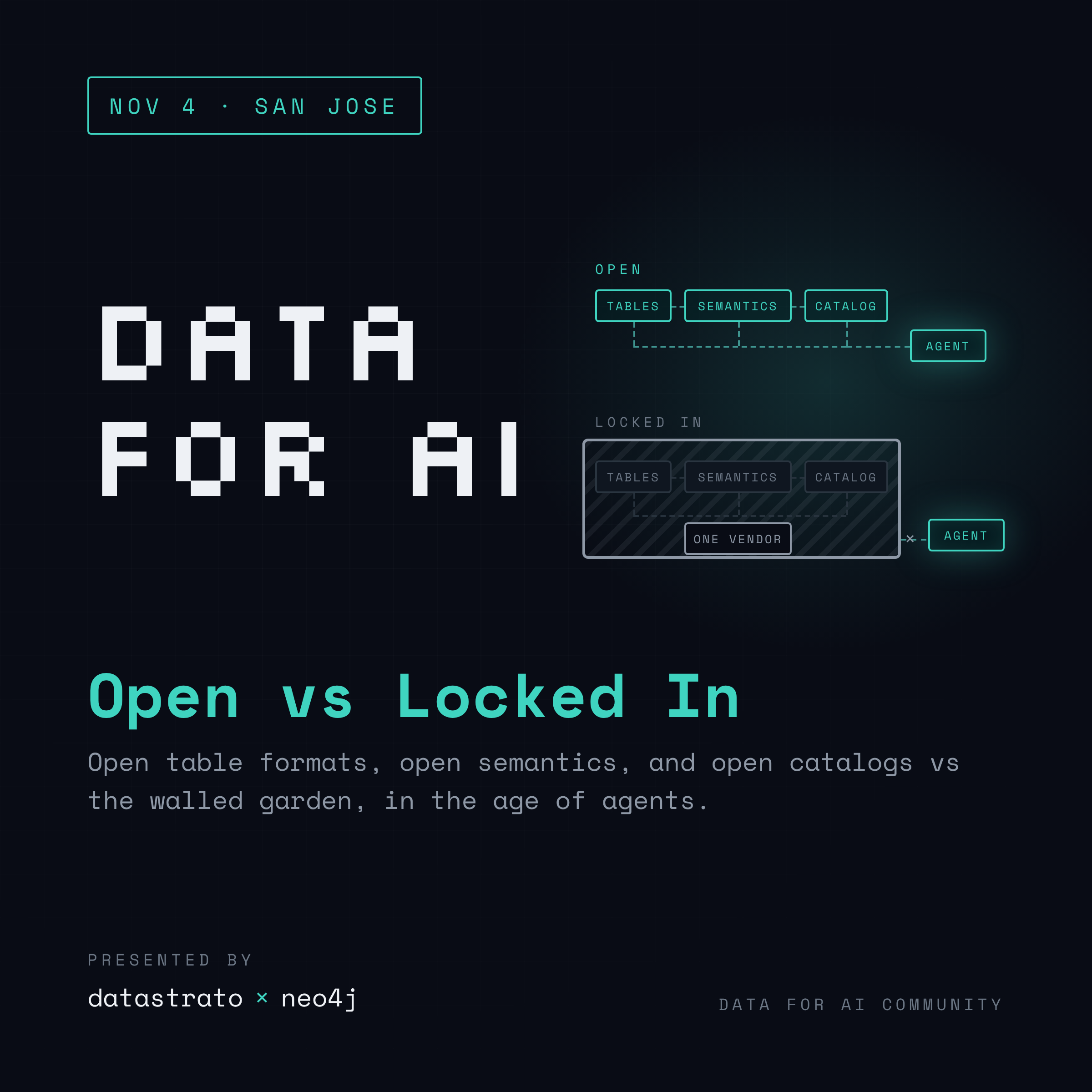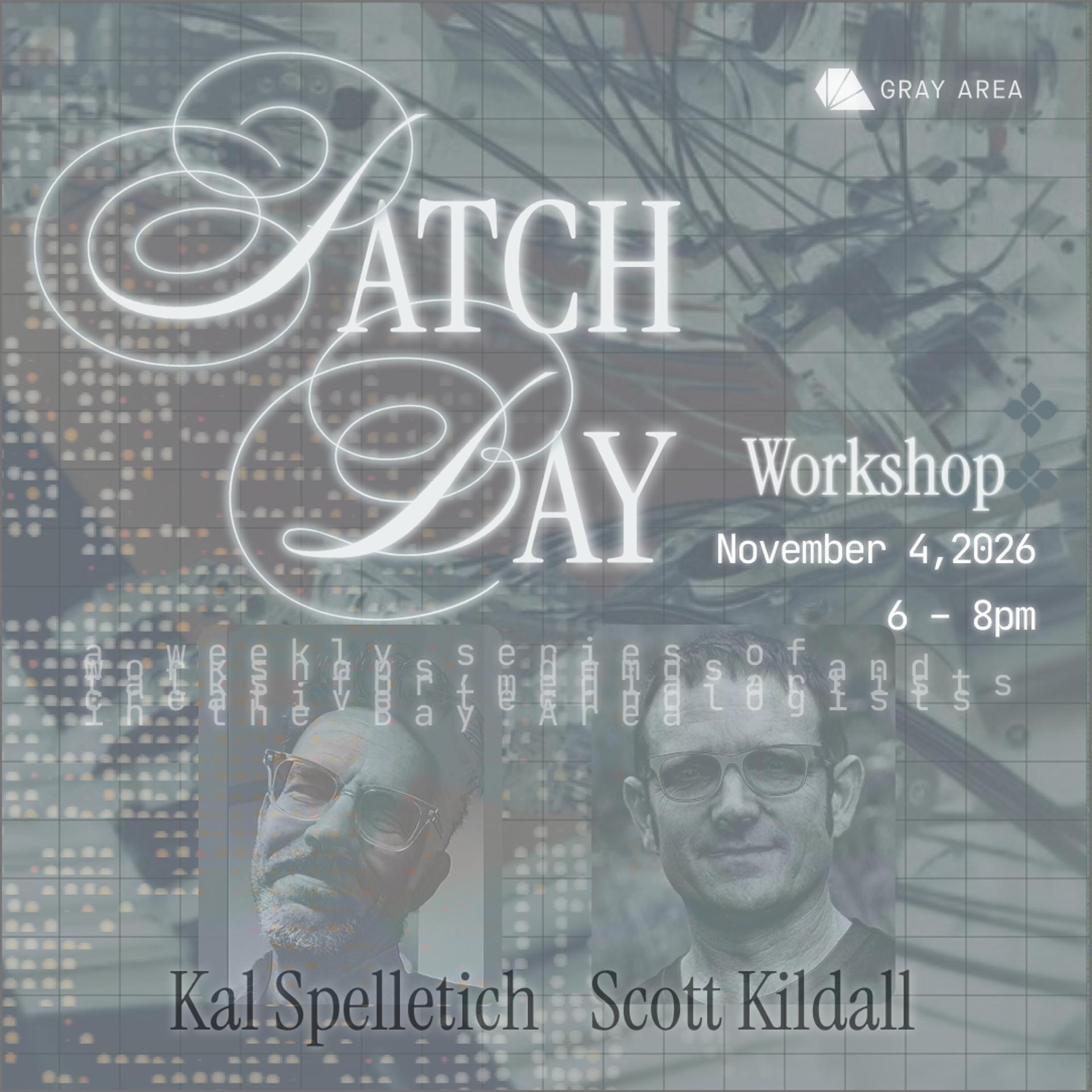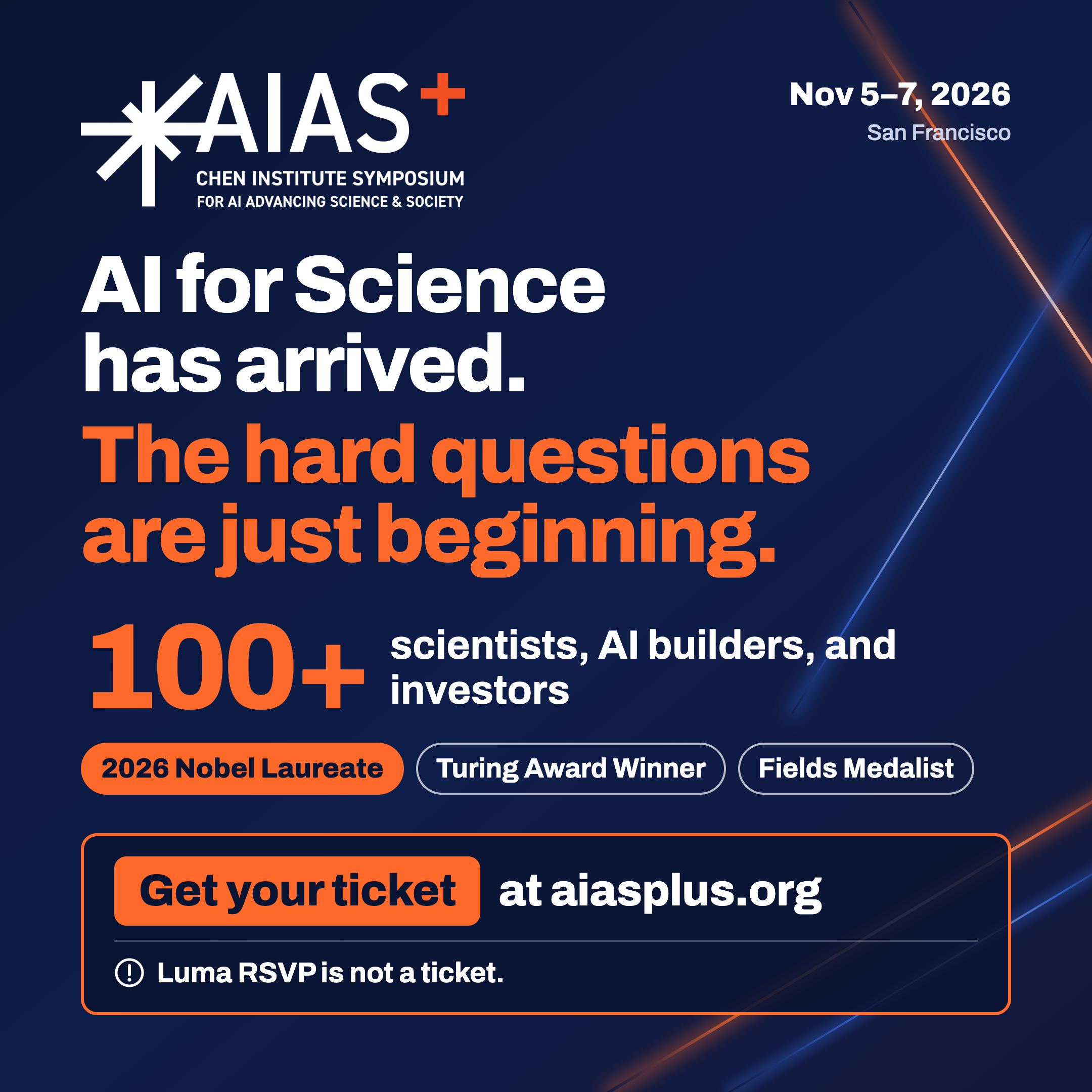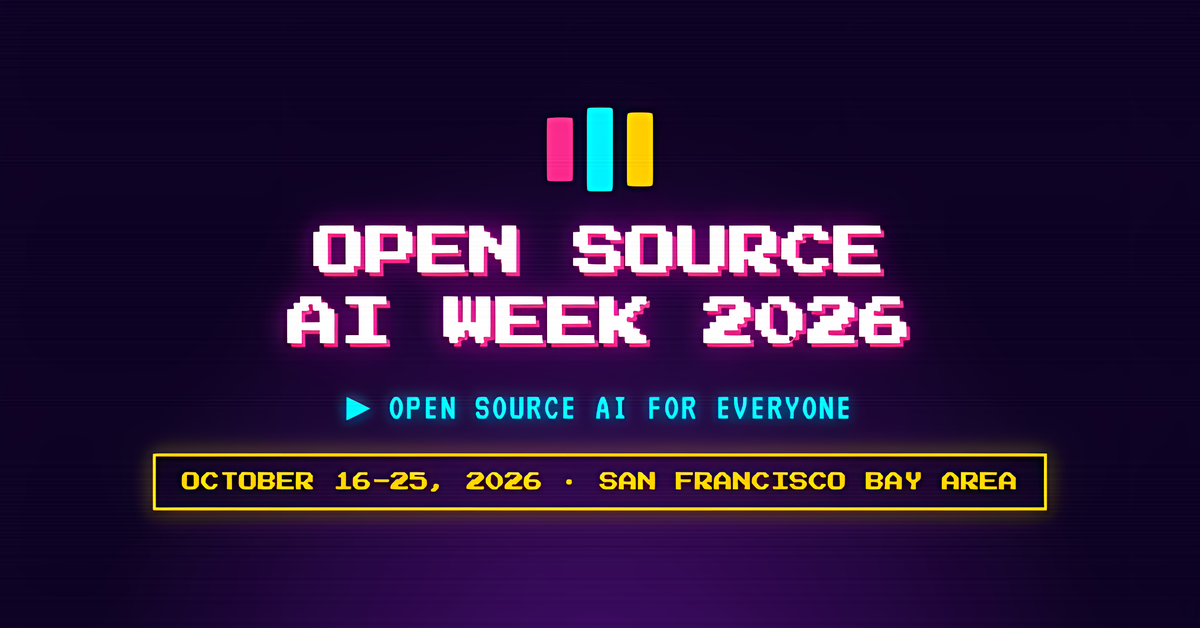
A week-long series of talks, workshops, and hackathons exploring open-source artificial intelligence. The event brings together researchers, engineers, and developers to discuss advances in open-source AI models, tools, and methodologies, with hands-on sessions designed for participants at all experience levels.
A workshop on Catholic social teaching and artificial intelligence, exploring how the Church's tradition of humanistic philosophy engages with AI ethics and technology. Part of the Markey Center's monthly Faith Meets World series, this session includes interactive discussion and reflection opportunities for all participants.
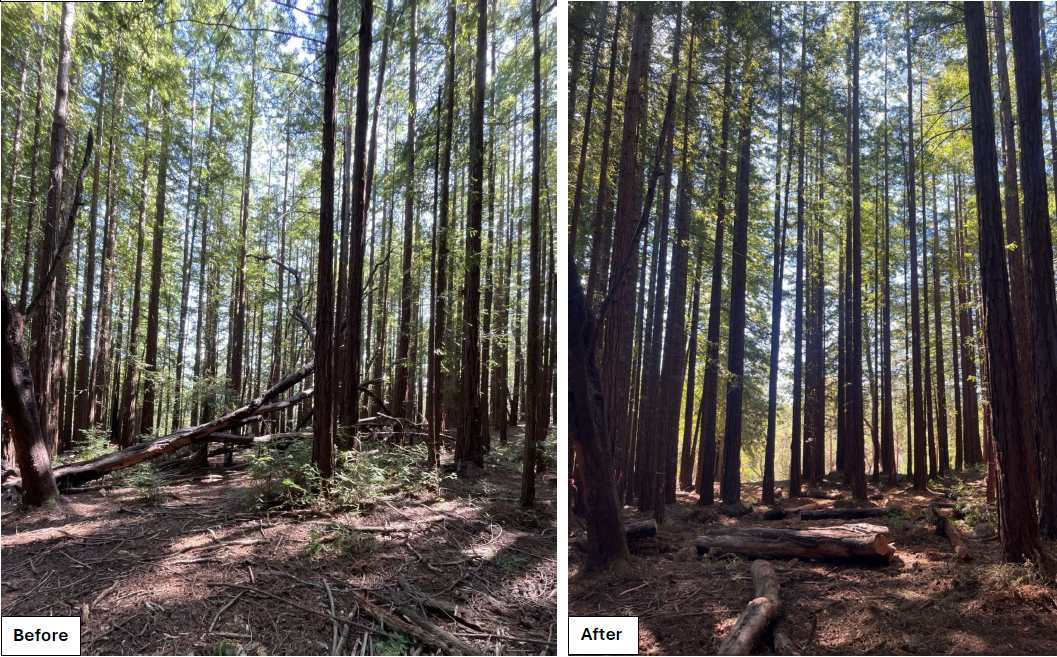
A guided walking tour of UC Santa Cruz's Upper Campus Demonstration Site exploring forest health treatments and wildfire resilience. Participants will learn about the Wildfire Vegetation Management Plan and techniques including thinning, handwork, mechanical treatment, mastication, and chipping designed to lower wildfire risk and support ecosystem recovery. The approximately one-mile walk is led by university experts and supported through a CAL FIRE Forest Health Grant. Comfortable hiking boots recommended; shuttles provided from Barn Theater Parking Lot.
Learn to write effective prompts for AI image generation in this hands-on workshop. AI expert Bridget Burke teaches visual basics, style selection, and prompt-writing techniques to help you create clearer, more accurate results with tools like DALL-E and Midjourney. Explore how to describe layout, mood, and visual style; compare simple versus detailed prompts; and learn what to check before sharing or printing. No art, design, or technical skills required—just curiosity and imagination. This is Class 1 of a 3-part series.
Author and Education Programs Director at Monterey Bay Aquarium Katy Scott reads and signs her illustrated children's book about a hermit crab's 24-hour journey through a tide pool ecosystem. Through the crab's search for a new shell, readers learn about tide cycles, marine adaptations, predator-prey relationships, and the interconnected life of tide pool creatures. Scott brings expertise from nearly 15 years developing STEM education programs at one of the world's leading aquariums.
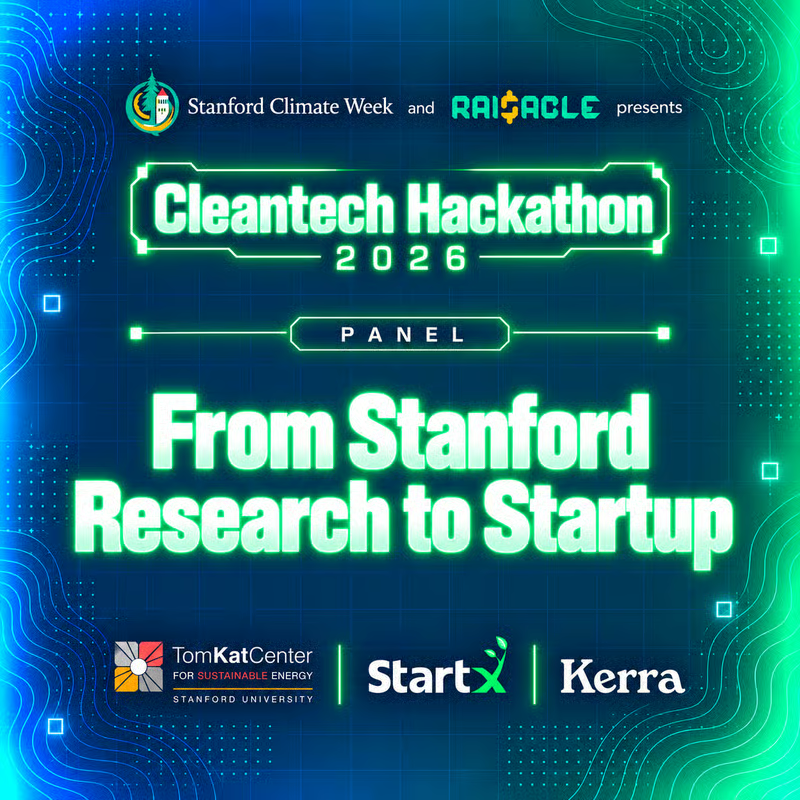
What does it take to turn research into a company? A panel explores the journey from Stanford lab to startup commercialization, featuring Brian Bartholomeusz, Managing Director of Innovation Transfer at Stanford's TomKat Center for Sustainable Energy; Caraiosa O'Farrell, a Stanford founder; and a representative from StartX's energy vertical. The conversation covers idea validation, early-stage challenges, and how to navigate Stanford's entrepreneurial ecosystem for founders at any stage—from hackathon prototype to company launch.
A talk demystifying El Niño and its local impacts, followed by an open community forum on preparedness and resilience. Learn what to expect from this climate pattern and how Oakland residents can prepare.
Learn about the diversity of pollinators in the Bay Area and how native plants and gardening practices can support them. Margaret Flaherty, a California Native Plant Society member and certified California Naturalist, draws on her experience volunteering at Native Here Nursery and leading ecological restoration projects in the Berkeley hills. She brings practical knowledge from her recent Ecological Restoration Field class and her work teaching plant biology to local students.
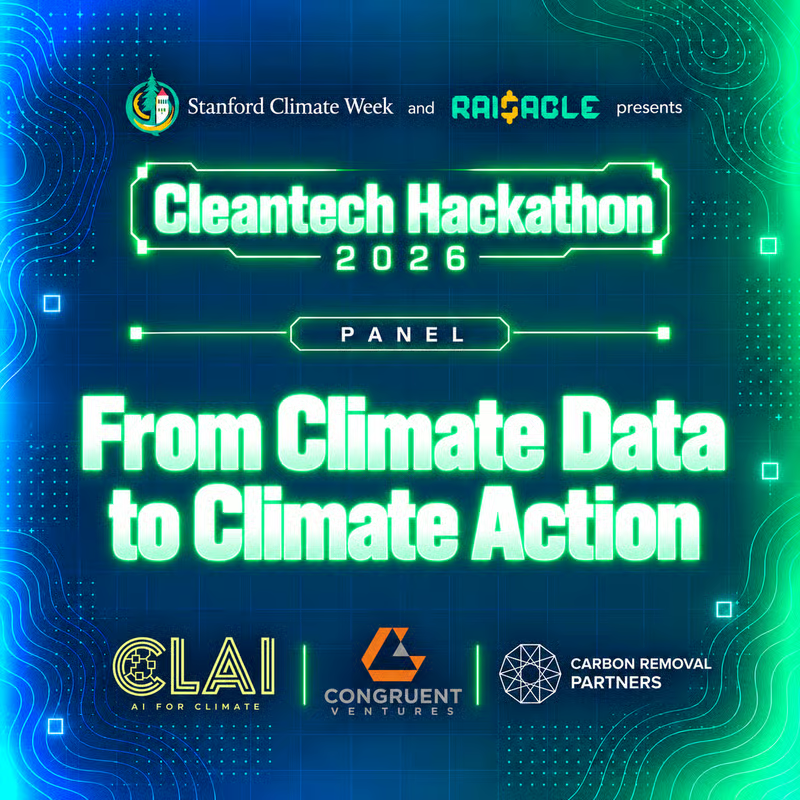
How can climate data drive real-world solutions? A panel discussion on turning climate insights into actionable opportunities, featuring Giancarlo Savini (Carbon Removal Partners), Kevin Kopczynski (Congruent Ventures), and Ajay Gupta (CLAI Ventures). The discussion explores how investors evaluate climate solutions, what evidence validates promising ideas, and what it takes to move from prototype to adoption. Aimed at hackathon participants seeking to connect technical work to customer needs, commercial viability, and measurable climate impact.
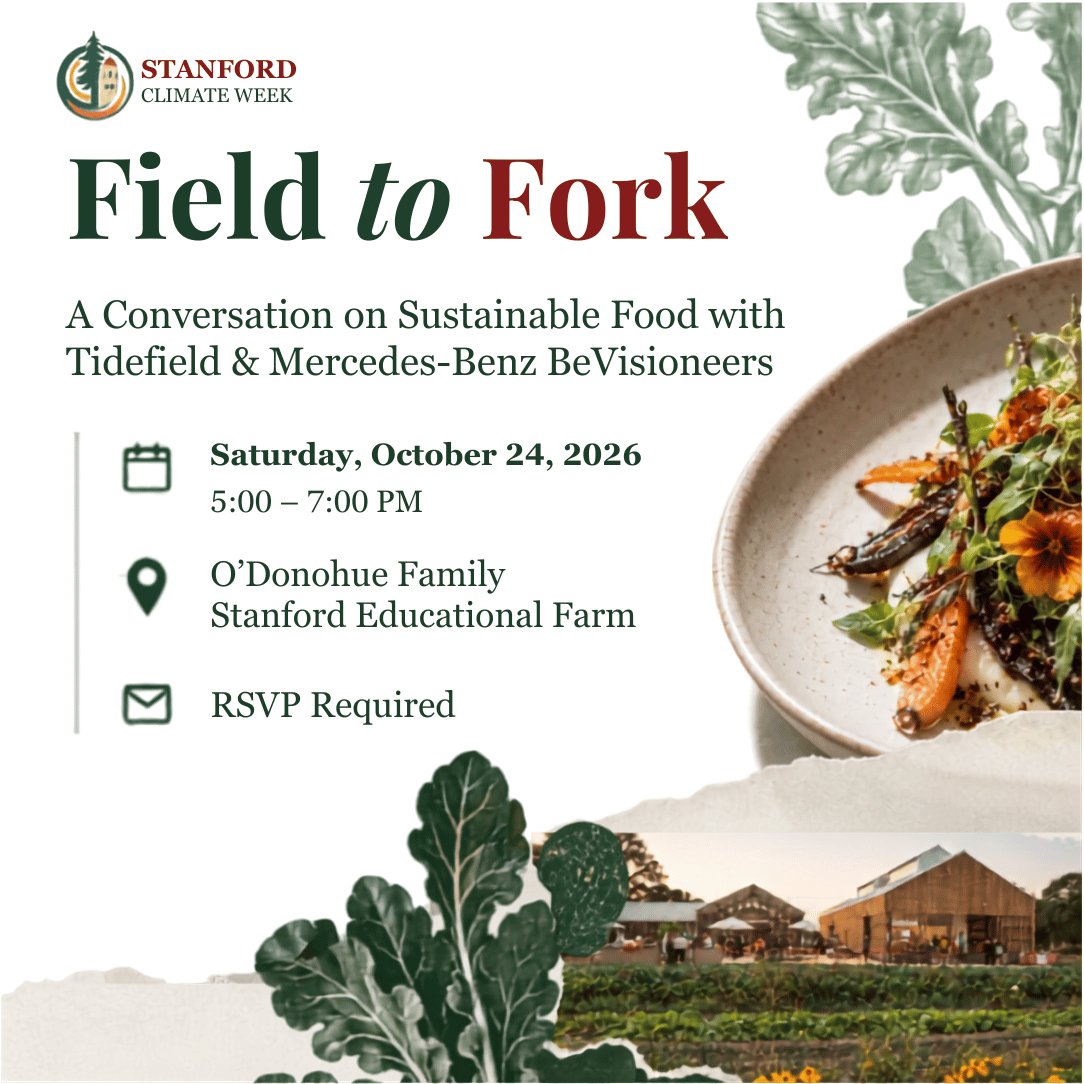
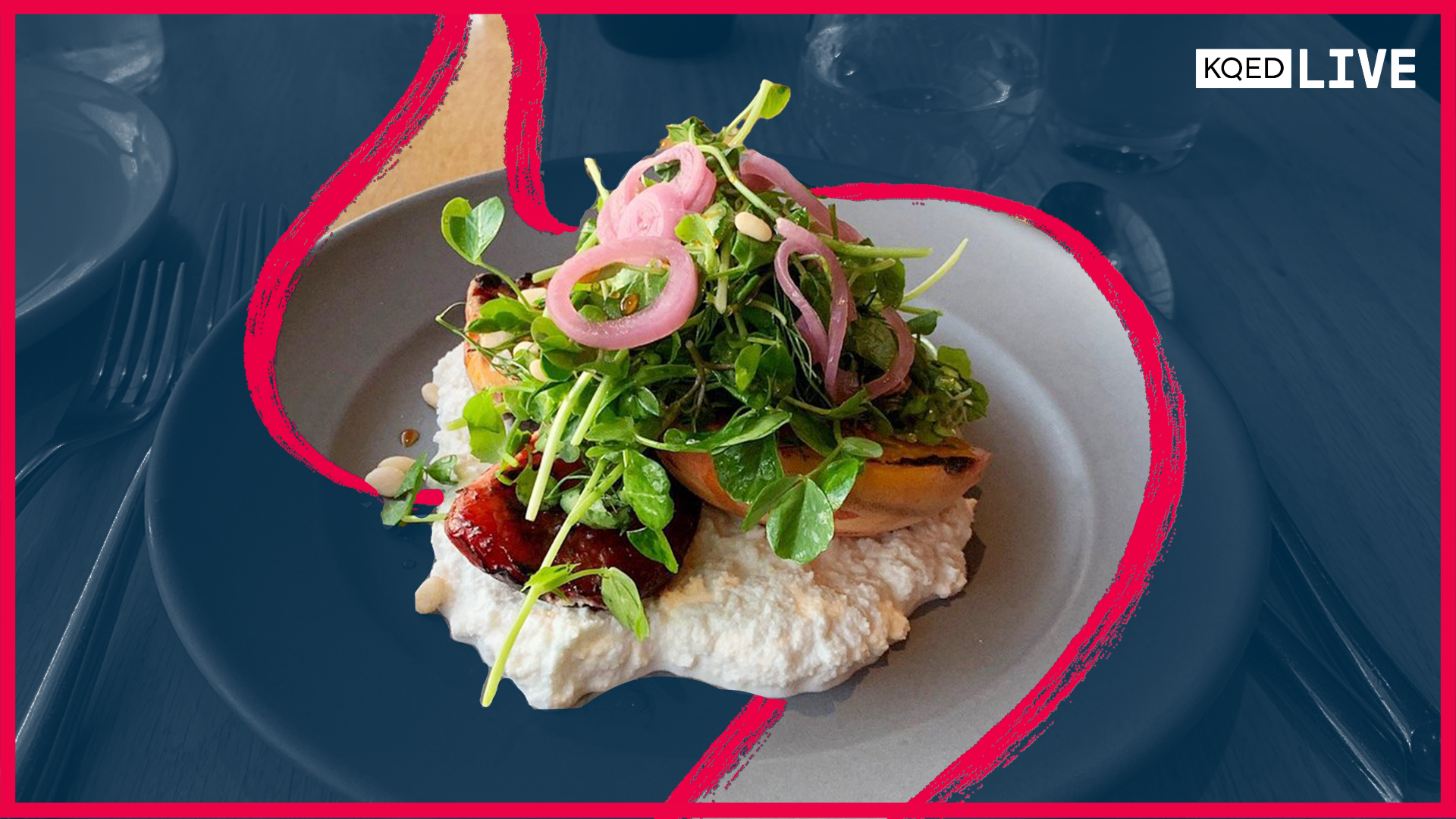
A guided multi-course dining experience exploring sustainable food systems from production to plate. Hosted by Stanford Climate Week Executive Director Naomie Chien and JC Arce, Founder & CEO of Tidefield, with participants from the Mercedes-Benz BeVisioneers fellowship, the event pairs curated dishes with conversations about agriculture, climate, science, and technology. Farmers, researchers, entrepreneurs, and chefs discuss environmental challenges across the food value chain and emerging solutions, examining topics from agricultural climate footprint to the role of consumer behavior and culinary innovation in building sustainable food systems.
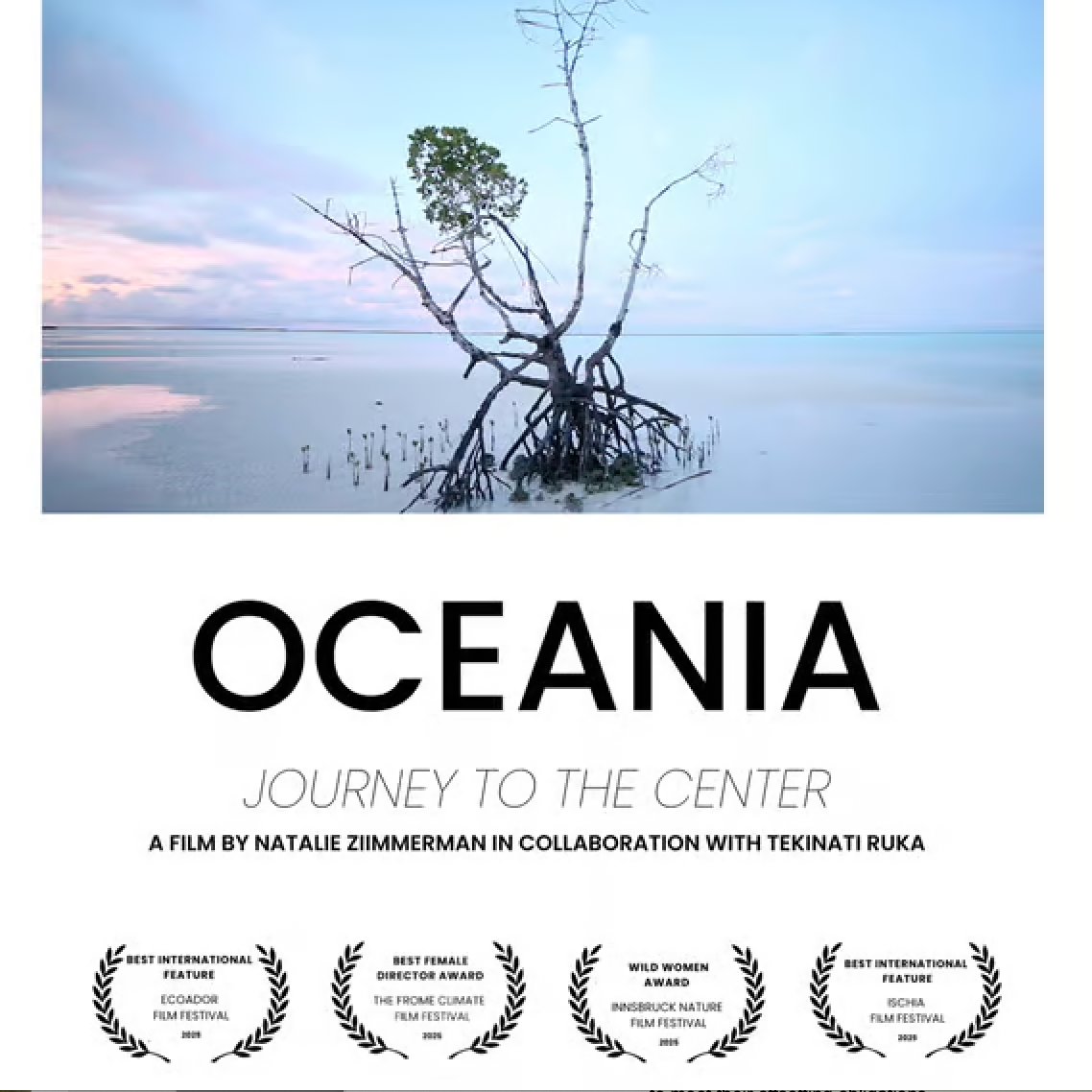
A screening of *Oceania: Journey to the Center*, an award-winning documentary following Kiribati elder Tekinati Ruka as she explores her nation's history, cultural strength, and response to predicted sea-level rise. The 75-minute film will be followed by a Q&A with filmmaker Natalie Zimmerman, who spent 10 years developing relationships in Kiribati, and Impact Producer Lindsay Gordon. The film addresses climate realities facing the Pacific Island nation, which scientists predict may become uninhabitable within a decade, and explores pathways to climate resilience.
As solar, wind, and battery storage displace conventional generators, the grid loses the stabilizing inertia that once came free from spinning mass. This interactive session explores how inverter-based resources can help maintain grid stability, what their limits are, and how reactive power support fits into the picture. Stanford IEEE's Power & Energy Society will walk through real-world grid events and their lessons, with live demos and open discussion. No power systems background required; open to all majors.
Gabriele Vajente, Deputy Head of System Science and Engineering at the LIGO Laboratory (Caltech), explores gravitational waves and what we've learned from a decade of detections. Ten years after LIGO first detected gravitational waves from colliding black holes, the field has become central to modern astronomy. Vajente will discuss how LIGO detects these ripples in space-time, discoveries about black holes and neutron stars, and future directions for gravitational-wave science.
Dr. Becca Robinson, Education Director at the SETI Institute and outreach lead for NASA's Multi-slit Solar Explorer (MUSE) mission, discusses solar mysteries and recent discoveries in solar physics. She will share how a serendipitous research moment led to new understanding of the Sun's atmosphere, and explain how MUSE will help observe magnetic explosions, predict space weather events, and improve forecasting of auroral displays and signal disruptions. The talk follows a 7:30pm social hour with snacks.
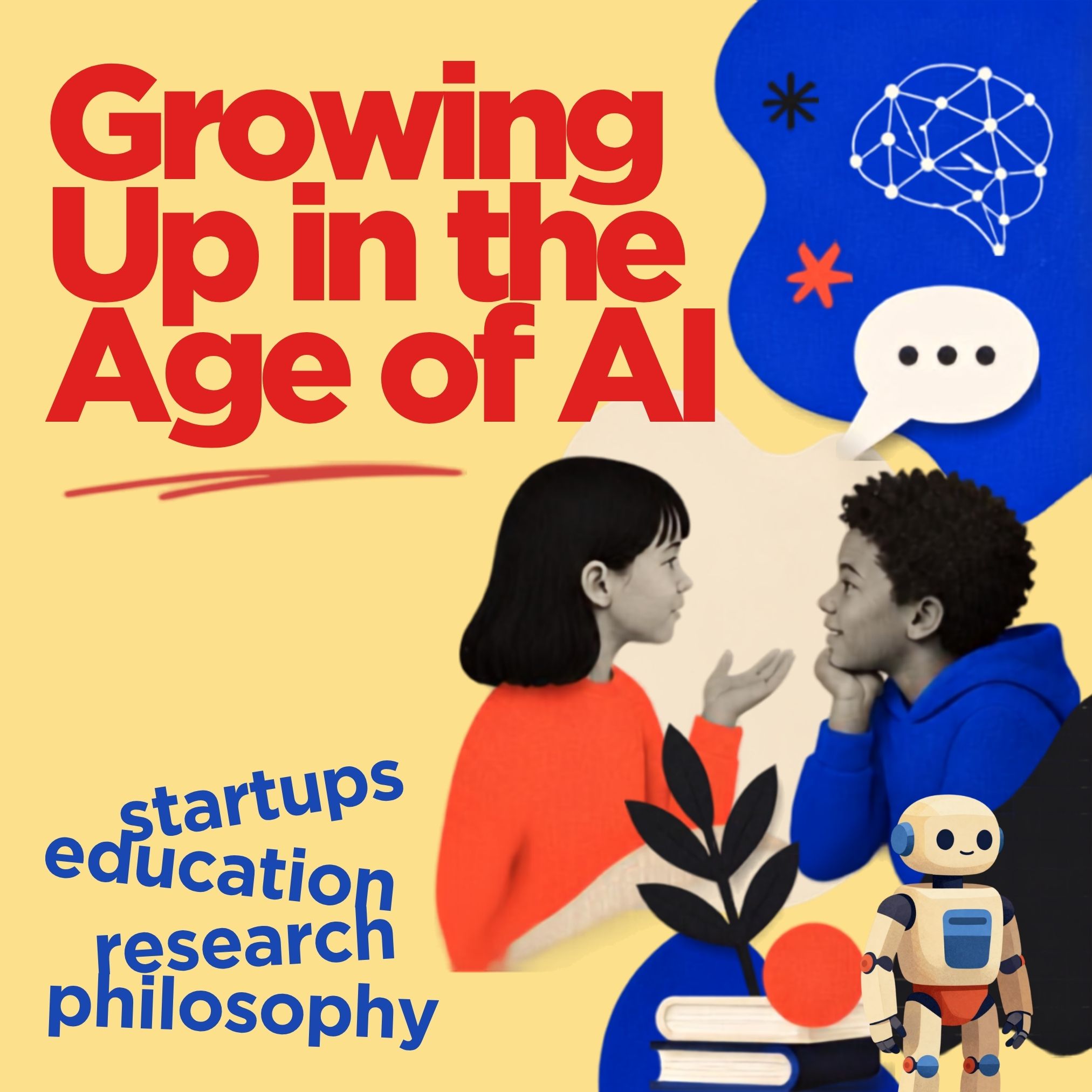
A full-day family event exploring AI's impact on child development, education, and human connection. The program features research presentations and founder conversations on how generative AI is reshaping childhood learning; panels on skills children need for an AI-driven world; workshops including a philosophy discussion ('Can a robot be a friend?') led by The Paradox Lab; an exhibition on brain development co-created with illustrator Linda Liukas; and a startup showcase where families can try emerging AI products for children. Speakers and workshop leaders include researchers, educators, and builders from leading institutions and startups.
A public science talk on sea lion biology, behavior, and global diversity hosted by the Marine Mammal Center, a leading marine research and conservation organization in the Bay Area. Learn about these charismatic marine mammals, their ecological roles, and the challenges they face in ocean ecosystems worldwide.
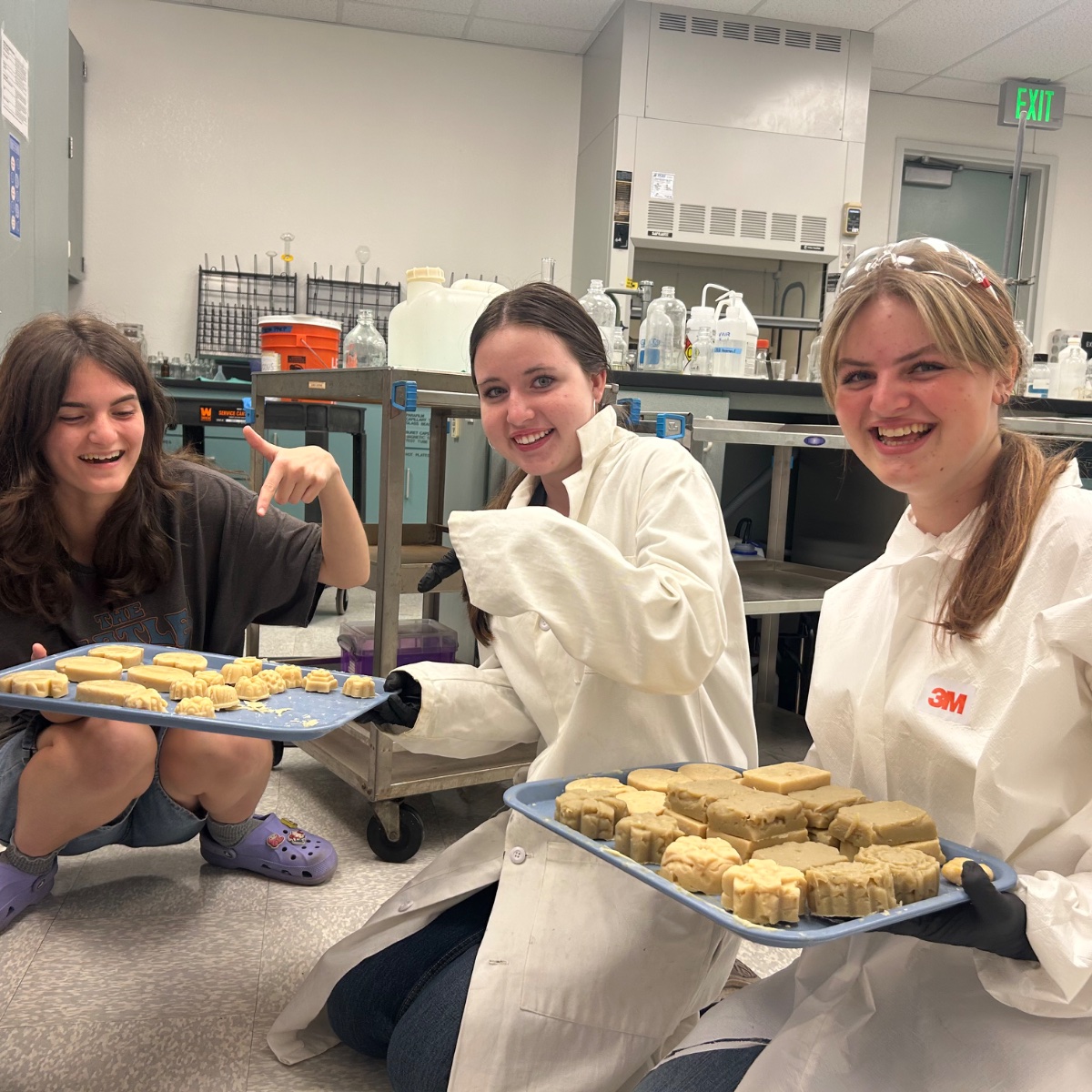
A live demonstration of how used cooking oil is transformed into soap through circular economy principles. Attendees will watch the soap-making process in action, learn about the environmental impact of cooking oil waste, explore the science behind the transformation, and discover ways to support sustainable solutions from everyday materials. The session explores both the practical methodology and the broader concept of converting waste into useful products.
Meet tarantulas in their natural habitat as summer turns to fall. Led by naturalist Alex Collins, this hands-on program explores why these arachnids emerge during mating season and offers a chance to observe them up close. Drop-in, no registration required; adult participation needed.
An intimate, facilitated philosophical dialogue on how AI is changing everyday life. Resonance Salons bring together people across tech, art, care, and community for Socratic-style conversation on rotating monthly themes. Each session includes guided group discussion and a creative share—music, writing, poetry, or other forms of expression. Dinner and drinks provided.
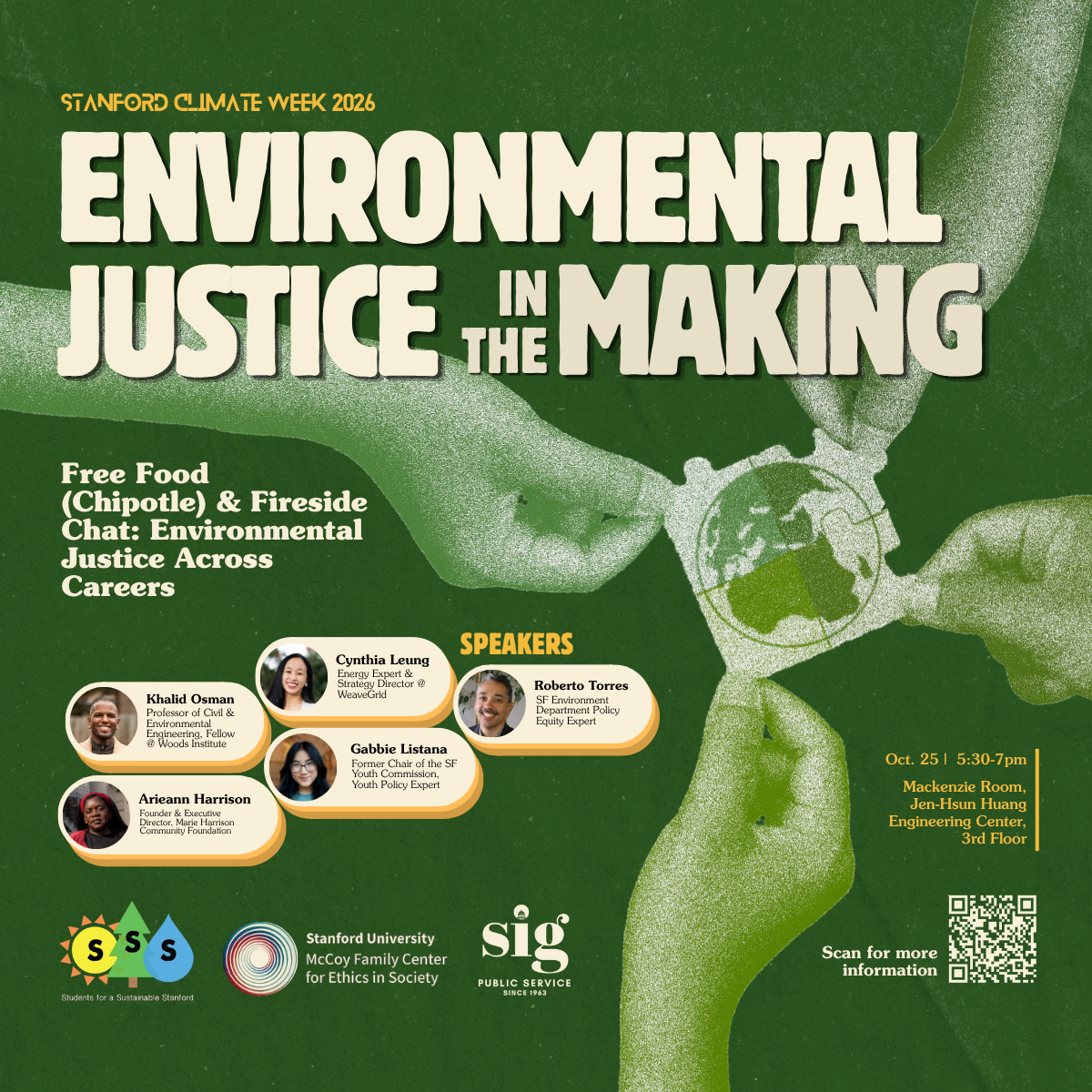
A free dinner and fireside chat exploring how advocacy, research, infrastructure, and public policy can advance environmental justice. Speakers include Khalid Osman (Stanford, environmental justice and equitable water infrastructure), Cynthia Leung (WeaveGrid, utility-scale solar and clean energy), Arieann Harrison (Marie Harrison Community Foundation, Bayview environmental advocacy), Gabbie Listana (San Francisco Youth Commission), and Roberto Torres (San Francisco Environment Department). The event addresses meaningful community collaboration, the interplay between different disciplines, and how students in engineering, law, business, policy, and the arts can contribute to a just, sustainable future.
Launch event for the new Center for Global Maternal and Child Health, a collaborative initiative between the UCSF Institute for Global Health Sciences and the UCSF Bixby Center for Reproductive Health. The symposium showcases maternal and child health research and programs across UCSF with lightning round presentations, roundtable discussions, and opportunities for cross-campus collaboration. Lunch provided.
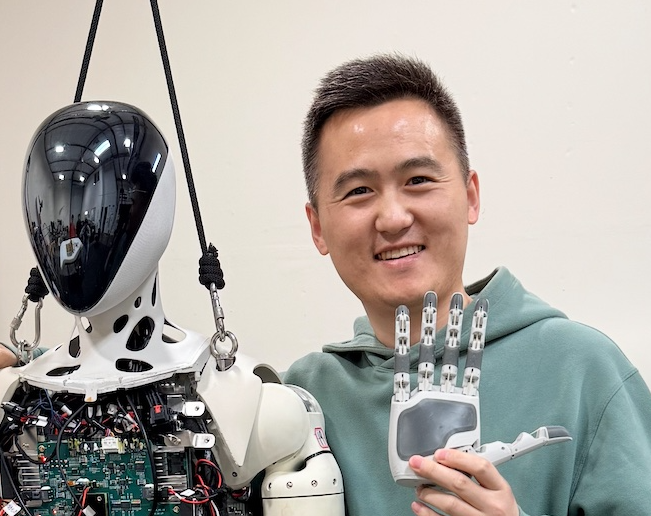
A technical talk on learning dexterous robotic manipulation through simulation and human demonstrations. Joe Dong, co-founder and CTO of Chestnut Robotics, presents two complementary approaches: training in simulation using reinforcement learning with the open-source Aero Hand, and learning from human demonstrations via a matched wearable capture interface. The talk covers hardware design, MuJoCo simulation, sim-to-real transfer, motion capture, contact sensing, and engineering tradeoffs in connecting robot embodiment with training data and simulation environments.
Kapil Ramachandran of Columbia University's Taub Institute for Research on Alzheimer's Disease presents recent findings on neuroproteasomes and spatial control of neuronal proteostasis. Hosted by Lennart Mucke, MD, at the Gladstone Institute of Neurological Disease.
UPenn Assistant Professor Daniel Rock examines how AI is reshaping scientific research by shifting computational and labor bottlenecks. Part of a university seminar series on AI's impact on science and research methodology.
How can policy, law, and institutional design advance equity during periods of social and political constraint? This session explores research-informed levers for creating more equitable developmental pathways for children, families, and communities. Speakers include Wendy Ellis, Associate Professor and Director of the Center for Community Resilience at George Washington University, and Laura Huerta Migus, Director of Fellowship Alumni Engagement at Ascend at the Aspen Institute, with moderation by Katie Albright, Executive Director of UC Berkeley's Equity and Excellence in Early Childhood program.
Urban planner Jesse M. Keenan, Associate Professor of Sustainable Real Estate and Urban Planning at Tulane University, discusses his book *North: The Future of Post-Climate America*. The talk explores how climate change is reshaping where and how Americans live, documenting population shifts that are transforming cities, electoral politics, and regional geographies of risk and opportunity. Keenan examines how markets and public institutions shape human mobility, analyzing communities' capacity to adapt as climate impacts accelerate and Sun Belt migration patterns shift. The event frames climate adaptation through the lens of everyday people caught between fast-moving markets and slow-moving governments, exploring both climate-driven relocation and emerging zones of opportunity for sustainable living.
Nori Nakata, Staff Scientist at Lawrence Berkeley National Laboratory, presents recent research on reservoir evolution during enhanced geothermal system (EGS) development. Using seismic networks and distributed acoustic sensing data from Cape Station and Utah FORGE, Nakata examines microearthquake stress drops, fracture network imaging, and focal mechanisms to understand subsurface stress changes and fracture activation. The work integrates seismic and aseismic slip observations to connect individual earthquakes to reservoir-scale processes and improve geophysical monitoring of geothermal development.
A hands-on tutorial on compiling and debugging code on WAVE, Santa Clara University's High Performance Computing Center. The session opens with an informational presentation from WAVE support staff, followed by supervised practice time and direct Q&A with the technical team. Bring a laptop to access WAVE during the workshop.
A workshop on supporting clients impacted by violence and trauma, led by Orchid Pusey, Executive Director of Asian Women's Shelter. Designed for legal professionals engaged in pro bono work, the session draws on clinical and advocacy expertise to equip participants with trauma-informed approaches to client care. Held in connection with Domestic Violence Awareness Month and National Pro Bono Week.
Dr. Archana Raja, Staff Scientist at Lawrence Berkeley National Lab's Molecular Foundry, discusses how artificial intelligence accelerates the discovery and characterization of quantum materials. She'll present experimental work on topological phase transitions in van der Waals heterostructures, including isotope-controlled switching in HfTe5, then introduce LEAP (Low-Energy, AI-Informed Phase Transitions), a UC AI Science at Scale initiative coordinating theory, experiment, and simulation to target topological materials for energy-efficient electronics. She'll demonstrate Struct-R1, an agentic system that navigates materials structure space through physics-grounded reasoning loops, and LEAP-Bench, a benchmark testing whether AI agents can reason from raw experimental data to scientific conclusions suitable for laboratory deployment.
Brian Trippe, Assistant Professor of Statistics at Stanford, discusses calibration methods for generative models with applications to protein structure prediction. Generative models often produce realistic samples while underestimating probabilities of important modes—a problem Trippe addresses by framing calibration as constrained optimization. He presents surrogate objectives enabling low-variance gradient estimates for stochastic optimization, demonstrating results across hundreds of simultaneous constraints and models with up to nine billion parameters. The talk includes applications for assimilating thermodynamic measurements into generative models of protein structure Boltzmann ensembles.
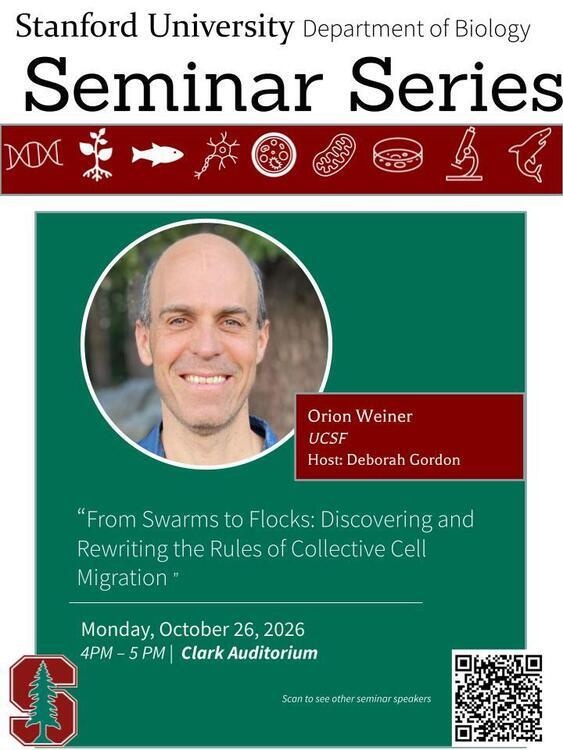
Orion Weiner explores the mechanisms of collective cell migration, drawing parallels between swarms and flocks to understand how cells coordinate movement. Part of Stanford's Biology Seminar Series.
A physics colloquium featuring Alexander Sushkov. This lecture is part of UC Berkeley's regular colloquium series in the Department of Physics, open to the university community and interested public.
A fireside chat on artificial intelligence's dual role in energy systems—driving new demand for power while enabling cleaner, more reliable, and efficient infrastructure. Richard Newell, former CTO of Sustainability Solutions at C3 AI, discusses concrete AI applications in energy, 'physical AI' for grids and infrastructure, AI's reshaping of software deployment, and promising opportunities at the AI-energy intersection, in conversation with John Weyant, Stanford professor and energy systems analyst. The discussion explores lessons from past energy transformations and how students and early-career professionals can contribute to this emerging field.
A conversation on collective action and resistance in the age of AI, examining how technology reshapes privacy, free expression, and accountability. Meredith Whittaker, Signal President and former AI Now Institute director whose research shaped global AI policy, discusses the surveillance practices and power concentration embedded in modern AI alongside Professor Lowry Pressly, who specializes in the ethical and political dimensions of AI and surveillance. The discussion explores how individuals, corporations, and government can be held accountable for technology's growing influence on society.
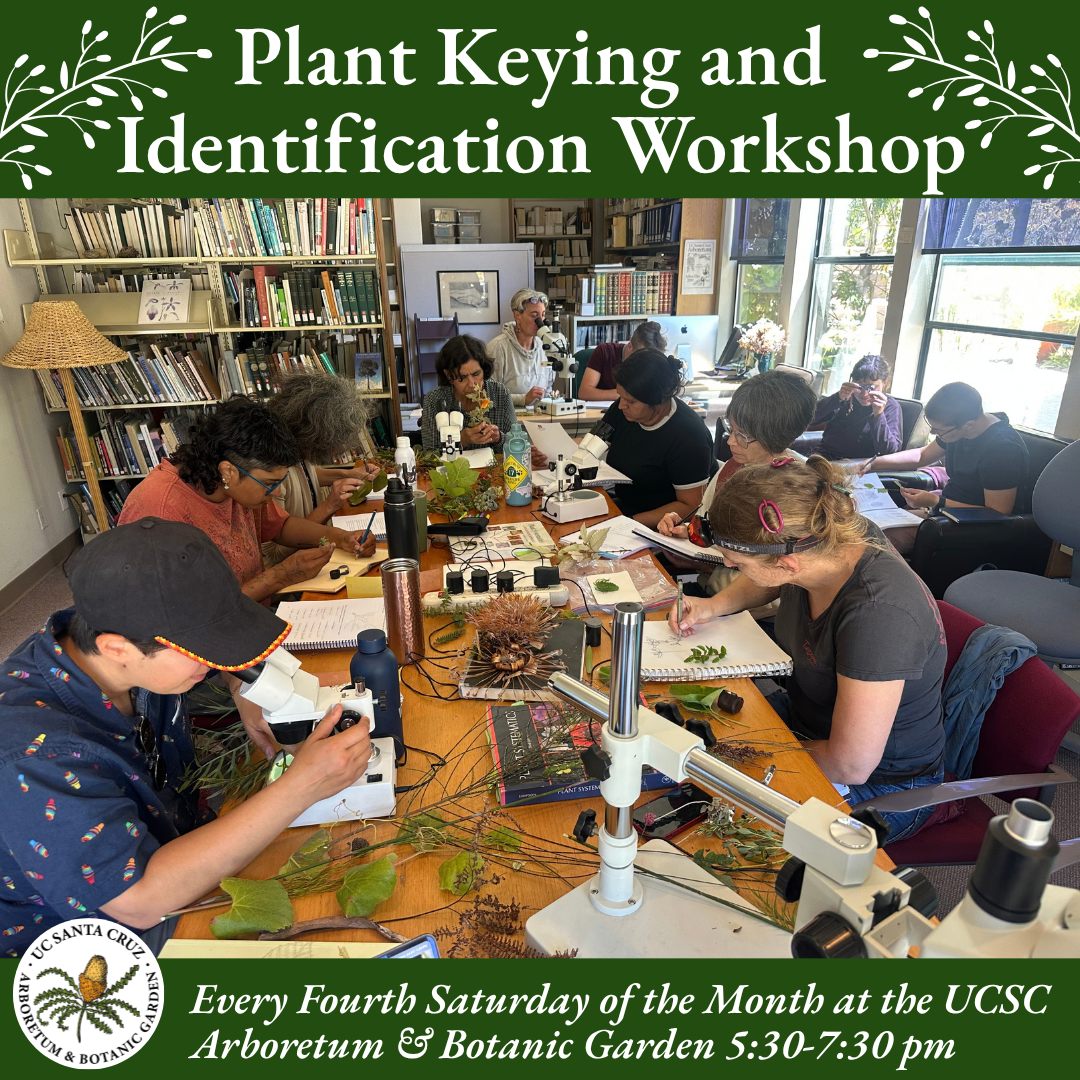
Learn plant terminology and identification techniques in a hands-on, informal workshop led by Lucy Ferneyhough, assistant director of the UCSC Arboretum & Botanic Garden. Participants are encouraged to bring plants to examine together and suggest topics for future sessions. Sessions held the 4th Monday of each month, 5:30–7:30pm at the Horticulture 2 meeting hall.
A practical guide to eliminating hallucinations, optimizing computational resources, and deploying secure, trustworthy, and compliant AI systems. Rush Shahani discusses concrete steps for building reliable AI in production environments.
Experimental astrophysicist Dr. Julie Rolla explores how NASA's work extends far beyond space exploration. Drawing on her experience in ultra-high energy neutrinos, dark matter, AI-driven detector design, and climate-focused satellite applications, she discusses how space science drives advances in medicine, climate science, technology, and emergency response. From telemedicine tools to Mars missions that reveal planetary evolution, NASA's breakthroughs quietly benefit everyday life while inspiring the next generation of scientists and engineers.
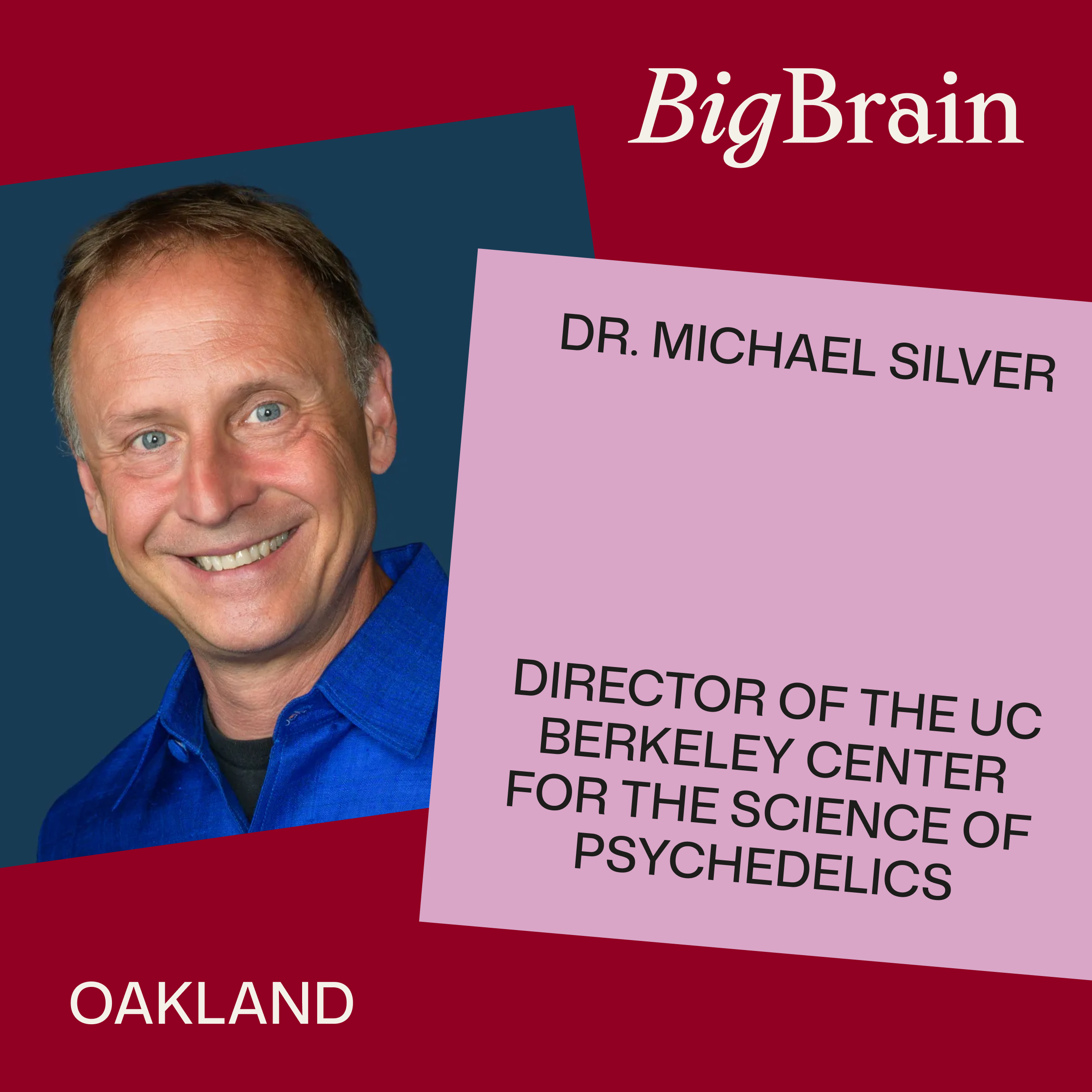
How does the brain construct our conscious visual experience? Michael Silver, Professor of Optometry, Vision Science and Neuroscience at UC Berkeley and director of the UC Berkeley Center for the Science of Psychedelics, explores how vision is an active inference shaped by attention, expectations, goals, and past experience—closer to a controlled hallucination than a camera. He will discuss how psilocybin research is revealing how the brain generates these inferences and illuminating the nature of consciousness itself. Includes Q&A.
Abstract:
"Bend is a proof language whose programs run as fast as C on one core, and in parallel on GPUs. Its checker verifies proofs in seconds, so you can write large programs that are proven correct and still fast. I'll show how it works, and how its core relates to Lean."
Speaker: https://x.com/VictorTaelin
Bend: https://bend-lang.com
The SF Lean meetup: Weekly presentations and discussions about formal methods, software verification, AI, and math. Beginners welcome!
Website: https://sflean.group/
Join our Discord server: https://discord.com/invite/bXNPhQyjfe
Host: Adi Baradwaj
More info: https://luma.com/0zs5pdkz
A two-day conference on market and consumer research — how insights teams work, and what AI, behavioural science, and UX methods are doing to the discipline. Greenbook runs it across three stages, sixteen hosted roundtables, and some sixty sessions, with live technology demonstrations and a startup pitch competition alongside the talks. Speakers include Stanford professor Byron Reeves; Kristen Griffith, insights director at Clorox; Rob Gaige, global head of marketing insights at Reddit; Kendra Shapiro, who leads consumer insights and UX research at Ancestry; Mike Carlon of Charter Communications; and Maya Kantak of Rocket, with further speakers from Microsoft, Visa, Warner Bros. Discovery, and Airbnb. Part of the programme is reserved for client-side researchers.
An annual summit on artificial intelligence and leadership hosted by ODSC (Open Data Science Community). The event brings together data scientists, AI practitioners, technology leaders, and business professionals to explore emerging trends, applications, and implications of AI systems. Held at the Hyatt Regency San Francisco Airport. Pre-registration required; paid attendance.
ODSC AI West 2026 is a multi-day conference bringing together practitioners, business leaders, and AI professionals to explore reskilling opportunities, emerging technologies, and leadership strategies in an AI-driven economy. The summit features keynotes, expert panels, and topic-focused sessions on AI applications, workforce transformation, and organizational strategy. Hosted by the Open Data Science Community at Hyatt Regency SFO.
The Open Data Science Conference (ODSC) AI West 2026 brings together data scientists, machine learning engineers, and AI practitioners for workshops and hands-on training led by industry experts. The conference features technical sessions on AI research, applications, and emerging tools, with opportunities to learn from leading practitioners across academia and industry. Multi-day program with keynotes, breakout sessions, and networking.
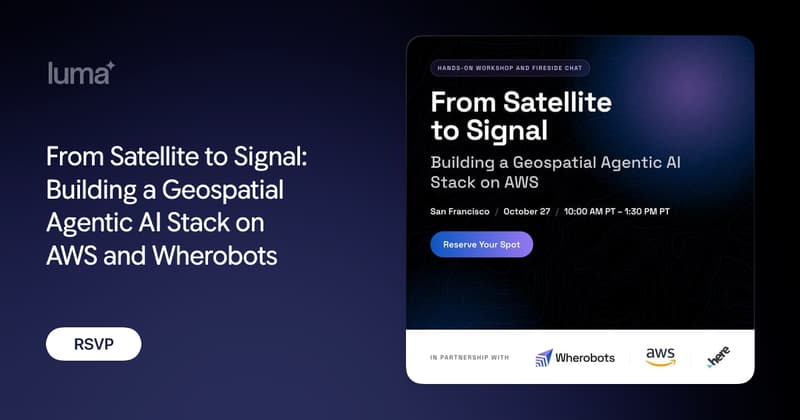
Learn how to build an end-to-end agentic geospatial pipeline using satellite and weather data on AWS and Wherobots. This technical talk covers practical approaches to processing geospatial intelligence at scale, combining machine learning with geospatial analysis. Hosted at AWS Builder Loft.
A research seminar on landslide hazard assessment and forecasting across scales—from individual tree root systems to national risk mapping. Ben Mirus, Research Geologist at the USGS Geologic Hazards Science Center, presents recent work on the national landslide susceptibility map, annual frequency estimates, seasonality patterns, and the critical zone continuum linking atmosphere, biosphere, and groundwater to slope stability. Drawing on post-Hurricane Helene response efforts and long-term site monitoring, the talk addresses knowledge gaps in predicting when and where landslides will occur.
Sidra Hamidi, Assistant Professor at Trinity College, presents her book *After Fission: Recognition and Contestation in the Atomic Age* (Cambridge University Press, 2026). Challenging the assumption that nuclear status is merely a technical matter, Hamidi argues that states actively contest how their nuclear capabilities are recognized globally. Drawing on diplomatic history of India, Israel, Iran, and North Korea, she examines the Non-Proliferation Treaty's legal structure, technical ambiguities in nuclear testing, and debates over rights in the global nuclear regime. Her work illuminates how powerful states like the US recognize or reject states' desired nuclear status formulations—with implications for negotiating with countries like Iran and North Korea.
From Reliability to Resilience: Risk-Informed Asset Management for the Energy Transition. Lina Bertling Tjernberg, Visiting Professor at Stanford University and Professor of Power Grid Technology at KTH Royal Institute of Technology, discusses advances in reliability-centered asset management, probabilistic risk assessment, and predictive maintenance for sustainable power grids. Drawing on two decades of research and industry application, including her leadership at Sweden's national transmission system operator, Bertling Tjernberg explores how risk-informed decision-making can support the transition to electrified, resilient energy infrastructure.
A series of four seminars on advances in genome engineering for stem cell biology and therapeutic development. Featured speakers include James Gardner (UCSF) on normothermic perfusion systems for ex vivo human biology, Dan Wagner on single-cell phenotyping in CRISPR-edited embryos, Michelle Gbenedio on organoid development, and Alex Pollen on experimental techniques for village culture organoids. Sessions run Oct 13–Dec 8, 2026 at UCSF.
A hands-on workshop on designing AI-integrated assignments that promote critical thinking, reflection, and deeper learning. Participants will redesign one of their own assignments and leave with a ready-to-use version. Led by Wendy Lee, Associate Professor in the College of Science at San Jose State University.
A practical seminar on generative AI models, tools, platforms, and workflows designed to accelerate scientific research. Vivek Natarajan, AI researcher at Google DeepMind, will discuss new applications and methodologies for AI-guided research. Followed by a networking reception.
How does hydrodynamics emerge from the dynamics of discrete quantum particles? Matthew P.A. Fisher, professor of physics at UC Santa Barbara and member of the National Academy of Sciences, explores this question in open quantum systems of bosons, examining how spontaneous symmetry-breaking transitions separate quantum from classical dynamics. He will discuss observations of these transitions in cold atomic gas experiments and the role of information-theoretic quantities in characterizing dynamical phases.
A panel discussion on how U.S. universities must restructure to address 21st-century threats, particularly the ecological crisis. Convened by the UCSC Earth Futures Institute, a group of world-class visionaries presents findings on what knowledge society needs and how higher education must reorganize to generate it. Designed for UC students, faculty, administrators, and community members concerned about the role of universities in managing existential challenges.
AI-generated code now arrives faster than validation pipelines can process, breaking the balance between code production and quality checks. This meetup brings together engineers rebuilding feedback systems for the agent era. Speakers and panelists will discuss why this gap matters for change success rates and recovery time, how pairing robust delivery pipelines with sub-minute validation improves efficiency, and how running only relevant tests keeps compute costs down. Hosted by Bond AI with a panel discussion, audience Q&A, and peer networking.
Ayesha S. Mahmud is an Associate Professor of Demography in the School of Public Health at UC Berkeley. She is a demographer whose research broadly examines the interplay between population change, environmental factors, and infectious disease dynamics. The event is moderated by Elora Shehabuddin, Professor of Gender Studies at UC Berkeley.
A Halloween-themed interactive investigation into a broken development environment, hosted by AI Valley and Flox. Attendees follow clues through suspicious dependencies and environment issues to diagnose what went wrong—with talks and live demos from Justin Castilla (Flox), Jessica Garson Beauchemin (Runpod), Amin Karbas (Resolve AI), and Dan Gross (FriendliAI). The event combines technical problem-solving with food, drinks, and networking; costumes encouraged.
An evening of AI research and insights featuring Dr. Ed Chi, discussing the future of personalized universal agents. The event includes a reception with opportunity for networking.
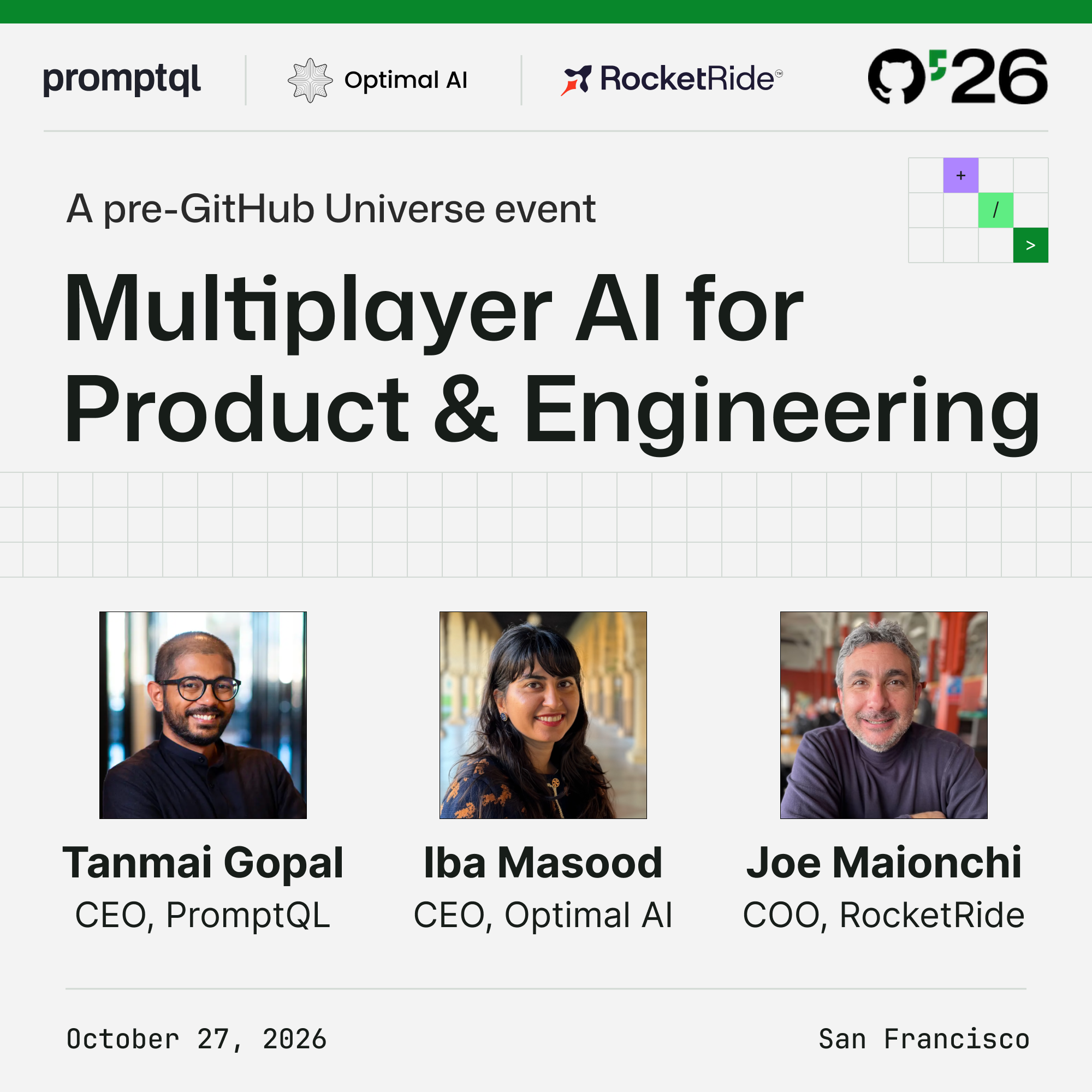
A conversation on how engineering teams integrate AI into their workflows beyond code generation. Tanmai Gopal (CEO, PromptQL) discusses how customer context and team knowledge shape AI-assisted work; Iba Masood (Optimal AI) covers AI code review, quality, security, and measurement; Joe Maionchi (co-founder, RocketRide.ai) addresses moving AI prototypes to reliable production, including testing, debugging, and maintenance. Aimed at engineering leaders attending GitHub Universe.
Physicist and public intellectual Pervez Hoodbhoy examines recent signs of social and political change in Pakistan, asking whether they represent a genuine retreat from religious fundamentalism or a more limited and uncertain shift. Drawing on decades of activism for science and rationalism in South Asia, Hoodbhoy discusses his latest book *Pakistan: Origins, Identity and Future*. Moderated by Munis D. Faruqui, Director of the Institute for South Asia Studies and Sarah Kailath Chair of India Studies at UC Berkeley.
The Information's annual summit for women in tech, media, and finance — what the initials stand for — held over two days at a Yountville resort. The format is onstage interviews with chief executives across the three industries, together with panels, breakout sessions, and networking; published topics include AI agents, the changing shape of SaaS, robotics, crypto financing, and AI in creative work. Tuesday runs as an evening reception and dinner, with the main interview programme on Wednesday. Speakers had not been announced at the time of listing.
A hands-on workshop on physical AI for engineers and developers, exploring how artificial intelligence applies to robotics and embodied systems. Hosted by Nebius and Voxel51 at Silicon Valley AI Hub.
Dr. Catie Cuan, founder of ART Lab (AI Robot Technology) and pioneer in choreorobotics, explores what happens when artificial intelligence moves beyond screens into physical robots. Drawing on her background in dance and robotics, she argues that movement is not merely functional but expressive—shaping emotion, trust, and human connection. Through examples including robots trained to improvise, respond to human gestures, and move collectively, Cuan demonstrates how choreography informs the design of intuitive, responsive, and human-centered machines. Part of UC Berkeley's Design Field Notes lecture series.
Frontier AI systems face real-world challenges at scale: GPU failures, cascading outages, and non-deterministic behavior threaten reliability. This session explores operational lessons from 2026's high-impact AI infrastructure incidents, featuring infrastructure leaders, SREs, and MLOps engineers discussing practical architectures for cluster resilience, inference under pressure, and redefining SLOs for probabilistic systems. Topics include mitigating compute failures, designing fallbacks and circuit breakers, measuring reliability in AI systems, and blameless postmortems from major 2026 outages. Hosted by Bond AI and Rootly.
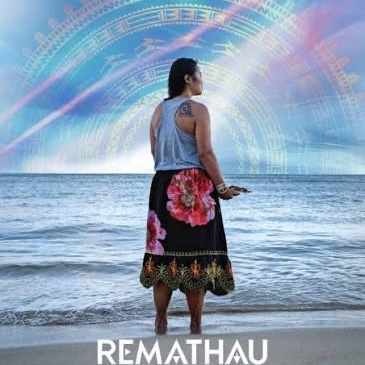
A screening of the 70-minute documentary Remathau: People of the Ocean featuring Dr. Nicole Yamase, the first Micronesian to earn a PhD in Marine Biology and reach the bottom of the Mariana Trench. The film explores her historic dive alongside themes of identity, culture, and belonging, reconnecting with the resilience of her people and the ocean navigation wisdom of earlier generations. Yamase, Director of Impact at OneReef, leads efforts to advance ocean science, conservation, and community-led stewardship across Micronesia. Hosted by Stanford's Doerr School of Sustainability.
A technical talk on building software factories using coding agents, harnesses, and verification systems. Attendees will learn how AI-driven coding tools are being integrated into production workflows and what engineering practices enable scaling from experimental agents to reliable systems.
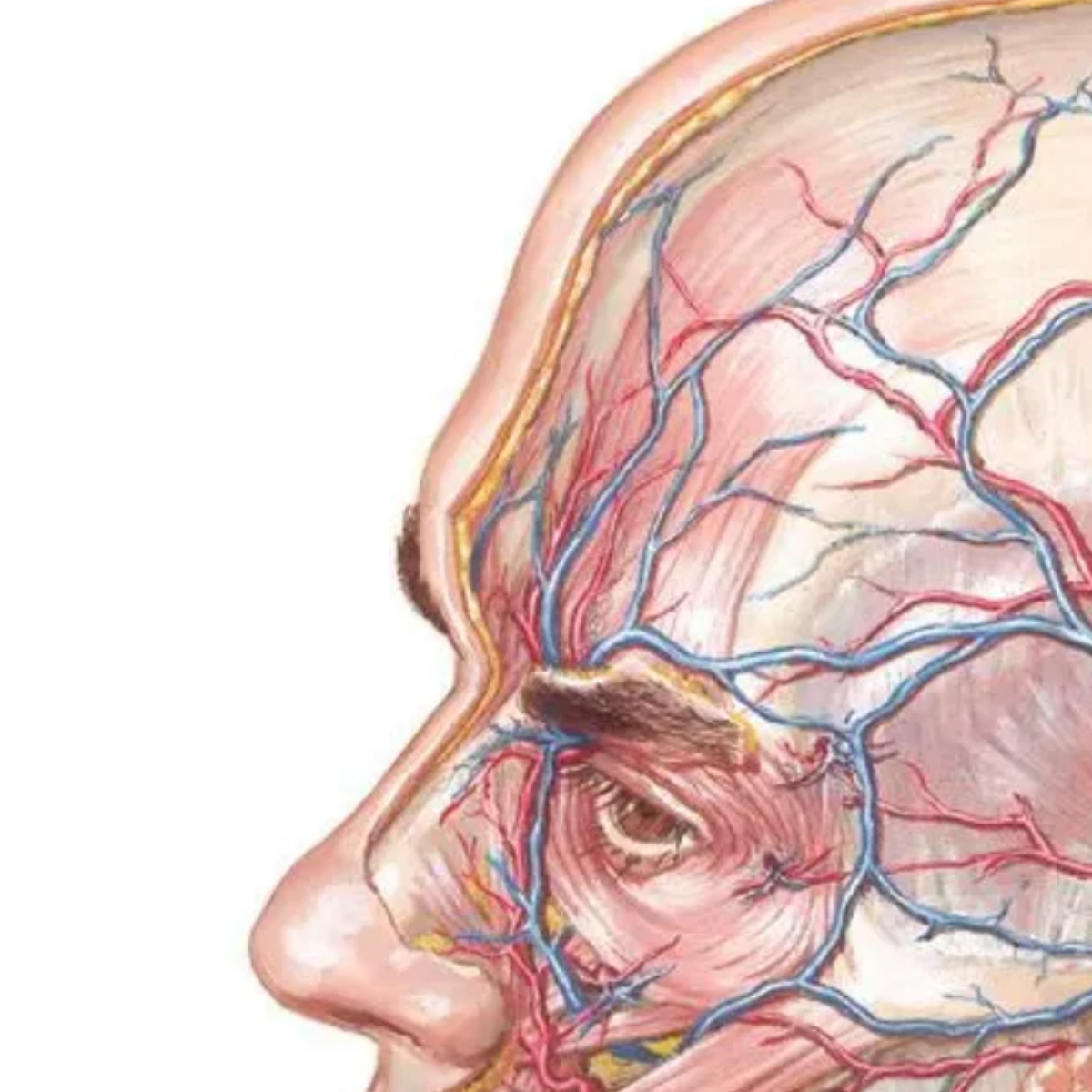
A lecture on Frank Netter's groundbreaking medical illustrations and the intersection of art and science in medical education. Dr. Wen Shen, an endocrine surgeon with a master's degree in the history of medicine, explores Netter's career and his profound influence on how physicians visualize and understand the human body. Part of the Orlo H. Clark Lectureship series.
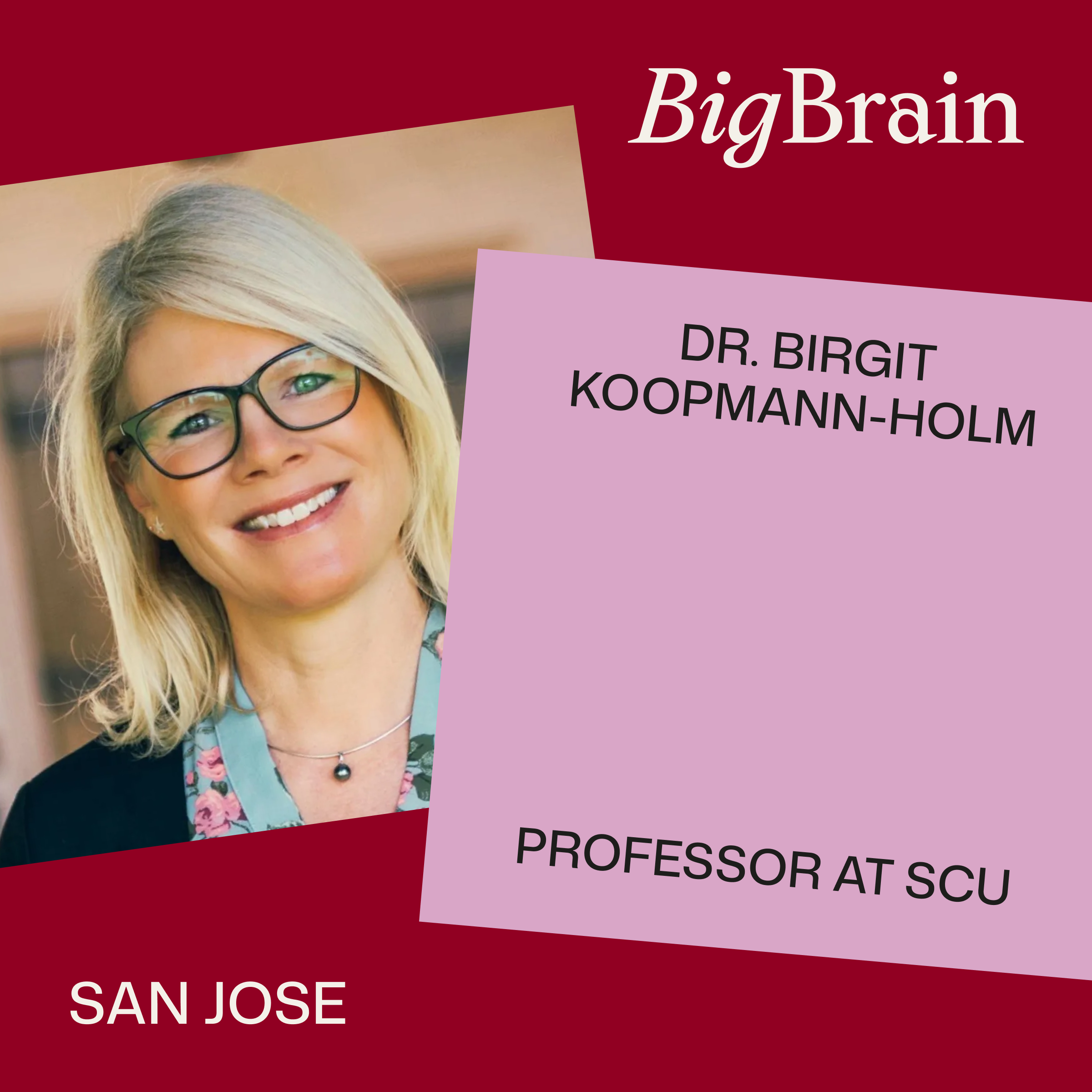
How does compassion differ across cultures? Birgit Koopmann-Holm, Associate Professor of Psychology at Santa Clara University, presents research on how people in the United States, Ecuador, Mexico, China, and Germany understand compassionate responses to suffering. Drawing on hypothetical scenarios and real experiences of bereavement, she shows that cultures systematically differ in whether they favor sharing in someone's pain, helping them toward positive emotions, or balancing both. These differences persist in real grief experiences, suggesting people from different backgrounds may need different kinds of support while grieving. The lecture explores what true compassion means across cultural contexts.
A lightning-talk meetup for Bay Area biosecurity professionals covering pandemic prevention technology, AI evaluation for biorisks, and synthetic DNA screening. Featured speakers include Jonas Sandbrink (CEO, BioTrust) on trusted access credentials for frontier biology, and Misha Gurevich (CEO, Aerolamp) on far-UVC technology. Hosted by Tessa Alexanian and Joey Bream in their personal capacities. The evening includes a meet-and-mingle, talks with Q&A, and informal discussion over snacks.
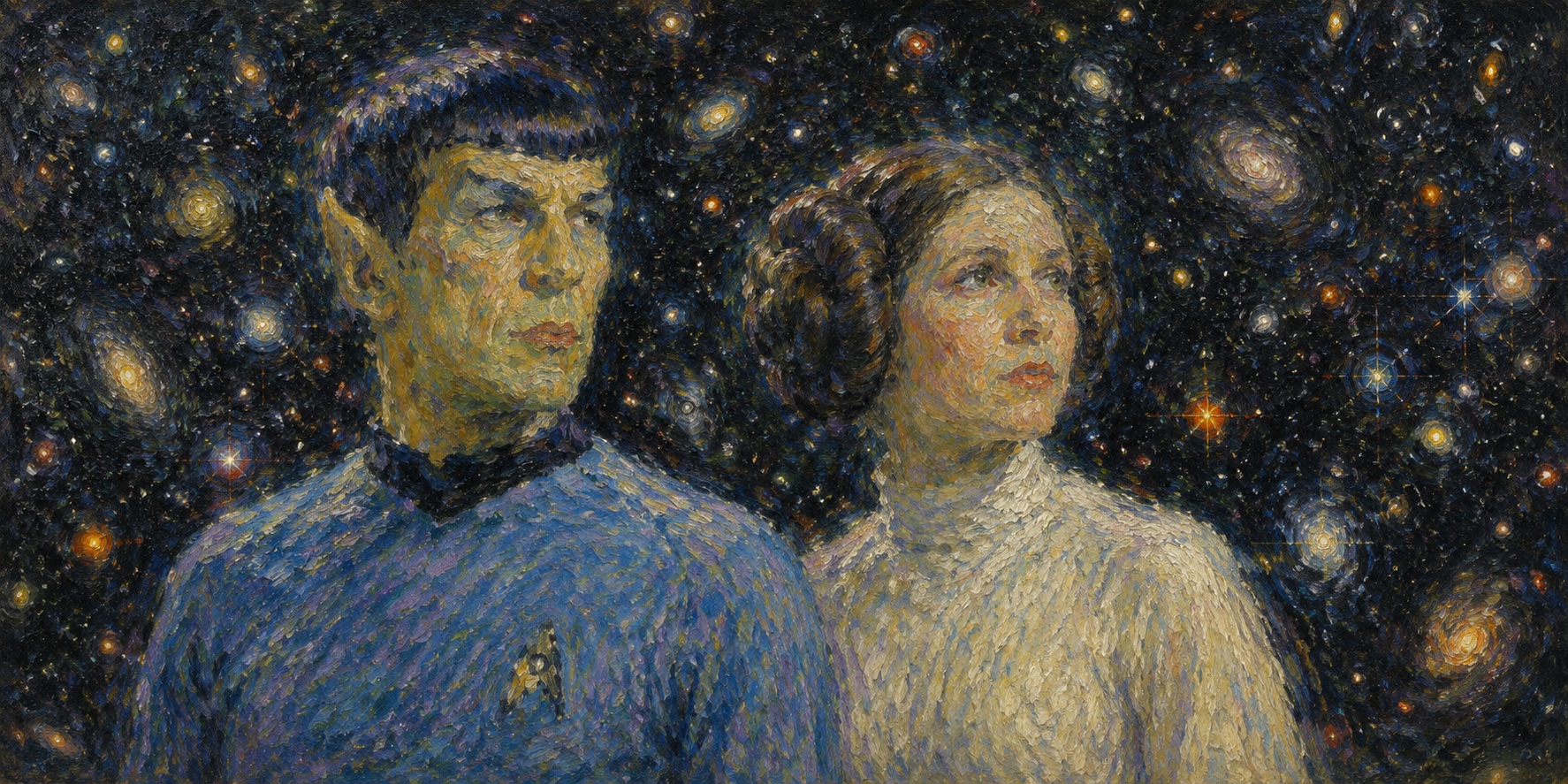
Prof. Thomas Targett separates fact from fiction in depictions of outer space, examining how Hollywood's portrayals in Star Trek, Star Wars, and other films and television shows compare to actual astronomy. A fun and informative exploration of where science and entertainment intersect.
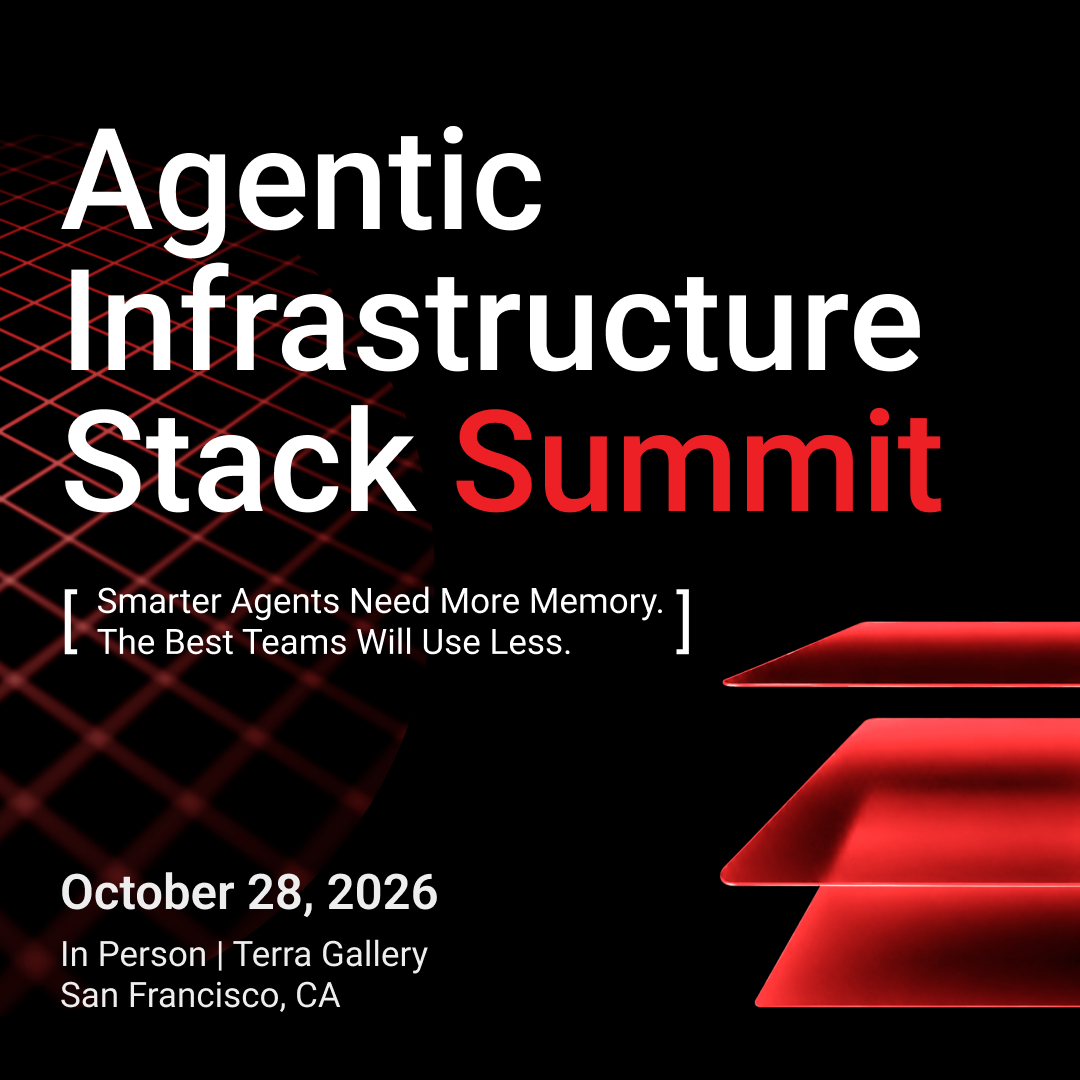
The Future of Decision-Making Conference examines how AI-enabled systems are reshaping high-stakes decision-making across military commands, intelligence analysis, crisis management, and clinical settings. Hosted by Stanford's Center for International Security and Cooperation, the conference brings together scholars, practitioners, and operational experts to discuss cognitive surrender, military decision-making and AI, and featured research presentations. Topics include how reliance on machine outputs reshapes professional judgment and how AI is changing command decisions in practice. October 28, 2026.
An in-person summit for enterprise IT leaders, technical decision-makers, and infrastructure architects scaling agentic AI systems at scale. Hear from enterprise leaders deploying and debugging AI agents in production, exchange technical strategies on inference economics, memory and context infrastructure, AI factory architectures, and agentic workload orchestration. VentureBeat curates a focused peer-networking environment designed for meaningful one-on-one conversations across industries and access to proprietary research on how enterprises are scaling agentic AI.
A conference bringing together customer experience leaders and AI experts to explore the intersection of AI and business strategy. Speakers include James Green and Hemant Taneja, alongside industry practitioners and researchers examining how organizations are deploying AI systems and rethinking customer engagement in an AI-driven landscape.
A Stanford HAI conference exploring the societal implications of rapid AI advancement, centered on workforce and labor concerns. Keynote speakers include Fei-Fei Li (Founding Director, Stanford HAI), James Landay (Denning Director, Stanford HAI), Jeff Dean (CEO, DiscoveryLoop), and Audrey Tang (Cyber Ambassador-at-large, Taiwan). The conference addresses widespread anxiety about AI's impact across sectors, examining questions of human worth and place in a shifting technological landscape.
Regenerate Conference explores the intersection of ranching and grassland bird conservation. Hosted by Point Blue Conservation Science, the conference brings together land managers, conservationists, ranchers, and ecologists to discuss sustainable grazing practices and habitat restoration that support bird populations and ecosystem health across working rangelands.
A talk on early childhood development measurement and monitoring. Susanne Martin Herz, MD, PhD, will discuss the Global Scales for Early Development (GSED), how developmental trajectories can be tracked similarly to physical growth metrics, and how the GSED and D-score inform population-level health monitoring and program design. Part of UCSF's Grand Rounds series exploring global health advances and research.
RNA cleavage is essential for processing and regulating all classes of RNA. Current methods profiling genome-wide RNA cleavage are biased towards cytoplasmic events and ignore compartmentalized differences. We have recently coupled subcellular RNA fractionation with degradome profiling to detect genome-wide nucleoplasm- and cytoplasm-enriched RNA cleavage in Arabidopsis thaliana . Using this enhanced profiling data we are studying RNA processing, including microRNAs, as well as RNA modification-mediated effects of RNA cleavage-mediated post-transcriptional regulation of the plant transcriptome. Our most recent results on miRNA processing and RNA modification-mediated regulation of the plant transcriptome will be presented.
Speakers: Brian D. Gregory, Professor (Department of Biology, University of Pennsylvania)
Economic historian Jan de Vries, Ehrman Professor Emeritus of History at UC Berkeley, presents his newly published book *Life, Death, & Migration in the Early Modern City*, which explores urban demographic dynamics, migration patterns, and social life in a German city around 1700. De Vries is a pioneering scholar of Dutch economic development during the industrial revolution whose work has fundamentally shaped our understanding of early modern European urbanism and economic change.
A seminar on Europa's dynamic ice shell and its potential to support life. Martin Kihoulou, a Fulbright Visiting Scholar at UCSC and recent Ph.D. in Physics of the Earth and Planets, presents evidence for tectonic-like activity on Jupiter's moon—including dilation bands and subduction zones driven by orbital cycles. He explores how vertical transport of chemical compounds across Europa's ice shell might create transient habitable conditions in the subsurface ocean, while addressing inconsistencies between observed surface age and current thermo-orbital models.
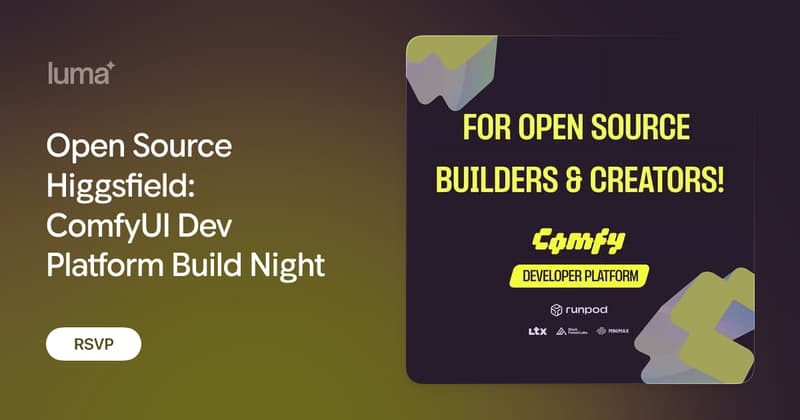
A hands-on build night focused on developing open-source alternatives to paid creative tools using ComfyUI. Participants will collaborate on projects competing for a $10K grand prize. Hosted at Frontier Tower.
How are surveillance technologies and data systems transforming U.S. immigration enforcement, and what are the stakes for civil liberties and democratic oversight? This panel examines the convergence of AI-assisted identification, inter-agency data-sharing, and on-the-ground policing practices. Panelists include David Hausman (UC Berkeley Law, Deportation Data Project), Caitlin Patler (UC Berkeley Goldman School of Public Policy), and Jennifer Urban (UC Berkeley Law, Samuelson Clinic), moderated by Deirdre Mulligan (UC Berkeley School of Information, former Principal Deputy U.S. Chief Technology Officer). Part of the Matrix On Point discussion series.
How does AI infrastructure concentrate power and extract wealth? Geographers Dillon Mahmoudi (University of Maryland Baltimore County) and Alan Wiig (University of Florida) argue that the AI economy is fundamentally material and geographic—anchored to specific territories by data centers, energy demands, and land availability. They analyze two forms of monopoly rent: control of location and network proximity (extracting value from proximity to data and low latency), and control of computation itself (concentrated in a handful of firms charging tribute for access to scarce training capacity). Drawing on financial filings, industry reports, and fieldwork in Northern Virginia's Data Center Alley, they show how what appears as agglomeration economy is actually rent extraction through strategic fixity of capital in digital infrastructure—and how rising fixed-capital requirements are driving a profitability crisis in the sector.
Dr. Alan Wiig, Associate Professor of Geography at the University of Florida, examines how data centers shape cities and urban life. His research explores the intersection of urban geography and infrastructure, investigating the physical form, economic function, and political dimensions of AI data centers as they reshape metropolitan landscapes, labor markets, and resource systems.
How can machine learning transform compiler design to finally fulfill the promise that began with FORTRAN—generating high-performance, architecture-agnostic code across CPUs, GPUs, and specialized accelerators? Saman Amarasinghe, Thomas and Gerd Perkins Professor of EECS at MIT and leader of the Commit Compiler Research Group, traces the history of compiler abstraction, explores how AI is reshaping traditional optimization, and examines whether the next generation of compilers can make hardware disappear once again. Amarasinghe's lab has developed StreamIt, Halide, TACO, Tiramisu, and numerous other influential languages, compilers, and tools.
Learn about indoor air quality, children's environmental health, and practical strategies for creating healthier home environments. Representatives from U.S. Environmental Protection Agency Region 9 will discuss common indoor air pollutants and asthma triggers—smoke, mold, dust, and pests—and explain how to use the Air Quality Index (AQI) to plan safe daily activities. Space is limited; reservations required.
A lecture on scientific explorations of neonatal pain and early life adversity. Dr. Kanwaljeet J. S. Anand, professor of Pediatrics, Anesthesiology, Perioperative & Pain Medicine at Stanford University School of Medicine and director of the Stanford Child Wellness Lab, will discuss his research journey toward changing the paradigm for neonatal anesthesia and analgesia, and his ongoing work on child wellness and early life adversity. The lecture is followed by a reception.
An exploration of how enterprise AI adoption is reshaping infrastructure, security, and data practices across organizations. The event features presentations and discussions on emerging AI applications and their operational impact.
Paul Cohen, M.D., Ph.D., head of the Molecular Metabolism Lab at The Rockefeller University, presents research on how brown fat—the metabolically active tissue that converts energy to heat—affects human health and disease. Using large patient cohorts and novel imaging methods, Cohen's lab investigates the genetics and biology of brown fat to understand its role in metabolic health and its potential to mitigate obesity-linked diseases including type 2 diabetes, cardiovascular disease, and cancer. A systems-based approach to understanding a fundamental lever in human physiology.
Dan Yamins of Stanford University presents on AI and data-driven methods in science. Part of AI + Data for Science, a weekly Wednesday seminar (4:30–5:30 pm) organized by Emmanuel Candès, Balasubramanian Narasimhan, Brian Wandell, and Gordon Wetzstein. Open to Stanford and non-Stanford attendees.
Carina Hong, founder of Axiom Math, discusses AI systems for mathematical reasoning at Stanford's Entrepreneurial Thought Leaders Speaker Series. The series features entrepreneurs and innovators sharing insights on building and scaling ventures.
Build your own AI agents for real estate workflows — transaction coordination, acquisitions, property search, and construction — using Genspark's AI workspace. Led by Corey Griffin, a real estate business owner who has deployed 10 agents for his own company, this hands-on session walks you through setting up agents that plan, research, and execute work autonomously. No experience needed; bring your laptop and a free Genspark account (created before arrival). Designed for realtors, investors, contractors, title professionals, and business owners curious about AI agent capabilities.
A Medical Humanities Research Workshop exploring the intersection of medicine, culture, and human experience. Speaker Bryant Lin, MD, a primary care physician, educator, and researcher at Stanford University, discusses how the humanities inform and transform medical practice and understanding. Part of Stanford School of Medicine's ongoing Medical Humanities Research Workshop Series, supported by the Humanities Center, Division of Literatures, Cultures & Languages, and Department of Anthropology.
A hands-on workshop featuring real robotics demonstrations and practical AI applications, hosted by Nebius and Voxel51. Attendees will engage directly with physical AI systems and explore how machine learning integrates with robotics hardware.
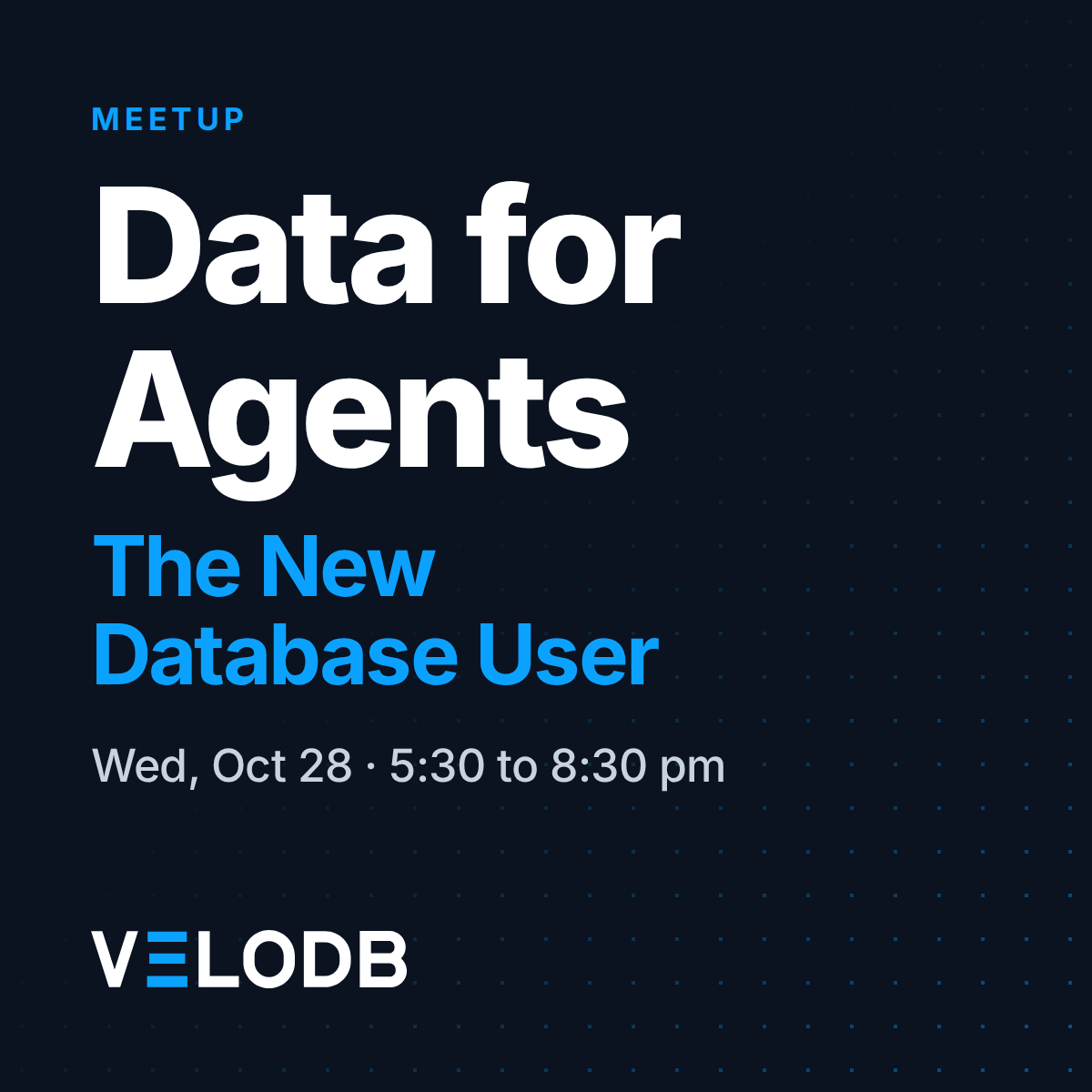
How data infrastructure and database systems are evolving to support autonomous AI agents in production. The talk covers data freshness, parallel request handling, access control, and metadata discovery across the data stack. Speakers include Savannah Whitman (VeloDB) on enterprise AI agents querying databases; Sijie Guo (StreamNative) on agent runtime failures and cost control; Jaz Ku (PuppyGraph) on mapping relationships across thousands of tables; and Adi Wabisabi (Datastrato) on scoping agent access to user permissions. The event concludes with a panel and Q&A.
A hands-on workshop on running AI models locally on your own computer. Participants will learn how to deploy and manage AI systems independently, without relying on cloud services or external platforms. Ideal for anyone interested in AI infrastructure, self-hosting, and practical machine learning applications.
A hands-on workshop in microfluidic cell-free manufacturing—a technique for producing proteins and biologics outside living cells. Participants will work with microfluidic systems to understand the principles and applications of cell-free protein synthesis, a growing field in synthetic biology and biotech manufacturing.
A ProductTank SF meetup focused on building products designed for AI agents. ProductTank is a global community for product managers and builders to discuss emerging challenges and opportunities in product development. This session explores how to design, develop, and ship products that leverage agent-based AI systems, covering product strategy, user experience, and technical implementation for agent-driven applications.
Dr. Priti Patel, Vice President and Chief Medical Information Officer at John Muir Health, discusses how AI tools are transforming patient care and workforce efficiency in healthcare systems. Drawing on her background as a family physician and clinical informaticist, Dr. Patel will explore where AI adds value in healthcare today, practical implementation strategies, and the ethical guardrails necessary for safe and responsible deployment.
Two leading astronomers discuss the frontiers of space science in a laid-back, Q&A-friendly setting. Nick Rodd, a Divisional Fellow at Lawrence Berkeley Lab and former CERN faculty member, presents the latest developments in dark matter detection. Seth Shostak, senior astronomer at the SETI Institute and co-host of the weekly podcast Big Picture Science, explores the search for extraterrestrial life. Part of the global Astronomy on Tap series, this is the revival of San Francisco's monthly chapter. No science background required.
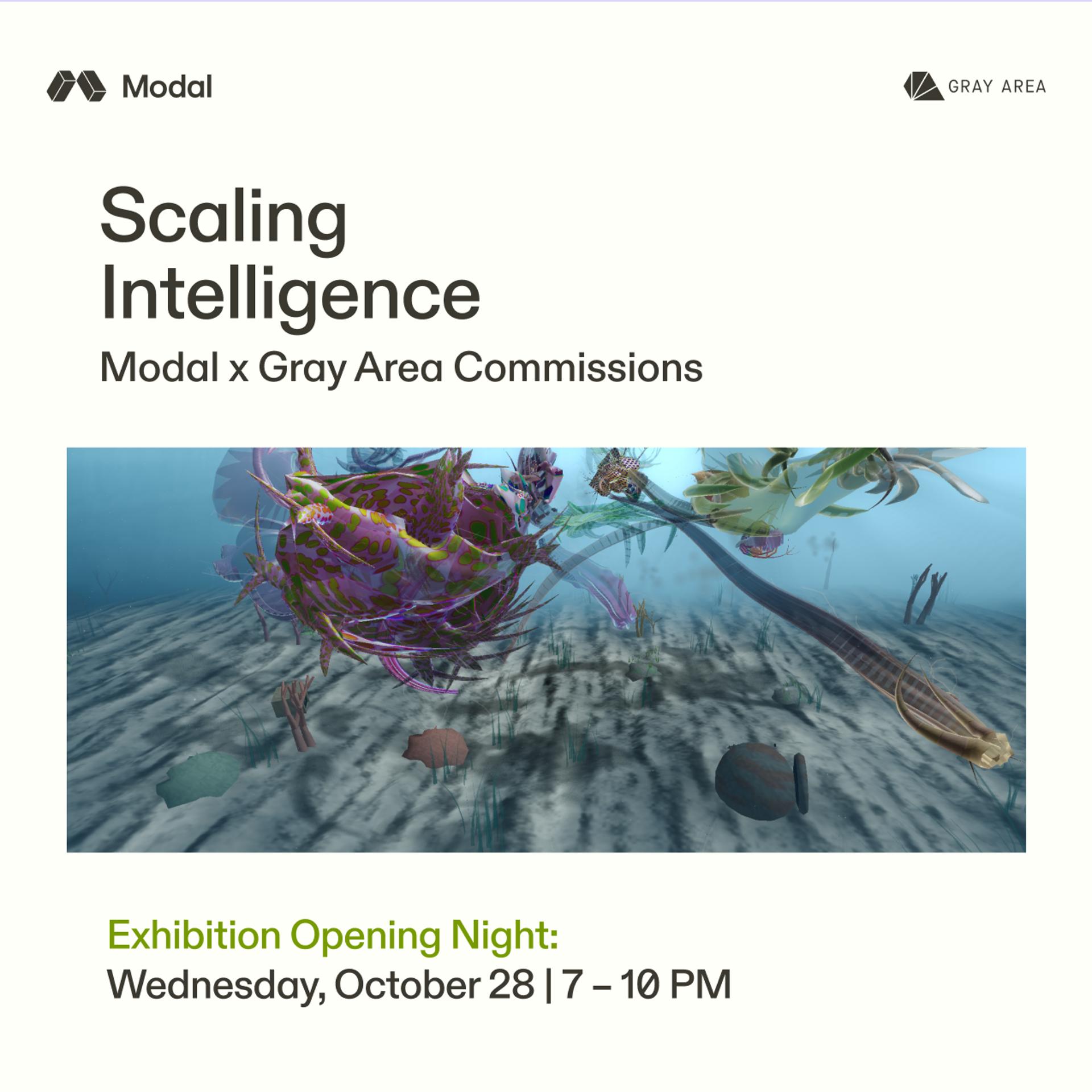
Opening night celebration of Scaling Intelligence, an exhibition of 11 commissioned artworks exploring creative possibilities at the intersection of AI, machine learning, and artistic practice. Selected through a global open call, participating artists developed works with Modal cloud computing credits and support from Gray Area and Modal, investigating how different forms of intelligence might connect, interact, and sense the world. Projects range from satellite imagery and microbial visualization to neural network exploration and watershed mapping. Featured artists include Cezar Mocan, Colin O'Donnell & Justine Sun, Dela Cruz & Will Gardiner, Grayson Earle, Iana Chugunova, Ira Greenberg, Kristina Pulejkova, Miguel Novelo Cruz, Parag Mital, Rashed Haq, Sasha Sorokina, and Spencer Chang. The exhibition runs through November 1.
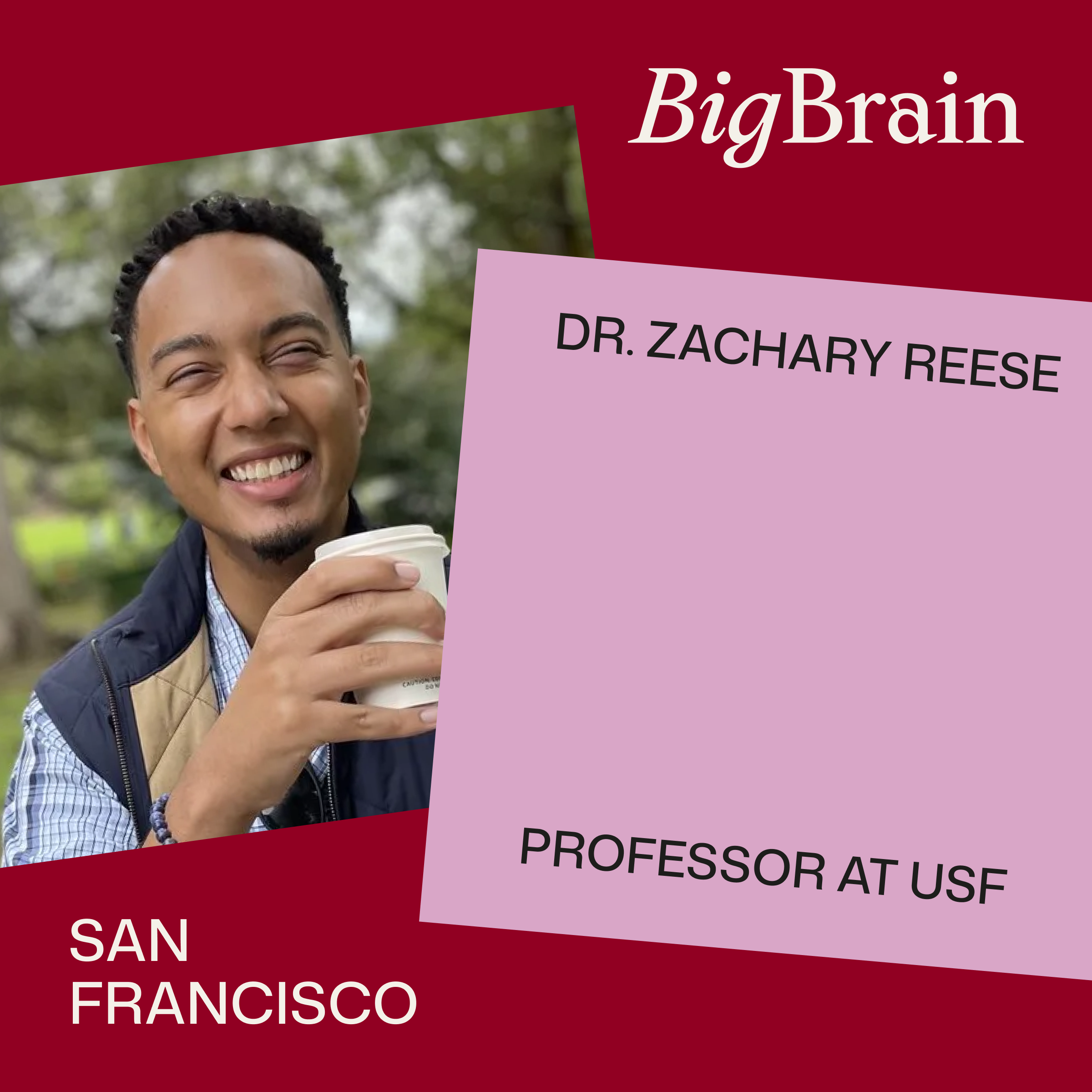
What blindspots shape our everyday conversations? Zachary Reese, professor of psychology at the University of San Francisco, explores the hidden dynamics of human connection: how we calculate sentence endings, build shared reality, and unconsciously follow patterns to make others laugh. Drawing on his research, Reese reveals why people hesitate to share good news (fear of seeming to brag) and avoid mentioning similar experiences (fear of stealing the spotlight)—behaviors that paradoxically undermine connection. He'll present findings from speed-friending studies on first-encounter anxiety and close with practical, research-backed strategies for deeper, more authentic conversations. The evening includes arrival time, lecture, and Q&A.
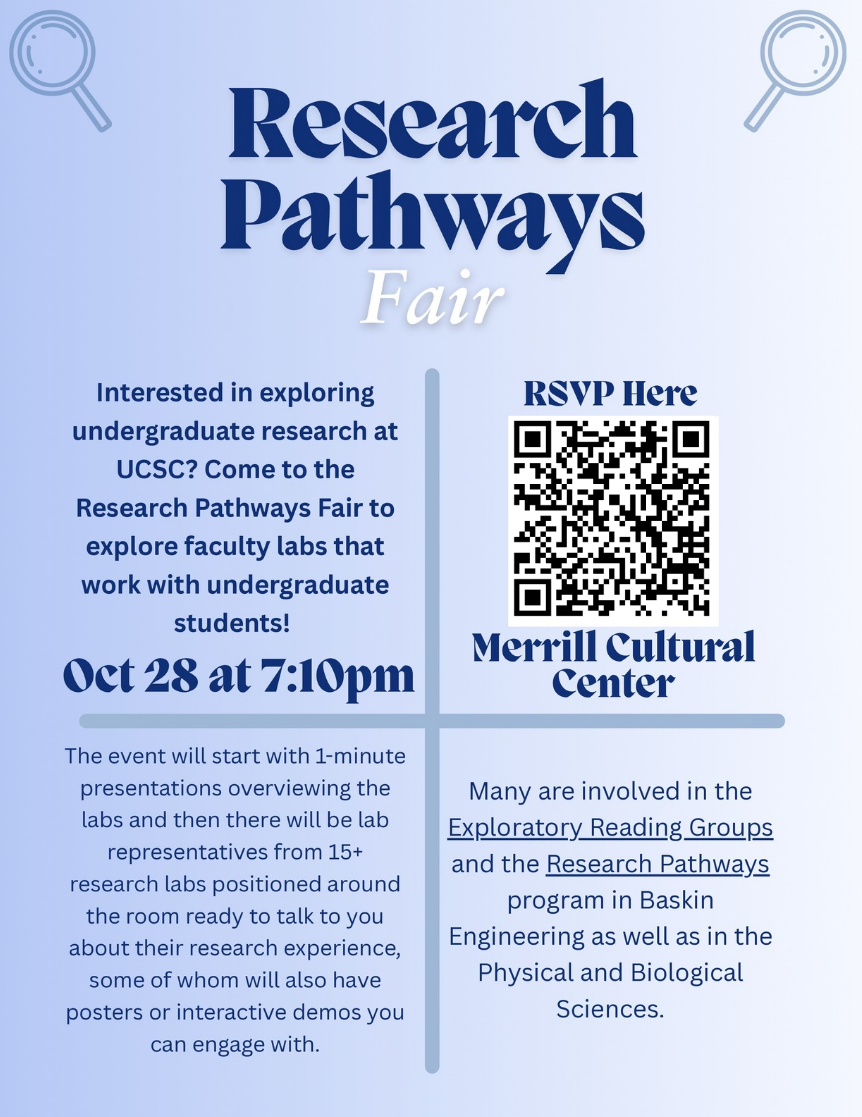
Meet 15+ research labs at UC Santa Cruz presenting posters and demos about undergraduate research opportunities. Labs will discuss their work and research experience across disciplines.
The 4th annual Collaborative Learning Experience on Reproductive Justice brings together medical students, law students, social work students, undergraduates, and others for a day of transdisciplinary learning. Co-sponsored by the UC Berkeley–UCSF Joint Medical Program, UC Berkeley Gender & Women's Studies, the School of Social Welfare, and the Center on Reproductive Rights & Justice, the workshop integrates perspectives from medicine, law, social work, and gender studies to explore reproductive justice as a framework connecting health, rights, and systemic inequality.
The EaRTH Center's 5th Annual Research & Translation Forum convenes researchers, clinicians, and innovators around the theme 'Shaping Health Futures: Leveraging Emerging Technologies to Advance Chronic Disease and Pediatric Research.' The day-long program features research presentations, an environmental health poster session, and collaboration opportunities among Center members and awardees. Hosted at UCSF Mission Bay.
Speaker: Tarje-Nissen Meyer
Professor in Environmental Intelligence, University of Exeter
Abstract:
Soils are among Earth’s most vital ecosystems: they provide 99% of humanity’s calories, store more carbon than vegetation and the atmosphere combined, regulate water, and host most terrestrial biodiversity. Yet soil health remains poorly characterised because key properties such as bulk density, porosity, carbon, moisture, texture and horizon depth, vary at centimetre-to-metre scales, while conventional sampling is destructive, costly and sparse. Seismology offers a non-destructive, inexpensive and scalable way to image these subsurface properties. I will present work by our non-profit Earth Rover Program spanning field experiments on three continents, development of low-cost high-frequency MEMS sensors and AI-based inference, and results showing seismic mapping of bulk density, soil horizons and temporal moisture variation, with promising implications for improved soil-carbon stock estimates.
South Korea's nuclear export journey spans three landmark projects—KEDO in North Korea, Barakah in the United Arab Emirates, and Dukovany in the Czech Republic—each shaped by different international conditions and policy environments. Dr. Eunjung Lim, visiting scholar at Stanford's Asia-Pacific Research Center and professor at Kongju National University, traces how Korea's nuclear capabilities evolved across nonproliferation cooperation, energy development, and commercial competition. As AI and data centers drive renewed interest in nuclear power, she examines whether Korea's future may require returning to a core lesson: the centrality of international cooperation in nuclear policy and energy security.
How are observatories adapting to survive mounting pressures from wildfires, light pollution, satellite megaconstellations, and federal budget cuts? Dr. Teznie Pugh, Superintendent of McDonald Observatory at the University of Texas at Austin, explores the field's response, arguing that modern astronomy requires training in advocacy, communication, and policy alongside excellent science. She examines coalitions among observatories, environmental and climate scientists, conservation groups, and elected officials, and draws lessons from satellite negotiations, light pollution regulation, and wildfire mitigation strategies.
How can data visualization deepen scientific investigation and communication? Eric Rodenbeck, founder of Stamen Design, discusses collaborations with UCSF scientists and researchers, including the Atlas of Emotions with Paul Ekman and the Dalai Lama, the UCSF Health Atlas with Dr. Debby Oh, and Brain Cartography with Dr. Edward Chang. He explores how maps, interfaces, and visual systems can reveal complex data, expose unexpected relationships, generate new questions, and help researchers and broader audiences understand science differently.
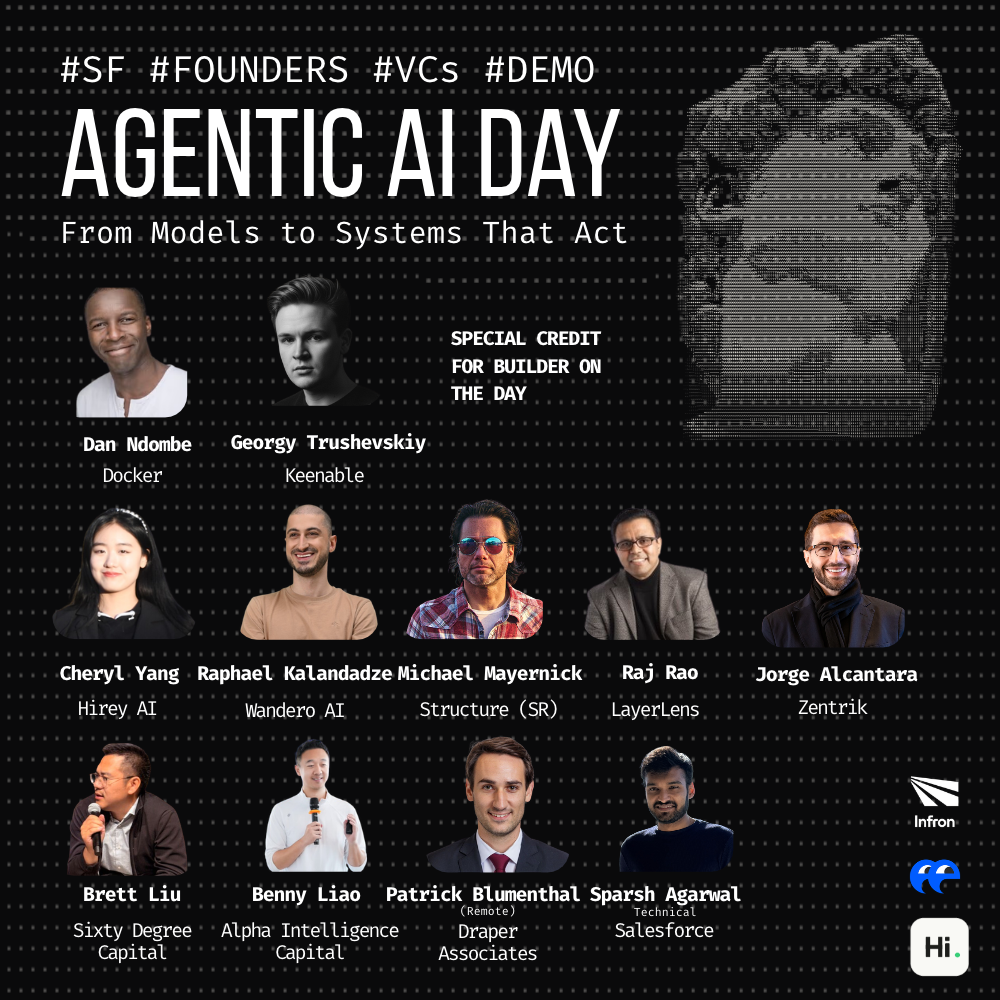
A half-day summit on infrastructure for autonomous AI agents, featuring 10 live product and technical demos from selected teams, a keynote on connected and collaborative AI systems, and a panel discussion on the infrastructure requirements for agentic applications. Speakers and judges include Dan Ndombe (Docker), Brett Liu (Sixty Degree Capital), Benny Liao (Acorn Pacific Ventures), and Vandon Duong (DCVC). Topics span agent runtime, tool use, multi-agent orchestration, context and memory systems, inference and serving, and evaluation and security. The curated room of approximately 80 attendees includes founders, engineers, researchers, investors, and enterprise leaders building in the agentic AI space.
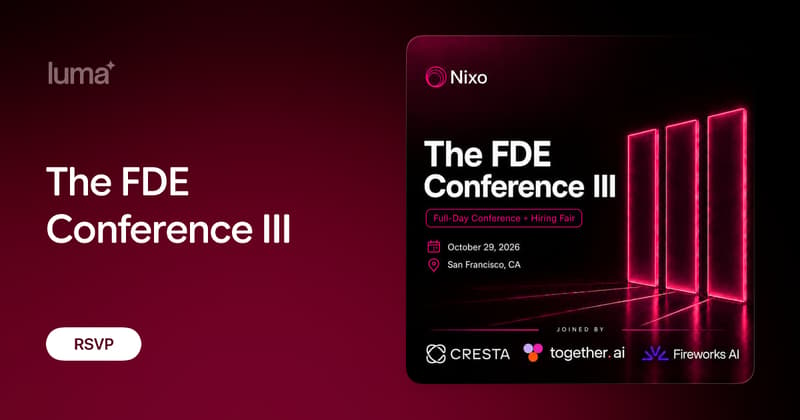
A multi-session conference for forward-deployed engineers, founders, and operators working in AI. The program features keynotes, breakout sessions, and fireside chats exploring emerging practices, technical challenges, and industry trends in AI deployment and engineering. Designed for practitioners navigating rapid AI adoption across organizations.
A lecture on the global prevalence and societal costs of violence, examining why interpersonal violence—homicide, intimate partner violence, and severe physical punishment of children—imposes far greater societal damage than wars and terrorism, and what evidence-based interventions can reduce these harms. James D. Fearon, Theodore and Frances Geballe Professor of Political Science at Stanford and Senior Fellow at the Freeman-Spogli Institute for International Studies, presents research showing that while wars are geographically concentrated, nearly all countries face high rates of homicide and assault affecting women and children—yet these rates are demonstrably reducible through targeted programs and social movements.
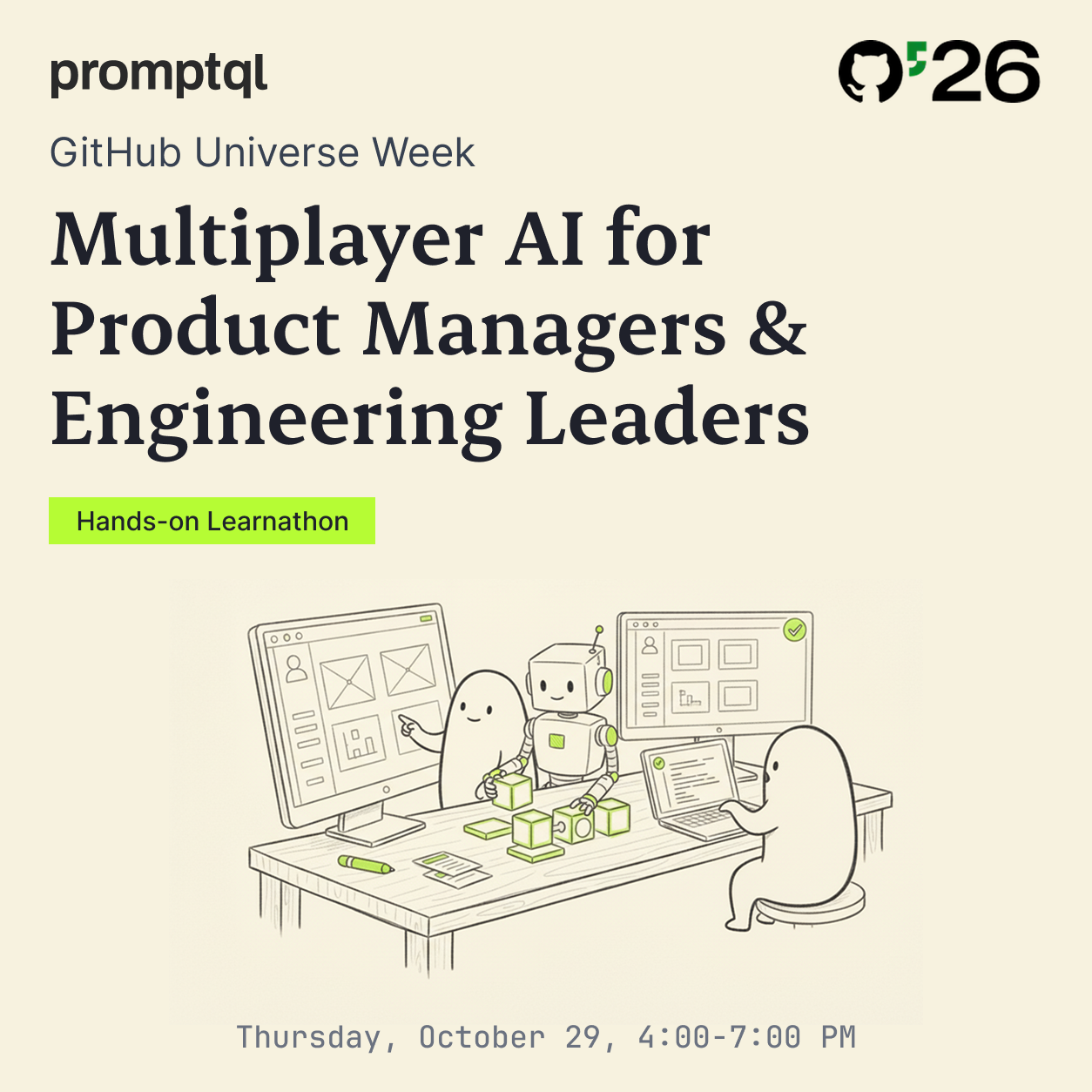
A hands-on workshop exploring how multiplayer AI can streamline product development workflows—from backlog to spec to implementation to team review. Participants will learn how to turn tickets into shareable specs, work with AI bots to build features, and capture team decisions for future context. Led by Anuhrut Gupta, Product & Applied AI Lead at PromptQL. Bring your laptop and a backlog item (sample data or authorized materials welcome). Dinner and non-alcoholic drinks provided.
In late Ming and early Qing China, a major Buddhist revival coincided with growing fascination for theater. Mengxiao Wang explores how performance became a vehicle for Buddhist philosophy and enlightenment, examining the intersection of religious practice and dramatic art in early modern China. Wang is a scholar of Chinese intellectual and cultural history with expertise in Buddhism, literature, and theater.
A conversation on the history of data and algorithms, tracing how data has been used as a tool and weapon—from the US Census and Victorian eugenics through facial recognition and AI systems today. Matthew L. Jones, Smith Family Professor of History at Princeton, discusses his book *How Data Happened: A History from the Age of Reason to the Age of Algorithms* (cowritten with Chris Wiggins), examining how technical capabilities shaped power relations among states, corporations, and people. Tom Mullaney, Stanford University, offers comments.
A practical talk on zero trust security strategies applied to AI systems, covering model protection, data security, and autonomous agent safety. Hosted by Cloudflare, a leader in cloud security infrastructure.
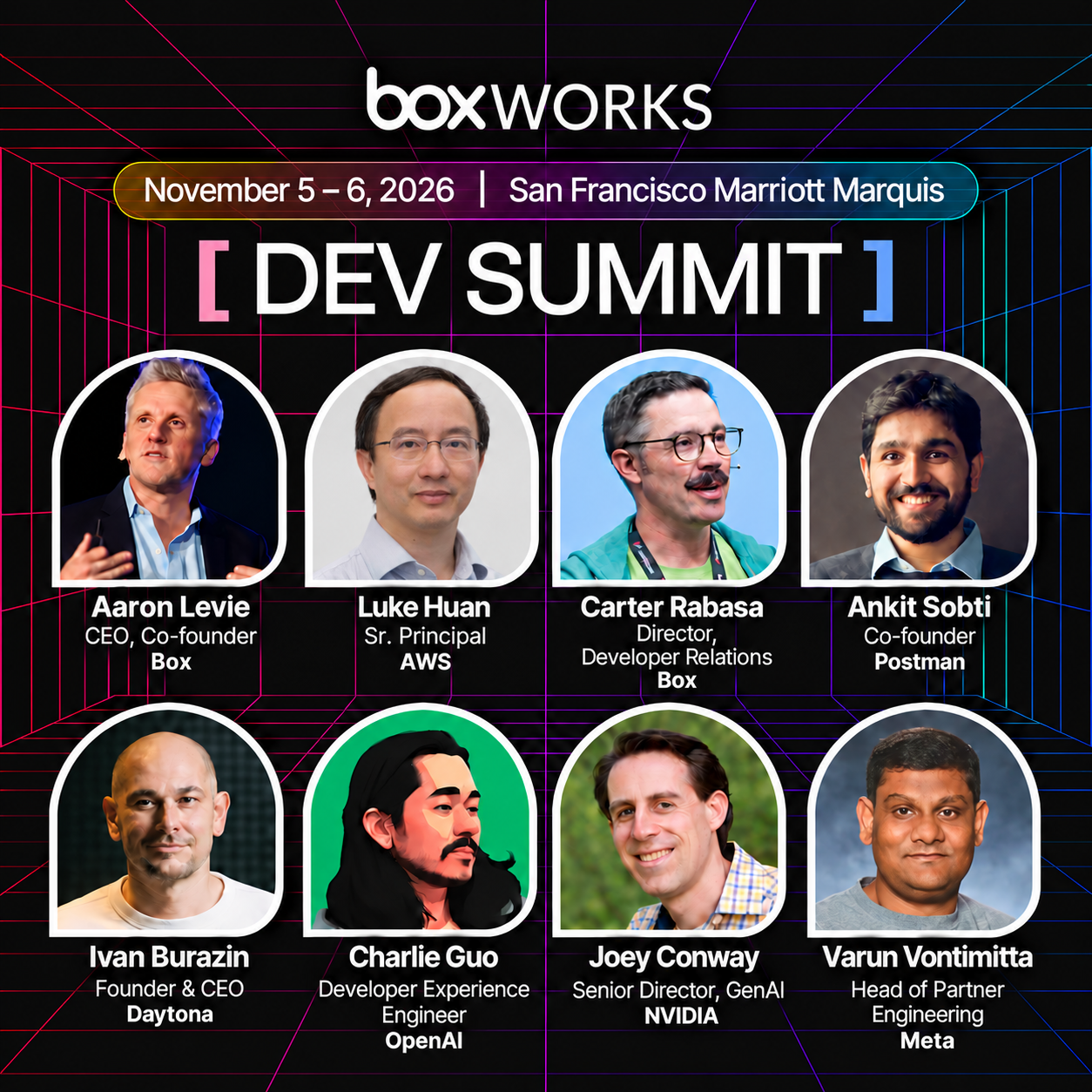
Open Source AI Week is a multi-day conference featuring expert-led tech talks, workshops, bootcamps, and crash courses on building and deploying AI systems. This session showcases three leading platforms: Temporal (workflow orchestration), Arize (ML observability), and Databricks (data and AI infrastructure). Designed for developers at all levels seeking to deepen their skills in open-source AI tools and methodologies.
Janet Poole of the University of Toronto examines the life and work of modernist writer O Changhwan (also Ch'oe Myŏngik), a Pyongyang-based author whose fiction documented urban life and decolonization hopes in early 20th-century Korea. Poole, a specialist in Korean literary modernism and translator of mid-century Korean writers, contextualizes O's work within her broader research on Korean modernist responses to colonialism and the political division of Korea after 1945.
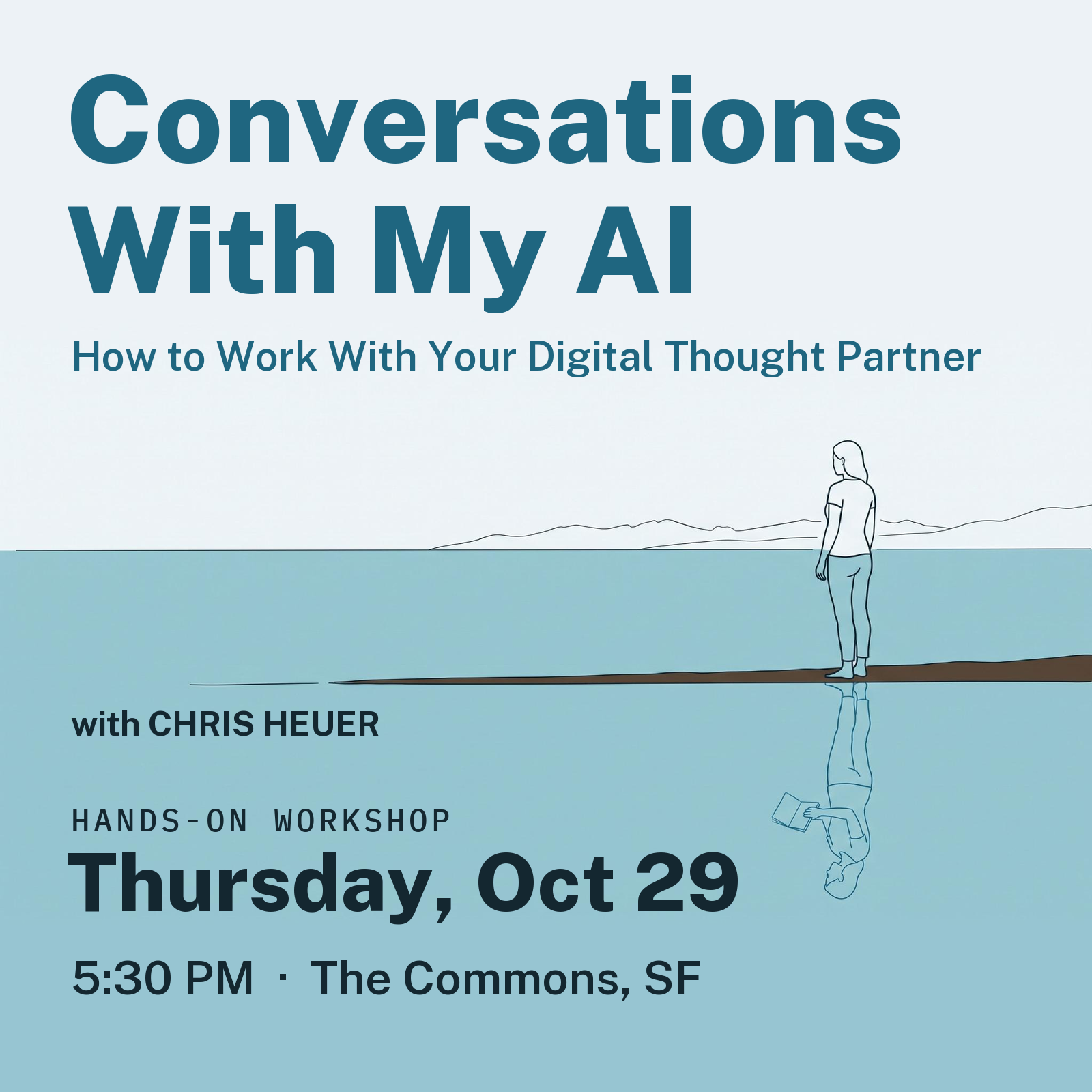
Explore how to have more productive conversations with AI tools by treating them as thought partners rather than vending machines. Facilitated by Chris Heuer, IBM futurist and author of *Conversations With My AI*, this workshop introduces a seven-part conversation framework, then guides participants through a real practice session with their own AI on something they're actually working on. You'll learn to ask better questions, provide necessary context, and leverage AI to think more clearly without outsourcing your own judgment. Bring a laptop or phone with access to ChatGPT, Claude, Gemini, or similar, and one real problem or creative project you're stuck on.
A Halloween-themed practical workshop on using AI agents, combining food and hands-on lessons on agent-based systems and their real-world applications.
A conversation with April Snow, CIIS alum and licensed psychotherapist, on reframing high sensitivity as a strength rather than a problem. Drawing from her clinical practice and lived experience as a Highly Sensitive Person (HSP), Snow explores practical frameworks for accepting sensitivity, managing an overwhelmed nervous system, nurturing your inner world, and thriving in daily life, work, and relationships. She also addresses supporting Highly Sensitive Children. Hosted at the California Institute of Integral Studies.
Explore the science of fear at the Exploratorium's Halloween event. Ralph Washington, Jr. traces the history, culture, and myth behind our aversion to insects in 'Creepy, Crawly, Curious: The Science Behind Our Bug Fears' (7:00 pm), while the evening features hands-on exhibits on survival instincts, a cow eye dissection, and demonstrations across the galleries. Dance to darkwave, post-punk, and cumbia with Los Goths Co., and enter the annual costume contest.
A candid panel on women's reproductive and pelvic health, covering fertility, contraception, menopause, endometriosis, PMDD, PCOS, pelvic-floor dysfunction, and healthcare navigation. Featuring Dr. Jasmine Pedroso (OB-GYN and fertility specialist at Kindbody), Dr. Joy Brotherton (minimally invasive gynecologic surgeon at Marin Fertility Center and Sutter Health), and Dr. Karen Hodges (pelvic health physical therapist and UCSF/SFSU graduate). The second half is open to anonymous audience questions—no topic is off-limits.
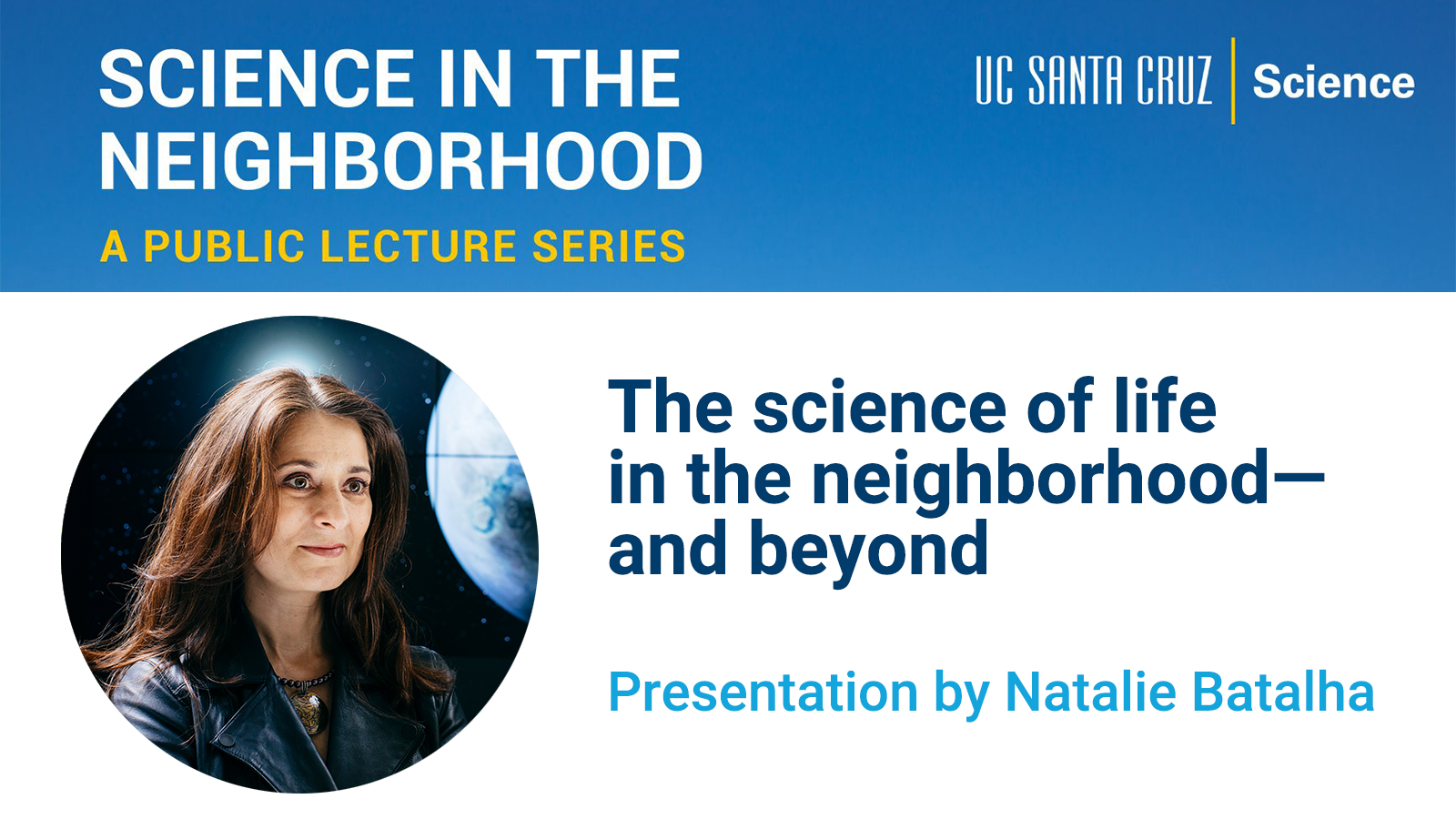
A presentation on astrobiology and the search for life beyond Earth by Natalie Batalha, professor and director of UC Santa Cruz's Santa Cruz Center for Astrobiology. Batalha explores how Earth's geological history offers clues about the origin and evolution of life, examines icy moons in our solar system that may harbor hidden oceans, and discusses the billions of planets orbiting distant stars. The talk covers how scientists are developing tools to search for signs of life on nearby worlds and connects fundamental questions about life's origins with the search for extraterrestrial life. The presentation will be followed by a live Q&A.
A comprehensive conference on heart rhythm disorders and arrhythmia management, featuring world-renowned cardiologists and electrophysiology experts. Plenary sessions explore digital health, wearables, and emerging technologies in arrhythmia care. Three parallel tracks with rapid-fire sessions cover mechanisms of cardiac fibrillation, inherited arrhythmias, catheter ablation strategies, and stroke prevention. Designed for physicians, nurses, advanced practice providers, fellows, residents, and students seeking CME/CEU credits. Free in-person registration for Stanford-affiliated attendees; professional registration available at sliding scale ($90–$390). Hosted by Stanford University.
A technical seminar on bilevel optimization methods for training agentic AI systems that combine language models with retrieval, tool use, and memory management. Quan Xiao, PhD candidate in electrical and computer engineering at Cornell University, will present a first-order penalty formulation for joint optimization of LLM parameters and agentic-system design variables, with applications to retrieval-augmented reinforcement learning and multi-hop question-answering tasks.
Serena Connolly, Professor and Chair of Classics at Rutgers University–New Brunswick, examines Emperor Hadrian's overlooked commitment to science and technology alongside his better-known philhellenism. Drawing on substantial evidence, she argues that Hadrian's intellectual interests in science and technology were shaped by personal inclination and imperial precedent stretching back to Augustus. Connolly's research spans Roman social and political history, women and non-elites in the Roman world, and the history of science and technology. She is the author of *Lives Behind the Laws* and *Wisdom from Rome*, and is completing *Learned Emperors: Science, Technology, and Power at the Roman Imperial Court*.
Prof. Tania Roy (Duke University) presents her group's memory-centric hardware co-design for edge AI, spanning devices, circuits, and architectures. Topics include in-sensor computing with optoelectronic synaptic pixels, in-memory computing with Flash-based content-addressable memory and CMOS-compatible memristors, and reliability of amorphous oxide semiconductors. Roy explores how emerging hardware—optimized for edge constraints rather than conventional CMOS scaling—can enable efficient LLM inference and fine-tuning at the device edge.
Julien Monardo of the University of Bristol presents research on scalable nonparametric methods for estimating consumer demand in differentiated product markets. The talk addresses methodological challenges in industrial organization and applied microeconomics, part of UC Berkeley's Agricultural and Resource Economics Friday Seminar Series.
A dissertation defense on advancing pangenome references and genome inference methods. Asri presents Secphase, a tool for correcting read mappings in genome assembly; HMM-Flagger, a reference-free detector of structural misassemblies; and pangenome-aware approaches to variant calling. The work contributes to the Human Pangenome Reference Consortium's mission of representing human genetic diversity and mitigating reference bias in genomics research.
USF's second Enterprise AI Summit brings together industry leaders, researchers, and practitioners to explore applications of AI in enterprise settings. The event spotlights USF's MS in Data Science and AI program and Data Institute, featuring talks on AI research, career pathways, and industry trends. Designed for students, professionals, and anyone interested in understanding how AI is reshaping business and technology.
A talk on how algorithmic innovation is being deployed to create healthier futures through artificial intelligence in medical practice and research. Hosted as part of Klinikum+, an initiative exploring AI's role in healthcare.
A weekend hackathon exploring whether formal methods are ready for production software. Participants will build a piece of production software and formally verify it, working hands-on to test the practical applicability of formal verification techniques in real-world development.
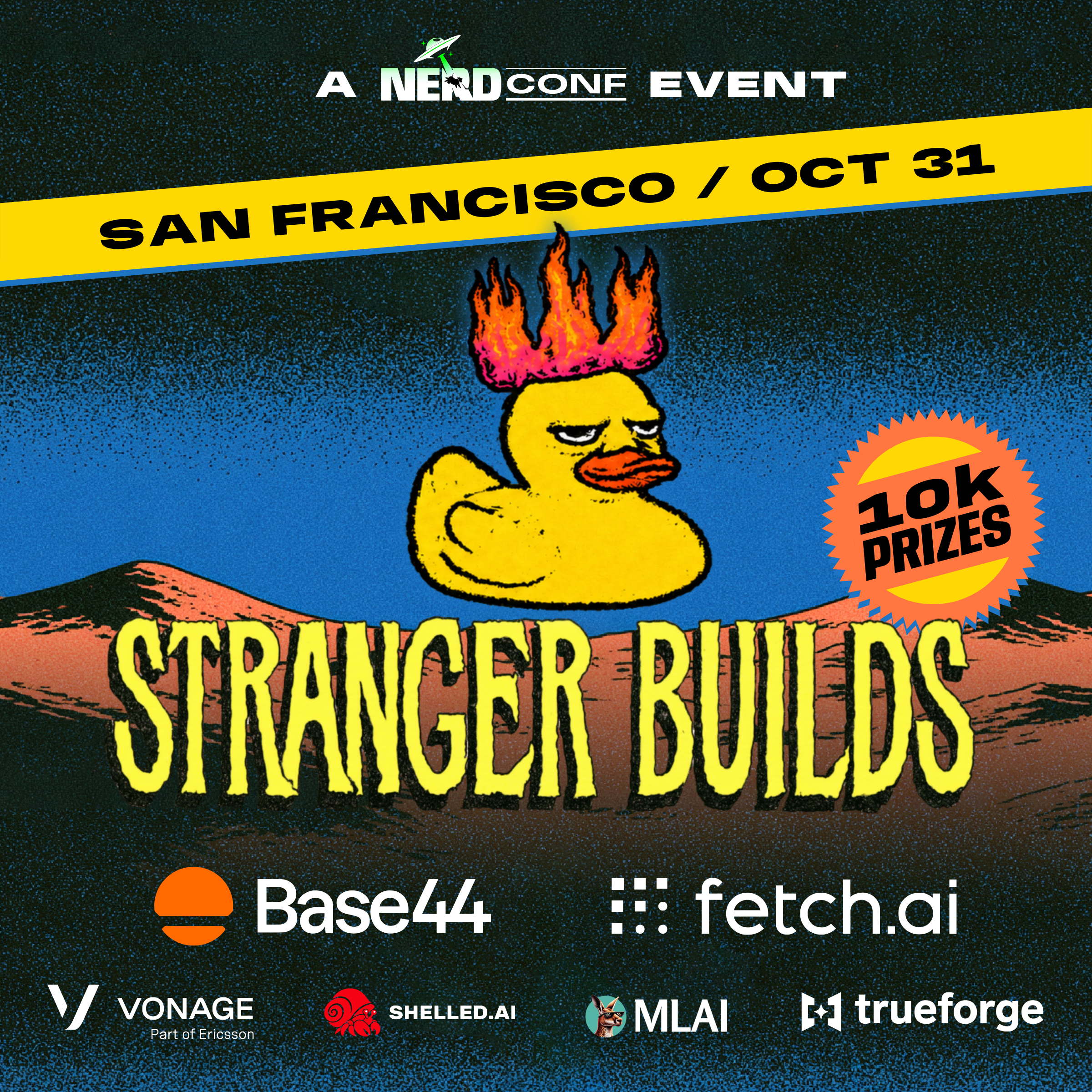
Stranger Builds is a one-day in-person hackathon (October 31) followed by seven days of remote development, challenging builders to ship new software and find real users. Participants compete for $10,000 in cash prizes and credits, with challenges announced during the event. The hackathon brings together engineers, designers, and makers to build AI agents, apps, and other creative projects, supported by sponsors Base44, Fetch.ai, Vonage, and Shelled AI. Part of NERDCONF's global network of 25,000+ builders.
A guided nature walk and craft activity exploring plant galls—the bizarre growths created by insects, mites, and other organisms on plants. Led by Martha Cerda, this program combines botanical inquiry with creative play: after learning about gall ecology during a short forest walk, participants design and wear their own gall-inspired costume accessories, then parade them along the trail. All ages welcome; parent participation required. Drop-in, no registration needed.
A community conversation on lung cancer in the Asian American community, with clinical and research perspectives. Dr. Velotta, a thoracic surgeon at Kaiser Permanente, will discuss clinical insights alongside patient experiences. Dr. Lin, a clinical researcher and lung cancer patient at Stanford University, will share both research findings and her personal experience. The discussion covers prevention, diagnosis, treatment, research advances, and lived experiences, with a focus on raising awareness and encouraging open dialogue about lung cancer in Asian communities.
A guided birdwatching walk exploring migratory and resident waterbirds at Crab Cove, led by naturalist Kevin Dixon. Participants will learn how local birds—from plovers to herons—are adapted to Bay habitats and seasonal food sources. Binoculars provided; beginners welcome. Ages 6+.
Join the San Jose Astronomical Association for a hands-on solar observation event featuring white-light and hydrogen-alpha telescopes revealing sunspots, prominences, and the Sun's chromosphere. A short introductory talk at 1:30 pm will cover how the Sun works and the role of magnetic fields in solar activity. Attendees can observe the Sun safely through specially filtered equipment, ask questions about solar astronomy, and learn about the scale of the solar system. Bring your own filtered telescope to share views with others. Come prepared for outdoor conditions with hat, sunscreen, and water.
What if Earth came with a user manual? David Gottfried, founder of the Living Building Challenge and author of *Regen360*, argues that humanity's environmental crisis stems not from a lack of care but from a broken operating system. He introduces the Earth Code, a practical framework for regenerative living and systemic change. Gottfried explores how rethinking our relationship with planetary systems can address climate, biodiversity, and resource challenges.
OSA Con 2026 brings together engineers, architects, and builders working at the intersection of open source data infrastructure and AI. The conference features deep technical talks on AI workloads and data management, agentic analytics platforms, real-time analytics, shared data lakes, and emerging open-source architectures. Speakers include Lisa Cao (Databricks) on AI agents writing Apache Spark pipelines, Wei-Chin Call (Grafana Labs) on benchmarking AI agents for debugging, Jason Smith (Google) on serverless eventing for AI data pipelines, Aditi Pandit (IBM) on the Presto C++ engine, and Alex Merced (Dremio) on agentic lakehouses, alongside sessions on AI-generated code licensing, infrastructure dashboards, data lock-in, RISC-V Kubernetes clusters, and AI-powered analytics for gaming. November 2, 2026, AWS Builder Loft, San Francisco.
How did Taiwan transform from an agricultural colony into an economic power in half a century, and how did it export that success globally? This talk traces the history and impact of the 'Taiwan model' of agrarian development—the land reforms, farmers associations, and improved crop varieties that Taiwan's authoritarian government promoted at home and throughout Africa and Southeast Asia during the Cold War. Drawing from Chapter 4 on Taiwan's agricultural missions to the Republic of Vietnam, the speaker explores how Taiwanese agricultural technicians and scientists framed their practices as proof of the Republic of China's modernity while seeking to maintain its contested international legitimacy and domestic martial-law rule.
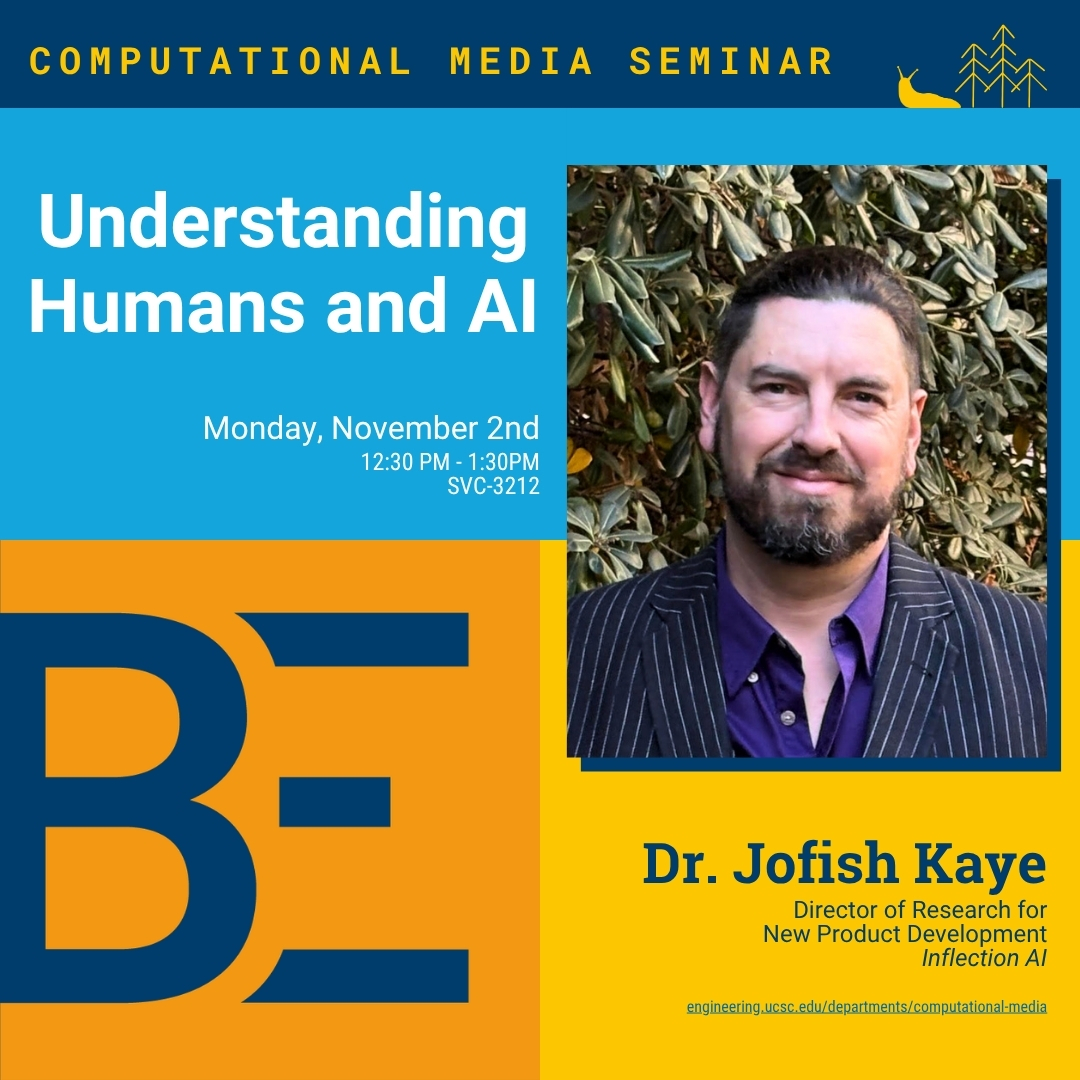
Dr. Jofish Kaye, Director of Research for New Product Development at Inflection AI, discusses how people across cultures experience and trust AI systems. Drawing on surveys of chatbot users in the US, India, and South Africa, he explores varying engagement styles, the limits of AI as a synthetic respondent, and how models erase dissent. Kaye will conclude with approaches to building AI that works collaboratively with humans, recognizing possibilities in partnership over solo capability. Hosted by UC Santa Cruz Computational Media.
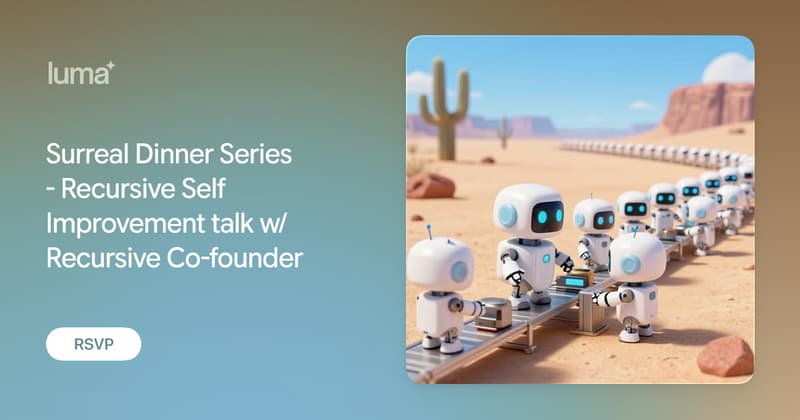
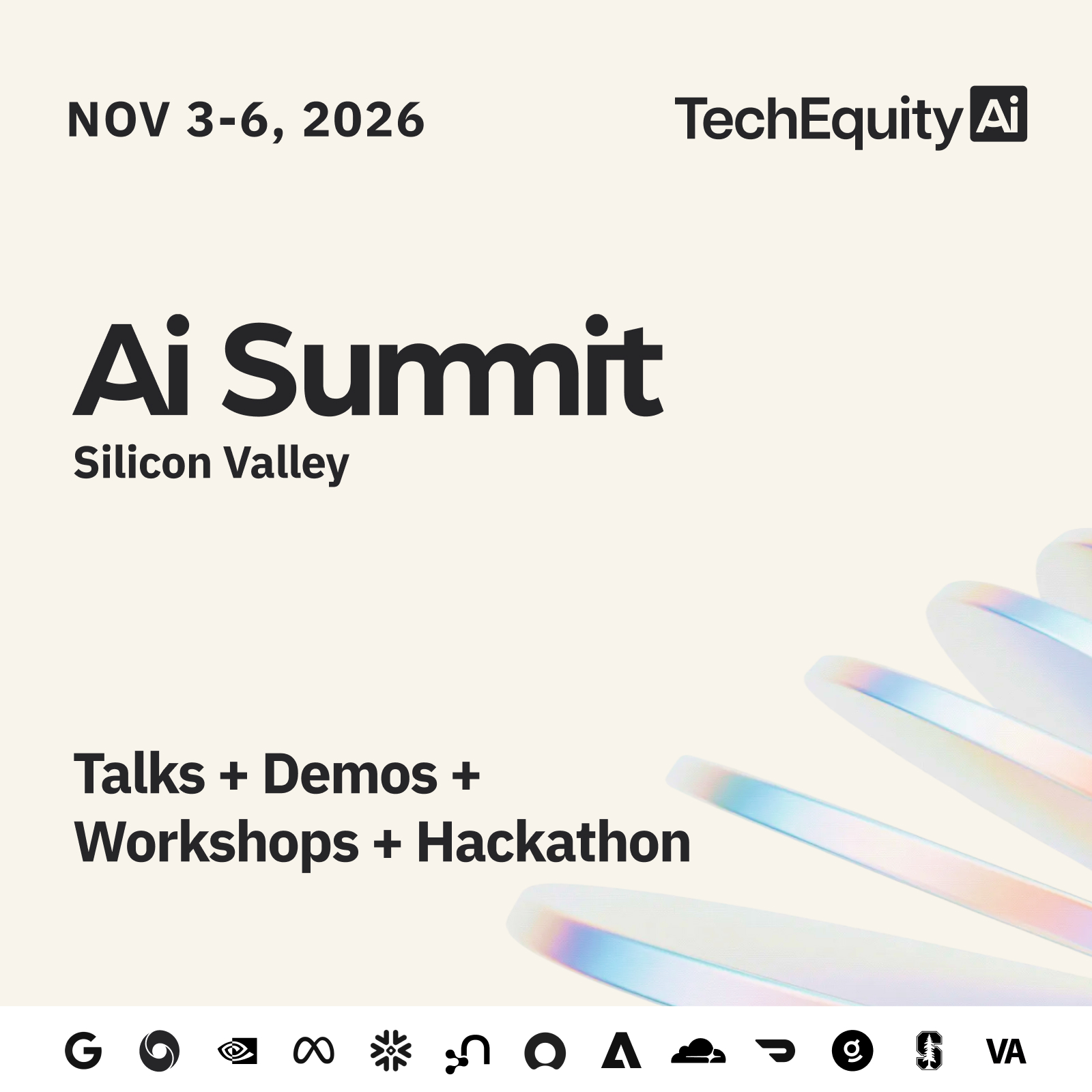
AgentCamp is a community-led unconference where early adopters of AI agent technologies gather to share experiences, challenges, and solutions. The program opens with lightning talks on agent engineering, AI memory, AI loops, and LLMs, followed by attendee-proposed breakout sessions across three rounds. Designed for builders, entrepreneurs, and anyone curious about practical AI applications, the event emphasizes peer learning and real-world use cases. Hosted by TechEquity AI, a nonprofit democratizing access to AI knowledge, as part of the broader TechEquity AI Summit series.
Emergent excitations from topological and correlated quantum systems can drive new phase instabilities and enable novel device concepts. Dr. Chenhao Jin, Assistant Professor of Physics at UC Santa Barbara, discusses recent efforts to investigate excitations in semiconducting moiré superlattices using ultrafast imaging techniques that capture their complete space-time evolution. He will present how space-and-time-resolved transport simultaneously captures and separates multiple collective excitations, distinguishing emergent excitations from conventional ones and revealing their role in phase stability and transitions.
Learn how to accelerate data analysis using low-code tools, Generative AI, and Agentic AI workflows. Dr. Reza Fazel-Rezai, Senior Science and Education Application Engineer at MathWorks, will demonstrate how to import, explore, visualize, and model data with minimal coding, how Generative AI assists with code creation and troubleshooting, and how Agentic AI can plan analysis steps, execute code, validate results, and iteratively refine outcomes. Includes live demonstrations and practical examples. Hosted by Professor Pascale Garaud at UC Santa Cruz.
A seminar on sliced optimal transport (SOT) and its applications to statistical modeling and Bayesian inference. Dr. Khai Nguyen, Assistant Professor of Statistics and Data Science at Texas A&M University, will discuss computational methods for optimal transport—a framework for comparing and interpolating probability distributions—and present sliced-regularized OT as an efficient approximation technique. The second part covers new applications including distributional determinantal point processes for clustering, with examples in image processing and single-cell data analysis. Hosted by Professor Yunyi Shen.
Jonathan Pritchard discusses trait causal models and methods for combining genome-wide association studies (GWAS), genetic perturbations, and observational 'omics data to understand human biology. Part of Stanford's Biology Seminar Series.
A physics colloquium featuring Chung-Pei Ma. The specific topic will be announced closer to the event date. Hosted by UC Berkeley Physics at Lecture Hall #1, Physics North.
What remains constant in energy technology investment, and what has fundamentally changed? Philip Deutch, Partner and Co-Head of Energy Transition at NGP Energy Technology Partners, draws on nearly three decades of experience as one of the nation's most active energy tech investors to examine the enduring drivers of energy innovation and the new forces reshaping the sector. Part of Stanford's flagship Energy Seminar series at the Precourt Institute for Energy, which brings perspectives from academics, entrepreneurs, utilities, nonprofits, and industry leaders.
The 16th annual Lundberg Institute Lecture explores how artificial intelligence is reshaping pediatric care and how families seek medical information, with a focus on the future of the doctor-patient relationship. Alan Greene, M.D., pediatrician and co-founder of DrGreene.com, discusses the implications of AI for both physicians and parents, moderated by George Hammond, author of *Conversations With Socrates*.
The Stanford Medicine Children's Health Center for IBD and Celiac Disease Research Symposium brings together faculty, trainees, postdocs, students, and researchers to discuss the latest advances in diagnosing, managing, and treating pediatric inflammatory bowel disease and celiac disease. The day-long program features translational research presentations and clinical discussions at the forefront of both fields, with opportunities to learn about innovations in therapy and patient care. Researchers are invited to submit abstracts.
TechEquity AI Summit 2026 features keynote talks and hands-on AI agent workshops. The event explores applications of generative AI across industries and skill-building in emerging AI tools and methodologies. Free to attend.
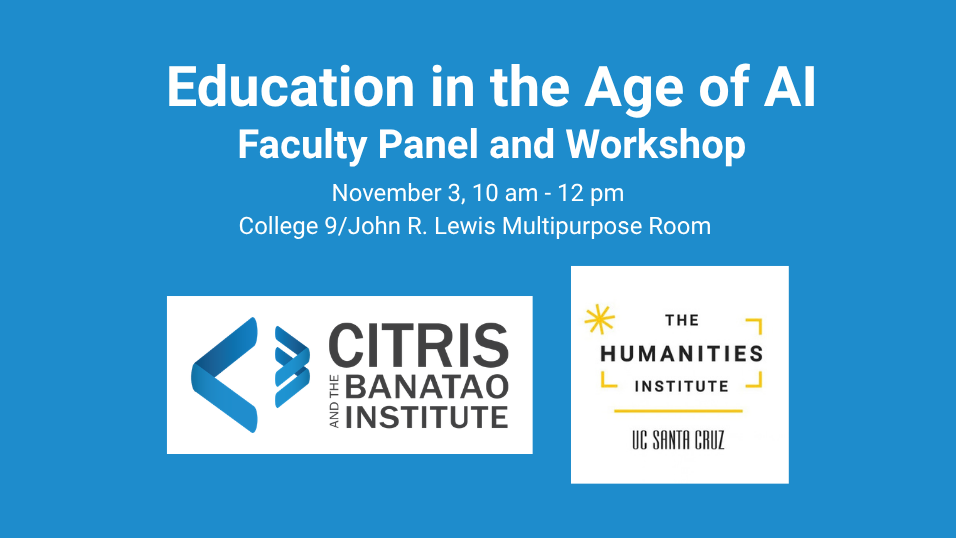
A faculty panel and workshop exploring AI's role in education, moderated by Pranav Anand (Faculty Director, Humanities Institute; Professor of Linguistics). Panelists include Leilani Gilpin (Computer Science and Engineering), Zac Zimmer (Literature), Lauren Lyons (Philosophy), and Adam Smith (Computational Media). The discussion addresses how AI impacts critical thinking, learning outcomes, and entry-level careers; questions of ethics, equity, and institutional policy; and whether students should embrace, avoid, or selectively use AI. Following the panel, attendees will join small-group workshops to brainstorm institutional responses and pathways forward. The first in a proposed series on AI and education.
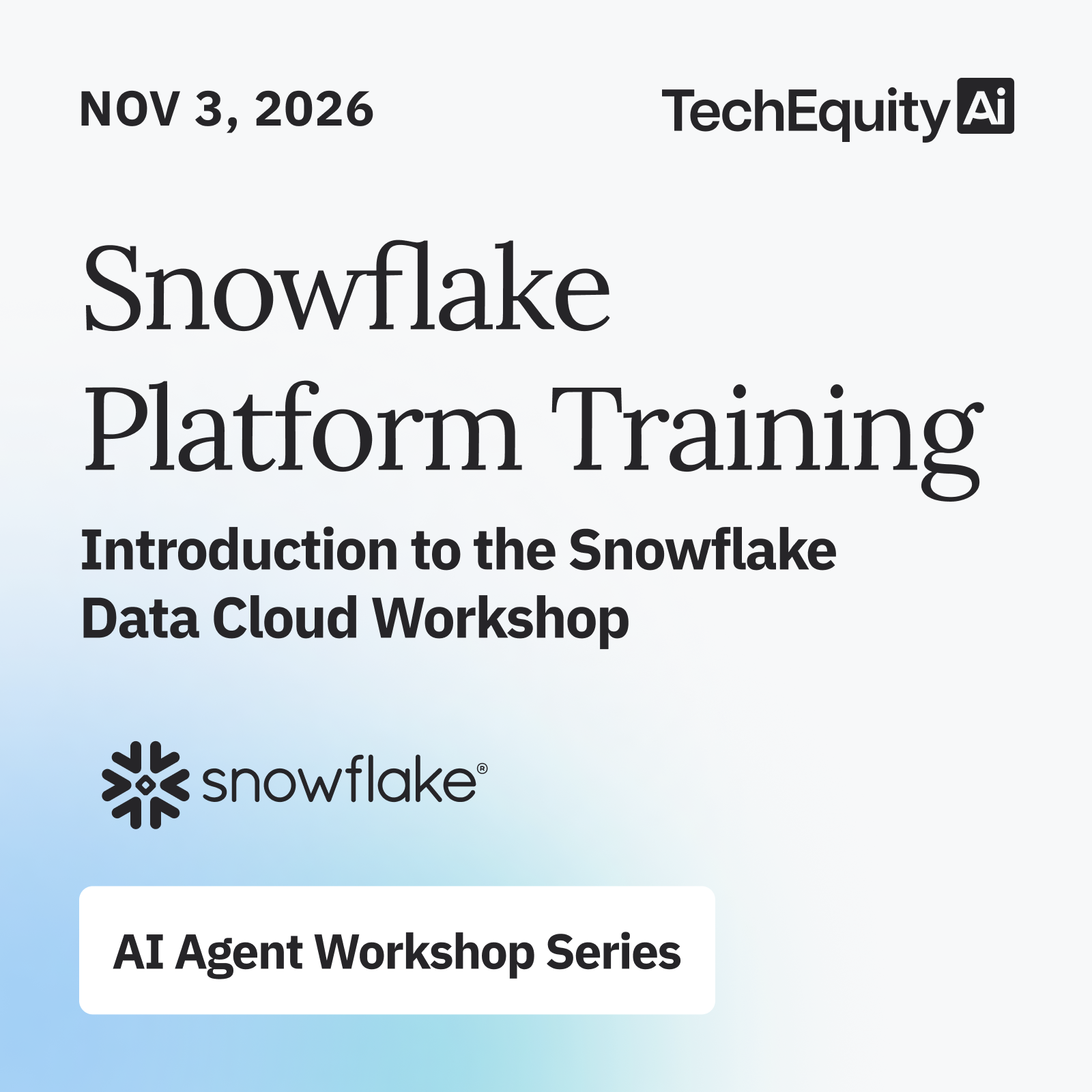
A hands-on workshop introducing Snowflake Data Cloud, covering platform navigation, data organization, access management, querying structured and semi-structured data, and built-in AI/ML capabilities. Led by Dave Doan and Richie Bachala, Senior Delivery Manager and Senior Manager of Applied Engineering at Snowflake, respectively. Part of the TechEquity AI Summit, a series of events combining keynotes, panels, and technical workshops designed to democratize AI knowledge and applications.
A book launch talk on the strategic gaps between AI ambitions and organizational readiness to deploy automation effectively. Stefanie Hutka, design leader and author of *What Your Machines Should Do: The Science and Strategy of Human-Centered Automation*, examines what she calls the "Automation Strategy Gap"—the distance between companies' AI plans and their actual capability to implement them usefully. Drawing on human factors, cognitive science, and management theory, she argues that automation accelerates existing organizational systems and beliefs, making it essential to map your organization's foundational assumptions before automating anything. Essential for anyone navigating AI roadmaps and deployment strategy.
A recurring cognitive science reading group for Bay Area enthusiasts. Members vote on and collectively read papers or books related to cognitive science, then gather to discuss. Hosted at Frontier Tower, open to anyone interested in the field.
A science talk on shark biology and behavior, debunking myths about these animals as villains. Learn how large sharks actually eat, their lifespans, migration patterns, and ecological roles. Presented by Wonderfest, a Bay Area science education nonprofit.
The 14th Structural Proteomics Symposium brings together world leaders in structural biology, mass spectrometry, cryo-electron tomography, computational structure prediction, and integrative modeling. Following the 2025 Milan meeting (130+ participants), this West Coast premiere promises an exceptional lineup of keynotes, cutting-edge research presentations, and collaboration opportunities spanning crosslinking, hydrogen-deuterium exchange, covalent labeling, limited proteolysis, native mass spectrometry, and top-down approaches. Hosted by the Quantitative Biosciences Institute at UCSF.
An in-person tutorial on using WAVE, Santa Clara University's High Performance Computing Center. The session begins with an informational presentation followed by hands-on practice time and Q&A with the WAVE support staff. Bring a laptop to access the system.
A public forum reviewing California's tech policy developments from the past legislative session. Assemblymember Rebecca Bauer-Kahan, Chair of the Assembly Privacy and Consumer Protection Committee, leads discussion with an expert panel of civil society leaders on landmark legislation addressing AI transparency, consumer data privacy, algorithmic accountability, and online safety. Speakers examine how recent state laws protect individuals, hold tech platforms accountable, and establish ethical standards for emerging technologies, while exploring future legislative priorities and the collaboration between lawmakers and advocates.
Clinical Mind AI is a Stanford-developed international platform that uses AI-simulated patient encounters to strengthen clinical reasoning education across health professions. Marcos Santiago Rojas Pino and Thomas Caruso discuss the platform's design principles, its implementation across institutions and languages, and how it supports instructor-centered clinical simulation. The talk also explores Clinical Mind AI as research infrastructure for studying learning processes—examining how learner interactions generate evidence about reasoning, hypothesis formation, and feedback integration—and addresses broader questions about building AI systems that preserve educator agency, enable multilingual collaboration, and advance the evidence base for AI-supported health professions education.
Christopher Gardner, a Stanford nutrition scientist, presents three decades of rigorous research comparing popular diets to identify what actually works. Gardner's twin study became the basis for a Netflix docuseries. Part of the Stanford Department of Medicine's Grand Rounds series.
A lecture examining how data are constructed rather than discovered—exploring the philosophical, methodological, and political dimensions of data creation in research and society. Hosted by UC Berkeley.
What more-than-human modes of knowing and world-making can guide ecological thought and practice in an era of ecological crisis? This panel brings together art, science, and environmental philosophy to explore field-based knowledge, speculative science, and critical aesthetics beyond human exceptionalism. Dimitris Papadopoulos (UC Santa Cruz, History of Consciousness) and María Puig de la Bellacasa (UC Santa Cruz, environmental humanities and science studies) lead the conversation, joined by philosopher and artist Mark Nash discussing Felix Guattari's ecosophy and art as singularization, alongside Donna Haraway, Karolina Karlic, and Kriti Sharma. Field Notes emphasizes place-based observation, relationality, and post-Anthropocene ecological thinking.
A hands-on afternoon hackathon where participants build a Company Brain—an AI-powered knowledge system that connects organizational documents, tools, and institutional knowledge. The program opens with a keynote by Stephen Chin (VP of Developer Relations, Neo4j) on GraphRAG patterns and production systems, followed by two hackathon rounds with live demonstrations and judging. Designed for developers, engineers, startup founders, students, and anyone exploring agent-based AI systems. Hosted by TechEquity AI at Snowflake's Silicon Valley AI Hub in Menlo Park.
Part of the TechEquity AI Summit, this half-day program combines a keynote on GraphRAG patterns with a hands-on 90-minute workshop on AI Gateway architecture and governance. Learn core concepts including build-vs-buy tradeoffs, cost visibility, rate limiting, and sensitive data redaction using Snowflake AI Gateway as a primary case study, with comparison to alternatives like LiteLLM, Kong, and Cloudflare AI Gateway. Speakers: Okhtay Azarmanesh, Principal AI/ML Architect at Snowflake, and Stephen Chin, VP of Developer Relations at Neo4j. No prerequisites beyond familiarity with AI agents and LLMs.
A workshop on integrating AI tools into academic work, career planning, and daily life. Designed for students navigating rapid AI development and seeking practical guidance on deploying these resources effectively.
A panel discussion on craft, materiality, and digital technology in the age of computation. MacArthur Fellows Katherine Behar, Nick Benson, Hideo Mabuchi, and Camille Utterback—artists and technologists working at the intersection of making, robotics, and digital systems—explore what traditional craft offers in a moment of paradigm-shifting technological change, and what is gained or lost when embodied creative practice meets machine intelligence. Moderated by Vanessa Chang. Part of the MacArthur Fellows at 45 series.
Stanford researchers Jon Saad-Falcon and Avanika Narayan present their work on Intelligence per Watt (IPW), a unified metric measuring how efficiently AI models deliver capabilities relative to power consumption. As data center energy demands surge, the research examines which tasks require frontier-scale cloud models versus local alternatives, tested across 20+ models and 8 accelerators on 1M real-world queries. Learn how efficiency measurements help researchers, builders, and policymakers decide where AI should run when supply outpaces power availability, and which queries create genuine value versus where gaps remain. Followed by research discussion and networking.
Wildfires and smoke are the fastest-growing environmental threat in the US and globally. Marshall Burke, professor of Global Environmental Policy at Stanford's Doerr School of Sustainability, reviews advances in measuring smoke constituents and quantifying short- and long-term health impacts from smoke and fire exposure. He estimates that short-run smoke exposure causes tens of thousands of deaths annually, with that number likely to grow due to climate change. Burke discusses prescribed burning as a leading intervention strategy, presenting evidence that meeting California's prescribed burning targets could meaningfully reduce smoke exposure.
A one-day summit exploring the data systems and infrastructure that power AI training. Attendees will hear from practitioners running some of the most ambitious training runs, discussing their architectures, technical tradeoffs, failures, and lessons learned. Designed for AI builders, engineers, researchers, and those working on the systems enabling large-scale model training.
Khiara M. Bridges, Earl Warren Professor of Public Law at UC Berkeley, discusses her book *Expecting Inequity: How the Maternal Health Crisis Affects Even the Wealthiest Black Americans*, which examines why wealthy Black Americans face dramatically higher maternal mortality than their white counterparts. Drawing on ethnographic research at a San Francisco obstetrics clinic serving affluent patients, Bridges explores the reproductive choices and healthcare decisions class-privileged Black people make to survive the ongoing maternal health crisis. A nationally recognized expert on race, class, and reproductive rights, Bridges brings legal scholarship and anthropological insight to this urgent public health challenge. Moderated by Charles Briggs, Distinguished Professor of Anthropology and Co-Chair of the Berkeley Center for Social Medicine.
A technical lecture on quantum interconnects and modular quantum processors. William D. Oliver, Henry Ellis Warren Professor of Electrical Engineering and Computer Science at MIT and Chief Engineer at Google Quantum AI, presents recent advances in entanglement distribution via directional photon emission and absorption in superconducting qubit systems coupled to microwave waveguides. The talk covers demonstrations of high-fidelity single-photon control, remote entanglement generation between physically separated qubit modules, and driven dissipative entanglement schemes designed to enable scalable, modular quantum information processing.
A weekly seminar on AI and data-driven methods across the sciences. Ruijiang Li (Stanford University) presents this week as part of a series organized by Emmanuel Candès, Balasubramanian Narasimhan, Brian Wandell, and Gordon Wetzstein. Open to Stanford and non-Stanford attendees.
Celine Halioua, founder and CEO of Loyal, a clinical-stage veterinary medicine company developing drugs to extend healthspan and lifespan in dogs, discusses her path to founding and scaling a biotech startup. Part of Stanford's Entrepreneurial Thought Leaders series, which features founders, investors, and industry leaders on disruption and startup building.
Data for AI meetup exploring open versus proprietary approaches to data infrastructure in the age of AI agents. Topics include open table formats (Iceberg, Delta, Hudi), semantic standards, catalog federation, and the trade-offs between interoperability and vendor lock-in. Practitioner talks and case studies from data engineers, AI/ML engineers, and platform architects on production experiences with open standards, agent deployment patterns, and when walled gardens make sense.
A hands-on workshop exploring how biological signals can be translated into robotic movement and synthesized sound. Artists Scott Kildall and Kal Spelletich—collaborating with over 50 years of combined experience in experimental art and technology—will demonstrate their bio-art practices: Kildall transforms environmental data and fungal signals into sculptural sound installations, while Spelletich creates interactive robotic sound machines from plants. Participants will engage with working prototypes, learn electronics and data harvesting techniques, and develop strategies for their own bio-related art projects. No technical prerequisites required. Part of Gray Area's Patch Bay weekly series for media artists and creative technologists.
What can millions of museum specimens tell us about biodiversity and climate change? The California Academy of Sciences holds nearly 46 million specimens — plants, insects, fossils — each a data point in Earth's biological story. Over recent years, large-scale digitization efforts including high-speed scanning, DNA barcoding, and global databases have transformed these century-old collections into searchable tools for tracking how species shift under climate change, guiding coastal restoration, and informing conservation policy. Academy scientists Dr. Terry Gosliner, Dr. Sarah Jacobs, Chris Grinter, and Crystal Cortez join Chief of Science Dr. Shannon Bennett for a panel discussion on how digitization and community science are turning historic collections into powerful conservation tools.
AIAS+ 2026 brings researchers, founders, and students together to explore AI applications in scientific discovery across disciplines. The three-day conference features frontier talks, seven workshops, and collaborative roundtables—Nobel and Turing laureates, founders, and students at the same table. Participants share work in progress, present selected projects on the main stage, and build collaborations designed to last beyond the event. Hosted by the Tianqiao and Chrissy Chen Institute, the conference emphasizes problem-solving over disciplinary silos, with daytime conversations, shared meals, and evening receptions. Early-stage work and individuals attending solo are equally welcome. Register at aiasplus.org.
BoxWorks Dev Summit is a two-day conference for developers, technical leaders, and builders working with intelligent content management and AI. Thursday features keynotes from Aaron Levie (Box), Jensen Huang (NVIDIA), and Lip-Bu Tan (Intel), followed by technical sessions and interactive demos in the Expo Hall Dev Zone. Friday offers hands-on programming workshops and technical deep dives on building with Box, AI, and leading AI tools. The summit includes peer networking and developer community connection. November 5–6, San Francisco Marriott Marquis.
An exploration of bioelectricity across molecular, membrane, and cellular scales, featuring scientific presentations from leading researchers. The 2026 Philomathia Day honors Associate Professor Karthik Shekhar, John F. Heil Jr. Professor of Chemical and Biomolecular Engineering and member of the Helen Wills Neuroscience Institute at UC Berkeley. Speakers include Stephen Brohawn, Na Ji, Olga Dudko, Kranthi Mandadapu, Bill Jia, Eric Mulhall, and Christoph Haselwandter. The day includes breakfast, lunch, and an evening reception.
A two-day conference on how product, design, research, and engineering teams actually work together, built as one cross-functional agenda rather than separate tracks per discipline. Speakers include Rachel Been, SVP of design at Expedia Group; Sneha Narahalli, who heads product and UX at Sephora; Richard Dalton, chief design officer at Verizon; Shobha Diwakar, VP of ads product and engineering at Snap; Ashley Nutter, SVP of product and design at CNN; Purvi Shah, who leads UX design, research, and accessibility at Target; and Maz Brumand, VP of product at Ōura. Keynotes and case studies run alongside hands-on workshops, a partner expo, and evening socials.
A one-day summit for engineers, founders, and product leaders building and deploying voice agents in production environments. The program covers practical technical and operational challenges: latency, turn-taking, interruptions, handoff, observability, orchestration, and compliance. Confirmed speakers include Kaan Karakas (Delphi), Vyoma Gajjar (ServiceNow), Pete Warden (Moonshine AI), Jessica Powell (Audioshake), and others. Sessions include opening keynotes, technical talks, hands-on workshops, lightning talks, and direct access to 20+ vendor booths. Attendees will gain architecture patterns, evaluation frameworks, and lessons from real deployments—what worked, what broke, and what changed after launch.
A day of talks and fireside chats on AI infrastructure and security from The Velocity Room, a technologists' membership community. Tom Edwards, EY's Americas consumer AI lead, on what it takes to scale generative and agentic AI across an enterprise; Zane Niyazbekov of AWS infrastructure supply on the land, power, and water behind a hyperscale data center; Christine Boles, a 33-year Intel veteran who ran its federal and industrial edge-computing business, on edge compute and physical AI in industry; Joseph Bisaccia of Behavior Frontiers on standing up an AI function under HIPAA; and Cal Al-Dhubaib of Rubrik on keeping AI systems from becoming autonomous insiders. A security session, a community AMA built from questions gathered over lunch, and a closing happy hour round out the program.
A geophysics seminar featuring Allan Rubin, Professor of Geosciences at Princeton University and Professor in Environmental Intelligence at the University of Exeter. Topic details to be announced.
A behind-the-scenes tour of Matter of Trust's Eco-Home and Edible Urban Garden, a demonstration space showcasing practical, accessible solutions for sustainable city living. Explore how renters and urban residents can make their homes more environmentally friendly. Hosted by SPUR Urban Center.
Part of UC Berkeley's Leo Simon Ag & Natural Resource Thursday Seminar Series. Dalia Ghanem of UC Davis presents research on agriculture and natural resources. Title to be announced.
A lecture on industrial agriculture's impact on bee populations and efforts to protect pollinators. Jennie Durant, ESPM alum and author of *Bitter Honey*, explores why bees and other pollinators are declining and what it will take to build a more just and sustainable food system. Her work weaves together science, agriculture, environmental policy, and human stories to reveal the ecological and economic costs of industrial farming for bees, beekeepers, and food security. A social hour follows the talk.
A panel examining artificial intelligence as a force shaping knowledge, disinformation, and politics in the U.S., with focus on how AI platforms influence information production and university partnerships with tech companies. Panelists include Matyas Bohacek (Stanford, media forensics and AI), Martha Kenney (SF State Women & Gender Studies, biomedical narratives and justice), Martha Lincoln (SF State Anthropology, cultural politics of health), and Edward Wasserman (UC Berkeley Journalism). Moderated by Cori Hayden, Director of Social Science Matrix. Co-sponsored by UC Berkeley's Institute of Governmental Studies, Berkeley Economy and Society Initiative, School of Information, and EECS.
Semiconductors power the digital economy and AI, but their production demands complex supply chains and significant materials, water, and energy inputs. Dr. Sadasivan Shankar, Research Technology Manager at SLAC National Laboratory and adjunct professor in Stanford Materials Science and Engineering, will present research on circular approaches—recycling, reuse, and localized processing—to reduce supply chain dependencies, improve resource efficiency, and create economic and strategic opportunities for the US. Dr. Richard Dasher, Director of the US-ATMC, moderates.
A screening of No Ideas But in Things, an art film directed by Lan A. Li and produced by Peter N. Miller, followed by a discussion with the filmmakers. The film explores what can be learned through touch, making, and the body, drawing on footage from the Material Intelligence seminar at the American Academy in Rome where scientists, makers, and humanists investigated how to engage with materials in an age of words and algorithms. Using Rome as an object of inquiry and conversation as a research instrument, the film reimagines scholarly output beyond traditional formats.
Dr. Bryant Lin, a primary care physician and cancer researcher living with terminal cancer, shares a personal reflection on serious illness, hope, and living fully amid uncertainty in 'My Cancer Journey: Happiness and Sadness, Hope and Fear.' In conversation with Dr. Shoshana Ungerleider, a physician, journalist, and leading voice in patient-centered care, they explore the emotional and practical dimensions of cancer diagnosis—fear, purpose, relationships, and navigating life-limiting illness with honesty. Dr. Lin's new book, *Sunshine: An Exploration of Living When You Are Dying*, launches November 10; signed copies available for purchase to in-person attendees. Hors d'oeuvres and refreshments served after the talk.
Agents are generating massive data volumes, running autonomous queries, and executing multi-step production workflows—fundamentally shifting how AI teams approach evaluation and observability. Ankur Goyal, Co-founder and CEO of Braintrust, and Corinne Riley, Partner at Greylock, discuss why the focus is moving from standalone evals to agent observability, rebuilding databases for agentic systems, and making model decisions when there are more models than ever. A fireside chat with audience Q&A for technical leaders building with AI.
Where does the data shaping our democracy actually come from? Danah boyd, author of *Data Are Made, Not Found*, discusses her investigation into the U.S. Census Bureau during the 2020 Census—one of the nation's most challenging periods. Drawing on rare access to the agency and hundreds of interviews, boyd reveals the people, decisions, and effort required to produce trustworthy public datasets and what was at stake when that process came under pressure. The conversation explores the forces that shape public data and why protecting institutions that produce reliable information matters to democracy.
A one-day conference examining how major technology platforms shape public life for billions in the Global Majority—Africa, Latin America, the Caribbean, and parts of Asia and Oceania—and why rights and safety protections remain concentrated in wealthy nations. Three panels explore the ideological foundations of tech power (the tech right), geopolitical dimensions of AI governance, online harms and accountability mechanisms, and the labor and financial systems sustaining counter-power. Hosted by Stanford's Center for South Asia in partnership with the Center for the Study of Organized Hate, We Are Noor, and DRF USA.
A full-day symposium exploring how artificial intelligence can create meaningful real-world impact while ensuring its progress benefits society. Participants engage in five interconnected areas: Responsible & Sustainable Innovation, AI Safety, Long-Context Web Search, Climate Change, and the ethical implications of technological advancement. The program includes a resilience workshop, frontier exploration sessions, a hands-on 2-hour prototyping workshop with mentors from Neo, Frontier Lab, and major tech companies, live demos, judging, and networking. Designed for researchers, engineers, entrepreneurs, policymakers, students, and anyone curious about the future of AI.
A pitch competition and conference showcasing deep-tech ventures at the intersection of health, AI, brain-machine interfaces, longevity, precision health, wearables, and robotics. Five finalist teams present to compete for a $25K prize. Keynote by John L. Hennessy, President Emeritus of Stanford and Chairman of Alphabet, in conversation with Prof. Zhenan Bao, eWEAR Faculty Director. The day includes pitches from teams including AlignSight Medical, Lume Health, CircuCare, and others, followed by a startup demo showcase and networking reception. Hosted by Stanford University's eWEAR initiative.
The 23rd Annual Graduate Research Symposium celebrates work across all academic divisions at UC Santa Cruz, featuring graduate student presentations in poster, talk, and mixed-media formats. The event showcases research from sciences, engineering, humanities, social sciences, and other fields, offering a window into current graduate scholarship and emerging work by early-career researchers.
A monthly breakdown of significant AI news stories and their real-world implications, led by Bridget K. Burke, an AI expert with 30 years of global technology experience and a degree from Columbia University. Burke distills complex developments into accessible analysis, exploring what's happening in AI, why it matters, and how it might affect daily life. Designed to encourage critical thinking and discussion around breakthroughs, controversies, and emerging trends. Free, friendly, and open to anyone curious about how artificial intelligence is shaping the future.
Nicholas Epley, John Templeton Keller Distinguished Service Professor of Behavior Science at Chicago Booth School of Business, discusses his new book *A Little More Social*, which explores the paradox at the heart of human life: we are a deeply social species equipped to connect, yet we habitually avoid opportunities to do so. Epley examines why we skip conversations with strangers, hesitate to express gratitude, and miss daily moments of connection—and how small, approachable practices can unlock the happiness and health benefits of a more social life. His research on decision-making and human behavior has been widely featured in the New York Times, Wall Street Journal, CNN, NPR, and other major outlets.
Dr. Jeff Cuzzi, NASA Ames research scientist and former Interdisciplinary Scientist for Planetary Rings on the Cassini-Huygens mission, discusses highlights from two decades of exploration at Saturn. The talk emphasizes Saturn's rings—increasingly believed to be relatively young (100–200 million years old)—and covers their complex structure, composition, and origin. Cuzzi also discusses Titan, with its dense atmosphere, and Saturn's icy moons including Enceladus, which harbors a subsurface ocean with signs of hydrothermal activity. A survey of one of NASA's most ambitious planetary missions and its ongoing discoveries.
Dr. Philip Marshall, Deputy Director of Operations at the Vera C. Rubin Observatory, presents a virtual tour of the world's newest astronomy and astrophysics facility in Chile and discusses its groundbreaking mission. The Rubin Observatory will conduct an unprecedented ten-year survey of the southern sky, generating the Legacy Survey of Space and Time (LSST)—more astronomical data than all previous telescopes combined. Marshall explores how Rubin addresses the resulting Big Data challenge through AI and machine learning, with applications to gravitational lensing, dark matter studies, and cosmological analysis. Held at the College of San Mateo Planetarium.
Discover the estuary where the San Lorenzo River meets Monterey Bay and learn why these habitats are vital for wildlife. Led by Suzy Clark of the Santa Cruz Museum of Natural History, this easy-to-moderate 2-mile guided walk combines natural history and ecology. Part of the San Lorenzo River Walk Series, featuring expert guides from the Monterey Bay Salmon & Trout Project, Coastal Watershed Council, and Santa Cruz Bird Club. Suitable for school-age children and adults.
Discover which owls inhabit the Bay Area and learn about their adaptations in this hands-on nature program led by naturalist Melissa Fowlks at Tilden Nature Area's Environmental Education Center. Participants will dissect owl pellets to understand these silent hunters' diets and behavior. Drop-in; no registration required.
Join the San Jose Astronomical Association for an evening of telescope viewing at Rancho Canada del Oro Open Space Preserve, a dark-sky site south of San Jose ideal for observing the Milky Way and celestial objects. SJAA members and experienced amateur astronomers will guide participants through the night sky, explaining constellations, planets, and deep-sky objects visible through the telescopes. The event welcomes beginners and experienced stargazers alike, with scopes set up for shared viewing — participants observe through provided equipment rather than bringing their own. Family-friendly and best suited for ages 5+. Registration required (limit ~95 cars); arrive within one hour of the session end time.
A day-long celebration of marine science at the Seymour Marine Discovery Center featuring the return of Ms. Blue, a reconstructed Great Blue Whale skeleton. Attendees can ask marine scientists about whale biology, ocean ecosystems, and the Center's conservation research; create art at a community mural; explore a special exhibit on the whale's reconstruction; participate in music and movement activities; and enjoy coastal explorations and behind-the-scenes experiences. The festival includes food trucks, local makers, and live music throughout the day.
A presentation on understanding and responding to behavioral changes in people living with dementia. Learn from an Alzheimer's Association Community Educator about how dementia affects behavior, common triggers, and person-centered care approaches to support both individuals and caregivers. Relevant for family members, professional caregivers, and anyone seeking to understand dementia-related communication and care strategies.
A story showcase where San Jose State students and faculty share personal narratives about how AI has shaped their academic and campus experiences. Attendees participate in a story wall, vote for the Audience Choice award, and engage in conversations about AI's role on campus. Facilitated by Vishnu S. Pendyala, Associate Professor at the College of Information, Data and Society. Hosted by the SJSU AI Faculty Fellows and the Center for Faculty Excellence and Teaching Innovation.
Joel Goh of the National University of Singapore presents research in operations analytics across healthcare, supply chain, and service platforms. His work spans healthcare delivery and hospital operations, supply chain efficiency enabled by digital technology, and service-platform optimization through policy and information design. Goh is an Associate Editor at Management Science, Manufacturing & Service Operations Management, Service Science, and Health Care Management Science, and Senior Editor at Production and Operations Management.
Part of UC Berkeley's Cultural Analytics Series. Speakers Meredith Martin and Wouter Haverals discuss computational approaches to analyzing culture, literature, and society. Cultural analytics combines data science, computational methods, and humanistic inquiry to uncover patterns and meaning in large-scale cultural datasets.
A series of classes on digital literacy and technology safety led by Digital Services Librarian Franklin Walther at Mill Valley Public Library. Designed to help participants navigate rapidly changing technology, avoid cybersecurity risks, and develop practical competency with digital tools and platforms.
A collaborative deep dive on cultural analytics with Mads Rosendahl Thomsen, Cultural Analytics speaker. Meredith Martin and Wouter Haverals join for an in-person discussion exploring how computational and quantitative methods illuminate cultural phenomena, bridging digital humanities, literature, and data science.
Harold Hwang presents recent developments in unconventional superconductivity observed in layered nickelate materials, exploring the relationship between superconducting phases and strongly correlated electronic phenomena. The talk covers materials science and fundamental physics of novel superconductors.
A talk on super-resolution imaging in strongly scattering media by Chrysoula Tsogka, Professor of Applied Mathematics at UC Merced. Tsogka discusses how multiple scattering, conventionally an obstacle to imaging, can paradoxically enable sharper refocusing than in homogeneous media. She presents methods to learn Green's functions directly from data using sparse dictionary learning, recovering resolution beyond standard limits. Recent extensions include new algorithms for random initialization, unstructured grids, and time-varying random media.
A conversation on flooding in the Philippines and disaster resilience with Dr. Mahar Lagmay, Executive Director of the UP Resilience Institute and scientist behind Project NOAH's national flood hazard maps. Panelists include Dr. Lisandro Claudio, Associate Professor of Southeast Asian Studies and Chair of UC Berkeley's Center for Southeast Asia Studies, and Dr. Diana Martinez, Assistant Professor of Architecture at UC Berkeley's College of Environmental Design. A reception follows.
How do single cells learn and process information without a brain or nervous system? Wallace Marshall explores the surprising cognitive behaviors exhibited by cells—including habituation and adaptive responses—and reveals the molecular mechanisms underlying cellular information processing. A UC Berkeley Physics Colloquium.
A talk by Tiziana Vanorio, Associate Professor of Earth and Planetary Sciences at Stanford University, as part of the Stanford Energy Seminar — a flagship program of the Precourt Institute for Energy bringing diverse perspectives on energy challenges and solutions to the Stanford community and beyond. The seminar series has run for nearly 20 years and features academics, entrepreneurs, utilities, nonprofits, and other voices working across the energy landscape.
A leading cancer researcher and patient advocate shares lessons for living learned through his dual perspective as a doctor and as someone navigating terminal illness. Bryant Lin distills wisdom on meaning, resilience, and the practice of living fully when facing mortality.
A discussion of investigative journalist Melanie D.G. Kaplan's book *Lab Dog*, which traces her adopted beagle Hammy's mysterious past and explores the ethics and realities of laboratory animal research. Kaplan joins USF law professor Matthew Liebman to discuss how her dog's story became a window into the complex world of animal research, institutional practices, and the animals behind scientific discovery.
A book launch and illustrated lecture on how emerging technologies are reshaping architectural imagination and the material world. Katherine Lambert and Christiane Robbins, founders of MAP Studio, examine the relationship between technological systems, architectural speculation, and environmental inquiry—exploring what technology allows architecture to imagine, what it obscures, and what it ultimately builds. Following the presentation, they join Keith Krumwiede, Dean of Architecture at California College of the Arts, for a conversation on implications for architectural practice and education. Copies available for purchase through William Stout Architectural Books.
A design workshop exploring music hardware as fashion. Nick Susi and artist VÉRITÉ trace the evolution from the Walkman to AirPods, sharing design references and historical context on how musicians make their sonic worlds tangible through wearable devices. Attendees then sketch their own wearable music-inspired device and share the creative story behind it, gaining insight into the emerging intersection of music, fashion, and technology.
How do we understand AI beyond the simplistic frames of savior or monster? Professor Kevin Volkan explores AI as a symbolic and transitional medium that reflects longstanding human desires to summon and control powerful forces we don't fully understand. Drawing on psychoanalytic theory, he examines how AI inherits distinctly human patterns of reasoning, conflict, and distortion—and how people form attachments and transference relationships with machine systems. Volkan is a clinical psychologist and founder of California State University Channel Islands who teaches in psychoanalytic studies programs at Roma Tre University and Pacifica Graduate Institute; his forthcoming book is *Artificial Intelligence and Our Ghosts in the Machine*.
A reading and discussion of *The Flying Death*, historian Matt O'Hara's account of 1930s explorers racing to harvest curare from the Amazon—a poisonous vine used by Indigenous tribes that became foundational to modern medicine and surgery. The book traces Richard Gill's obsessive quest to broker deals between Indigenous poison masters and American pharmaceutical companies, his competition with rival Boris Krukoff, and the human cost of their success: curare became central to shock therapy and surgical innovation, eventually earning a Nobel Prize, yet the story raises urgent questions about who profits from discovery and who bears the price. O'Hara is a professor of history at UC Santa Cruz and author of *The History of the Future in Colonial Mexico* and *A Flock Divided*.
Will generative AI and automated text summaries transform how we read, write, and think? Dr. Maryanne Wolf, director of the Center for Dyslexia, Diverse Learners, and Social Justice at UCLA and author of *Proust and the Squid* and *Reader, Come Home*, explores whether outsourcing language tasks to AI agents risks diminishing the deep cognitive processes that enable critical thought. In conversation with Kirsten Read, Associate Professor of Psychology at Santa Clara University and director of the Language Learning Lab, which studies how children develop language fluency through early literacy experiences.
After Tokens is a one-day technical conference on the infrastructure behind AI product economics: metering, credits, entitlements, billing, and the systems that keep them in sync. Speakers include Dor Sasson (CEO, Stigg), Jonah Cohen (Tech Lead for Financial Engineering, OpenAI), Jerone Z. Ng (Former Head of Monetization Engineering, GitLab), Vidhi Agrawal (Director of Commercial Capabilities, Databricks), and engineering leaders from Webflow, Mixpanel, and other companies. Topics span metering and usage data, pricing infrastructure, AI cost control, and agent economics. Designed for backend, platform, and AI infrastructure engineers, technical founders, and engineering leaders building AI products.
A full-day conference for builders, founders, and engineers working with Apify's AI agent platform. Featuring keynotes, live demos, and talks from teams already shipping with Apify Actors, plus direct access to the Apify team. All-day catering and an evening reception included. Apify is the largest marketplace for AI tools, providing ready-made solutions for powering AI apps, lead generation, market research, and web automation.
A hands-on workshop where participants bring a small object, scan it into a 3D digital model using 3D scanning technology, and then place it back into the real world using augmented reality. No previous 3D or technical experience required. Learn the fundamentals of 3D scanning, 3D modeling, augmented reality, and spatial computing while creating your own digital clone. Hosted by the KLEVR Lab at San José State University's King Library, a resource for exploring emerging technologies in digital creativity and learning.
Dr. Anurima Pannu, Assistant Professor at Johns Hopkins Bloomberg School of Public Health and Director of Frontier Safety at the Chan Zuckerberg Biohub, discusses recent advancements in AI for biology alongside security and oversight considerations. She will explore how policy can incentivize and shape technology development for defensive purposes, connecting the colloquial "defensive acceleration" concept in AI circles to formal offense-defense balance frameworks. Drawing on her work in biosecurity, pandemic preparedness, and emerging technology governance, Pannu brings expertise from advisory roles at the National Academies of Sciences, the EU AI Office, and the Bipartisan Commission on Biodefense.
A one-day summit on real-time AI infrastructure and agentic AI for enterprise. Speakers include Akamai leaders, NVIDIA engineers, industry visionaries, and futurist Salim Ismail discussing inference optimization, AI agent security, scaling strategies, and organizational transformation. Programming features a live multimodal application teardown, hands-on code workshops, and networking with CTOs, founders, and engineering leaders. Held at Oracle Park, San Francisco, November 2024.
A four-part lecture series on advances in genome engineering for stem cell biology and therapeutic development. Sessions feature cutting-edge research on organoid models, single-cell phenotyping, ex vivo tissue engineering, and culture techniques. Speakers include Michelle Gbenedio (UCSF) on organoid basics, Dan Wagner on Cas9-edited embryos, James Gardner on perfusion systems, and Alex Pollen on analytical techniques for organoid culture. UCSF, Fall 2026.
A practical seminar on generative AI models, tools, platforms, and workflows designed to accelerate scientific research. Michaela Hinks, Head of Science at Edison Scientific, will discuss how AI is reshaping research methodology and enabling new discovery pathways. The talk is followed by a networking reception.
Andrew Hogan, Head of Insights at Figma, presents empirical research on how design work is transforming in an era of AI and new tools. Drawing on years of research at Figma and his background as a Forrester analyst, Hogan examines who is actually doing design work today, how decisions get made across teams, and what separates organizations that consistently ship great products. He will discuss the rise of "designers by another name" across product, engineering, and marketing; how AI-generated interfaces and accelerated prototyping are reshaping practice; and where distinctly human judgment remains irreplaceable. He'll articulate emerging principles for contemporary design, including cross-disciplinary collaboration, pathways for junior practitioners, and strategies for sustaining distinctive design languages in an era of widely accessible interface creation.
How do social media algorithms shape family life, food choices, and teenage identity? This Kraw Lecture explores research with teens, parents, grandparents, and people with food allergies, revealing how young people actively interpret and navigate online content to spark meaningful family conversations. Rather than passive consumption, the talk examines how families use technology together—and when to disconnect. Speaker Christina Chung, Associate Professor at UC Santa Cruz, offers practical insights for parents, teens, and technology designers about living with algorithms and designing tools that support rather than replace family decision-making and traditions.
Hassan Murad and Vivek Vyas, co-founders of Intuitive AI, discuss how artificial intelligence and data-driven systems are transforming waste management. Their flagship platform, Oscar Sort, uses AI to achieve 91% disposal accuracy, making recycling and sustainability measurable and efficient. The talk explores the Oscar Zero-Waste Platform's integrated tools and the vision to eliminate landfilling and pollution globally. Presented by Yerba Buena Gardens Conservancy.
Dr. Joel Mokyr, 2025 Nobel Laureate in Economics, discusses the cycle of progress—how innovation displaces existing techniques and methods while creating uncertainty and disruption. He explores the future of innovation, addressing concerns about idea scarcity and AI competition, while making the case for continued human ingenuity and economic progress.
A lecture on patient self-advocacy and healthcare navigation with Javonne At-Chan, MSW, ASW, a healthcare consultant, social worker, and child and youth wellness specialist. At-Chan will explore practical strategies for speaking up in medical appointments, navigating insurance and referrals, and advocating for yourself when facing dismissal or confusion. The talk covers communication tools, confidence-building approaches, and how to take a more active role in your own care even when feeling vulnerable or uncertain.
An evening of science talk and socializing at an Irish pub featuring Benjamin Radford, deputy editor of Skeptical Inquirer and Research Fellow with the Committee for Skeptical Inquiry. Radford, author of fourteen books on urban legends, paranormal investigation, critical thinking, and science literacy, will discuss his work debunking myths and mysteries. The event is part of International Skeptics Day, with a simultaneous global Zoom component connecting skeptic communities worldwide. Hosted by Bay Area Skeptics.
Intoxications and Their Meanings: A lecture exploring how the U.S. understands altered states across addiction, drug policy, and culture—from 19th-century temperance movements to today's overdose crisis and therapeutic uses of psychedelics and cannabis. Craig Reinarman, Professor Emeritus of Sociology at UCSC and author of *Cocaine Changes* and *Crack in America*, examines why we narrowly frame intoxication around addiction while ignoring its ubiquity in American society. Presented by the UC Santa Cruz Emeriti Association.
Leading cancer researcher and physician Bryant Lin discusses his memoir *Sunshine*, which explores living with terminal illness from both a doctor's and patient's perspective. After his own lung cancer diagnosis, Lin created a Stanford Medical School course called "From Diagnosis to Dialog: A Doctor's Real-Time Battle with Cancer," which gained international attention. In conversation with Laurel Braitman, Lin offers philosophical and scientifically grounded insights into navigating medical crises, finding hope and resilience, and making meaning in life's most challenging moments.
Why does the Moon need an international lunar resource prospecting campaign? Clive Neal, Professor of Planetary Geology at the University of Notre Dame and leading lunar scientist with 40 years of experience, explores how defining the Moon's resource potential could sustain human exploration, enable a cislunar economy, and benefit Earth. He examines the scientific and logistical issues such a coordinated international effort must address, why international coordination is essential, and how prospecting could unlock both scientific discovery and commercial opportunity.
TAP (Technology in Architectural Practice) Symposium explores the integration of AI and emerging technologies into architectural design and professional practice. Hosted by AIA San Francisco at the Center for Architecture + Design, this symposium brings together architects, technologists, and design leaders to discuss how AI is reshaping workflows, creative processes, and the future of the built environment.
Part of a weekly Stanford seminar on AI and data-driven methods across the sciences, this session features Alex Pentland of Stanford University. Organized by Emmanuel Candès, Balasubramanian Narasimhan, Brian Wandell, and Gordon Wetzstein, the seminar brings together researchers exploring how artificial intelligence and data science are reshaping scientific discovery and research methodology across disciplines.
An open conversation about building AI software factories—systems where agents help plan, build, test, and ship code. Ben Levine, Chief Product Officer at Candidly, leads discussion with product and engineering leaders on what's actually working in practice, where bottlenecks emerge, and how planning, specs, and handoffs change when agents move from demos into daily work. The event pressure-tests claims and explores real tradeoffs beyond polished product pitches.
A discussion of how AI systems could concentrate power among a small number of companies, governments, or individuals, and what mechanisms might prevent or mitigate that risk. Hosted by Jen Ba at Mox.
SRI International celebrates its 80th anniversary at the Computer History Museum, reflecting on transformative inventions—from foundational computing technologies to modern applications used globally—and exploring the organization's future research directions. The event showcases how SRI-developed technologies have shaped contemporary life across computing, communications, and related fields.
A technical overview of California's 2025 Energy Code requirements for multifamily buildings, covering envelope, mechanical, photovoltaic, and battery storage systems, plus new electric-ready and performance compliance pathways. Hosted by Energy Code Ace, a utility-funded program under the California Public Utilities Commission that helps architects, developers, and compliance professionals navigate Title 24 building energy standards.
A two-day multidisciplinary symposium exploring precision pharmacology for pregnant women, fetuses, and children. Despite advances in precision medicine, maternal and pediatric populations remain underrepresented in pharmacology research. The symposium brings together researchers, clinicians, pharmacologists, trainees, and experts across maternal and child health, precision medicine, translational science, and implementation science to identify evidence gaps, advance safe and individualized pharmacotherapy, and foster interdisciplinary collaboration. Hosted by UCSF at the Wayne and Gladys Valley Center for Vision.
A showcase of practical ethics projects from Stanford's 2026 Ethics and Technology Practitioner Fellows, exploring critical intersections of technology and ethics through inquiry, stakeholder engagement, and organizational reform. Projects span community deliberation on data centers, AI-accelerated carbon emissions, and AI regulation. The event welcomes civil society actors, policymakers, industry leaders, and academics to discuss exercising ethical leadership amid barriers to change.
A two-day symposium on artificial intelligence applications in biology, organized by the Quantitative Biosciences Institute (QBI) at UCSF. Speakers and organizers include Brian Cheung, Tanja Kortemme, Nevan Krogan, and Kliment Verba, alongside leading experts in protein design, structural dynamics, cell systems, and deep learning algorithms. The program features focused presentations and discussions designed to foster collaboration among researchers, learners, and innovators working at the intersection of AI and biological science.
A geophysics seminar on the mechanisms driving the 2026 super El Niño, examining how springtime atmospheric and oceanic dynamics amplified the event to break century-long temperature records. Shang-Ping Xie, Distinguished Professor of Climate Science at Scripps Institution of Oceanography, UC San Diego, discusses real-time observations, key El Niño precursors, and the distinctive two-part evolution shared by extreme El Niño events of 1982, 1997, 2015, and 2026.
A colloquium on relativistic stellar explosions and the landscape beyond gamma-ray bursts, revealed by high-cadence optical surveys. Dr. Anna Y.Q. Ho, Richards Family Assistant Professor at Cornell University's Center for Astrophysics & Planetary Science, discusses how optical time-domain surveys have made it possible to test the hypothesis that gamma-ray bursts represent only a fraction of relativistic outflows from massive stellar deaths. She will review emerging phenomena discovered through large-scale alert triaging and multiwavelength campaigns, and discuss how expanding survey capabilities across the electromagnetic spectrum will illuminate the physical origins and connections of these phenomena in the coming decade.
A conversation on how sacred spaces, art, and spirituality shape the experience of living with cancer. David S. Zucker, M.D., PhD, Emeritus Founding Medical Director of Cancer Rehabilitation Services at Providence-Swedish Cancer Institute, discusses the body's capacity to heal while living with serious illness. Kathryn Barush, founding director of the Berkeley Art and Interreligious Pilgrimage Project and author of *Imaging Pilgrimage: Art as Embodied Experience*, explores how the arts shape belief and ritual. Of particular interest to pre-health students and those in the Medical and Health Humanities Program.
Learn to build a personalized AI assistant that synthesizes email, calendar, and personal context into a daily briefing to help you identify priorities and organize your day. Patricia Rodriguez, Director of Resources and Operations at SJSU King Library, will demonstrate a real-world example and discuss how to adapt the approach to different roles and work styles. This hands-on workshop includes time to experiment with your own workflow, ask questions, and begin designing a morning briefing tailored to you. Bring your laptop.
How do social norms and professional incentives shape foreign policy discourse in Washington? Based on over 50 semi-structured interviews with policy professionals, Rory Truex examines attitudes toward China and the mechanisms that influence expert opinion-formation within the foreign policy establishment. A research talk grounded in social science methodology exploring the relationship between institutional culture and policy advocacy.
Historian Matt O'Hara traces the true story of American explorer Richard Gill's 1938 quest to extract curare from the Amazon, believing the Indigenous poison held pharmaceutical promise. Gill's obsessive race against Russian rival Boris Krukoff to broker deals with Indigenous poison masters and U.S. pharmaceutical companies transformed surgery globally and led to a Nobel Prize — but at what cost? O'Hara examines who benefits from scientific discovery, whose knowledge is exploited, and what price is paid for progress, weaving together Indigenous expertise, colonial ambition, corporate competition, and the ethics of medical innovation.
A lecture celebrating excellence in materials research education and community impact. Zhenan Bao, Professor of Chemical Engineering at Stanford University, is honored by the PPG Foundation for her contributions to the field and her role as an inspiring educator and mentor fostering inclusive research environments.
An immersive exploration of fungi where ecology, culture, and cuisine intersect. Participants taste and experience mushrooms through a curated wild-grazing board in an approachable, sensory-forward format. No named speaker or educational framework specified.
Join artist-naturalist Laura Cunningham for a reading and presentation on the reissue of her natural history masterpiece *A State of Change: California's Forgotten Landscape*. Cunningham, who studied paleontology and biology at UC Berkeley and has worked field biology jobs for the California Department of Fish and Game and USGS, presents illustrated scientific detail of California's precolonial ecology and historical biodiversity. This fully redesigned edition features new material on wolf reintroduction, regenerative agriculture, and traditional Indigenous uses of fire. A book signing follows. Hosted at the Santa Cruz Museum of Natural History.
David D. Schmidt discusses his California Book Award–winning environmental history of the San Francisco Bay Area, tracing how natural forces and human choices have shaped the region's landscape over thousands of years. Schmidt will present his research with particular focus on Oakland and the East Bay, followed by audience Q&A and book signing.
SRI International celebrates 80 years of technological innovation with a public event at the Computer History Museum. Speakers will reflect on SRI's foundational contributions to computing, robotics, weather satellites, artificial intelligence, medicine, and personal computing — technologies that shaped the modern world. The evening features current SRI researchers and leaders discussing the institute's past achievements and ongoing work, with additional speakers to be announced.
A book talk with Spencer R. Scott, biologist and cofounder of Solar Punk Farms, celebrating his new memoir *As If We Were Staying*. Weaving personal narrative with scientific inquiry, Scott explores how we might reimagine our relationship to capitalism and ecology, drawing on his experience building a queer regenerative community. The book bridges science and lived experience to ask: how do we live on this planet as if we were staying? Event at The Booksmith, San Francisco's independent Haight Ashbury bookstore. Seats guaranteed with book purchase or $3 sliding-scale donation; first-come, first-served thereafter. Check-in begins 6:45 PM.
The Computer History Museum and IEEE honor SRI International's significant technical achievements with the unveiling of two new IEEE Milestones. The event celebrates SRI's history of innovation in computing and related fields.
Vision Weekend USA 2026 marks the 40th anniversary of the Foresight Institute, a three-day conference celebrating frontier science and technology. The gathering features keynotes and expert panels from prominent researchers and technologists including Adam Marblestone, Alex Gladstein, Christine Peterson, Erika DeBenedictis, Hannu Rajaniemi, Illia Polosukhin, Lindy Elkins-Tanton, and 54+ additional speakers. Programming includes cutting-edge presentations, expert office hours, unconference discussions, 1:1 networking, immersive experiences, and live technology demonstrations. The institute will award a $10,000 grant to a project advancing the frontiers of science. Foresight Institute has historically championed early-stage research in nanotechnology and artificial general intelligence.
A full-day hands-on workshop where participants build an AI Software Factory using Band's infrastructure for agent collaboration. Developers, designers, founders, and builders of all experience levels will learn how AI coding agents coordinate to produce working software from specifications, using Band Desktop tools. The day includes prize announcements, a panel discussion, and technical introductions. Participants may work solo or in teams; bring your laptop and relevant tools/accounts. Organized by HackerSquad at AWS Builder Loft.
A behind-the-scenes tour of Matter of Trust's Eco-Home and Edible Urban Garden, a demonstration space showcasing practical, accessible solutions for sustainable city living. Explore how renters and urban residents can make their homes more environmentally friendly through greener design and gardening practices. Hosted by SPUR Urban Center.
Candace Yano, Distinguished Professor of Industrial Engineering and Operations Research at UC Berkeley's Haas School of Business, discusses her research in supply chain management and operations-marketing interdisciplinary problems. Yano is a Fellow of INFORMS and the Institute of Industrial and Systems Engineers, and has held numerous journal editorial positions. Hosted by Santa Clara University.
A moderated panel on the shifting economic, environmental, and social value of forests and how these changing priorities are reshaping forest management beyond traditional timber production. Moderator Sarah Federman (Conservation X Labs, Colorado State University) leads panelists Sarah Billig (President, FSC US), Ara Erickson (Vice President of Corporate Sustainability, Weyerhaeuser), and Meryl Harrell (Founder, Friends of the Forest Service) in exploring what evolving forest valuation means for management practices and policy going forward.
Vision Weekend USA is Foresight Institute's flagship three-day conference celebrating the organization's 40th anniversary. The event brings together frontier researchers, builders, and funders working on transformative science and technology across AI safety, neurotechnology, longevity, molecular manufacturing, energy, and space. The program features keynotes from leading researchers including Wojciech Zaremba (OpenAI), Robin Hanson (George Mason University), Adam Marblestone (Convergent Research), and others; lab tours at venues including the Internet Archive and Lighthaven; 1:1 connections; tech demos; and office hours. Attendees compete for a $10,000 grant for frontier projects. Includes VIP pre-party aboard the USS Hornet. March 2026, San Francisco.
San Jose Astronomical Association offers free introductions to astronomy covering topics including observing the night sky, the solar system, galaxies, astrophotography, and binoculars. The specific topic for this session has not yet been announced. After the talk, attendees can view telescopes set up for the In-Town Star Party. SJAA is a community organization welcoming curious members of the public; membership is optional at $20 per year.
An evening of stargazing at Houge Park hosted by the San Jose Astronomical Association, an all-volunteer nonprofit. SJAA members will share night sky views through telescopes. Binoculars welcome; personal telescopes discouraged. An optional intro-to-astronomy talk for beginners may precede the 2-hour event. Registration required for facility use tracking.
The Sogdians were Iranian-speaking merchants from Samarkand and Bukhara who dominated Silk Road trade between the 4th and 8th centuries CE, serving as cultural brokers who spread Buddhism, Manichaeism, Christianity, and Zoroastrianism across Eurasia. Dr. Sanjyot Mehendale, an archaeologist at UC Berkeley specializing in Silk Road trade and mobility networks, explores how the Sogdians shaped artistic traditions, technologies, and urban life across Central Asia to China. A full-day study group featuring morning and afternoon sessions at the Asian Art Museum.
Learn to create and edit images using AI tools in this hands-on workshop. Bridget Burke, an AI expert, guides participants through practical projects including event graphics, photo restoration, room makeovers, and creative image transformation. Explore how AI can remove or add objects, change backgrounds, and reimagine images in new visual styles. No design experience required—just bring curiosity and ideas.
A beginner-friendly, hands-on hackathon where builders, hackers, artists, and scientists conduct real wet-lab experiments and compete for prizes. Tracks include longevity & AI, robotics, biosecurity, DeSci tooling, and real-time bio-imaging. No PhD, entry fee, or prior experience required—designed for anyone biocurious enough to engage with biotech as a tool for creative expression and learning. Judged by biotech founders and backed by frontier-science partners. Hosted at Frontier Tower.
A screening of Ghost in the Machine, a documentary exploring the origins of artificial intelligence in power structures rather than machines, directed by Valerie Veatch. Following the film, a moderated panel with Dr. Alex Hanna (Director of Research, Distributed AI Research Institute, co-author of The AI Con), Wendy Liu (author of Abolish Silicon Valley), Adam Becker (author of More Everything Forever), and Khari Johnson (tech reporter, CalMatters) will discuss AI's societal implications and the tech industry's role in shaping these technologies.
An illustrated lecture on how to evaluate artificial intelligence through the lens of human flourishing—considering authenticity, embodiment, agency, relationship, community, and responsibility. Sam Stern, Senior Content Creator at Esalen Institute and host of the podcast Voices of Esalen, draws from the human potential movement to examine AI's capacity for assistance and expression alongside its risks of extraction, dependency, and control.
A wide-ranging conversation between multidisciplinary artists Holly Herndon and Mat Dryhurst and curator Hans Ulrich Obrist exploring art's relationship with technology and AI. Building on their co-curated exhibition *Strange Rules* at Palazzo Diedo in Venice, the three discuss protocol art—work that examines the invisible systems (AI, algorithms, apps) that shape culture itself—and why artists need power over the systems they work within. Herndon and Dryhurst bring an artist's perspective on technology's potential and control; Obrist contributes curatorial and historical insight into contemporary practice.
A research seminar on safe and resilient autonomous robotics, spanning stochastic planning, learning-based control, and real-time decision-making in uncertain environments. Francesco Trotti, Marie Skłodowska-Curie Postdoctoral Fellow at the University of Bologna (currently UC Santa Cruz), will discuss model-based planning with Markov Decision Processes and Monte Carlo Tree Search, safe reinforcement learning using Control Barrier Functions, computational approaches to collision avoidance, and NEMORE, his fellowship project on energy-aware and morphologically adaptive aerial systems integrating hybrid control and wind-adaptive autonomy. The talk concludes with open questions at the intersection of hybrid systems, optimization, learning, and control for adaptive autonomous robots.
A cross-disciplinary faculty conversation about norms and practices for disclosing AI use in teaching, research, scholarship, and creative activity. Participants will share perspectives on ethical and practical concerns, explore common ground, and develop institutional guidance. Facilitated by Jason Aleksander, Professor of Humanities and the Arts, and Kerri Malloy, Associate Professor of Social Sciences, and hosted by the SJSU AI Faculty Fellows and the Center for Faculty Excellence and Teaching Innovation.
A Slow Seminar examining Iftekhar Iqbal's *The Range of the River*, which traces the interconnected histories of Asia's great river systems—the Brahmaputra, Mekong, and Yangtze—and their role in shaping transregional exchange, imperial power, and cultural encounters across South Asia, Southeast Asia, and China. Facilitator Anna Tsing (UCSC Anthropology) will guide discussion with reflections from Sanjay Barbora (UCSC Sociology), David Biggs (UCR History), and Ben Read (UCSC Politics), each offering disciplinary perspectives on one river system before opening to collective conversation. Registered participants receive a PDF of the book.
California's wildfires are growing more destructive as the climate warms and decades of fire suppression fuel accumulation. This panel examines wildfire policy across multiple domains—insurance markets, electricity, land use, building codes, and forestry—and explores how integrated state policy can build greater resilience. Panelists include Lauren Teixeira (Breakthrough Institute), Michael Wara (Stanford Woods Institute), and Dave Jones (UC Berkeley Center for Law, Energy, and the Environment), moderated by Samuel Trachtman of BESI.
Cecilia Leal presents research on non-lamellar lipid membranes and their role in regulating biological function. Part of Stanford's Biology Seminar Series.
Joshua Schraiber, Research Scientist at USC and Cornell University, presents evolutionary models for analyzing biobank-scale genetic data. He discusses methods to study recent human demographic history, mutation rates, and natural selection using hundreds of thousands of genotypes, and to understand the genetic architecture of complex traits. The talk addresses how ultra-rare mutations, recurrent mutation, and rare variants often violate standard assumptions in population genetics, and presents Bayesian approaches to extract fine-scale evolutionary insights from large datasets.
A talk on efficient heat and scalar transport in turbulent flows, with applications to data-center cooling. Anuj Kumar, Assistant Professor of Mathematics at UC Davis, presents a constructive approach using explicitly designed incompressible flows to reveal the physical mechanisms underlying enhanced transport and dissipation in turbulence. He will discuss optimal heat-transport scaling under power constraints, scalar turbulence and the Obukhov–Corrsin regularity threshold, and how eddy-diffusivity effects allow advection to mimic diffusion even without molecular diffusion.
A public program exploring advances in physical artificial intelligence and the next frontier of Silicon Valley innovation, part of Asia Society Northern California's ongoing technology series.
A talk by Jonathan Fan, Associate Professor of Electrical Engineering at Stanford, as part of the Stanford Energy Seminar, a nearly 20-year-old flagship program of the Precourt Institute for Energy. The seminar series brings diverse perspectives on energy from academics, entrepreneurs, utilities, nonprofits, and other stakeholders to the Stanford community.
The IceCube Neutrino Observatory at the South Pole has opened an entirely new window on the cosmos by detecting high-energy neutrinos from distant supernovae, gamma-ray bursts, and active galactic nuclei. Francis Halzen, principal investigator of IceCube, discusses how the project melted 86 holes 2.5 kilometers deep in Antarctic ice to construct a massive underground detector, the science behind neutrino astronomy, and what these ghostly particles reveal about the universe's most violent and energetic phenomena. A named lecture in UC Berkeley's flagship public science series.
A screening of YUMI, a documentary following young Pacific Islander advocates who launched a campaign to bring climate change before the International Court of Justice. The film traces their movement from the University of the South Pacific to the international stage, documenting their efforts to establish clearer legal obligations for states to address climate change and protect vulnerable island nations. It captures their negotiations with ministers, ambassadors, and international representatives as they work toward a UN resolution that could lead the ICJ to clarify states' responsibilities under international law. Award-winner at the 2025 Max Ophüls Preis Film Festival.
A tech talk and Q&A with Sangeetha Visweswaran, VP of Engineering for Microsoft Intune, on security in the AI era, engineering at global scale, and her path from software engineer to leadership. Designed for engineers, students, and security-interested builders at UC Berkeley.
A hands-on exploration of how AI and voice technology are reshaping our relationships with everyday objects. After a short talk on personification in media, technology, and culture, attendees will interact with several installations where ordinary things—water bottles, sketchbooks, and more—have been given distinct voices and personalities. Experiment with remixing personas, test your emotional reactions, and collectively imagine what this emerging era of talking objects could or should feel like.
Biologist and environmentalist Spencer R. Scott, cofounder of Solar Punk Farms in Guerneville, explores how we might envision a more hopeful collective future amid ecological crisis. Weaving memoir and scientific inquiry, Scott chronicles his transition from biotech research to building a queer regenerative community and education hub, reframing capitalism as an adaptive environment and documenting the process of re-adapting to ecological reality. He argues that only through community and collective action can we create survival—and joy—beyond capitalism. A free public talk at Mill Valley Public Library.
Ben Buchanan, former White House Special Advisor for Artificial Intelligence and Dimitri Alperovitch Assistant Professor at Johns Hopkins University, discusses the geopolitical implications of advanced AI systems and the strategic choices facing the US. Drawing on his co-authored book *The Bitter Struggle: Superintelligence, Superpowers, and the Fate of the World*, Buchanan examines how AI development will shape competition between nations and the long-term trajectory of technological power. In conversation with Patrick McGee, Financial Times correspondent.
Microsoft's flagship conference for IT professionals, developers, and enterprise technology teams, running four days at the Moscone Center with a pre-day of training on 16 November. The program covers the company's AI, cloud, and security stack through breakout sessions, hands-on labs, and technical deep-dives, and runs as a hybrid event with sessions also delivered online. It is Microsoft's main annual venue for product announcements, so much of the schedule is oriented to its own platforms rather than to the field at large.
A hands-on workshop exploring motion capture technology at San José State University's KLEVR Lab. Using just a laptop and webcam, participants will capture their own movements and animate a digital avatar in real time—no prior animation or technical experience required. The workshop covers how MoCap is applied across video games, film, animation, virtual production, sports, and research, and introduces creative and technical careers in animation, game development, 3D art, and virtual production. Attendees will leave with their own short character animation and a practical understanding of how human movement translates to digital media.
Mark Bell, Associate Professor of Political Science at the University of Minnesota and author of *Nuclear Reactions: How Nuclear-Armed States Behave*, examines the concept of the 'new nuclear age' that scholars and policymakers have increasingly invoked since the mid-2010s. Bell challenges whether this era—characterized by technological change, nuclear multipolarity, and eroding constraints on state behavior—is truly novel or merely echoes historical patterns. He connects debates about the new nuclear age to nuclear history and the Theory of the Nuclear Revolution, arguing that emerging features often have precedent and may not require new theoretical frameworks. The result: a more complex understanding of continuities between past and present nuclear competition.
A discussion with Kristen Michal, Prime Minister of Estonia, on security, resilience, and digital innovation at a time of profound geopolitical change. Moderated by Michael McFaul, Senior Fellow at the Hoover Institution and Freeman Spogli Professor of International Studies at Stanford, the conversation will explore Estonia's position on NATO's eastern flank, lessons from Russia's war in Ukraine, Europe's security responsibilities, and Estonia's emergence as one of the world's most digitally advanced societies with ambitious AI development. The event covers how smaller nations adapt to technological disruption and what Estonia's digital-state model offers as a case study for innovation in governance and the economy.
A two-day summit exploring AI's transformation of software engineering and the infrastructure needed to scale from individual agents to enterprise-grade AI software factories. Day 1 features hands-on workshops on Terraform automation, MCP servers, AI SRE governance, and engineering workflows. Day 2 includes keynotes from Kelsey Hightower (GitHub) and speakers from NVIDIA, 1Password, and Port, covering agentic SDLCs, orchestration, security, and scaling. Breakout sessions and technical deep dives with 200 engineering leaders, CTOs, and AI practitioners. November 17–18, 2026 at SHACK15, Ferry Building, San Francisco.
A talk by Dawn Danby and David McConville, co-founders of Spherical, an integrative research and design studio focused on regenerating Earth's living systems. They examine how climate action is framed through infrastructure language and argue for a broader understanding that includes ecological relations, nested scales, and more-than-human worlds. Drawing on work in ecological design, planetary systems, and media arts, they explore how climate solutions demand new ways of seeing, mapping, and designing in relation to the Earth—reconceiving infrastructure as a living scaffold for reciprocal care and transformation. Part of the Design Field Notes lecture series.
Historian Matt O'Hara discusses his book *The Flying Death*, a narrative nonfiction account of 1930s explorers racing to harvest curare from the Amazon—a poisonous vine used by Indigenous tribes that became a revolutionary surgical anesthetic and led to a Nobel Prize. The book traces American explorer Richard Gill's obsessive quest to connect Indigenous poison masters with pharmaceutical companies, alongside rival Boris Krukoff, examining how their success created a curare-industrial complex while raising urgent questions about who pays the price of scientific progress and who receives credit. O'Hara, a history professor at UC Santa Cruz and award-winning author, explores themes of Indigenous knowledge, exploitation, and the ethics of discovery.
Build your first phone voice agent in one evening with developer advocates from Deepgram and Vapi. This hands-on workshop guides you through creating a working voice agent that can pick up calls — no prior AI experience required. Bring a laptop; dinner and drinks provided.
The PAE Living Building in Portland demonstrates that deep sustainability can work on a commercial budget. This session translates the project's key strategies—net-positive energy, on-site water reuse, and low-carbon materials—to California's climate, codes, and challenges, from drought and wildfire to seismic resilience and Title 24 compliance. Claire Maxfield, Principal of Sustainability at PAE and a nationally recognized leader in sustainable and regenerative design, will share practical, cost-effective approaches architects can apply to their own projects, plus strategies for removing financial, regulatory, and design barriers to highly sustainable buildings. Includes 2 AIA learning units.
A tour of 4C Construction Systems' Hayward manufacturing facility exploring factory-built wall panels, roof and floor framing, and complete envelope components that reduce on-site construction time from weeks to days. Co-founders Yonah Naftaly, a licensed general contractor, and Denny Skripchenko, an architect, will walk participants through live production, compare 4C ECO (wood-framed, Type V) and 4C SAFE (steel-framed, fire-rated for WUI sites), and discuss quality control, continuous insulation installation, water-resistive barriers, and how panelization serves projects from single-family homes to multifamily housing.
Dana Ragouzeos, Assistant Professor of Design at SJSU, discusses how 15 years designing in health care settings shaped her mission to demystify complex medical information through visual design. Drawing on her recent work visualizing reproductive health and abortion rights data, she explores how information design can empower rather than persuade—connecting sleep testing, museum design, liver enzymes, maxi pads, and AI policy as case studies in making intimidating health topics accessible and legible. A presentation on the intersection of design, health literacy, and equity.
Ignacio Navarrete (UC Berkeley, Spanish & Portuguese) discusses *Sneaking into Print*, his forthcoming book examining how early printing technology transformed narrative literature in Spain. The study integrates historical bibliography, material book features, and literary analysis to reveal how new print capabilities enabled circulation of older texts, translations, and newly written works alongside one another, giving rise to a distinct narrative culture. Through close readings of hagiography, the epic, and sentimental fiction, Navarrete illuminates the intersections of literature, materiality, and the early print marketplace. He is joined in conversation by Nicholas Paige (UC Berkeley, French), followed by audience questions.
Maria Mavroudi, UC Berkeley Professor of Byzantine History, challenges the narrative of a 'dark' period between late antiquity and the Arab scientific renaissance by tracing the Greek and Arabic reception of Ptolemy's Almagest from the 7th to 9th centuries. Drawing on her MacArthur-recognized scholarship on cross-cultural transmission of texts between Byzantine, Arabic, and Latin intellectual traditions, Mavroudi shows how this pivotal astronomical work circulated and was transformed across religious and linguistic boundaries, revealing a far more intellectually vibrant medieval world than conventional histories suggest.
The 2026 AI 100 report launch featuring Mike Wooldridge, Chair of Computer Science at Oxford University and study panel chair. The One Hundred Year Study on Artificial Intelligence is a longitudinal assessment of AI across technical, ethical, economic, and societal domains, returning every five years to track how the field evolves. Wooldridge will present key insights from the third report, released in October 2026.
Smart glasses promise hands-free AI access but carry histories of surveillance rooted in racial capitalist computation. Maywa Montenegro, associate professor of Environmental Studies at UC Santa Cruz, examines four cases: Meta's luxury Ray-Bans for elites, Amazon's delivery glasses for working-class drivers, eyewear training Indian textile workers to replace robots, and smart glasses marketed to disabled populations. She traces this persistence to Charles Babbage's theories borrowed from plantation surveillance and control. Part of the Center for Cultural Studies' weekly Wednesday colloquium.
A historical and environmental analysis of how Canadian coastal communities transitioned from commercial whaling to whale-watching economies. Sophie Chapple of Trinity College Dublin examines this shift in cultural attitudes toward whales, the economic implications for fishing communities, and the broader conservation movement that enabled the transformation from exploitation to observation and protection.
Andreas Tolias of Stanford University presents on AI and data-driven methods in science. Part of a weekly seminar series organized by Emmanuel Candès, Balasubramanian Narasimhan, Brian Wandell, and Gordon Wetzstein, featuring a different Stanford speaker each week exploring how AI and data science are reshaping research across disciplines. Open to Stanford and non-Stanford attendees.
Learn computational poetry—treating language as material shaped through algorithms and code—in this hands-on workshop led by Alicia Guo, a computational poet and HCI researcher at the University of Washington. Participants will explore the history of computational poetry through artists and writers, recreate existing works using tools like RiTa and Nounsing, then create their own generative poem—whether endlessly evolving, time-shifting, or a strange language machine. No coding experience necessary; laptops required. Part of Gray Area's new Patch Bay series, a weekly program for media artists and creative technologists exploring emerging technology, AI's role in creative work, and experimental practice.
What becomes scarce when intelligence is abundant? This panel explores how AI promises a new era of abundance and what societal impacts that abundance will have, marking the publication of the second issue of *The Humanist Review of AI*. Speakers include Aaron Bastani, co-founder of Novara Media; Sarah Guo, venture capitalist and founder of Conviction; and Mustafa Suleyman, CEO of Microsoft AI.
UCSF's Engineering Biology Initiative inaugural symposium brings together researchers and innovators in synthetic biology and bioengineering. The program features a keynote by Dr. Dawn Beraud (UCSF Resource Allocation Program awardee), project presentations showcasing EBi-supported research, lightning talks, and an interactive poster session. Attendees will learn about emerging work across the engineering biology community and connect with peers in the field.
The Gladstone Institutes honors Jun Takahashi, MD, PhD, with the 2026 Ogawa-Yamanaka Stem Cell Prize for pioneering the translation of induced pluripotent stem cell biology into regenerative therapies for Parkinson's disease, culminating in the world's first clinical approval for iPS cell-derived cell transplantation. Takahashi, former director of the Center for iPS Cell Research and Application at Kyoto University, will present an award ceremony and scientific lecture on his groundbreaking translational work. In-person and livestream attendance available.
After a summer of record global heat, where does international climate diplomacy stand? Paul Salvaire, Deputy Consul General of France in San Francisco and a career diplomat who represented France in climate and biodiversity negotiations, takes stock of achievements in environmental diplomacy, examines current challenges, and identifies emerging solutions. Moderated by Claire Tourmen, Executive Director of the IES Center of Excellence for French and Francophone Studies at UC Berkeley.
Ishan Nath, Assistant Professor of Public Policy at Harvard Kennedy School and Faculty Associate of the Salata Institute for Climate and Sustainability, presents research on how trade openness affects food price stability in the face of climate shocks and geopolitical disruption. The paper examines trade integration's protective effect against extreme heat shocks while revealing how importing countries face vulnerability to weather and policy shocks in source nations—illustrated by the 2022 Ukrainian wheat export disruption. Nath uses quantitative trade modeling to compare food price stability under varying trade scenarios and evaluate policies that diversify import sources. His research bridges climate change, international trade, and development macroeconomics.
Physical geographer Jimmy Li presents research on aeolian processes, atmospheric dust, and ecosystem change in a warming climate, with particular focus on Valley fever and other health impacts of airborne dust. Li's work spans aeolian geomorphology, biogeochemistry, GIS, remote sensing, and ecosystem science. Part of the weekly ESPM seminar series at UC Berkeley.
A multi-track technical deep dive into agentic AI systems and their real-world deployment across the full application stack. Engineers and founders will hear from leaders at Databricks, Neon, SpaceX AI, Vercel, OpenAI, and WorkOS on production patterns, failure modes, and architectural models for autonomous agents — covering backend infrastructure, data layers, quality control, and observability. Topics include live demos of agent-driven infrastructure, strategies for production-quality code generation, democratizing app development for non-coders, and deploying agents safely with human guardrails. The evening includes networking with software engineers, ML/AI developers, and startup founders.
Explore how AI is reshaping commerce and customer discovery as artificial intelligence increasingly mediates transactions between consumers and businesses. What happens when AI systems negotiate on behalf of both sides before human interaction occurs? The talk examines the business and market implications of this shift, with insights from Toby Corey and his team at BrandCapsule, an AI discovery intelligence company learning these dynamics firsthand.
A lecture on using large language models as experimental tools for social science research. The speaker argues that LLMs encode human preferences, enabling computational study of human behavior at lower cost and greater scale than traditional human-subject experiments, with unprecedented experimental control. The talk presents results from projects establishing this approach for economic models, applications across social-scientific domains, and analysis of both strengths and limitations.
Irene Solaiman, Chief Policy Officer and SVP of Strategy at Hugging Face, opens this evening with frontline perspective on AI opportunities, risks, and choices ahead as the world prepares for the 2027 global AI Summit in Geneva. Following her talk and Q&A, attendees join one of six facilitated roundtables — AI and sovereignty, governance and regulation, safety and frontier risk, democracy and media, high-stakes settings, and oversight and human judgment — alongside Swiss policymakers, researchers, and civil society leaders from the Geneva Loading… cohort, who are spending the week meeting Bay Area builders, funders, regulators, and critics to inform their preparation for the summit.
A three-act multimedia performance exploring how artists can translate the hidden signals of microorganisms, plants, and crustaceans into sound and robotic movement. Scott Kildall performs Bacterial Beats, converting live electrical activity from Salton Sea bacteria into generative music, while Kal Spelletich presents Plant Powered Orchestra, using plant sensors to trigger sound machines. Their collaboration Micro to Macro tracks swimming ostracods under a microscope and maps their motion into robotic choreography and sound. A breathalyzer-activated pipe organ at the bar offers interactive participation. Kildall and Spelletich, both pioneering San Francisco artists, embrace what they call "Natural Intelligence"—demonstrating how the organic world's complexity is best explored through live electronics. Q&A follows the performances.
Renowned mycologist and medical researcher Paul Stamets explores the history, current applications, and future potential of psilocybin mushrooms in human health and evolution. Stamets charts scientific milestones demonstrating how psilocybin and psilocybin-containing fungi may support human flourishing, drawing on decades of mycological research and emerging clinical evidence. A CIIS Public Programs lecture.
A conversation on how farmers and ranchers adapt to climate change beyond the politics of belief. Margiana Petersen-Rockney, environmental studies professor at University of Montana and political ecologist, draws on seven years of research in Northern California to explore the social, economic, and personal forces shaping agricultural adaptation—what it means to change how we farm when it touches land, family, identity, and generations of knowledge. She joins award-winning journalist Anna Sale, host of Slate's Death, Sex & Money and People Trying, for a dialogue on where climate science meets lived experience. Anthropologist Cari Borja, who works at the intersection of food, agriculture, and education, will introduce the conversation: How do we ask people to change without first understanding what we are asking them to risk?
The Big Tent is an AI safety convention convening researchers, technologists, policymakers, and advocates to shape humanity-driven AI futures. Hosted by Effective Altruism San Francisco, the two-day event brings together the AI safety community for panels, talks, and discussion on technical safety research, governance, alignment, and societal implications of advanced AI systems. November 20–21, 2026 at Mox, San Francisco.
A structured community discovery event exploring real-world applications for voice AI technology. Participants—founders, builders, operators, and community leaders—will engage in small-group conversations to identify meaningful challenges across small business, education, accessibility, healthcare, workforce development, and community services. Selected ideas will advance to a mini hackathon and demo showcase, creating a conversation-to-creation pipeline. First in a three-part series presented by NemulAI and Lynkable.
A guided exploration of the Palo Alto Baylands led by Environmental Volunteers docents, investigating the science and ecology of this unique saltwater habitat. Participants will learn how plants and animals survive saline conditions, why the environment changes seasonally and throughout the day, and how to protect this fragile ecosystem. Suitable for ages 6 and up; children under 14 must be accompanied by a parent or guardian. Low-impact hike.
Learn about the axolotl and its cultural and ecological importance in this hands-on watercolor workshop led by 2027 Osher Fellow Josué Rojas. Connect with these amphibians and explore their significance through art-making in the East Garden.
An illustrated lecture on the Beat artists of 1950s San Francisco who used peyote and psychedelics to challenge American conformity years before the 1960s counterculture explosion. Michael J. Pearce, Ph.D., art historian and painter, explores the underground network centered at 669 Oak Street in the Lower Haight—including assemblage artists of the Batman Gallery, Dave Haselwood's Auerhahn Press poets, and Alan Russo's radical psychedelic experiments. Pearce traces the philosophy and aesthetics of figures like Dion Wright, whose 12-foot Taxonomic Mandala became a centerpiece of California's psychedelic art movement. The talk covers police raids, institutional censorship, and the origins of West Coast visionary art.
Learn how pollinators support plant reproduction and biodiversity, with over 80% of flowering plants depending on pollination. Certified California naturalist Margaret Flaherty explores the ecological role of pollinators and their importance to plant diversity.
A guided geology walk through Coyote Hills Regional Park exploring the natural history embedded in the landscape. Led by naturalist Shawn Mulcahy, this drop-in walk uncovers the geological story of the hills—the rocks present and those eroded away—suitable for all ages with parent participation required.
Mary Mitchell, Assistant Professor of History at New Jersey Institute of Technology and Rutgers Newark, discusses her research on international law, nuclear weapons, and U.S. extraterritorial power in postwar Oceania, with particular focus on the Marshall Islands. Mitchell's work examines the intersections of science, technology, and law in the nuclear era, investigating how radiological risk produced environmental inequality in the United States and across borders. She holds a Ph.D. in History and Sociology of Science from the University of Pennsylvania and a J.D., and previously practiced law and clerked for the U.S. Court of Appeals.
Edric Tam, Warren Alpert Fellow in AI and Computational Biology at Stanford University, presents on randomization posteriors and generalized Bayesian inference. The talk introduces a class of Bayesian updates obtained by averaging over auxiliary randomization laws, with applications to robustness and statistical modeling. Tam will discuss power posteriors, bagged posteriors, and contamination posteriors, characterizing their theoretical properties and illustrating empirical performance through simulations and experiments.
How does the brain construct conscious visual experience from patterns of light and neural activity? This talk explores perception as 'controlled hallucination' — the brain's active inference process that shapes what we see based on expectations, attention, and prior experience. Presented by Wonderfest at HopMonk Tavern.
Geophysics seminar featuring Tapan Mukerji, Professor of Energy Science Engineering, Earth and Planetary Sciences, and Geophysics at Stanford University. Topic details to be confirmed.
Maria Brbić, Assistant Professor of Computer Science & Life Sciences at EPFL, presents research bridging artificial intelligence and biology. Her work develops new AI methods to advance biological and biomedical research, building on postdoctoral work at Stanford University and the Chan Zuckerberg Biohub. Brbić is an MIT Rising Star in EECS (2021) and recipient of the SIB Early Career Award (2023).
Peter Walter, PhD, discusses therapeutic approaches targeting cellular stress pathways. Walter is a renowned cell biologist and UCSF professor whose research on the unfolded protein response and cellular stress mechanisms has shaped modern understanding of how cells respond to dysfunction—work with direct implications for neurodegenerative diseases, cancer, and metabolic disorders.
Water scarcity, rising energy demand, and global emissions are major sustainability challenges of the 21st century. Carlos Diaz-Marin, Assistant Professor of Energy Science & Engineering at Stanford University, will present three soft matter-enabled technologies his lab is developing: hydrogel-salt composites for water production from air, low-temperature carbon capture sorbents to enable data center heat reuse for carbon removal, and dry biomass combustion systems for high-temperature industrial decarbonization. The talk explores how fundamental studies of soft materials can address pressing water, energy, and emissions challenges.
A behind-the-scenes look at designing and building the world's largest swim-up pool bar in Nassau, Bahamas — a project featuring a sweeping free-form canopy that required pushing the limits of design, coordination, and fabrication. Brendan Mullins, AIA of Stantec, walks through the canopy's evolution from concept to installation, revealing the digital workflows, rationalization strategies, and on-site problem-solving that turned complex geometry into reality. Learn practical lessons on protecting design ambition, managing risk, and coordinating architects, engineers, contractors, and specialty fabricators to deliver ambitious architecture on tight schedules and within technical constraints.
A dissertation defense on inclusive design for neurodivergent youth. Presenting researcher Aleksandrina Kobenova advances a philosophy of joyful learning grounded in the Affirmative Model of Disability and Flourishing HCI, resisting ableist therapeutic paradigms that prioritize "behavior deficits" over autonomy and well-being. The work introduces the Joyful Extended Reality (XR) framework—a set of inclusive design principles—evaluated across three immersive systems: a room-scale motion-capture mixed-reality environment for autistic children, a narrative VR space for emotional literacy and grief processing, and an immersive game for environmental problem-solving. Findings demonstrate how instructional structures can be decoupled from adult coercion and embedded into play-centered, self-directed exploration.
A seminar on plant thorns as defensive structures, focusing on their development and role in citrus disease resistance. Vivian Irish explores how thorns arise from axillary shoot apical meristems and their implications for citrus breeding and agricultural resilience.
A lecture on how U.S. geopolitical decisions—including USAID's dismantling and military actions affecting the Strait of Hormuz—are shaping child health and survival in Africa. Dr. Ruth Gibson, Founding Executive Director of Stanford's Geopolitical Human Impact Research Lab, presents research modeling the cascading effects of these decisions on food security and nutrition in the Sahel during the 2027 growing season, and outlines policy options to avert humanitarian catastrophe. The talk draws on health modeling, open-source intelligence, and international law to connect geopolitical crises to human outcomes.
A lecture on the science and strategy of human-centered automation—designing machines and systems that augment rather than replace human capability. The talk explores how organizations can approach automation thoughtfully, balancing efficiency with workforce impact and ethical considerations.
Leonidas Guibas of Stanford University speaks on AI and data-driven methods in science. Part of a weekly seminar series examining how artificial intelligence and computational approaches are reshaping scientific discovery and research across disciplines. Organized by Emmanuel Candès, Balasubramanian Narasimhan, Brian Wandell, and Gordon Wetzstein.
A geophysics seminar on RIME and the JUICE mission featuring Lorenzo Bruzzone, full professor of information engineering and computer science at the University of Trento. The JUICE (Jupiter Icy Moons Explorer) mission, supported by RIME (Radar for Icy Moon Exploration), uses advanced radar imaging to study Jupiter's icy moons.
China's gray-zone coercion in the Indo-Pacific—including military drills between Taiwan and the Philippines—risks disrupting critical sea lanes vital to global fuel and food supplies. Dr. Ruth Gibson, Founding Executive Director of Stanford's Geopolitical Human Impact Research Lab, presents research on what maritime disruptions comparable to a Strait of Hormuz closure would mean for human populations, with focus on food security, energy access, and maternal and child health. Based on the Stanford Geopolitical Coercion and Global Health Impact Initiative, the talk draws on health modeling, open-source intelligence, and international humanitarian law to examine how geopolitical decisions shape human lives.
Ecological stoichiometry—the study of energy and chemical-element balance in ecosystems—with Jim Elser, Bierman Professor of Ecology at the University of Montana and director of the Flathead Lake Biological Station. Elser's research examines freshwater lakes in western Montana and western China, with a focus on how nutrient cycling and elemental composition shape lake productivity and resilience. Part of the UC Berkeley ESPM Seminar Series.
Exploring the gendered and racialized dimensions of AI development and deployment. Tamara Kneese, Senior Research Scientist at Partnership on AI, examines how gender and artificial intelligence intersect—from the design politics of voice assistants like Siri and Alexa to narratives of life extension and space colonization—and traces the material impacts of AI infrastructure on global communities. The lecture considers how AI futures will be shaped by venture capital and data center expansion, but also by forms of resistance and collective resistance.
A one-day symposium convening climate and environmental justice leaders, practitioners, policymakers, and academics to reimagine how billions in climate financing can serve frontline communities. The event explores pathways for adaptation and mitigation funding that center community voices while aligning investment strategies with academic research and policy. Keynote speakers include Silvia Paz, Founder and Executive Director of Alianza Coachella Valley, and Dave Jones, former California Insurance Commissioner. The symposium features presenters from CBOs, environmental justice organizations, global climate justice practitioners, and local and global leaders. Participation is capped at 50 to facilitate meaningful discussion. Apply to attend or propose a breakout session. Hosted by UC Santa Cruz at the Silicon Valley Campus on December 4, 2026.
Paul Novosad of Dartmouth presents in the Agricultural and Resource Economics (ARE) Friday Seminar Series. Part of UC Berkeley's regular research colloquium.
An monthly AI news briefing and discussion with Bridget Burke, an AI expert with 30+ years in technology. Burke breaks down significant headlines in artificial intelligence—breakthroughs, controversies, emerging trends—into accessible pieces, exploring their real-world implications and impact on daily life. Designed to foster critical thinking about rapidly evolving technologies, the session encourages attendees to understand not just what is happening in AI, but why it matters and how it might shape the future.
AI expert Bridget Burke explores the rapidly expanding world of artificial companions—from chatbots and virtual assistants to robotic pets and social robots. Drawing on research into human attachment and AI design, Burke examines why people develop genuine feelings for artificial entities, what these relationships reveal about human loneliness and connection, and whether AI companionship widens or replaces real human bonds. The discussion considers both benefits (practicing difficult conversations, comfort for isolated individuals) and deeper questions about what we lose when we outsource intimacy to machines.
The largest annual gathering of Earth and space scientists, back at the Moscone Center for five days and drawing a stated 25,000-plus researchers from more than 100 countries. The program spans the range of the geosciences — climate, atmospheric and ocean science, seismology, volcanology, hydrology, planetary science, and space physics — through technical sessions, poster halls, workshops, and panel discussions. AGU also runs mentoring and career programming, a careers fair, and sessions putting researchers in front of policymakers. Sessions are available both in person and online.
A series of classes on technology literacy and cybersecurity in everyday life, led by Digital Services Librarian Franklin Walther. Learn how to navigate rapidly changing digital tools, understand their societal implications, and protect yourself from cyber threats.
Suliana Manley of Stanford presents on mitochondrial organization and function, part of Stanford's Biology Seminar Series. Hosted at Stanford ChEM-H Building.
How does human evolution shape what we should eat? Daniel Lieberman, founding chair of Harvard's Department of Evolutionary Biology, explores how and why our bodies are the way they are, and how that history informs contemporary health, diet, and nutrition. Lieberman unpacks the confusion around factory foods and competing diet claims (paleo, Mediterranean, intermittent fasting, vegan, carnivore, and others). In conversation with Patty James, M.S., N.C., nutritionist and culinary educator.
A lecture on detecting adaptive and ghost introgression in human populations using machine learning. The speaker presents recent work identifying adaptive introgression from Neanderthals and Denisovans in modern Peruvian populations, revealing two temporally distinct waves of adaptive introgression linked to the peopling of the Americas and the Andean agricultural transition. Candidate loci cluster in immune signaling, hypoxia, and lipid metabolism pathways, with CXCR4 as a key immune-related candidate. The second half covers a scalable machine learning framework for detecting deep archaic ancestry signals in Oceanian and Tibetan genomes, with enrichment near the HLA locus and EPAS1.
Daniel Swain, climate scientist at UC Agriculture and Natural Resources, discusses his research on 'hydroclimate whiplash'—extreme swings between floods and fires—and his work making climate science accessible to the public through his blog, YouTube channel Weather West, and over 200 annual media interviews. Moderated by Kousha Navidar, co-host of Climate One.
An intimate evening pairing science with exceptional food. Drawing on decades of research in biology, anthropology, physiology, and medicine, Harvard evolutionary biologist Daniel Lieberman traces the human diet from foraging bands through fire discovery, the rise of agriculture, and modern industrialized food systems, drawing on his new book *Fed Up: What Evolution Reveals about Food, Diet, Health, and Eating Well*. The presentation is paired with mindful courses from Greens, San Francisco's farm-to-table vegetarian restaurant, with Executive Chef Katie Reicher.
An exhibition celebrating five years of Creative Minds, a UCSF Fein Memory and Aging Center Community Outreach Program that pairs community workshops with visual art-making as a practice for brain health. The exhibition features artwork created by workshop participants. Creative Minds workshops continue in fall 2026. For information or to participate, contact Araseli Garcia or Gloria Aguirre at UCSF.
A book launch and conversation on the content creator economy. Digital studies scholar Angèle Christin examines how social media creators—from vegan YouTubers to Instagram dads to drama commentators—enter the platform economy, monetize their work, and navigate the pressures of algorithmic environments. Based on extensive fieldwork, Christin demystifies the professionalization and pitfalls of digital content creation. In conversation with Hannah Zeavin.
A symposium celebrating student research in data science and analytics. Participants present poster projects developed with mentors across UC Berkeley and industry, applying data skills to real-world challenges in design, analysis, and tool-building. The event includes presentations, networking, and awards recognizing contributions to the data research community.
A screening of Mud Frontier with Rael San Fratello, architect and designer exploring the fusion of 3D-printing technology and traditional adobe architecture. The artist will discuss innovative approaches to sustainable building and digital fabrication in conversation following the film.
A highlights tour of *Solid Pictures*, an exhibition exploring photosculpture—the precursor to 3D printing—with Assistant Curator of European Art Patrick R. Crowley. The exhibition features rare artifacts from François Willème's 1859 experiments translating photographic negatives into solid figures using projection and mechanical instruments, aiming to make affordable portrait sculpture accessible to the French middle class. Though commercially unsuccessful, Willème's work laid the groundwork for modern scanning, machining, and printing technologies. The exhibition opens a largely overlooked chapter in the history of art and technology, deepening our understanding of how contemporary digital fabrication emerged from 19th-century innovation.
Dr. Margot Kushel, Professor of Medicine at UCSF and Director of the Benioff Homelessness and Housing Initiative, delivers the Fourth Annual Faculty Research Lecture in Social, Behavioral, and Health Policy Sciences. Her lecture, 'Housing, Homelessness, and Health: Bringing Evidence to the Policy Discussion,' examines her decades of research on homelessness, housing instability, and health outcomes, with direct translation into state and national policy. Kushel leads major studies including the California Statewide Study of People Experiencing Homelessness (surveying 3,200 adults) and the National Institute on Aging-funded HOPE HOME study on older adults. Her work combines rigorous health services research with community engagement and policy advocacy.
A discussion of *Bogland*, a book exploring peatlands, climate change, and ecological science. Merritt R. Turetsky, a leading researcher on permafrost and peatland ecology, discusses her work with science journalist Ed Yong, author of *An Immense World*. The event combines environmental science expertise with accessible science communication.
An immersive exploration of transhumanism and human enhancement technologies—from genetics and AI to neural interfaces and longevity science. Hosted by technology strategist Bridget K. Burke with special guests, this event examines both the promise and the ethical questions raised by emerging technologies that could treat illness, restore abilities, or reshape normal human differences. When does treatment become enhancement? Who decides what counts as a limitation worth overcoming? The discussion invites critical thinking about the future of human bodies, brains, and identity.
A guided winter birdwalk led by naturalist Susan Ramos at Crown Memorial State Beach's Elsie Roemer Bird Sanctuary. Learn to identify shorebirds and marsh birds during their winter season, distinguishing between similar species in grays and browns. Binoculars available to borrow; beginners welcome. Drop-in, no registration required.
What happens when AI preserves—or recreates—a life after death? Join AI expert Bridget Burke for an exploration of digital afterlife technologies: memory boxes and archives, AI-assisted memoirs, recreated voices, digital avatars, and robots. The talk asks critical questions about digital identity ownership, family consent and privacy, and where preservation ends and invention begins. Burke will discuss practical ways to preserve what matters and the ethical implications of AI versions of ourselves speaking in our voices, answering questions posthumously, or appearing as avatars. Come ready to think imaginatively about memory, technology, and what we want to survive us.
Witness the Geminid Meteor Shower and explore the night sky at Del Valle's East Ridge Trailhead. Led by astronomer Josh Armosino, this stargazing event invites participants to observe stars, planets, and meteors on a near-winter night. An easy quarter-mile walk down a dirt trail leads to the viewing spot; bring warm clothing, blankets, or chairs. Weather-dependent; registration required.
A guided nature walk exploring ferns and other ancient plants predating flowers, led by Anthony Fisher. Participants will identify species and learn about fern biology and ecology. Drop-in, no registration required. Meeting at the Environmental Education Center in Tilden Nature Area.
A discussion of the cryptographic threat posed by quantum computing and its implications for digital security infrastructure. When quantum computers mature, they may break the mathematical foundations of current encryption systems that protect banking, medical records, government infrastructure, and business communications. How should society prepare? Speakers include Bill Jouris and Mark Nguyen of Outside the Stacks, Inc., moderated by Nalini Elkins (Chief Technology Officer), with introduction by Frank Price (Chair, International Relations Member-led Forum, Commonwealth Club World Affairs).
Mitochondria — ancient bacterial organelles present in nearly every human cell — supply the energy that powers life and maintain critical cellular functions. Researchers have identified mitochondrial dysfunction as a key driver of aging. This talk explores how these cellular powerhouses work, why they fail with age, and what their dysfunction reveals about the aging process itself. Hosted by Wonderfest, a Bay Area nonprofit dedicated to public science engagement.
Does the obsessive pursuit of health itself make us sick? A panel examines the booming wellness economy—biometric wearables, longevity podcasts, supplements, and expensive biohacking regimens—and asks whether complexity and cost have divorced modern longevity culture from genuine wellbeing. Speakers include Ben Dubin, venture capital investor and author at Health Gap Ventures, and Dr. Loree Pinnavaia, doctor of chiropractic, moderated by Robert Lee Kilpatrick of the Commonwealth Club's Health & Medicine Forum.
A guided exploration of the Palo Alto Baylands with Environmental Volunteers docents, focusing on the science and ecology of this unique salt-marsh habitat. The walk covers plant and animal adaptations to saline conditions, seasonal and diurnal ecological shifts, and conservation. Low-impact hike suitable for ages 6 and up; children under 14 must be accompanied by a parent or guardian. Space is limited; advance registration is recommended.
Environmental consultant Dr. Juliet Lamont discusses efforts to restore biodiversity to Codornices Creek, an urban waterway. The talk covers the ecological challenges of urban creeks and strategies for restoring habitat and ecosystem function.
A science talk exploring recent news about primates — from legislative changes protecting apes in England to fascinating animal behavior stories, like the power dynamics within Japanese macaque troops. Part of Wonderfest's public science lecture series.
A 3-day conference (January 14–16) exploring cutting-edge health technologies and advancements across longevity, women's health, diagnostics, biotech, peptides, stem cells, mental health, digital infrastructure, DeSci, and healthcare finance. Hosted by Aiify.io as a major JPM Healthcare Week side event, the summit features keynote presentations, panels, fireside chats, product demos, and a startup pitch competition with investor audience. Includes networking, co-living community options, and a HealthTech Wearables Fashion Show. In-person with livestream available.
E.J. Chichilnisky of Stanford University speaks on AI and data-driven methods in science. Part of a weekly seminar series organized by Emmanuel Candès, Balasubramanian Narasimhan, Brian Wandell, and Gordon Wetzstein, featuring Stanford researchers discussing applications across scientific disciplines.
Where, when, and why do auroras appear? A Wonderfest talk exploring the Northern Lights and Southern Lights, the special geomagnetic conditions that recently made them visible across California, and when and where they might appear again.
Ben Domingue of Stanford University speaks on AI and data-driven methods in science. Part of a weekly seminar series featuring Stanford researchers discussing applications of artificial intelligence and data science across scientific domains. Organized by Emmanuel Candès, Balasubramanian Narasimhan, Brian Wandell, and Gordon Wetzstein.
Dakota Gruener, founder and CEO of Reflective, discusses rigorous research on sunlight reflection as a climate mitigation strategy. Gruener leads a nonprofit climate research initiative focused on accelerating transparent, evidence-based work in solar radiation management. Her background spans global health, technology governance, and international standards-setting, including prior roles as aide-de-camp to the CEO of Gavi, the Vaccine Alliance, and founding Executive Director of ID2020 during the COVID-19 pandemic. She holds a dual degree in Biology and Political Science from Brown University. Hosted by The Long Now Foundation at Fort Mason, San Francisco.
Emma Alexander (Northwestern University) discusses AI and data-driven methods in science as part of AI + Data for Science, a weekly Stanford seminar. The series features leading researchers exploring applications of machine learning and computational approaches across scientific disciplines, organized by Emmanuel Candès, Balasubramanian Narasimhan, Brian Wandell, and Gordon Wetzstein. Meetings are Wednesdays 4:30–5:30 pm.
A discussion of *Carry My Strength: A Parent's Guide to Growing and Thriving Alongside Your Child*, featuring Debbie Raphael, M.D., a double board-certified child and adult psychiatrist. Dr. Raphael decodes the psychological forces shaping early parenthood, helping parents understand their own emotional patterns and build stronger connections with their children. Drawing on clinical concepts like reflective functioning, secure attachment, and mentalization, she offers actionable guidance on interrupting intergenerational trauma cycles and cultivating resilience. Event includes a reading and audience Q&A.
A lecture on the search for extraterrestrial intelligence (SETI) and the methods used to detect alien life. Since 1960, radio telescopes have been the primary tool for searching for ET signals, but decades of silence raise questions: are we looking in the wrong places, using the wrong methods, or making anthropocentric assumptions about how alien intelligence would communicate? Hosted by Wonderfest at HopMonk Tavern.
The CIFE annual Industrialized Construction Forum convenes industry leaders, innovators, and startups exploring off-site construction, prefabrication, 3D printing, robotics, and emerging business models reshaping how buildings are made. Since 2014, the IC Forum has served as the premier knowledge-exchange hub for this growing community across the Bay Area and globally, bridging research and practice in next-generation construction technology and methodology.
A statewide symposium on the evolution of prehospital emergency medical services and community care, convening EMS leaders, frontline providers, researchers, regulators, trainees, funders, and community partners from across California. The conference explores how prehospital care is adapting to pressing challenges, with emphasis on mental health, substance use disorder, and homelessness. Led by UCSF Department of Emergency Medicine and San Francisco Fire Department with support from the CARESTAR Foundation, the event bridges research and operational practice through keynotes, expert panels, and collaborative sessions on innovative care models, quality improvement, and emerging data to strengthen patient outcomes and system performance.
The 2027 Global and Planetary Health Research Convening brings together physician-scientists, engineers, economists, earth scientists, ecologists, and mathematical modelers to share original research and explore collaborations in global and planetary health. Hosted by Stanford's Center for Human and Planetary Health and Center for Innovation in Global Health, the full-day convening welcomes abstract submissions across disciplines addressing this year's theme. Thursday, February 11, 9am–3pm at Stanford.
Dr. Stuart Slavin, former Dean of Curriculum at Saint Louis University School of Medicine, discusses his book *The Success Trap*, examining how achievement culture drives the teen mental health crisis. Drawing on decades of research, Slavin explores how school, sports, college admissions, and parental expectations create environments where well-being suffers. He shares evidence-based strategies from his own work leading a program that reduced depression and anxiety among medical students by 80% while improving academic outcomes, offering practical approaches to help young people flourish rather than simply achieve.
Can we understand biology at the atomic level using electron microscopy? Most human macromolecules are too small to image clearly in conventional noisy, low-contrast photographs. Researchers have now adapted a 1930s breakthrough in light microscopy—phase contrast—for use in electron microscopy, enabling unprecedented visualization of a cell's molecular machinery. Hosted by Wonderfest, a Bay Area nonprofit dedicated to public science.
Łukasz Dębowski of the Polish Academy of Sciences presents on AI and data-driven methods in science. Part of AI + Data for Science, a weekly Stanford seminar featuring leading researchers discussing computational approaches across scientific disciplines. Organized by Emmanuel Candès, Balasubramanian Narasimhan, Brian Wandell, and Gordon Wetzstein. Open to Stanford and non-Stanford attendees.
Russ Poldrack of Stanford University speaks on AI and data-driven methods in scientific research. Part of a weekly seminar series organized by Emmanuel Candès, Balasubramanian Narasimhan, Brian Wandell, and Gordon Wetzstein, featuring Stanford speakers discussing applications across the sciences. Open to Stanford and non-Stanford attendees.
Robin Wall Kimmerer, author of Braiding Sweetgrass and The Serviceberry, explores humanity's relationship with the natural world through reciprocity, gratitude, and respect. A botanist, professor, and enrolled member of the Citizen Potawatomi Nation, Kimmerer bridges indigenous wisdom and scientific knowledge, inviting us to listen to plants as the earth's oldest teachers. Her work reveals how ecology can be understood through the lens of gift economies and mutual care.
Why do people so often fail at pursuing happiness, despite it being a universal human goal? This talk explores what modern psychology reveals about the gap between our happiness aspirations and actual outcomes, and whether the pursuit itself might be the problem. Hosted by Wonderfest, a Bay Area science lecture series.
Azalia Mirhoseini of Stanford University presents on AI and data-driven methods in science, part of a weekly seminar series (Wednesdays 4:30–5:30 pm) exploring computational approaches across the sciences. Organized by Emmanuel Candès, Balasubramanian Narasimhan, Brian Wandell, and Gordon Wetzstein.
The UC Berkeley Center for Korean Studies honors the 2026 winner of the Hong Yung Lee Book Award: I. Jonathan Kief, assistant professor at UNC Chapel Hill, for *Triangle Republics: Cross-Border Literary Transits between the Cold War Koreas and Japan* (Columbia University Press, 2025). Kief's groundbreaking work traces how North and South Korean literature circulated through Japan's diaspora communities between 1945 and the 1980s, revealing creative transnational exchanges that challenge conventional Cold War narratives of division. The ceremony includes remarks, book signing, and refreshments. Established in 2022 to honor Berkeley political scientist Hong Yung Lee's legacy, the award recognizes exceptional English-language scholarship advancing Korean Studies.
Silvana Konermann, Assistant Professor of Biochemistry at Stanford and Howard Hughes Medical Institute Hanna Gray Fellow, discusses her research on the molecular pathways driving Alzheimer's disease development. Using next-generation functional genomics and CRISPR-based tools to perturb cellular transcriptomics, her lab works toward rationally targeted therapeutics for neurodegenerative disorders. Hosted by The Long Now Foundation at Fort Mason, San Francisco.